Jan '22
The IUP Journal of Organizational Behavior
Archives
The Impact of Ethical Climate on Emotional Engagement and Team Orientation
Vianny Jeniston Delima
Lecturer, Department of Business and Management Studies, Trincomalee Campus, Eastern University, Konesapuri Nillavelli, 31010, Sri Lanka; and is the corresponding author. E-mail: jenistond@esn.ac.lk
Treshalin Sellar
Assistant Lecturer, Department of Multidisciplinary Studies, Eastern University, Sri Lanka, Vantharumoolai, Chenkelady, Sri Lanka. E-mail: treshal.slr@gmail.com
The apparel industry must ensure emotional engagement and team orientation among the employees to be successful in the dynamic environment. The ethical climate is perceptions regarding correct behavior and the ways of handling ethical issues. This study focuses on how ethical behavior affects employees' emotional attachment to the organization and their collaboration and cooperation in executing business activities and making decisions. In the Sri Lankan context, it is difficult to find empirical studies on the impact of ethical climate on emotional engagement and team orientation, especially in the apparel sector. Thus, there is an empirical knowledge gap that exists and this study attempts to fill it. The data was collected through survey responses using a closed structured questionnaire, in which the sample comprised 200 machine operators working at three garment factories in the Kalutara district. Data was analyzed and evaluated by univariate and bivariate techniques. In univariate analysis, descriptive statistic has been used for the analysis and in bivariate analysis, correlation has been used. The findings show that there is a strong positive relationship between ethical climate and emotional engagement and a strong positive relationship between ethical climate and team orientation. Further, the major findings of the study revealed that ethical climate has a significant positive impact on emotional engagement and team orientation among the machine operators of the apparel industry in the Kalutara district.
Introduction
Sri Lanka's garment industry is highly concentrated in large-scale factories. That concentration saved a large part of export earnings, while providing many job opportunities. The apparel industry has had more impact on the total export earnings of the country over the past five years. The apparel industry can make an impact on the economy of Sri Lanka (Embuldeniya, 2015).
To survive and gain a competitive advantage in this fast-changing environment, nowadays, organizations attribute more importance to their workforce. This situation leads to efforts that make employees more engaged and working as a team in order to achieve the organizational goals. Today, most organizations realize that a satisfied employee is not necessarily the best employee in terms of loyalty and productivity. It is only an engaged employee, who is intellectually and emotionally bound with the organization, who feels passionate about its goals and is committed to its values and thus goes the extra mile beyond the basic job (Konrad, 2006). When employees are emotionally and psychologically engaged with an organization, it will perform more effectively (Insync Surveys, 2009). According to Manzoor et al. (2011), teamwork was found to have a positive impact on employee performance which brings benefits in terms of higher productivity, better organizational performance, competitive advantage, and increased product quality and quantity. So, emotional engagement and team orientations are very important employee attitudes for todays' competitive environment.
The presence of an organizational ethical climate has gained importance as a result of globalization in today's companies and increasing competition in the apparel industry. The studies have shown that the employees work more productively in the case of ethical climate than in the case of uncertain ethical standards. Thus, the ethical climate affects employees' behaviors. Creating a positive ethical climate is significant in terms of combating unethical behaviors in the organization. The ethical climate should be focused on the ethical aspects of decision-making and actions of members of an organization. Ethics provides the values and morals that an individual, organization, or society finds desirable or appropriate (Northouse, 2015). According to Yener et al. (2012), work engagement is positively and significantly related to ethical climate. Also, another study revealed that there is a positive relationship between ethical climate and emotional organizational commitment (Gul et al., 2017). Many researchers have investigated the influence of ethical climate on employees' attitudes and behaviors (Kang and Busser, 2018), but very few researchers have focused on the impact of ethical climate on engagement (Rastgar et al., 2021).
Thus, it would be reasonable to draw a link between ethical climate, emotional engagement, and team orientation because there is a dearth of academic research on the impact of ethical climate on emotional engagement and team orientation. The ethical climate is certainly a hot topic amongst academicians and their relationship and influence on employee engagement have attracted little research (Parboteeah et al., 2010). Also, very few studies have been carried out on the particular sample, especially in the Sri Lankan context. The authors examine this problem and attempt to fill this empirical knowledge gap. Therefore, the current study investigates whether ethical climate impacts emotional engagement and team orientation among the machine operators of the garment industry in the Kalutara district.
Literature Review
Ethical Climate
Ethics is basically to distinguish the good from the bad, the right from the wrong, and always to act as per the good and the right (Miesing and Preble, 1985). Conceptually, the ethical climate is a type of organizational work climate. According to Schneider (1975), in psychological perspective, work climate means the status that people are willing to characterize a system's practice and procedure. And the same author described the ethical climate as a concept that describes the stream of an organization concerning the norms, the values, and the behavior itself. Ethical climate, introduced into the literature by Victor and Cullen (1988), in an organization refers to the behaviors that are perceived to be ethically correct and how issues regarding deviations away from those expected behaviors are handled in the organization. Hence, the ethical climate is a type of organizational climate that refers to behaviors perceived to be satisfactory or generally accepted in a given environment (Moore and Moore, 2014). If the employees are supposed to work in a caring climate, the employees will also care about the well-being of others and the organization; if employees are supposed to work in a rules climate, the employees are expected to obey the rules and regulations (Fu et al., 2020).
Schneider (1975) argued that various types of climates can exist in a single organization, and he stated ethical climate as the stable, psychologically meaningful perceptions which an individual holds concerning the ethical procedures and policies in his/her organization and departments. Ethical climate represents the organizational values, practices, and procedures that pertain to moral behaviors and attitudes (Cullen et al., 2003). Also, the presence of an ethical code provides a set of rules or principles that must be followed, and non-compliance can result in, among other actions, expulsion from the association (Bullock and Panicker, 2003). The ethical climate is exposed as the common perceptions about what is true and how ethical issues in the workplace must be used (Goldman and Tabak, 2010).
The ethical climate serves as a map that generates ideas and decisions within the organization and determines the direction in which it will move as it is put into practice and the ethical climate is a judgment on "what constitutes a proper behavior" and becomes a psychological mechanism where ethical issues are addressed (Martin and Cullen, 2006). Further, the ethical climate is an unspoken understanding among employees of what is seen as acceptable behavior and what is not (Nafei, 2015), and provides the basis for making a decision when confronted with the ethical situation (Khan, 2012).
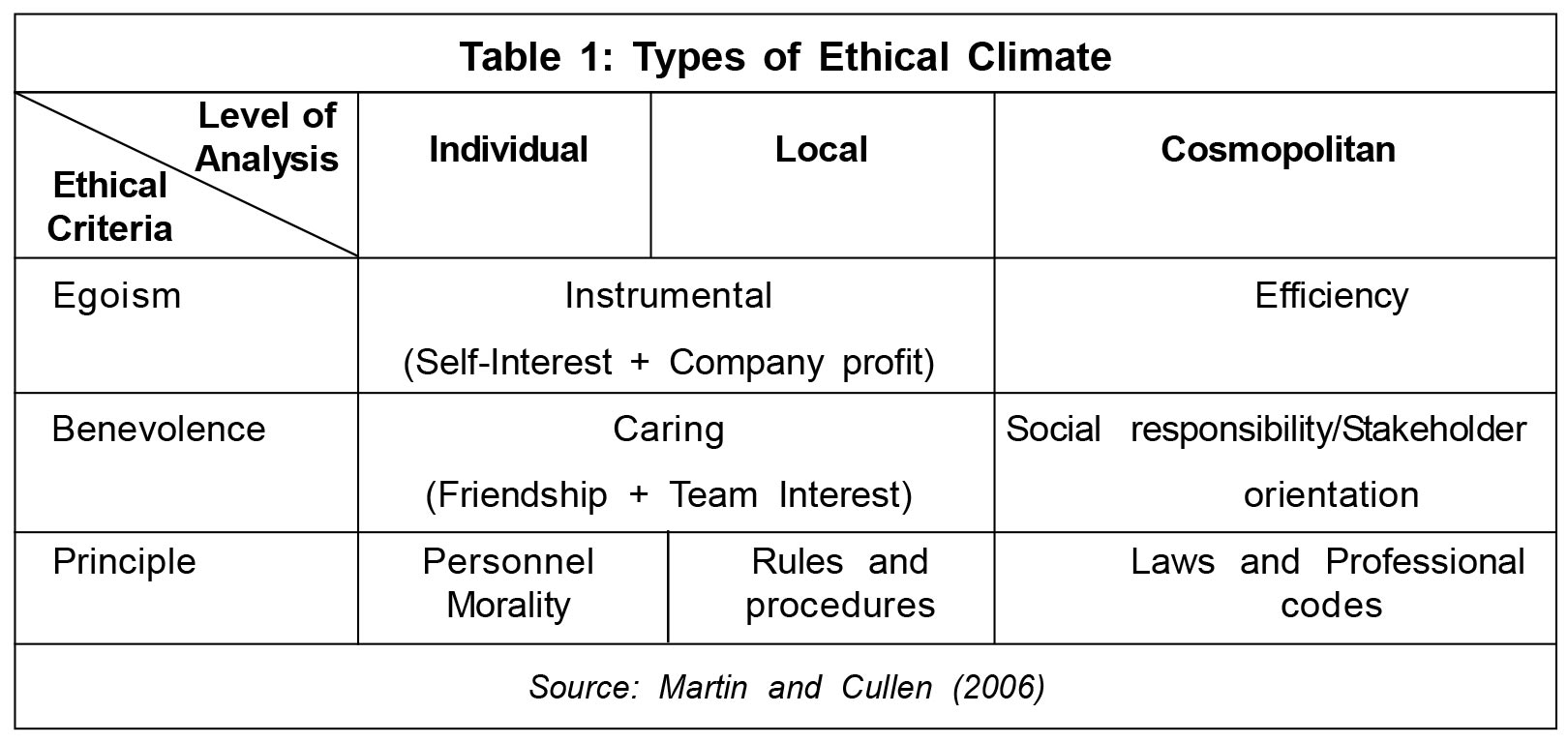
Kohlberg (1984) categorized ethical climate into three dimensions: egoism, benevolence, and principle, also the level of analysis as individual, local and cosmopolitan (Table 1). Egoism refers to the maximization of personal interests, while benevolence seeks maximum pleasure and/or less inconvenience for an organization as a whole and principle places the greatest emphasis on duty founded upon laws, rules, norms, and policies (Ayla and Muge, 2012). Cross-classification of these dimensions reveals nine ethical climate types.
Egoism Climate
Egoism climate refers to self-interest focused and self-interest maximizing behavior (Victor and Cullen, 1988). Those participants who perceive their organization's ethical climate to be egoistic have the assumption that self-interest, company profit, and efficiency are the most prevalent values embodied by the organization (Cullen et al., 2003). A climate of egoism refers to the self-serving behavior of individuals (Ascigil and Parlakgumus, 2012) in gaining awards and preventing punishment.
Benevolence Climate
Benevolent climate centers on fostering friendship, team interest, and social responsibility amongst organizational members. Utilitarianism or benevolence considers the utmost good outcome for the maximum number of people (Victor and Cullen, 1988). Contrary to egoism, individuals who care about the well-being of co-workers are guided by benevolent, altruistic behavior (Ascigil and Parlakgumus, 2012).
Principle Climate
Principled ethical climate describes those workers who have a professional set of standards, laws, or codes associated with their trade. In deontology or principle theory, rules, law, codes, and procedures specify decisions and actions for the good of others (Victor and Cullen, 1988). The principle ethical criterion refers to employees' adhering to rules and regulations established by organizations (Ascigil and Parlakgumus, 2012).
Emotional Engagement
The emotional aspect of employee engagement concerns how employees feel about each of the employee engagement factors and whether they have positive or negative attitudes toward the organization and its leaders (Kahn, 1990). According to May et al. (2004), employee engagement is related to emotional experiences and well-being. Employees feel emotionally engaged with each other as well as with the work (Cleland et al., 2008). Engaged employees are emotionally attached to their organization and highly involved in their job with great enthusiasm for the success of their employer, going the extra mile beyond the employment contractual agreement.
Kahn (1990) demonstrated that work engagement, emotional connection to other organizational members, and task performance are all interrelated, where functionality in relationships is dependent upon members feeling emotionally bound to each other, "experiences of feeling themselves joined, seen and felt, known, and not alone" in the context of work. Towers-Perin (2003) suggested that ''the emotional factors tie to people's satisfaction and the sense of inspiration and affirmation they get from their work and being part of their organization". Engagement has been studied as a multidimensional construct consisting of three subtypes: behavioral, cognitive, and emotional (Fredricks et al., 2004). More specifically, engaged employees are also more likely to display discretionary behavior. Engagement has been found to be closely linked to feelings and perceptions around being valued and involved, which in turn generates the kinds of discretionary effort that lead to enhanced performance (Konrad, 2006).
Team Orientation
A team is a collection of individuals who are interdependent in their tasks, who share responsibility for outcomes, who see themselves and who are seen by others as an intact social entity embedded in one or larger social systems (for example, business unit or the corporation) and who manage their relationships across organizational boundaries (Sundstrom et al., 1990). Team-oriented individuals are predisposed to be an affiliate without being overly dominant toward team members. The results also indicated that team orientation predicts team effectiveness on a range of team tasks, including decision-making and negotiation, suggesting that team orientation might play a role in team processes and outcomes (O'Shea et al., 2004). According to Kirsch (2016), team orientation is an attitude of employee engagement. Teamwork orientation is defined as the extent to which members have a positive attitude towards working in a team (Fransen et al., 2011). Team orientation means a state of being directed as a team (Arulrajah and Opatha, 2012). Team work benefits both employees and employers. Teamwork helps in promoting enhanced personal growth and better work environment, thus contributing to the growth of the firm (Elkhwesky et al., 2021). Also, communication between team members will decide the duties and responsibilities to be allocated to each member in a team based on their skillset (Guznov et al., 2020). According to literature, team orientation is the extent to which employees are involved in and committed to teamwork. Especially, team orientation allows the employees to achieve their daily targets and objectives through involvement in the job as a team.
Relationship Between Ethical Climate, Emotional Engagement, and Team Orientation
The role of an ethical work climate is significant for work engagement because when moral judgment is high, employees feel free and are at peace because they will experience fairness and security (Christian et al., 2011). The positive perceived culture and ethical work climate have a positive influence on employee engagement levels (Young, 2012). According to Yener et al. (2012), there is a significant relationship between ethical climate and work engagement. Professionals who perceive their ethical climate to be principled may be more committed to their profession than they would be to the employing organization (Moore and Moore, 2014). A canonical analysis indicated that the participants' perceived workplace ethics culture and workplace ethics climate were significantly and positively related to their level of employee engagement (Monga and Cilliers, 2015). When employees perceive that their organization is committed to a code of ethics and ethical perceptions and behaviors, they are likely to respond with greater engagement to the organization (Eldor, 2016). Accordingly, the ethical climate is a critical factor in predicting employees' behavior, Rastgar et al. (2021) reported that there is a significant effect of ethical climate on the level of employee engagement.
The favorable impacts of ethical climate were also highlighted by Shin (2012) where positive effects of ethical climate on employees' interpersonally and organizationally directed collective citizenship behaviors were found. Itani et al. (2018) found that frontline employees who perceive higher levels of ethical climate are more likely to report improved teamwork in the workplace, which involves interdependency and cooperative work. According to Rathert and Fleming (2008), team members feel that the teamwork is better within a benevolence ethical climate in the organization. Considering literature review regarding ethical climate, emotional engagement, and team orientation, the study presents the following hypothesis:
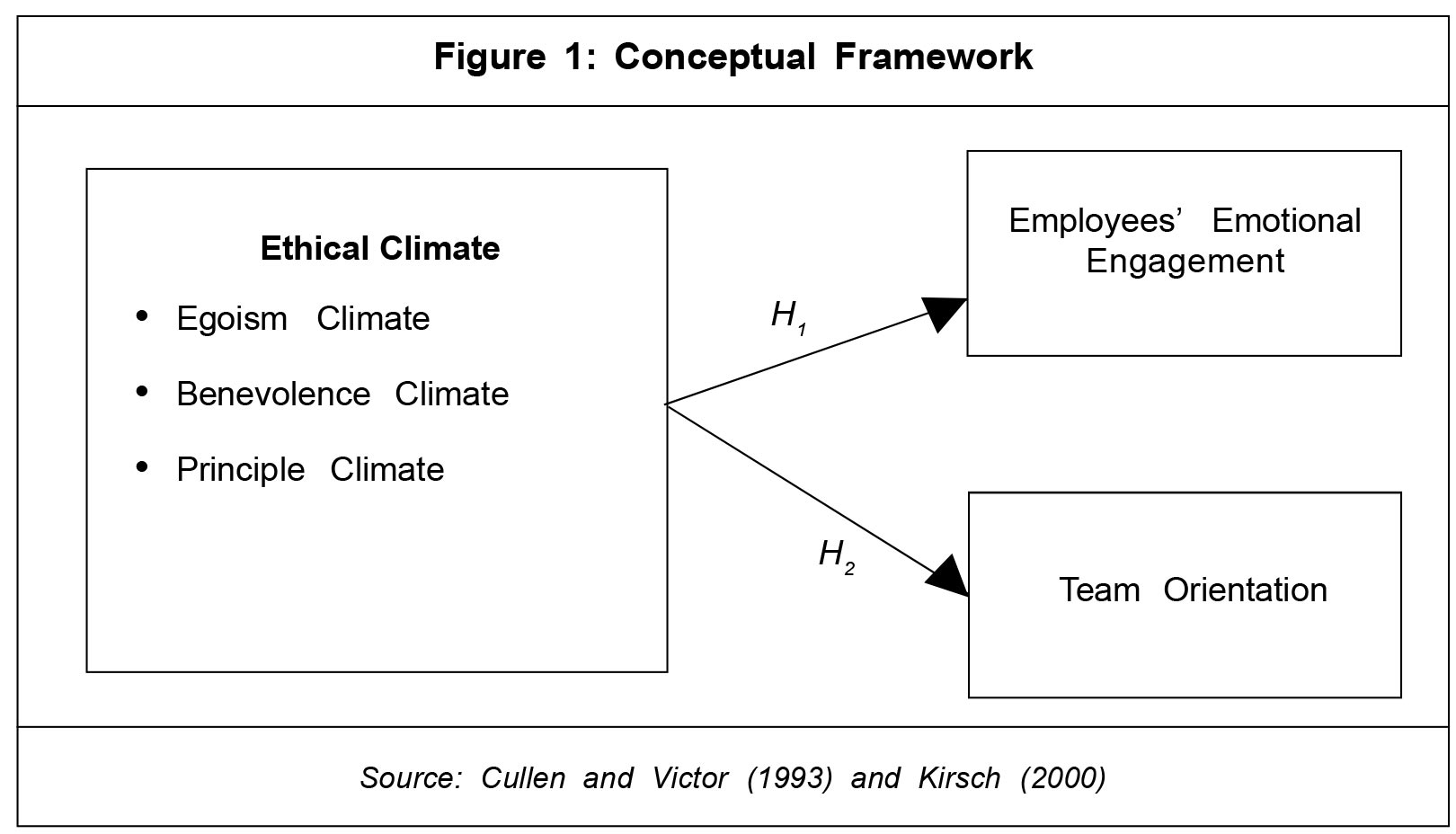
H1: Ethical climate significantly and positively impacts employees' emotional engagement.
H2: Ethical climate significantly and positively impacts employees' team orientation.
The conceptual model, shown in Figure 1, is based on Social Exchange Theory, wherein it is suggested that when organizational justice and fairness are provided, employees will do their best to achieve their organizations' missions and goals through more benevolent and altruistic behaviors (Kim et al., 2015). In the current study, the theoretical framework considers the independent variable as the ethical climate with three dimensions (egoism, benevolence, and principles climate), and the dependent variables are employees' emotional engagement and team orientation. Figure 1 shows the conceptualization framework of this study.
Data and Methodology
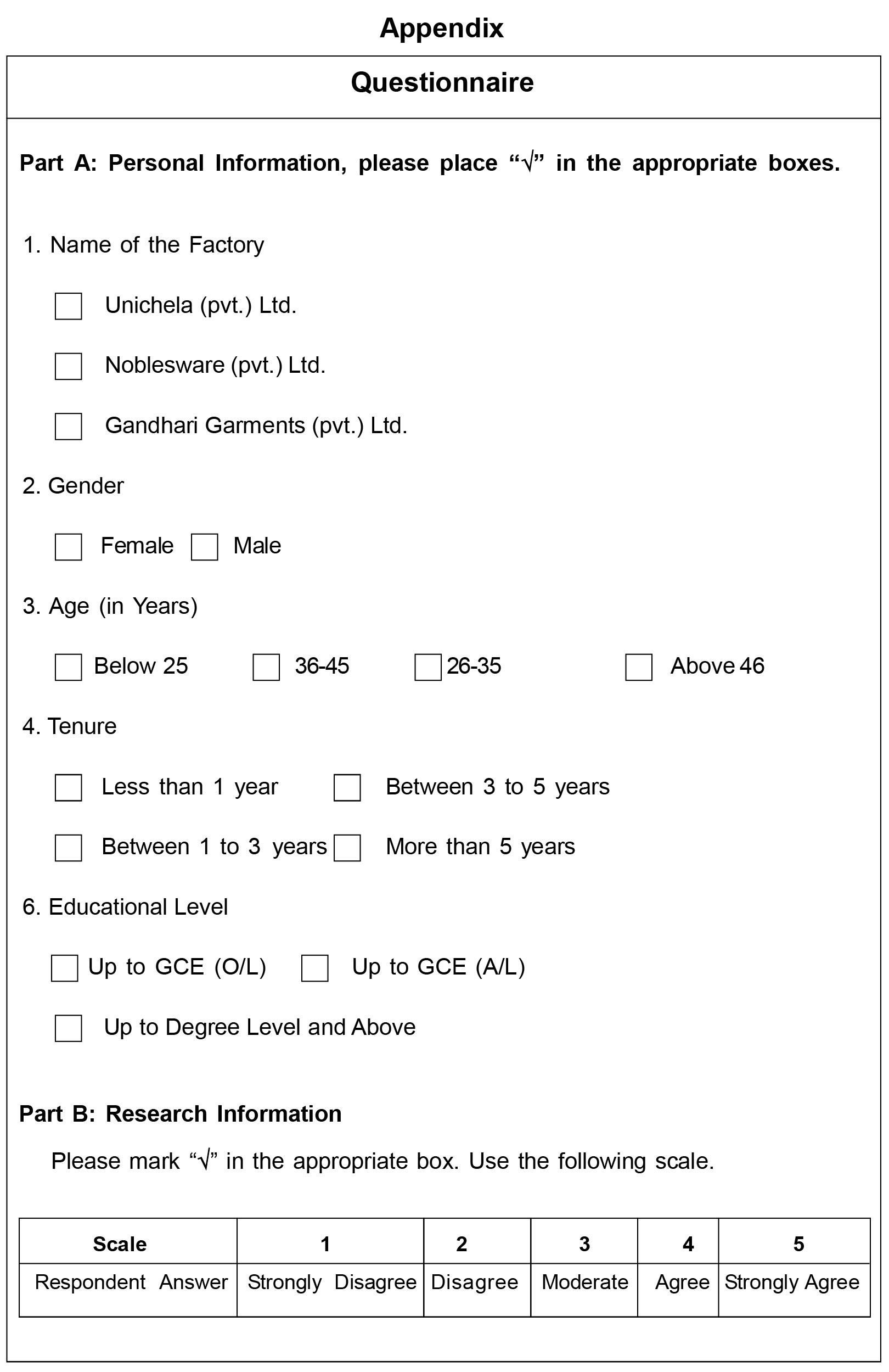
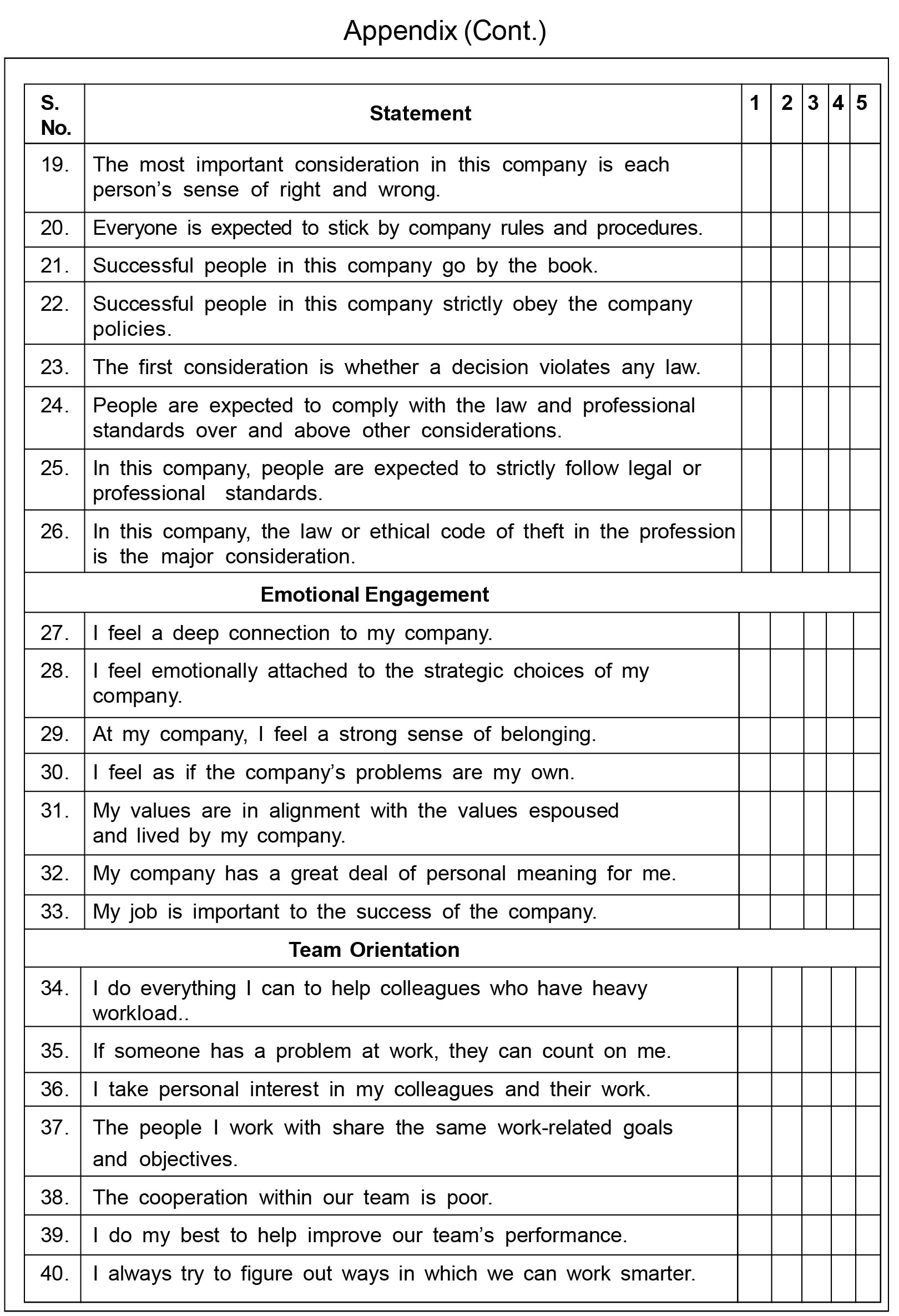
A cross-sectional study was conducted among 200 employees of three selected garment factories in the Kalutara district by using a questionnaire-based survey method (see Appendix). This study was conducted in a non-contrived setting and the unit of analysis was the machine operators of the three organizations. The stratified random sampling method was used to select the sample respondents from the population
(Table 2).
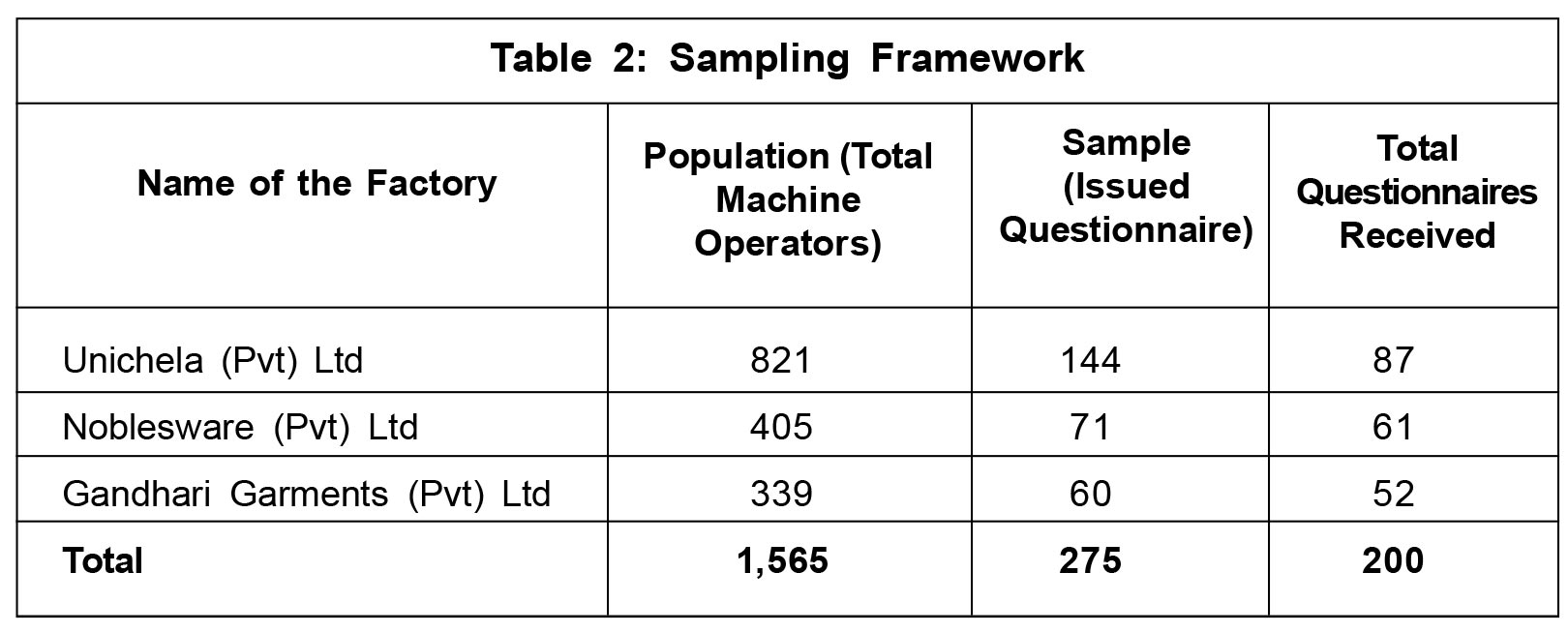
Of the total 200 machine operators, 43.5% (87) are working in Unichela (Pvt) Ltd, 30.5% (61) in Noblesware (Pvt) Ltd and 26% (52) employees in Gandhari Garments (Pvt) Ltd. Among those, 78% (156) of the employees are female. Respondents below 25 years represent 51%, ages between 26 and 35 represent 43.5%, with very few employees in the age group 36-45. A majority of the machine operators (36.5%) have an experience of less than one year, 27.5% of the machine operators between 1 and 3 years, 21.5% have an experience of 3-5 years and 14.5% have more than 5 years of service experience. As far as educational qualifications are concerned, most of the machine operators (58%) studied up to GCE O/L and the other 42% of the machine operators studied up to GCE A/L.
The questionnaire consists of two main parts. Part one includes demographic factors (name of the factory, age, tenure, gender and educational level). Part two consists of the measurements of independent and dependent variables of the study. Here, the independent variable "Ethical Climate" is measured with 26 statements. Dependent variables, "Emotional Engagement" is measured with 7 statements, and "Team Orientation" is measured with 7 statements.
In this study, univariate analysis was used to measure the level of ethical climate, emotional engagement, and team orientation of employees. Correlation and regression analyses were used to determine the relationship and impact of ethical climate on emotional engagement and team orientation of the machine operators in the garment industry in Kalutara.
Results and Discussion
Univariate Analysis
Table 3 shows that the overall mean value of ethical climate is 4.10 with a standard deviation of 0.298. It shows that the dimensions of ethical climate; egoism
(M = 4.02), benevolence (M = 4.23), and principle climate (M = 4.12) have higher levels among the employees of the surveyed organization. The overall mean value of the first dependent variable, emotional engagement is 4.06, and it has a standard deviation of 0.391. It shows that emotional engagement is at a higher level among the employees of the selected organization. And the overall mean value of the second dependent variable, team orientation, is 4.26, and it has a standard deviation of 0.365. It shows that team orientation among the selected sample is also at a high level.
Correlation and Regression Analysis
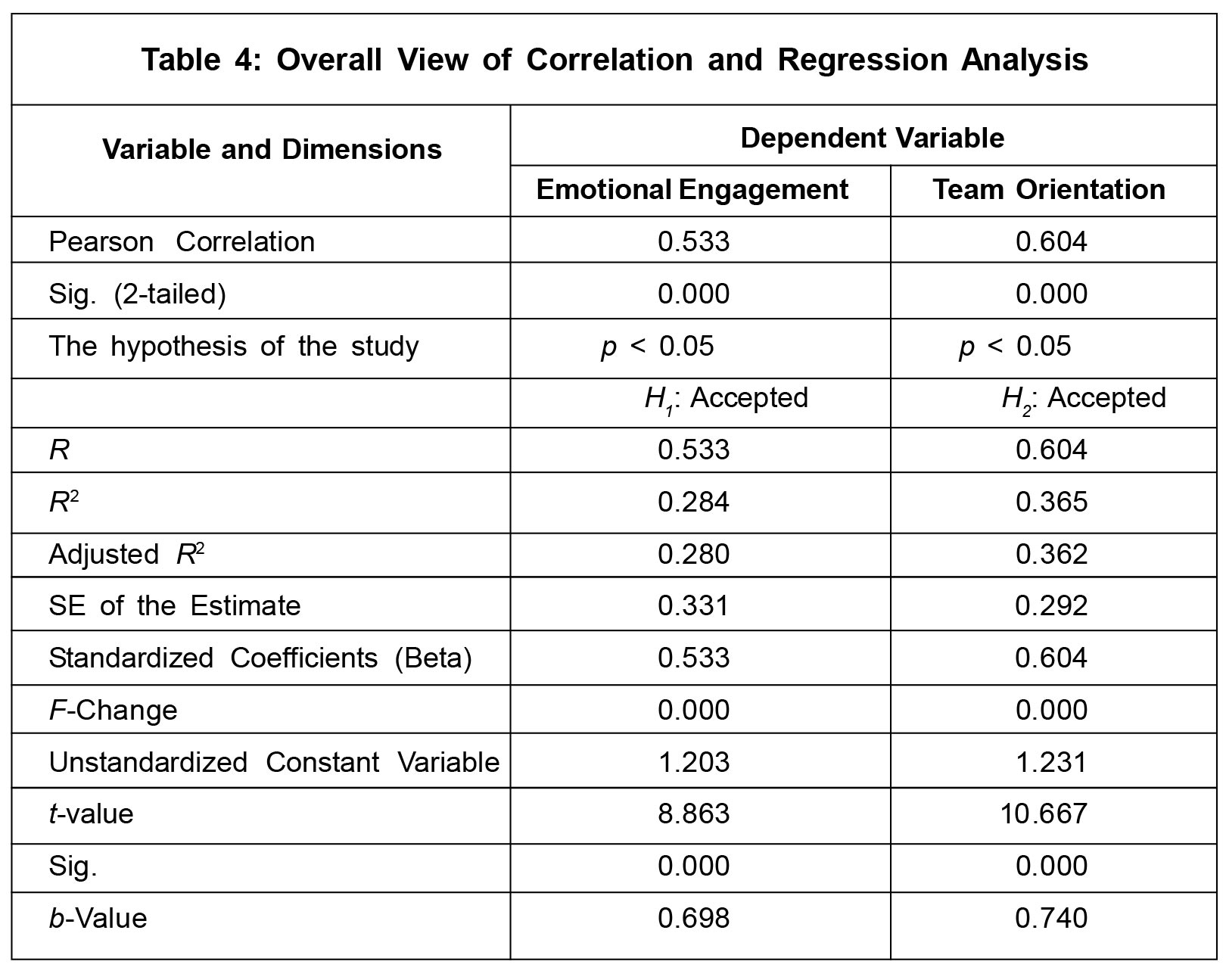
Correlation analysis is used to measure the relationship between ethical climate and emotional engagement. Table 4 clearly shows that the correlation coefficient (r) value between ethical climate and emotional engagement is 0.533 at 0.000 significant level (p < 0.01). This means, there is a strong positive relationship between ethical climate and emotional engagement of the sample. Then the impact of ethical climate on emotional engagement is analyzed using regression analysis and the adjusted R-square is 0.280, which implies that only 28% of emotional engagement is explained by ethical climate. The regression result indicates that the significance of the t-value is less than 0.05. The b-value of ethical climate is 0.698; this result indicates that if ethical climate increases by one point, emotional engagement of the employees gets increased by 0.698. Based on the evidence, it is concluded that the ethical climate has a positive impact on the emotional engagement of the machine operators in the garment industry in the Kalutara district. Young (2012) argued that the workplace ethical climate is positively related to employee engagement. Further, Yener et al. (2012) also proved that there is a significant relationship between ethical climate and work engagement. Inconsistent with the current findings, another study in the literature stated that the workplace ethics culture and workplace ethics climate were significantly and positively related to their level of engagement (Monga and Cilliers, 2015). So the first hypothesis of the study is accepted.
H1: Ethical climate significantly and positively impacts employees' emotional engagement.
The correlation coefficient (r) value explained that there is a strong positive correlation between ethical climate and team orientation (r = 0.604) at 0.000 significant level
(see Table 4). In the same way, Itani et al. (2018) proved in their studies that ethical climate is negatively related to workplace isolation and positively to teamwork. When investigating the impact of ethical climate on team orientation of samples, the adjusted R-square 0.365 implies that 36.5% of the team orientation is explained by the ethical climate. The regression result indicates that the significance of the t-value is less than 0.05 and the b-value of ethical climate is 0.740; it indicates that if ethical climate increases by one point, team orientation of the employees gets increased by 0.740. Based on the evidence, it can be concluded that ethical climate has a positive impact on team orientation of the employees. So the second hypothesis of the study is accepted.
H2: Ethical climate significantly and positively impacts employees' team orientation.
Conclusion
The study was conducted with 200 machine operators of the garment industry in Kalutara district to achieve the research objectives. The findings of the study clearly show that the ethical climate, employees' emotional engagement, and team orientation are at a high level among the sample. Based on the findings of correlations analysis, there is a strong positive relationship between ethical climate and emotional engagement (r = 53.3%) in the selected sample and this is consistent with the findings of a canonical analysis that indicated that the participants' perceived workplace ethics culture and workplace ethics climate were significantly and positively related to their level of employee engagement (Monga and Cilliers, 2015). Similarly, the current study found that there is a strong positive relationship between ethical climate and team orientation (r = 60.4%).
The results of the regression analysis interpreted that the ethical climate has a significant positive impact on both emotional engagement and team orientation individually of the selected respondents. The results of the present study are supported by a previous study by Young (2012) that stated that the positive perceived culture and ethical workplace climate have a positive influence on employee engagement levels. Also, another study revealed that frontline employees who perceive higher levels of ethical climate are more likely to report improved teamwork (Itani et al., 2018). The present study also revealed that the influence of ethical climate on team orientation is higher than the influence of ethical climate on emotional engagement among employees of the selected garment industry.
Recommendation: This study identified that there is a strong positive relationship between ethical climate and emotional engagement. So, in order to enhance employee emotional engagement, the apparel industry should concentrate on ensuring ethical climate. Also, there is a strong positive relationship between ethical climate and team orientation among the machine operators. If there is a good ethical climate, the employees' team orientation attitude also will increase. In addition to that, the management should work to build an ethical climate of benevolence focusing on friendship, team work, and social responsibility. According to this study, those efforts may lead to more emotionally engaged and team-oriented employees.
Limitations: This study examined the impact of ethical climate on emotional engagement and team orientation among the machine operators of the garment industry in the Kalutara district. The study was limited only to the Kalutara district and the data collection was limited to machine operators. Therefore, it might not be representative of all employee characteristics across the country.
References
- Arulrajah A A and Opatha H H D N P (2012), "An Exploratory Study on the Personal Qualities/Characteristics Expected by the Organisations for Key HRM Jobs in Sri Lanka", Sri Lankan Journal of Human Resource Management, Vol. 3, No. 1, pp. 32-48.
- Ascigil S F and Parlakgumus A B (2012), "Ethical Work Climate as an Antecedent of Trust in Coworkers", Business & Professional Ethics Journal, Vol. 31, pp. 399-417.
- Ayla Z O and Muge L Y (2012), "The Impact of Ethical Climate on Relationship between Corporate Reputation and Organizational Identification", 8th International Strategic Management Conference. Procedia - Social and Behavioral Sciences, Vol. 58, No. 1, pp. 714-723, available at https://doi.org/10.1016/j.sbspro.2012.09.1049
- Bullock M and Panicker S (2003), "Ethics for All: Differences Across Scientific Society Codes", Science and Engineering Ethics, Vol. 9, No. 2, pp. 159-170.
- Christian M S, Garza A S and Slaughter J E (2011), "Work Engagement: A Quantitative Review and Test of its Relations with Task and Contextual Performance", Personal Psychology, Vol. 64, No. 1, pp. 89-136.
- Cleland A, Mitchinson W and Townend A (2008), "Engagement, Assertiveness and Business Performance: A New Perspective", Ixia Consultancy Ltd.
- Cullen J B and Victor B I (1993), "The Ethical Climate Questionnaire: An Assessment of Its Development and Validity", Psychological Reports, Vol. 73, No. 2, pp. 667-674.
- Cullen J B, Parboteeah K P and Victor B (2003), "The Effects of Ethical Climates on Organizational Commitment: A Two-Study Analysis", Journal of Business Ethics, Vol. 46, pp. 127-141.
- Eldor L (2016), "Work Engagement: Towards a General Theoretical Ethical Model", Human Resource Development Review, Vol.15, No. 3, pp. 317-339.
- Elkhwesky Z, Salem I E and Barakat M (2021), "Importance-Implementation of Disability Management Practices in Hotels: The Moderating Effect of Team Orientation", Journal of Mediterranean Tourism Research, Vol. 1, No. 1, pp. 22-38. Retrieved from https://digitalcommons.usf.edu/jometr/vol1/iss1/3
- Embuldeniya A (2015), "Impact of Apparel Industry on the Economy of Sri Lanka", Journal of Social Statistics, Vol. 2, No. 1, pp. 1-14.
- Fransen J, Krischner P A and Erkens G (2011), "Mediating Team Effectiveness in the Context of Collaborative Learning: The Importance of Team and Task Awareness", Computers in Human Behavior, Vol. 27, pp. 1103-1113.
- Fredricks J A, Blumenfeld P C and Paris A H (2004), "School Engagement: Potential of the Concept, State of the Evidence", Review of Educational Research, Vol. 74, No. 1, pp. 59-109.
- Fu W, He F and Zhang N (2020), "Antecedents of Organizational Commitment of Insurance Agents: Job Satisfaction, Ethical Behavior and Ethical Climate", Journal of Global Business Insights, Vol. 5, No. 2, pp. 134-149, available at https://www.doi.org/10.5038/2640-6489.5.2.1135
- Goldman A and Tabak N (2010), "Perception of Ethical Climate and its Relationship to Nurses' Demographic Characteristics and Job Satisfaction", Nursing Ethics, Vol. 17, No. 2, pp. 233-246.
- Gul M, Pekbay K N and Gul K (2017), "The Impact of Ethical Climate on Emotional Organizational Commitment: A Survey in the Accommodation Industry", ILIRIA International Review, Vol. 7, No. 2, pp. 10-32.
- Guznov S, Lyons J, Pfahler M et al. (2020), "Robot transparency and Team Orientation Effects on Human-Robot Teaming", International Journal of Human-Computer Interaction, Vol. 36, No. 7, pp. 650-660.
- Insync Surveys (2009). Retrieved from research@insyncsurveys.com.au
- Itani O S, Jaramillo F and Chonko L (2018), "Achieving Top Performance While Building Collegiality in Sales: It All Starts With Ethics", Journal of Business Ethics, Vol. 156, No. 2, pp. 417-438.
- Kahn W A (1990), "Psychological Conditions of Personal Engagement and Disengagement at Work", Academy of Management Journal, Vol. 33, No. 4, pp. 692-724.
- Kang H J and Busser J A (2018), "Impact of Service Climate and Psychological Capital on Employee Engagement: The Role of Organizational Hierarchy", International Journal of Hospitality Management, Vol. 75, No. 1, pp. 1-9, available at https://doi.org/10.1016/j.ijhm.2018.03.003
- Khan M A (2012), "Ethical Values and Work-related Outcomes: An Empirical Study of Pakistani Organizations", Academic Journals, Vol. 6, No. 11, pp. 3977-3987.
- Kim M Y, Miao Q and Park S M (2015), "Exploring the Relationship between Ethical Climate and Behavioral Outcomes in the Chinese Public Sector: The Mediating Roles of Affective and Cognitive Responses", International Journal of Business, Humanities, and Technology, Vol. 5, No. 3, pp. 88-103.
- Kirsch Ch (2016), "What is 'Employee Engagement'? Analysis of the Factor Structure of the Engagement Construct", Change Tracking Research, [Online], available at http://www. anzam.org/wp-content/uploads/pdf manager/1325_KIRSCH_CHRISTINA-153. PDF [15 Nov 2016].
- Kohlberg L (1984), Essays on Moral Development: The Psychology of Moral Development, Harper & Row.
- Konrad A M (2006), "Engaging Employees Through High-Involvement Work Practices", Ivey Business Journal Online, Vol. 70, No. 4, pp. 1-6.
- Kumar R (2011), Research Methodology- A Step-by-Step Guide for Beginners, 3rd Edition, Sage publications.
- Manzoor S, Ullah H, Hussain M and Ahmad Z M (2011), "Effect of Teamwork on Employee Performance", International Journal of Learning & Development, Vol. 1, No. 1, pp. 110-126.
- Martin K D and Cullen J B (2006), "Continuities and Extensions of Ethical Climate Theory: A Meta-Analytic Review", Journal of Business Ethics, Vol. 69, No. 2, pp. 175-194.
- May D R, Gilson R L and Harter L M (2004), "The Psychological Conditions of Meaningfulness, Safety and Availability and The Engagement of The Human Spirit at Work", Journal of Occupational and Organisational Psychology, Vol. 77, No. 1, pp. 11-37.
- Miesing P and Preble J F (1985), "A Comparison of Five Business Philosophies", Journal of Business Ethics, Vol. 4, No. 6, pp. 465-476.
- Monga M J and Cilliers F (2015), "Ethics Culture and Ethical Climate In Relation to Employee Engagement in a Developing Country Setting", Journal of Psychology in Africa, Vol. 25, No. 3, pp. 242-249.
- Moore H L and Moore T W (2014), "The Effect of Ethical Climate on the Organizational Commitment of Faculty Members", Journal of Academic and Business Ethics, Vol. 9, No. 12, pp. 1-15.
- Nafei W (2015), "The Influence of Ethical Climate on Job Attitudes: A Study on Nurses in Egypt", International Business Research, Vol. 8, No. 2, pp. 83-99.
- Northouse P G (2015), Leadership: Theory and Practice, 7th Edition, Sage Publications.
- O'Shea P G, Driskell J E, Goodwin G F et al. (2004), "Development of a Conditional Reasoning Measure of Team Orientation", Vol. 52, No. 2, pp. 316-328.
- Parboteeah K P, Chen H C, Lin Y T et al. (2010), "Establishing Organizational Ethical Climates: How do Managerial Practices Work?", Journal of Business Ethics, Vol. 97, No. 4, pp. 599-611.
- Rastgar A, Feiz D and Moradi H (2021), "Psychological Capital and Ethical Work Climate Effects on Employees' Service Behavior: Evidence from Iran", Organizational Behavior Studies Quarterly, Vol. 10, No. 2, pp. 2322-2348.
- Rathert C and Fleming D A (2008), "Hospital Ethical Climate and Teamwork in Acute Care: The Moderating Role of Leaders", Health Care Management Review, Vol. 33, No. 4, pp. 323-331.
- Schneider B (1975), "Organizational Climate: An Essay", Personal Psychology, Vol. 28, No. 4, pp. 447-479.
- Shin Y (2012), "CEO Ethical Leadership, Ethical Climate, Climate Strength and Collective Organizational Citizenship Behavior", Journal of Business Ethics, Vol. 108, No. 3, pp. 299-312.
- Sundstrom E, DeMeuse K P and Futrell D (1990), "Work Teams: Applications and Effectiveness", American Psychologist, pp. 120-133.
- Towers-Perin (2003), "Working Today: Understanding What Drives Employee Engagement", Towers Perrin, Stamford CT.
- Venezia G, Venezia C C and Hung C (2010), "A Comparative Study of Ethical Work Climates Among Public and Private Sector Asian Accountants", International Business and Economics Research Journal, Vol. 9, No. 4, pp. 77-85.
- Victor B and Cullen J B (1987), "A Theory and Measure of Ethical Climate in Organizations", Research in Social Performance and Policy, Vol. 9, pp. 51-71.
- Victor B and Cullen J B (1988), "The Organizational Bases of Ethical Work Climates", Administrative Science Quarterly, Vol. 33, No. 1, pp. 101-125.
- Yener M, Yaldiran M and Ergun S (2012), "The Effect of Ethical Climate on Work Engagement", Social and Behavioral Science, Vol. 58, No. 1, pp. 724-733, available at https://doi.org/10.1016/j.sbspro.2012.09.1050
- Young P (2012), "A Glance Into Organizational Culture, Ethical Workplace Climate, and Employee Engagement Levels in a Health Organization Unit", University of Prince Edward Island, School of Business, Charlottetown.