Jan'23
The IUP Journal of Organizational Behavior
Archives
Shift in Employee Engagement Drivers Following Covid-19 Pandemic: A Literature Review
Yuvika Sing
Ph. D. Student, School of Management Studies, Punjabi University, Patiala, Punjab, India; and Assistant Professor, ICFAI University, Himachal Pradesh, India; and is the corresponding author. E-mail: yuvikasingh23@gmail.com
Shivinder Phoolka
Assistant Professor, University School of Applied Management, Punjabi University, Patiala, Punjab, India.
E-mail: shiviphoolka@gmail.com
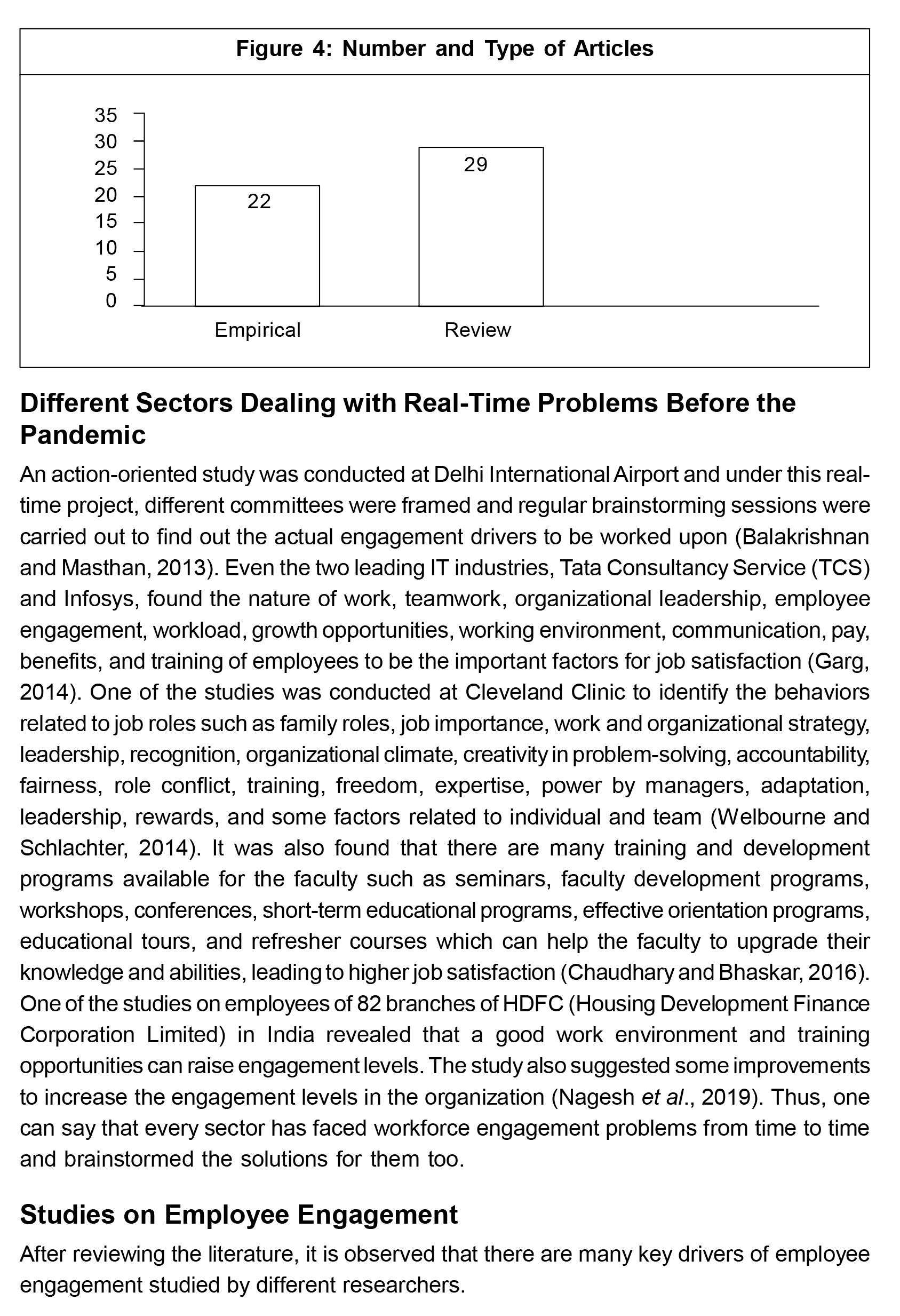
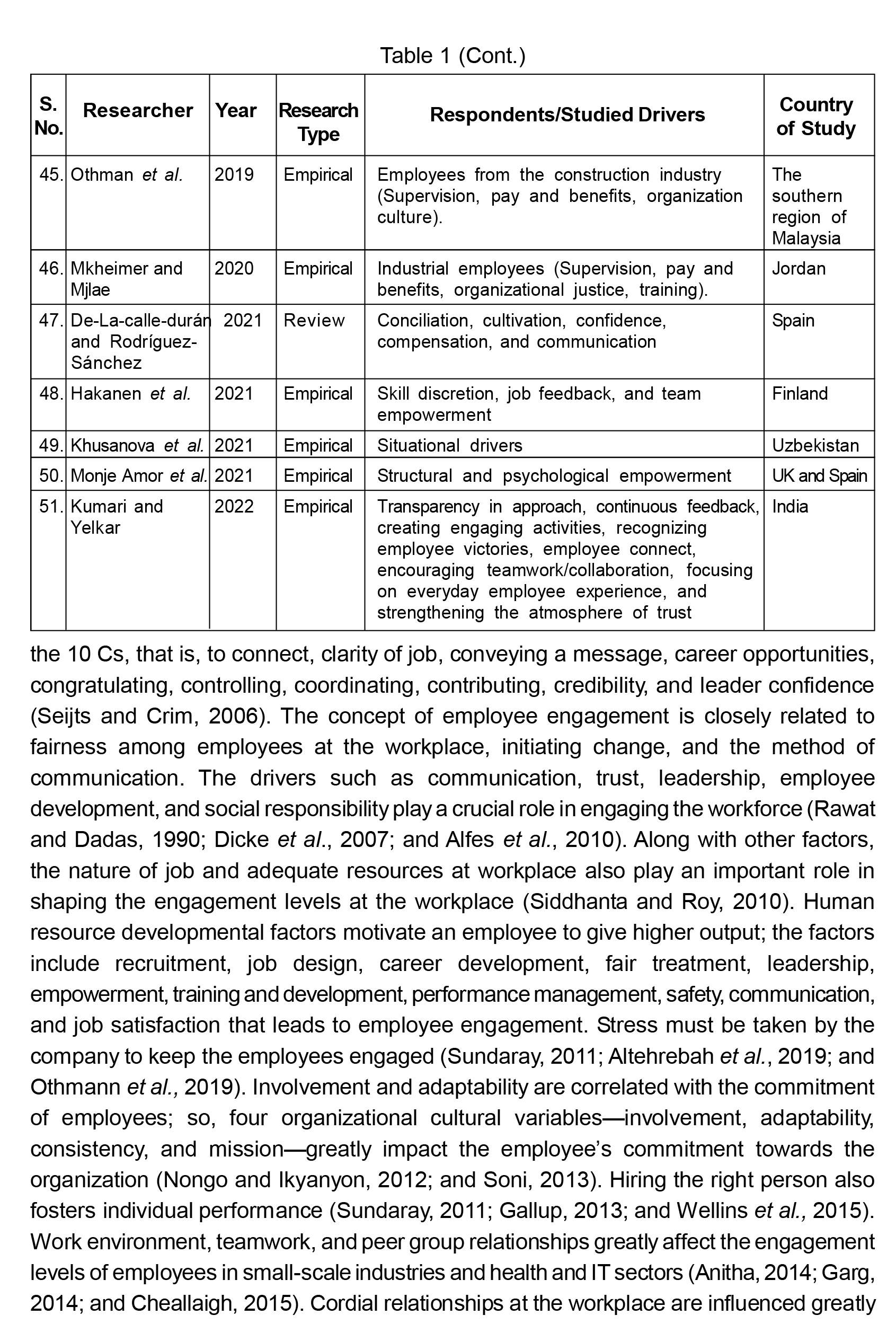
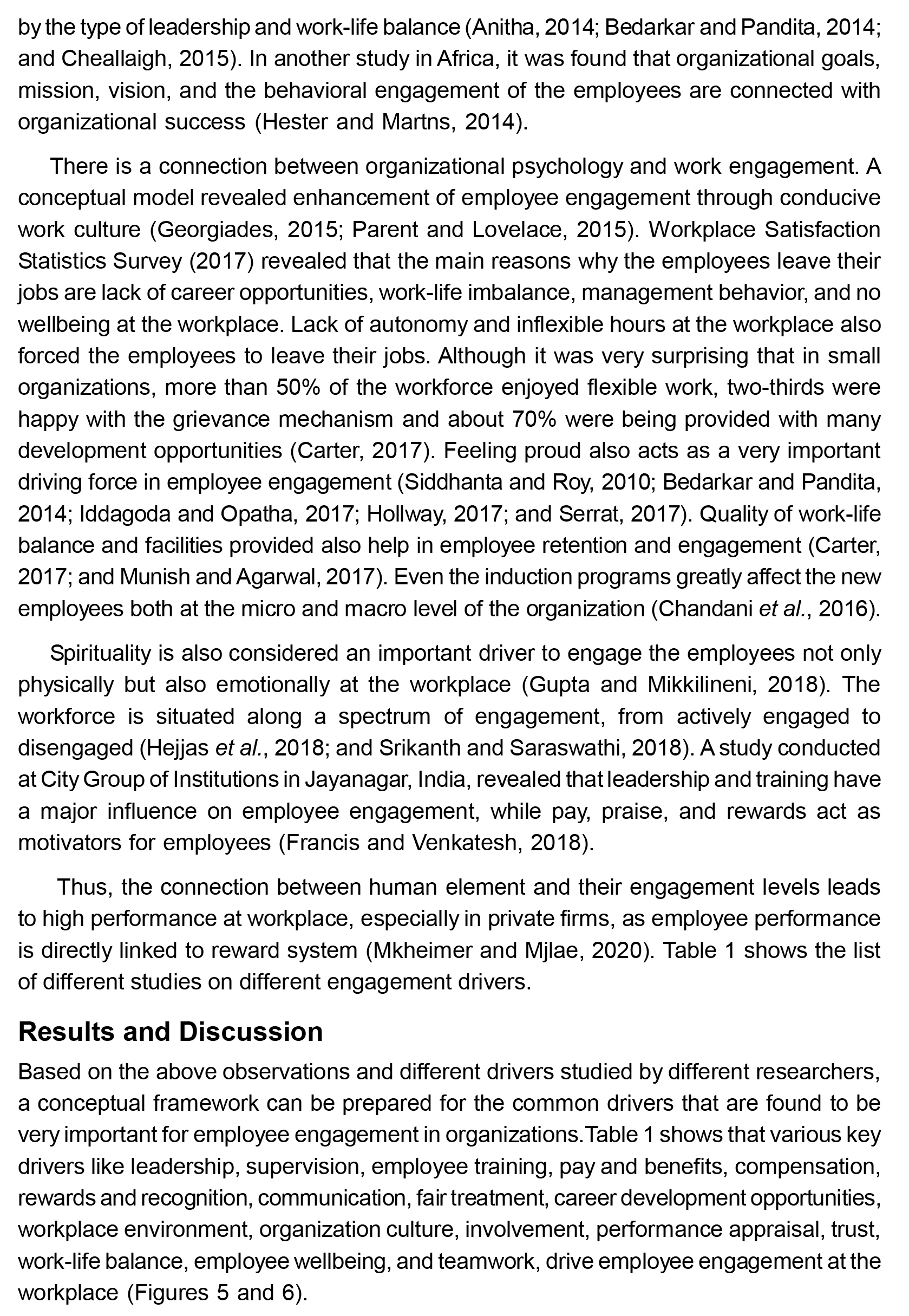
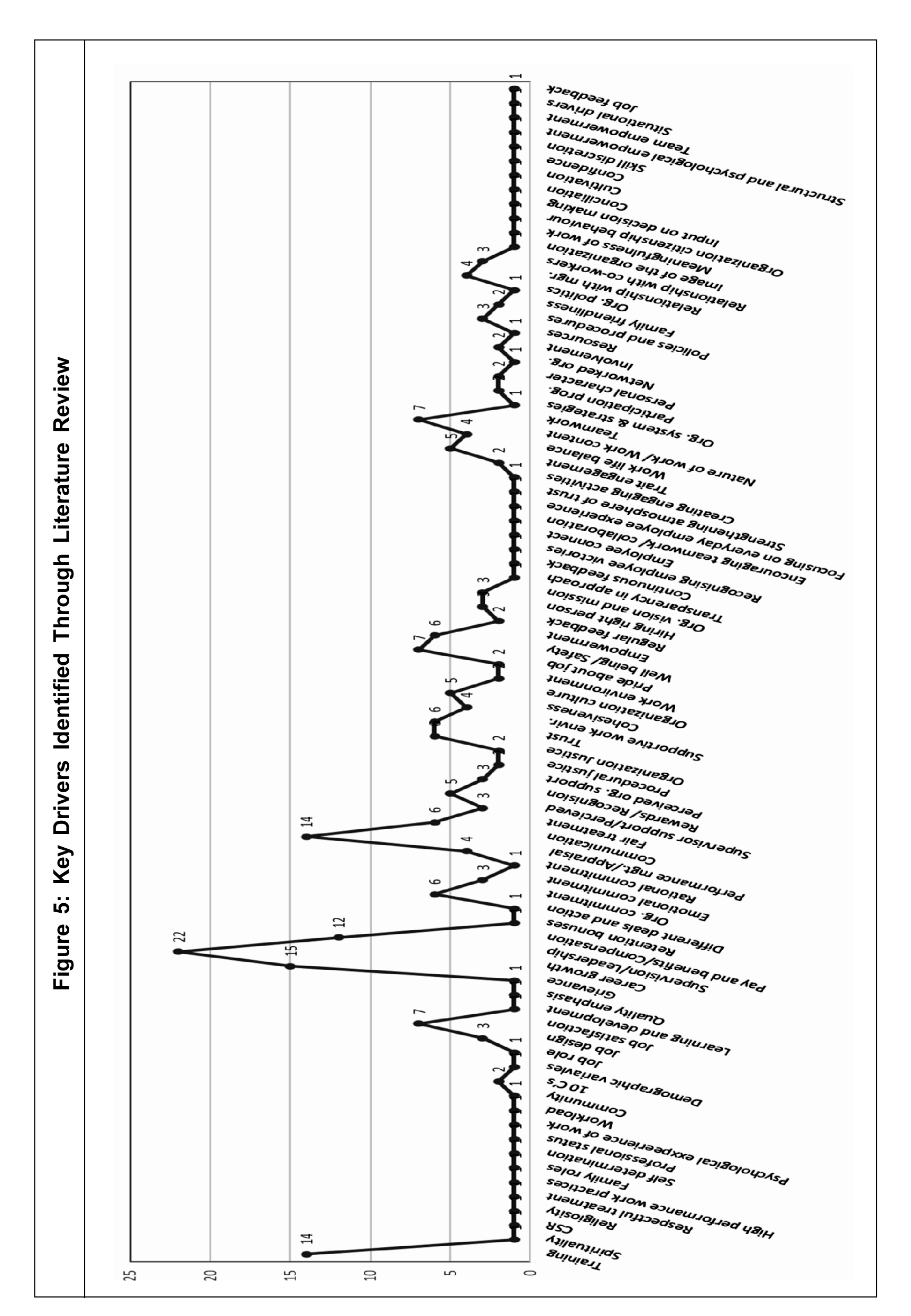
Today, employee engagement has become a critical issue for every organization. Earlier, while organizations considered employees as a strategic tool, they are now believed to be strategic partners in a business. Employee engagement is connected with organizational outputs such as productivity, retention rate, creativity, customer satisfaction, and sustainability. This study focuses on the concept of employee engagement drivers that affect employee engagement at workplace, and the challenges faced by organizations and employees before and after the Covid-19 pandemic. An extensive literature review was done on such drivers, to find out whether there is some shift in the engagement drivers before and after the emergence of the pandemic and whether the shift is a slight or a major one. Fifty-one research publications on employee engagement, published in various journals between 1970 and 2022, were examined, and databases such as Web of Science, EBSCO, and ProQuest were used.
Introduction
Earliest studies on employee engagement were limited to employees in state hospitals and counsellors, and then the focus shifted to the manufacturing industries (Porter
et al., 1974; and Khan, 1990). Factors like employee motivation, retention, and job engagement have become the prime focus for human resource managers, which in turn may lead to higher production, high quality results, and profits. Over the years, the toughest challenge has been to identify engagement techniques, as a highly engaged employee can set new standards of work at the workplace.
Engagement can be defined as the extent to which the employees perform for their organization as measured by their hard work, involvement and passion for work (Corporate Leadership Council, 2004; Storey et al., 2009).
Employee engagement is a process through which an organization wins the employees' commitment, which in turn leads to overall success (Dicke et al., 2007; and Vance, 2006).
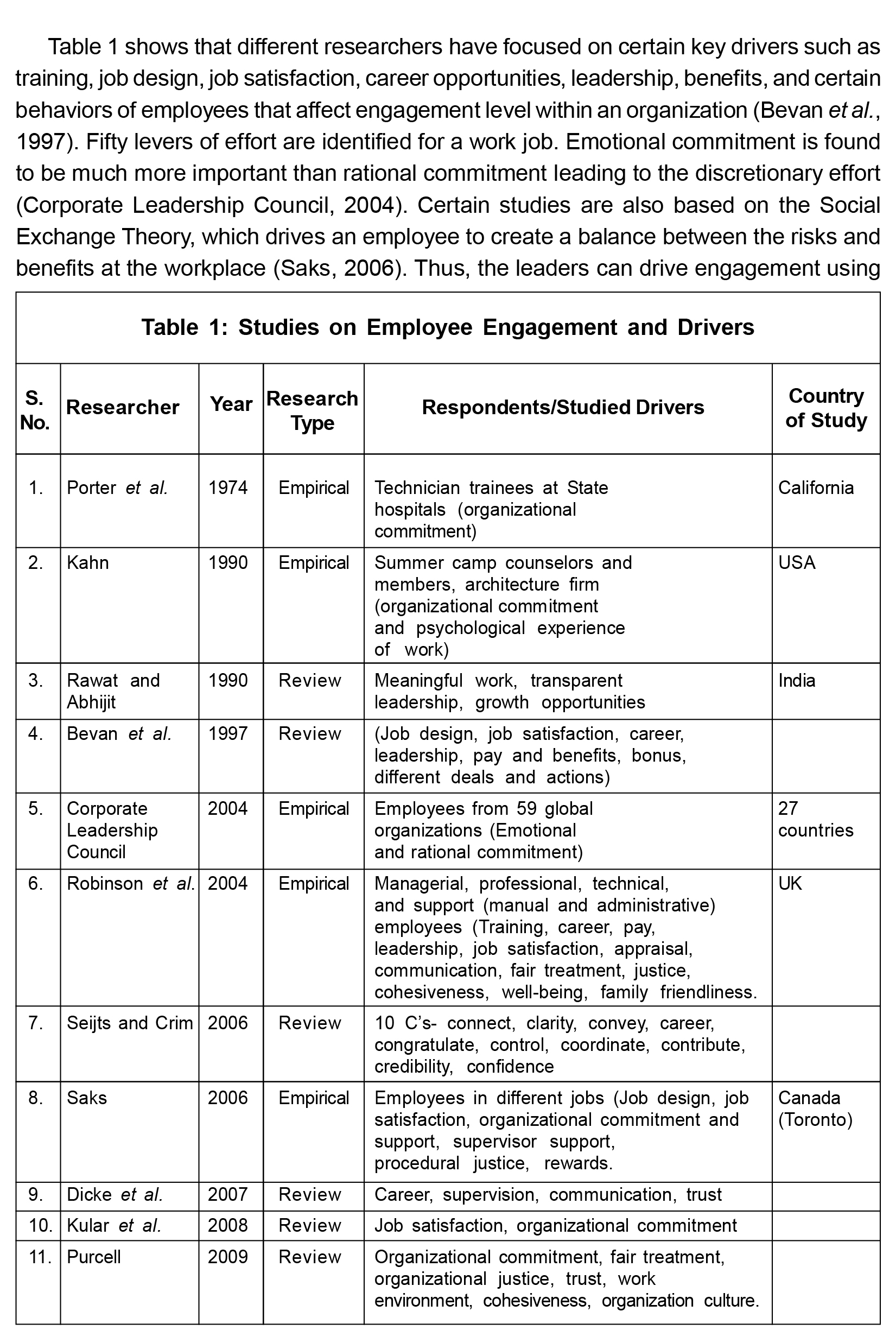
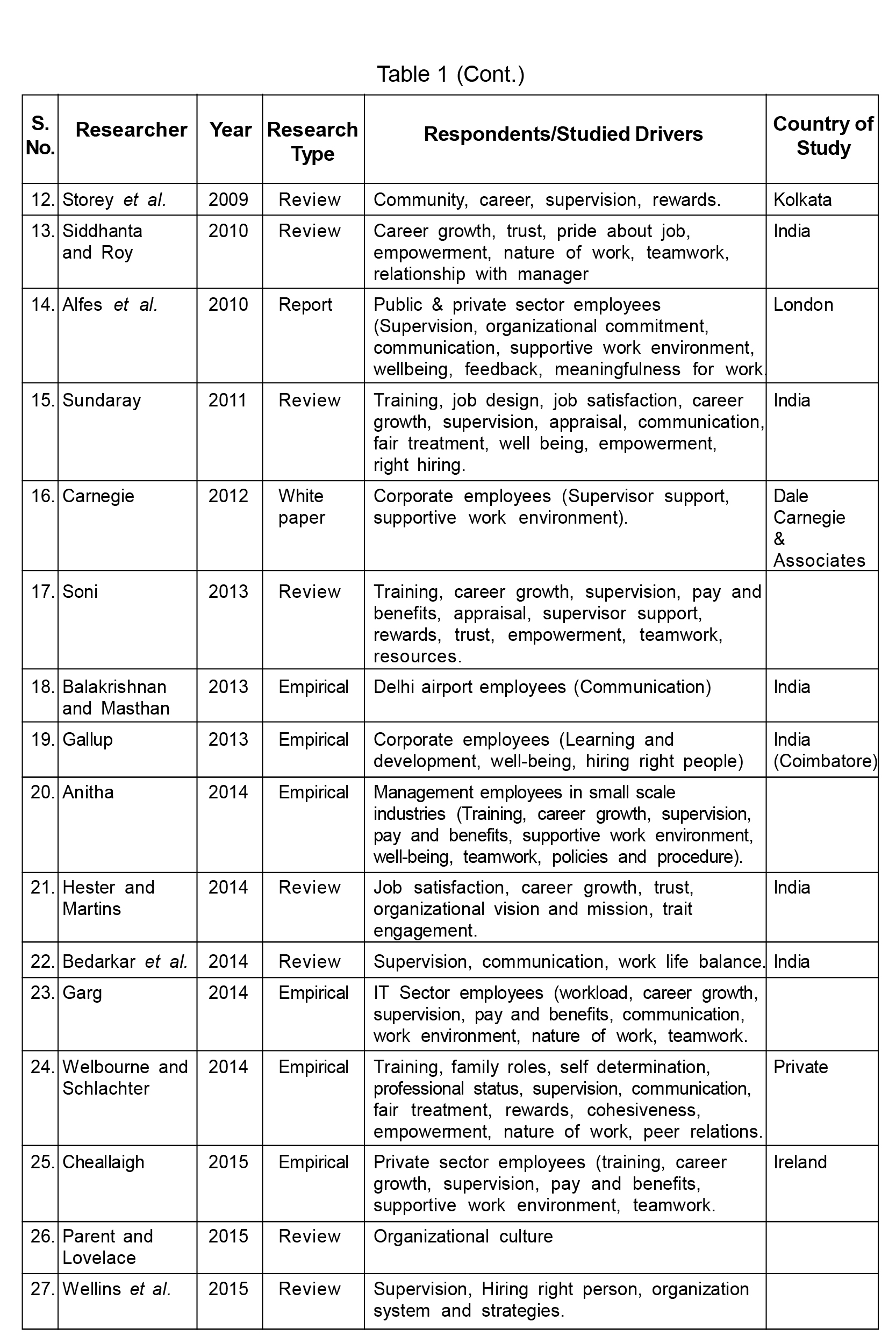
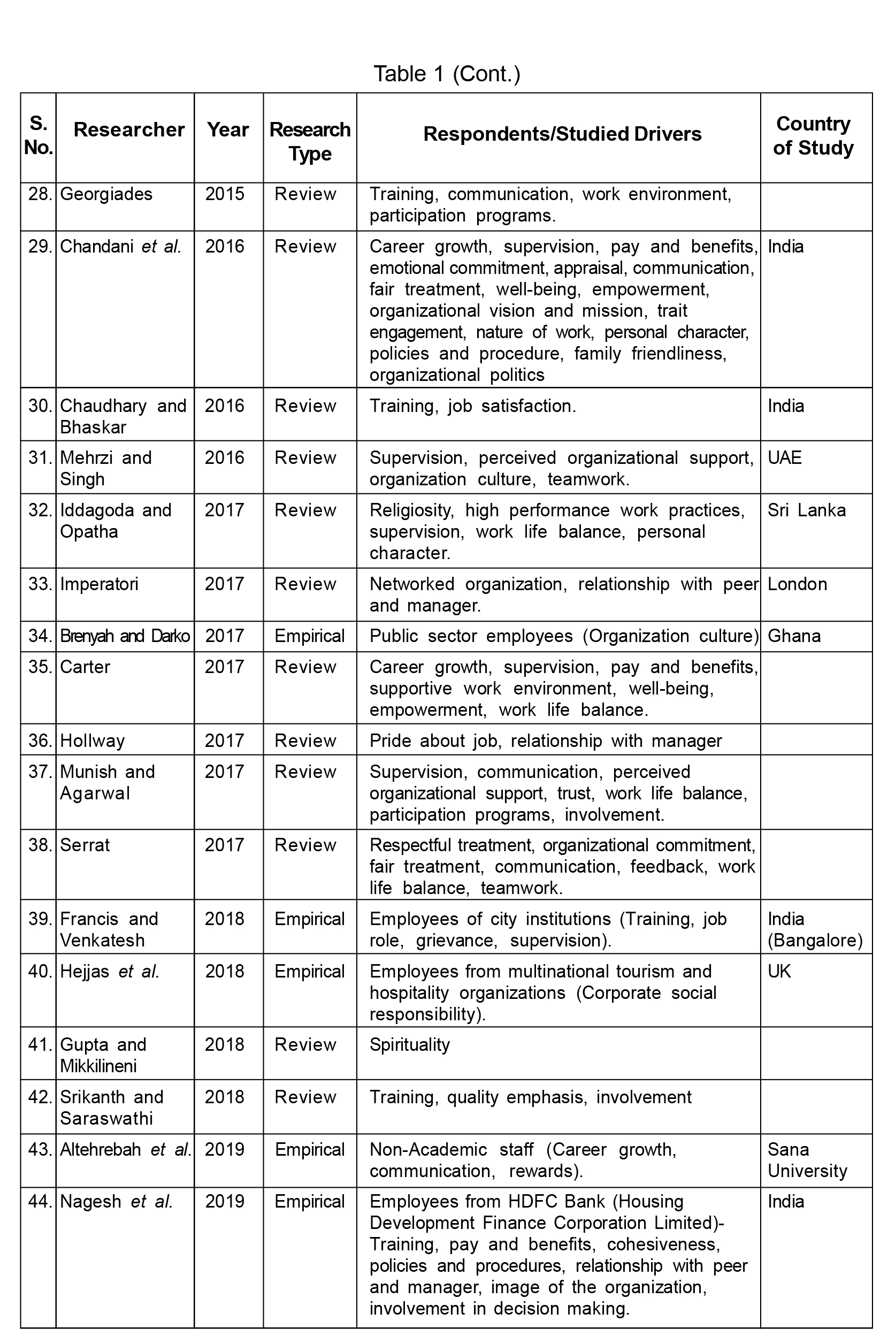
Engagement drivers help foster employee engagement at the workplace. If one just follows a chronological order, one can see that different researchers have given different dimensions to employee engagement over the years. Porter et al. (1974) conducted a study on 60 newly employed technician trainees and the findings revealed a significant relationship between employee attitude, turnover rate, and organizational commitment. The psychological experience of work drives the behaviors of both individuals and groups (Kahn, 1990; and Kular et al., 2008). Superiors need to understand the level of engagement and engagement interventions for wiser decisions (Seijts and Crim, 2006; and Storey
et al., 2009). Intensive communication with staff members and unions is very important for firms (Purcell, 2009). A good framework of engagement interventions can lead to increased profits and employee satisfaction (Sundaray, 2011). Driving forces require continuous efforts on the part of leaders as well as individuals (Carnegie, 2012; and Richard and Mark, 2015). Mehrzi and Singh (2016) conducted a study in the United Arab Emirates (UAE) on public sector employees, and it was found that teamwork, leadership, organizational support, and culture are connected with engagement. Handy's framework for culture reveals a connection between employee engagement and workplace culture in public sector organizations in Ghana in Africa (Brenyah and Darko, 2017). So, there is a need for identifying whether there was a shift in the engagement drivers and whether new dimensions emerged.
Objective
The main objectives of this study are:
- To offer a descriptive, analytical view of employee engagement drivers at workplace.
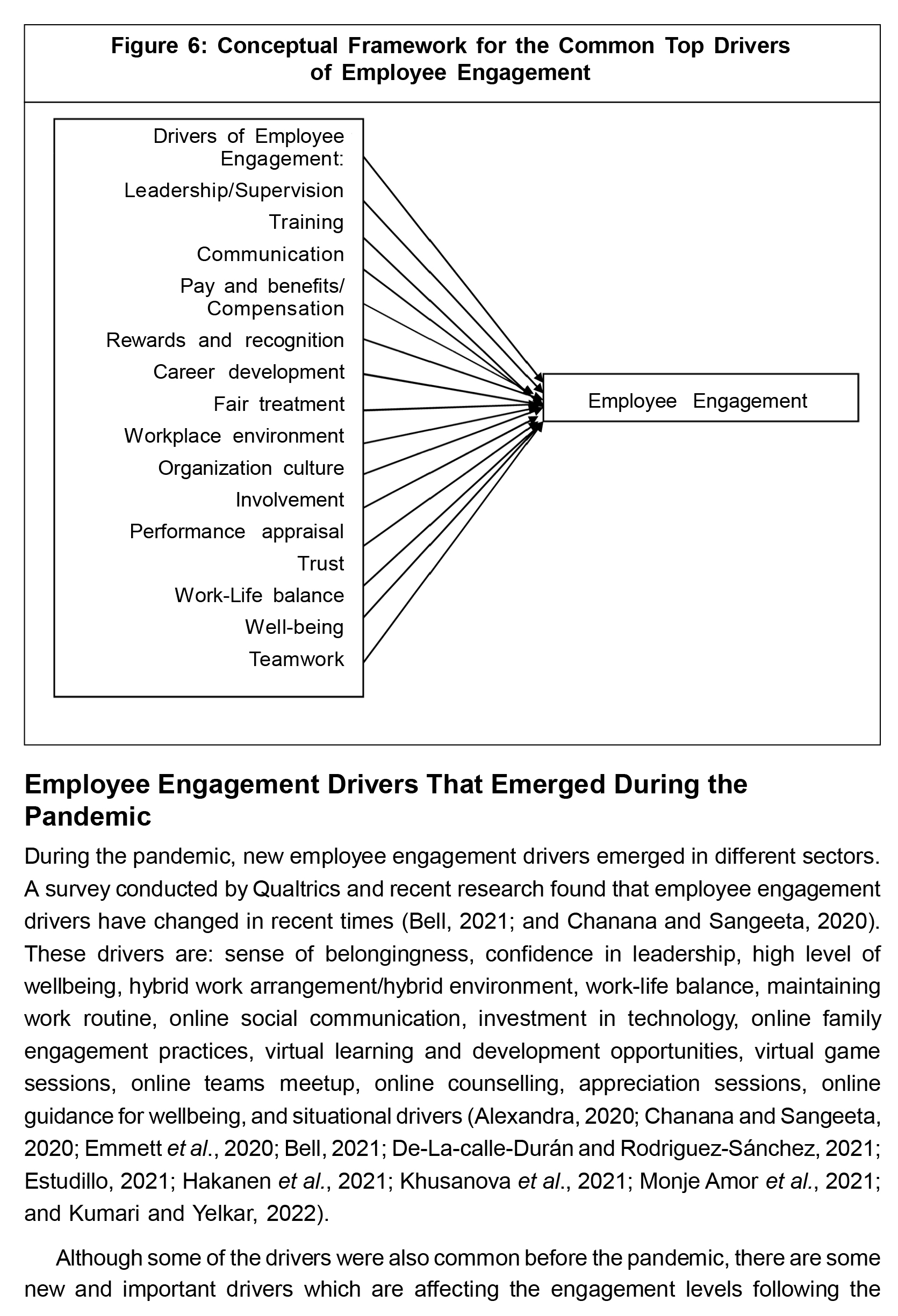
- To propose a conceptual framework based on the review of literature for the important key drivers of employee engagement.
- To study the shift in the engagement drivers after the emergence of Covid-19.
Data and Methodology
The paper gathered the necessary information with the help of 53 research publications for a better understanding of the engagement drivers. Databases such as Web of Science, EBSCO, and ProQuest were used for the purpose.
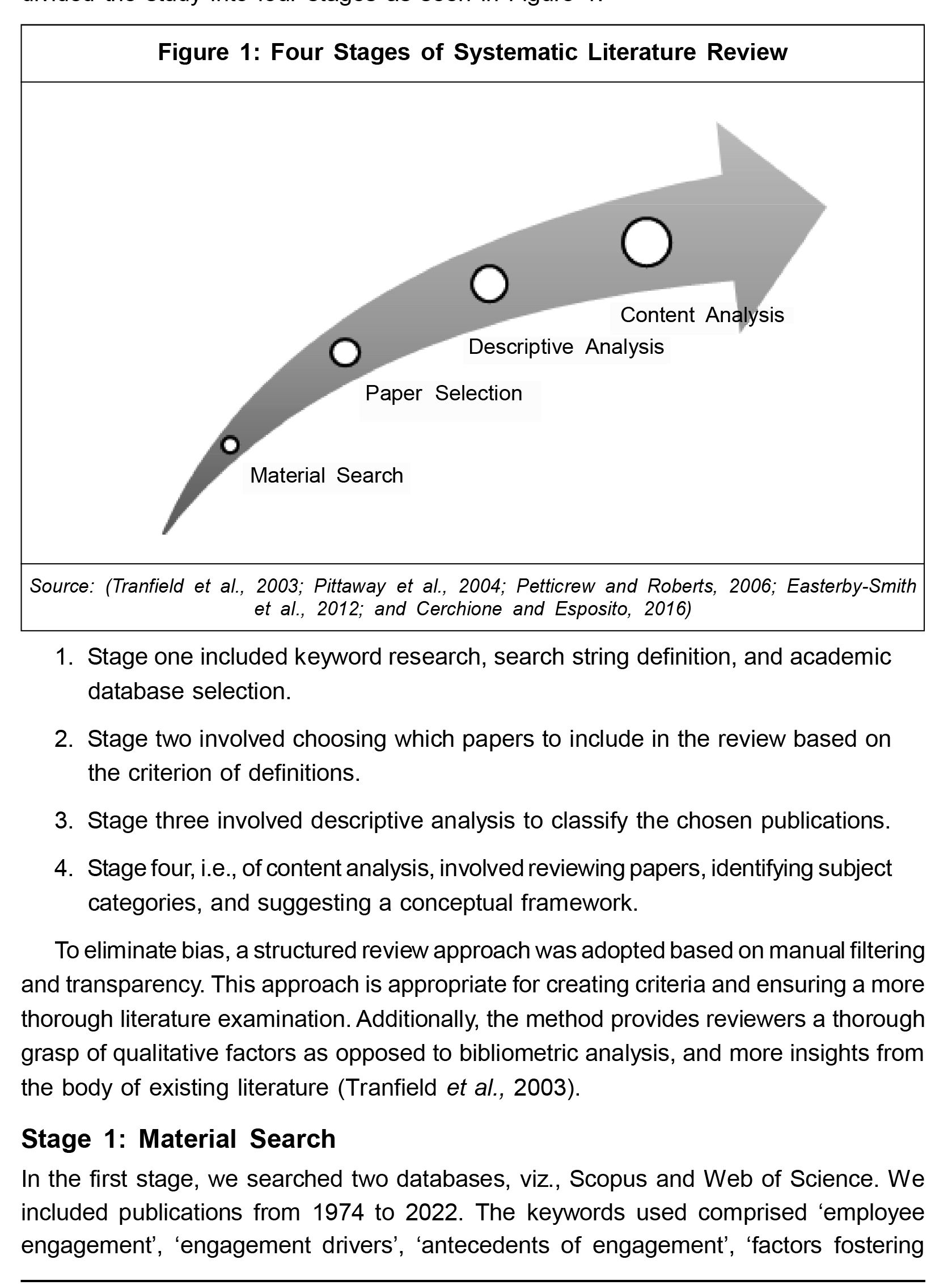
The authors attempted a structured evaluation of the literature addressing several facets of employee engagement. The study achieved this by employing the approach recommended by Cerchione and Esposito (2016), which demonstrates how to carry out a structured literature review. The method of Cerchione and Esposito (2016) for conducting a systematic literature review does, in fact, include the contributions of Easterby-Smith et al. (2012), Petticrew and Roberts (2006) and Pittaway et al. (2004). As a result, we divided the study into four stages as seen in Figure 1:
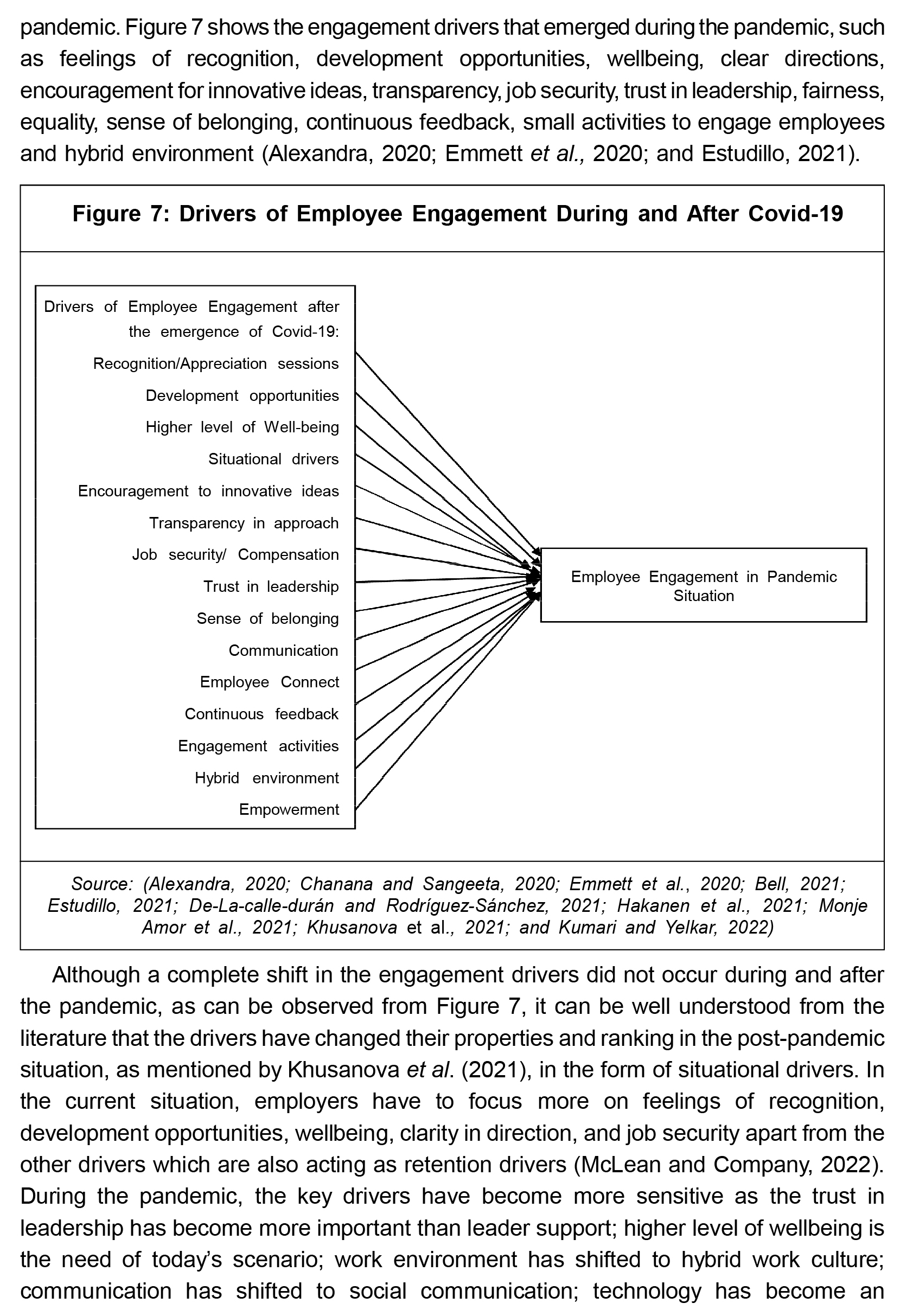
lack of flow of complete information are some of the major stumbling blocks in the way of engagement (Mehrzi and Singh, 2016). Health factors, the capability of the person to work, sociocultural factors, and organizational culture have a great impact on engagement levels (Kular et al., 2008). The unpredictability of socioeconomic scenarios, changing demographics, unpredictable employee behavior, work fatigue, burnout, aging of the employees, and employee diversity in the context of age, gender, or culture act as barriers in engaging employees in any organization (Imperatori, 2017). Reactive decision making, lack of transparency in messages, inappropriate management styles, a wrong channel of communication, long working hours, and low trust levels also act as hurdles in employee engagement (Serrat, 2017).
During the Pandemic (2019-21)
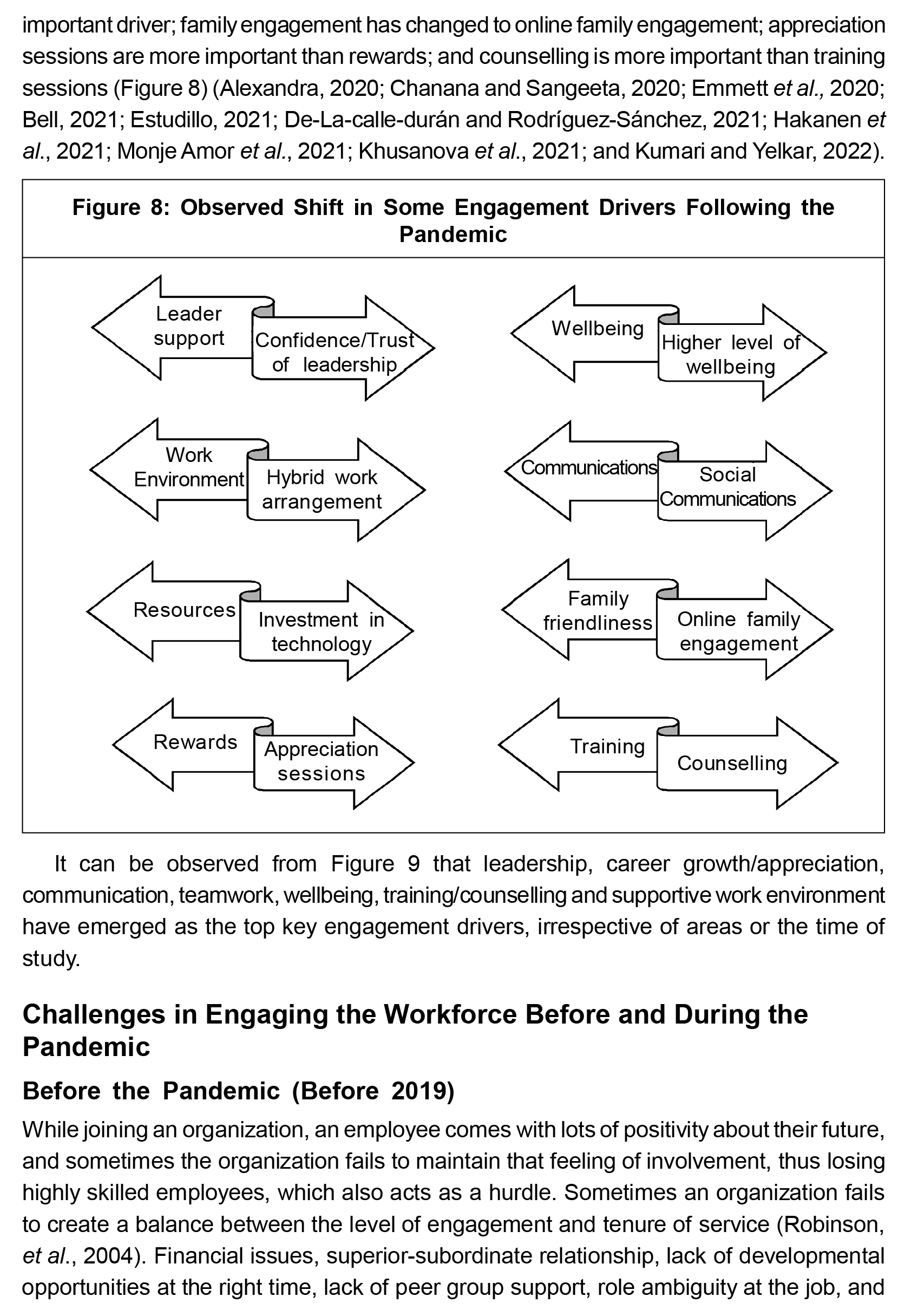
The Covid-19 outbreak has almost shut down the industries globally for a while, leading to underemployment or unemployment. The managements in most of the sectors felt that the employees were not fully engaged as they were working from home and could not be supervised as compared to the situation before the pandemic when everything was normal. But can one say that employees working from home are not facing any challenges or they do not deserve increments or promotions (Rubeena and Naz, 2020). A recent survey in the US shows that 73% of the employees believe that they are more efficient while working from home (Guttmann, 2021). In a survey on 1100 US employees, 38% found themselves exhausted after the full week virtual meetings, while 30% found that they are stressed out which is a matter of concern. A study by Twingate and Doodle in 2020 on US employees also revealed that 40% of employees faced mental stress and exhaustion due to video calls; 10% faced system hacking while working online; 59% felt more secure in accessing the Internet from office; and 52% believed that due to noise disruptions during online meetings, they lost their focus and engagement (Robinson, 2020). On comparing the engagement drivers in Figure 8, one can clearly understand how the engagement drivers have suddenly transformed due to the pandemic situation as well as online mode of work, as it is easier to engage the employees when they are physically present at the workplace, as compared to virtual mode.
Conclusion
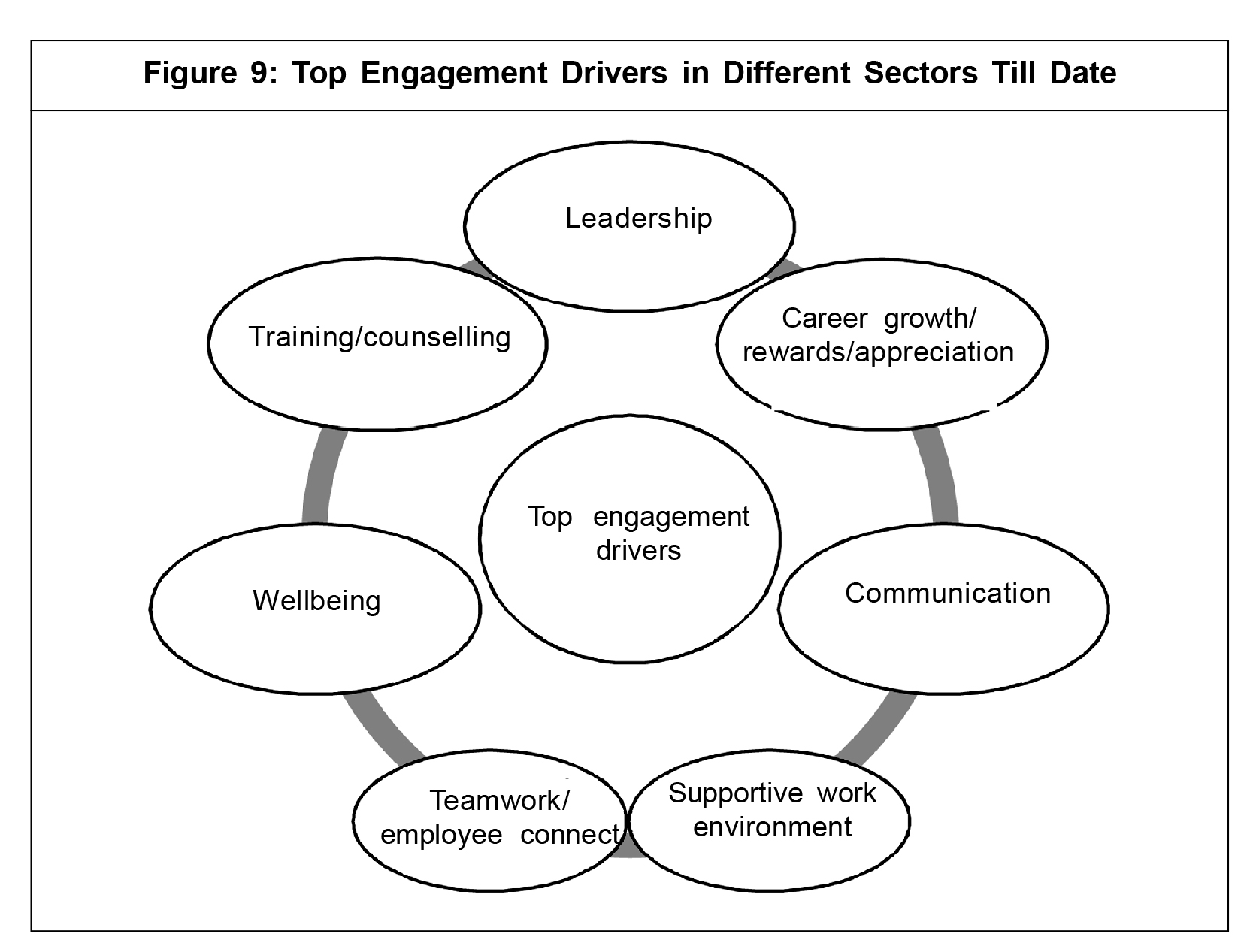
The findings of the study have a number of real-world implications for managers and their businesses, as the findings reveal the factors that boost employee engagement, which in turn enhances organizational output. It can be concluded that employee engagement is not only the most important factor for the success and growth of a business organization but also is responsible for different outcomes in different sectors. Organizations must target employee engagement to grow and to get a competitive advantage in the current scenario. The study found that leadership, career growth/appreciation, communication, teamwork, wellbeing, training/counselling and supportive work environment are the most important drivers, which must be kept in mind while dealing with the employees. On the other hand, aging, employee diversity, and improper communication act as barriers to employee engagement. Although the drivers may have changed a bit after the pandemic, the organizations must adopt an empathetic approach towards the employees. Any situation or crisis can be handled with a collaborative approach involving the employees and the employers. The study is the first systematic attempt to review the engagement drivers before and after the pandemic.
Applying real-world data to the suggested conceptual framework would make for an intriguing study topic. To strengthen the proposed framework, it is possible to collect data from various national and international businesses using surveys and structural equation modeling approach. If one or more of the assumptions are proved correct, then useful employee engagement strategies can be framed based on that. Policymakers can then decide on specific policies while keeping in mind the employee engagement drivers. The findings of this study could also have serious implications for regional and national development, particularly in relation to how they may affect employee engagement efforts.
Future Scope: Future research can address many of the limitations of this study. Firstly, to reduce the study gap in the literature pertaining to public and private organizations, future researchers can empirically explore the links between various drivers of engagement according to their importance by adding additional moderators and mediating variables.
Secondly, due to the time and scope constraints, the number of variables chosen from the literature review for this study was limited. So, future researchers can combine the elements to create shorter scales and sub-scales as needed to meet their research needs for factors promoting engagement.
Thirdly, engagement studies can be carried out for less explored samples like academic staff as well as students in higher education sector, social workers, doctors, bankers in both public and private sectors and other service-related professions, as very few studies have been conducted in these areas.
References
- Alexandra (2020), 11 Ways Drive Employee Engagement in a Challenging Period, https://harver.com/blog/drive-employee-engagement/. Accessed on 06-10-2021.
- Alfes K, Truss C, Soane E C, Rees C and Gatenby M (2010), "Creating An Engaged Workforce", CIPD Research Report, Chartered Institute of Personnel and Development.
- Altehrebah S S, Mohammed Yusr M and Gbadebo Salimon M (2019), "Factors Influencing Employee Engagement: A Study of Sana' University", International Journal of Modern Trends in Business Research (IJMTBR), Vol. 2, No. 9, pp. 23-37.
- Anitha J (2014), "Determinants of Employee Engagement & Their Impact on Employee Performance", International Journal of Productivity & Performance Management, Vol. 63, No. 3, pp. 308-323.
- Balakrishnan C and Masthan D (2013), "Impact of internal Communication on Employee Engagement: A Study at Delhi International Airport", International Journal of Scientific & Research Publications, Vol. 3, No. 8, pp. 1-13.
- Bedarkar M and Pandita D (2014), "A Study on the Drivers of Employee Engagement Impacting Employee Performance", Procedia - Social & Behavioral Sciences, Vol. 133, pp. 106-115.
- Bell J (2021), "Employee Engagement Drivers are Shifting Thanks to Hybrid Work", https://www.hcamag.com/nz/specialisation/employee-engagement/employee-engagement-drivers-are-shifting-thanks-to-hybrid work/250238. Accessed on December 15, 2021.
- Bevan S, Barber L and Robinson D (1997), "Keeping the Best: A Practical Guide to Retaining Key Employees, Institute for Employment Studies", Brighton, https://files.eric.ed.gov/fulltext/ED413505.pdf. Accessed on 23-10-2020.
- Brenyah S R and Darko O T (2017), "Organizational Culture & Employee Engagement Within the Ghanaian Public Sector", Review of Public Administration & Management, Vol. 5, p. 233.
- Carnegie D (2012), "What Drives Employee Engagement and Why It Matters?", Dale Carnegie & Associates, pp. 2-6.
- Carter C (2017), "Employee Engagement and Loyalty Statistics", Bureau of Labor Statistics, https://blog.accessperks.com/2017-employee-engagement-loyalty-statistics. Accessed on March 25, 2021.
- Cerchione R and Esposito E (2016), "A Systematic Review of Supply Chain knowledge Management Research: State of the Art and Research Opportunities", International Journal of Production Economics, Vol. 182, No. 1, pp. 276-292.
- Chandani A, Mehta M, Mall A and Khokhar V (2016), "Factors Affecting Employee Engagement", Indian Journal of Science & Technology, Vol. 9, No. 15, pp. 1-8.
- Chanana N and Sangeeta (2020), "Employee Engagement Practices during COVID-19 Lockdown", J Public Affairs, Vol. 21, No. 4, pp. 1-8. https://doi.org/10.1002/pa.2508
- Chaudhary S N and Bhaskar P (2016), "Training and Development and Job Satisfaction in Education Sector", Journal of Resources Development and Management, Vol. 16, No. 1, pp. 42-45.
- Chaudhary S and Kumar A K H (2016), "Drivers of Employee Engagement-A Conceptual Study", International Journal of World Research, Vol. 1, No. 26, pp. 13-19.
- Cheallaigh N O (2015), The Key Drivers of Employee Engagement: A Case Study in an Irish Private Sector Organization.
- Corporate Leadership Council (2004), "Driving Performance and Retention Through Employee Engagement-a Quantitative Analysis of Effective Engagement Strategies", Corporate Executive Board.
- De-La-calle-duran M C and Rodriguez-Sanchez J L (2021), "Employee Engagement and Wellbeing in Times of Covid-19: A Proposal of the 5Cs Model", International Journal of Environmental Research and Public Health, Vol. 18, No. 10, https://doi.org/10.3390/ijerph18105470
- Dicke C, Holwerda Jake and Kontakos M A (2007), "CAHRS, International Survey Research", https://citeseerx.ist.psu.edu/viewdoc/download?doi=10.1.1.460.3251& rep=rep1&type=pdf. Accessed on November 29, 2021.
- Easterby-Smith M, Thorpe R and Jackson P (2012), Management Research, Sage Publications, London.
- Emmett J, Schrah G, Schrimper M and Wood A (2020), "COVID-19 and the Employee Experience", https://www.mckinsey.com/business functions/organization/our-insights/covid-19-and-the-employee-experience-howleaders-can-seize-the-moment#. Accessed on June 06, 2021.
- Estudillo J (2021), "What's Changed When it Comes to Employee Engagement Pre- COVID-19 vs. Today?", https://blog.perceptyx.com/employee-engagement-drivers. Accessed on November 06, 2021.
- Francis R and Venkatesh P V (2018), "An Empirical Study on the Level of Employee Engagement in City Group of Institutions, Bangalore, India", IOSR Journal of Business and Management (IOSR-JBM), Vol. 20, No. 3, pp. 72-80.
- Gallup (2013), "State of the American Workplace: Employee Engagement Insights for US Business Leaders", https://fdocuments.in/document/state-of-the-american-workplace-report-2013-employee-engagement-insights-for-us-business-leaders.html. Accessed on March 22, 2021.
- Garg P (2014), "Impact of Employee Engagement on IT Sector", International Journal of Management Research and Review, Vol. 4, No. 1, pp. 62-72.
- Georgiades S (2015), Employee Engagement and Organizational Change, pp. 9-37, Springer International Publishing.
- Gunasekaran A, Irani Z, Choy K L et al. (2015), "Performance Measures and Metrics in Outsourcing Decisions: A Review for Research and Applications", International Journal of Production Economics, Vol. 161, No. 3, pp. 153-166.
- Gupta M and Mikkilineni S (2018), "Spirituality and Employee Engagement at Work", in S Dhiman, G Roberts and J Crossman (Eds.), The Palgrave Handbook of Workplace Spirituality and Fulfillment, Palgrave Macmillan, Cham, https://doi.org/10.1007/978-3-319-62163-0_20
- Guttmann A (2021), "Covid-19: Working from Home and Work-life Balance of Marketers in the UK in 2020", https://www.statista.com/statistics/1104762/coronavirus-home-office-and-work-life-balance-of-uk-marketers/. Accessed on March 12, 2022.
- Hakanen J J, Bakker A B and Turunen J (2021), "The Relative Importance of Various Job Resources for Work Engagement: A Concurrent and Follow-up Dominance Analysis", BRQ Business Research Quarterly, pp. 1-17, https://doi.org/10.1177/23409444211012419
- Hejjas K, Miller G and Scarle C (2018), "It's Like Hating Puppies! Employee Disengagement and Corporate Social Responsibility", Journal of Business Ethics, pp. 1-19.
- Hester N and Martns N (2014), "An Employee Engagement Instrument and Framework Building on Existing Research", Mediterranean Journal of Social Sciences, pp. 485-496, MCSCR Publishing.
- Hollway II J (2017), "Top Three Drivers of Employee Engagement", https://www.linkedin.com/pulse/top-three-drivers-employee-engagement-john-hollway-ii/. Accessed on 17-02-2021.
- Iddagoda A and Opatha H H D N P (2017), "Identified Research Gaps in Employee Engagement", International Business Research, Canadian Center of Science and Education, pp. 64-73.
- Imperatori B (2017), "Engagement and Disengagement at Work", Springer Briefs in Business, pp. 5-18.
- Kahn W A (1990), "Psychological Conditions of Personal Engagement and Disengagement at Work", Academy of Management Journal, Vol. 33, No. 4, pp. 692-724.
- Khusanova R, Kang S W and Choi S B (2021), "Work Engagement Among Public Employees: Antecedents and Consequences", Frontiers in Psychology, Vol. 12, October, pp. 1-15, https://doi.org/10.3389/fpsyg.2021.684495
- Kular S, Gatenby M, Rees C et al. (2008), "Employee Engagement: A Literature Review", Kingston University, pp. 3-28.
- Kumari S and Yelkar N (2022), "Examining the Factors and Employee Engagement Model Design for a New-Age Hybrid Work Culture", Journal of Strategic Human Resource Management, Vol. 11, No. 1, pp. 11-12.
- McLean & Company (2022), "Engagement in a Hybrid Workplace Relies on Three Key Driver Categories", According to New Employee Engagement Trends Report, https://www.prnewswire.com/news-releases/engagement-in-a-hybrid-workplace-relies-on-three-key-driver-categories-according-to-new-employee-engagement-trends-report-301534270.html
- Mehrzi A N and Singh K S (2016), "Competing Through Employee Engagement: A Proposed Framework", International Journal of Productivity & Performance Management, Vol. 65, No. 6, pp. 831-843.
- Mkheimer I and Mjlae A S (2020), "Factors of Employee Engagement And Organizational Development: Are They Linked?", International Journal of Recent Technology and Engineering (IJRTE), Vol. 8, No. 5, pp. 788-797, https://doi.org/10.35940/ijrte.e5784.018520.
- Monje Amor A, Xanthopoulou D, Calvo N and Abeal Vazquez J P (2021), "Structural Empowerment, Psychological Empowerment and Work Engagement: A Cross-Country Study", European Management Journal, Vol. 39, No. 6, pp. 779-789, https://doi.org/10.1016/j.emj.2021.01.005
- Munish and Agarwal R (2017), "Employee Engagement & Retention: A Review of Literature", International Journal of Bric Business Research, Vol. 6, No. 1, pp. 1-19.
- Nagesh P, Kulenur S and Shett P (2019), "The Study on Factors Affecting Employee Engagement", International Journal of Engineering Research & Technology (IJERT), Vol. 8, No. 6, pp. 426-430.
- Nongo S E and Ikyanyon N D (2012), "The Influence of Corporate Culture on Employee Commitment to the Organization", International Journal of Business & Management, Vol. 7, No. 22, pp. 21-28.
- Othman R B, Rapi R B M, Alias N E B et al. (2019), "Factors Affecting Employee Engagement: A Study Among Employees in The Malaysian Construction Industry", International Journal of Academic Research in Business and Social Sciences, Vol. 9, No. 7, pp. 784-797.
- Parent J D and Lovelace K J (2015), "The Impact of Employee Engagement and a Positive Organizational Culture on an Individual's Ability to Adapt to Organization Change", Eastern Academy of Management Proceedings: Organization Behavior and Theory Track, Vol. 1, No. 1, pp. 1-20.
- Petticrew M and Roberts H (2006), Systematic Reviews in the Social Sciences, Blackwell Publishing, Malden, MA.
- Pittaway L, Robertson R, Munir K et al. (2004), "Networking and Innovation: A Systematic Review of the Evidence", International Journal of Management Reviews, Vol. 5, No. 3, pp. 137-168.
- Porter L W, Steers R, Mowday R and Boulian P (1974), "Organizational Commitment: Job Satisfaction and Turnover Amongst Psychiatric Technicians", Journal of Applied Psychology, Vol. 59, No. 1, pp. 603-609.
- Purcell J (2009), "Maintaining Employee Engagement in Difficult Times", Employee Engagement Summit.
- Rawat P A and Dadas A B (1990), "A Study of Employee Engagement Models To Build New Business Approaches", Human Resource Management, Vol. 1, No. 1, pp. 98-107.
- Richard S W and Mark P (2015), "Employee Engagement: The Key to Realizing Competitive Advantage", Development Dimensions International, Vol. 1, No. 1,pp. 1-24.
- Robinson B (2020), Is Working Rmote a Blessing or Burden? Weighing the pros and Cons, available at: https://www.forbes.com/sites/bryanrobinson/2020/06/19/is-working-remote-a-blessing-or-burden-weighing-the-pros-and cons/?sh=61a38d7540a9.
- Robinson D, Perryman S and Hayday S (2004), "The Drivers of Employee Engagement", IES report Published by Institute of Employment Studies, University of Sussex Campus, pp. 1-87.
- Rubeena S and Naz R (2020), "Impact of COVID-19 on Employee Engagement in 2020", Journal of Management Research and Analysis, Vol. 7, No. 4, pp. 137-141.
- Saks M A (2006), "Antecedents and Consequences of Employee Engagement", Journal of Managerial Psychology, Vol. 21, No. 7, pp. 600-619.
- Seijts H G and Crim D (2006), "What Engages Employees The Most Or, The Ten C's of Employee Engagement", IVEY Business Journal, Vol. 70, No. 4, pp. 1-7.
- Serrat O (2017), Engaging Staff in the Workplace: In Knowledge Solutions, pp. 437-445, Springer, Singapore.
- Siddhanta A and Roy D (2010), "Employee Engagement Engaging the 21st-century Workforce", Asian Journal of Management Research, Vol. 1, No. 1, pp. 170-189.
- Soni S B (2013), "Employee Engagement - A Key to Organizational Success in 21st Century", Voice of Research, Vol. 1, No. 4, pp. 51-55.
- Srikanth C P and Saraswathi A B (2018), "Employee Engagement as a Driver for the Organizational Performance", International Journal of Core Engineering and Management, Vol. 5, No. 3, pp. 1-10.
- Storey J, Ulrich D, Welbourne M T and Wright M P (2009), The Routledge Companion to Strategic Human Resource Management, Vol. 1, Routledge, https://doi.org/10.4324/9780203889015
- Sundaray K B (2011), "Employee Engagement: A Driver of Organizational Effectiveness", European Journal of Business and Management, Vol. 3, No. 8, pp. 53-59.
- Tranfield D, Denyer D and Smart P (2003), "Towards a Methodology for Developing Evidence- Informed Management Knowledge by Means of Systematic Revie", British Journal of Management, Vol. 14, No. 3, pp. 207-222.
- Vance R J (2006), "Employee Engagement and Commitment: A Guide to Understanding, Measuring and Increasing Engagement in Your Organization", In SHRM Foundation's Effective Practice Guidelines, Vol. 1, No. 1, pp. 1-45, https://www.shrm.org/hr-today/trends-and-forecasting/special-reports-and-expert views/Documents/Employee-Engagement-Commitment.pdf
- Welbourne T M and Schlachter S (2014), "Engaged in What? Role Theory Perspectives for Enhancing Employee Engagement Research and Practice", Academy of Management Proceedings, Vol. 1, No. 1, pp 1-40. DOI:10.5465/AMBPP.2014.14033abstract
- Wellins R S, Bernthal P and Phelps M (2015), "Employee Engagement: The Key to Realizing Competitive Advantage", In Development Dimensions International, Inc., Vol. 1, No. 1, 1-23, www.ddiworld.com/employee-engagement