October'23
The IUP Journal of Organizational Behavior
Archives
Impact of Green Variables on Employee Behavior in Indian Green Hotels: An SEM Study Using S-O-R Framework
Samrat Bharadwaj
Assistant Professor, Department of Commerce, Digboi College, Assam, India; and is the corresponding author. E-mail: samratbharadwaj23@gmail.com
Raktutpal Baruah
Executive Trainee - Finance & Accounts, Seven Sisters Development Assistance (SeSTA), Assam, India. E-mail: raktutpalbaruah1122@gmail.com
The Covid-19 pandemic has heightened tourists' environmental awareness resulting in a desire for green hotels. Existing literature has extensively examined tourists' attitudes and behaviors towards green hotels, but there is a scarcity of research on employees' perceptions of these accommodations. The study investigates the determinants of green behavior among 220 green hotel employees from India using an established behavioral theory called Stimulus-Organism-Response (S-O-R). Structural equation modeling and related statistical techniques are employed to analyze the data gathered from a structured survey. The primary findings indicate that green purchases largely impact normative objectives, implying inadequate significance. Green product and process innovations have a significant impact on employees' green workplace behavior by influencing their hedonic, gain, and normative goals. The study examines human resource management sustainability in Indian hospitality and tourism sectors.
Introduction
Tourism is one of the most rapidly developing sectors. According to Merli et al. (2019), tourism accounts for 10.4% of global GDP. According to Jaipuria et al. (2020), 10.8 million foreign tourists visited India in 2019, producing $29.9 bn in foreign revenue. According to FICCI (2020), India ranks seventh in gross direct travel contribution with $108 bn.
Dwivedi et al. (2022) stated that the Covid-19 pandemic has affected various commercial sectors, particularly the hospitality industry. According to Liew (2022), Covid-19 has caused a significant decline in tourism. Green hotels are preferred due to increased environmental concerns, brand trust, and Covid-19 anxiety (Jian et al., 2020). Wang (2020) reported that the global hospitality industry has launched various green hotel projects to promote sustainability. According to Lepananon (2022), travelers who value environmental stewardship prefer hotels that employ sustainable practices. Green hotels are growing as the tourism industry pursues sustainable development and environmental conservation (Demir et al., 2021). Zhang et al. (2019) defined "green behavior" as acts that follow an organization's environmental plan. In today's dynamic organizational context, employees' environmentally responsible behavior is vital to the organization's longevity, expansion and competitive advantage (Hameed et al., 2022). Hospitality and tourism are under psychological stress to innovate. Minh-Duc and Huu-Lam (2019) found that innovative thinking motivates frontline hospitality personnel. Sustainable inventions also inspire eco-friendly creativity. Green policy communication done well can promote environmental consciousness among hospitality employees (Li et al., 2020; and Bhutto et al., 2021).
A comprehensive literature review found no studies on green hotel human resources, presenting a considerable vacuum. It found no Indian green hotel studies, indicating a critical need for more research. The first study of its sort uses Stimulus-Organism-Response (S-O-R) theory to explore Indian tourism and hospitality employees' sustainability viewpoints. Moreover, no research has been conducted previously connecting the two applied theories, which significantly expands the existing corpus of literature. This study is unique since S-O-R, one of the most renowned consumer behavior theories, has never been assessed and validated in HRM and sustainable tourism sector. Green product and process innovation significantly affect hedonic goals, gain goals and normative goals which in turn affects employee green behavior, as shown by structural equation modeling of 220 green hotel employees in India. It is, however, vital to note that green purchases are found only to affect employees' normative aspirations.
Literature Review
Green Hotels
According to Al-Gharibah and Joma (2022), the hospitality industry has become a major economic engine in many nations. This industry's growth has raised awareness of the need to go green, raising disputes over environmental issues and green hotel guests' higher expenditures. Green hotels are debated and defined differently by authors. The Association of Southeast Asian Nations (2016) defined green hotels as those that use energy-saving methods throughout. These hotels use environment-friendly techniques to reduce pollution and improve their reputation (Eid et al., 2020). Green hospitality methods minimize water, energy, non-durable products, fuel emissions, oil, and soil contamination (Patwary et al., 2022). As the tourism and hotel industry uses a significant number of resources and energy, which has a negative impact on the environment (Aman et al., 2021), they must adopt green initiatives like green HRM for sustaining a competitive leverage in the hospitality industry (Wang et al., 2023). The Indian Green Building Council has registered over 687 projects in India, which is a developing tourist destination (Amandeep, 2017).
Stimuli-Organism-Response Theory
Mehrabian and Russell (1974) proposed the S-O-R theory for the first time in the literature of environmental psychology. The model addresses multiple environmental factors that serve as Stimuli (S), which interact with people's internal states, i.e., Organism (O), and ultimately cause a behavioral Response (R) in them (Cheng et al., 2020). This approach has been extensively used and assessed in a variety of situations, including the field of tourism (Kim et al., 2020; and Chen et al., 2022).
Stimulus (S) refers to any external environmental factor (Zhang et al., 2021). Regarding the tourism sector, Chen et al. (2022) used the S-O-R framework to identify perceived destination features as a stimulus and verified its impact on travelers' emotional and general satisfaction. In addition, they determined the significance of the effect of tourists' perceptions of marketing strategies and tourists' motivation as stimuli for their intention to return. In a different study, natural soundscapes captured in nature (wind, waterfalls, bird calls, etc.) were found to be 'Stimuli' that affect visitors' travel intentions and behavioral responses (Jiang, 2020).
As the intermediate component of the S-O-R paradigm, 'Organism' is defined as the individual's emotional and behavioral state following the introduction of 'Stimulus' (Zimmerman, 2012). Mehrabian and Russell (1974) asserted that it serves as an internal mechanism that connects the stimulus and the reaction. Chen et al. (2022) included memorable tourism experiences, visitor emotions, and overall satisfaction as variables for the 'Organism' construct in the context of tourism. In addition, pleasure and arousal were identified as variables that influence visitors' behavioral intentions (Jiang, 2020). In contrast, Kim et al. (2020) proposed cognitive response and affective response as mediating factors when investigating tourist behavior in reference to virtual reality tourism. In addition, tourist satisfaction and positive emotions have been identified as 'Organism' variables that assess tourists' intentions to return (Cheng et al., 2020).
'Response' in the S-O-R paradigm refers to the organism's ultimate action/reaction in response to an external stimulus (Zhang et al., 2021). While Chen et al. (2022) found revisit intentions to be a key 'Response' variable around tourism, Min et al. (2020) found identical results in the setting of musical perceptions. When Kim et al. (2020) investigated the variable in the context of virtual reality tourism, they reached similar outcomes.
Influence of Green Purchases on Hedonic, Gain and Normative Goals
Green purchases refer to the process of buying recyclable commodities that result in energy conservation (Ogiemwonyi and Amran, 2020). Green products include jute bags, battery-powered vehicles, natural soaps, environment-friendly paper, energy-saving technology, organic food, and other sustainable items (Iqbal et al., 2023). Green purchases have been shown to significantly raise people's propensity to buy green products as well as their level of satisfaction (Abrar et al., 2021; and Iqbal et al., 2023). Furthermore, people with higher levels of green self-efficacy are more likely to attain higher levels of sustainable performance through investments, optimistic thinking, and self-control (Zhang et al., 2020). HRM experts came to similar results when they found that advances in the garment industry and green purchasing have a significant positive influence on worker performance (Abbas et al., 2020). Shah and Bahadur (2023) found a favorable association between green innovations and employee concern for green involvement. Green purchasing has also been shown to improve a company's overall performance as well as the environment in which it operates (Suswadi et al., 2022). Elsaman and Rommel (2021) claimed that environment-friendly items such as engine oils tend to produce fewer harmful emissions, which instills in people a sense of responsibility for the environment.
The literature review suggests that green purchases significantly influence hedonism, gain and normative aspects within an individual.
Influence of Green Products Innovation on Hedonic, Gain and Normative Goals
Green practice innovation has a favorable impact on green product innovation (Xie et al., 2019; and Wang et al., 2021). Shaikh (2019) claimed that using ecological products by individuals boosts their degree of enjoyment. This fosters the inner delight that comes from utilizing more environment-friendly products. Qiu et al. (2020) asserted that companies need to aggressively encourage the development of environment-friendly and employee satisfaction standards-compliant green products. Taking appropriate steps to produce environment-friendly items can stimulate creativity. This may boost the company's problem-solving mindset as well as staff competitiveness (Awan et al., 2019).
According to Ozsungur et al. (2020), companies that adopt new green product innovations and concepts have a major positive impact on workplace belongingness. The impression of great career opportunities associated with the adoption of a green work culture in the future may be responsible for the influence of workplace belongingness (Ozsungur et al., 2020). According to Gill et al. (2021), the company's green product innovations encourage employees to act in a way that aligns with their core beliefs and promotes environmental consciousness to advance the business's green goals. According to Sun and Sung (2022), green enterprises need to develop a sustainable strategy by promoting the purchasing of green products and connecting this behavior to moral, ecologically responsible consumption.
The literature review reveals that green product innovation significantly influences aspects like commitment, belongingness, positivity, pleasure, responsibility and so on within an individual.
Influence of Green Process Innovations on Hedonic, Gain and Normative Goals
Green process innovations are manufacturing strategies that use resources and manage pollution within environmental constraints (Bhatia, 2021). According to Chen (2008), businesses tend to improve their production processes by consuming less energy and emitting fewer pollutants. According to Wang et al. (2021), green process improvements could significantly contribute to economic growth. Green process innovations such as green environmental practices also foster the development of a positive employee work culture (Shahriari et al., 2023). Gaining mental and emotional wellbeing through green process innovations is a prevalent lifestyle philosophy in the hospitality industry which increases hotel staff performance by increasing their satisfaction over time (Yu
et al., 2020). Shahriari et al. (2023) discovered that a company that fosters green process innovations such as the adoption of an eco-friendly workplace, reduces employee tension and boosts job satisfaction. Similarly, employees in the IT industry were content with the implementation of green process innovations in their organization (Singh and Vikas, 2020). According to Paille et al. (2018), implementing a green approach to sustainability can boost employee commitment. In addition, hotel workers' satisfaction with green processes has increased in terms of salary, physical health, and work hours (Xess
et al., 2021). The sense of identity and belonging of employees has increased in organizations that promote environment-friendly practices (Ribeiro et al., 2022). Proper green HRM can increase a company's sense of affiliation, which can aid it in challenging times and reduce employee turnover (Fahim et al., 2019). Usman et al. (2023) found that companies can gain a competitive edge and foster a sense of employee belonging by investing in and implementing green training programs. According to Fahim et al. (2019) and Biswas et al. (2021), cultivating employee belongingness improves the green innovation process within the framework of HRM. In the context of HRM, research suggests that encouraging employee belongingness improves green innovation process
(Fahim et al., 2019; and Biswas et al., 2021). Green HRM methods boost organizational commitment (Jyoti, 2019). It also improves hotel enterprises' environmental performance by encouraging environmentally conscious conduct and increasing staff loyalty (Kim
et al., 2019). Sharma et al. (2021) discovered that staff engagement positively improves green performance in a second study. Ly (2023) asserted that to motivate employees to engage in environmentally conscious behavior, corporate commitment and green HRM are critical. In addition, the implementation of green process innovation may increase employee awareness and commitment (Sharma et al., 2021). Adopting green environment processes in the organization has increased the significance of individual qualities and the spirituality of employees (Usman et al., 2023).
The literature review proposes that green process innovation has a substantial influence on an individual's altruistic and egoistic urges.
Influence of Hedonic, Gain and Normative Goals on Employees' Green Behavior
Employees that actively work to reduce their income-seeking motivations and take steps to improve their environmental behavior are exhibiting green employee behavior (Roscoe et al., 2019). Prior research has demonstrated that implementing green innovation increases employee commitment which increases their environmental consciousness (Sharma et al., 2021; and Abdou et al., 2022). Green hotels should conduct green educational and training events that encourage employees to be proud of their affiliation with a green hotel and to enhance their level of commitment, thus empowering staff to exhibit green behavior (Kim et al., 2019). Ribeiro et al. (2022) suggested that green HRM methods may have a greater influence on individuals' green behavior when employees feel emotionally attached to the firm. Furthermore, Meng et al. (2023) indicated that employees are more likely to establish and promote green behavior if their employers exhibit positive organizational citizenship behavior.
Green practices tend to enhance workers' abilities and motivation. Improving the work environment also contributes to the company's ability to operate more sustainably
(Yu et al., 2020). According to Yu et al. (2020), a green workplace in the hospitality industry satisfies a person's hedonic goals by reducing employee fatigue and so boosting the organization's trust in its working environment. Usman et al. (2023), in a similar vein, found that organizations that adopt green training develop a good perception of their features and achieve similar aims for their employees. Kim et al. (2019) found that adopting green practices leads to achievement of gain goals, which in turn enhances the level of engagement among employees, boosting their engagement in green behavior and improving the organizational work culture. Furthermore, Gill et al. (2021) stated that using green practices supports employees' normative goals by instilling care for the environment, thus fostering the growth of green habits. Environmentally concerned customers are more inclined to stay in green hotels that offer green services and promote sustainable workplace practices (Park and Eungoo, 2022).
The literature review indicates that hedonic, gain and normative goals have influenced people's behavior at various levels, including hedonic, gain, and normative. It is also clear that implementing green practices in the workplace fosters green employee behavior.
Hypothesis Formulation
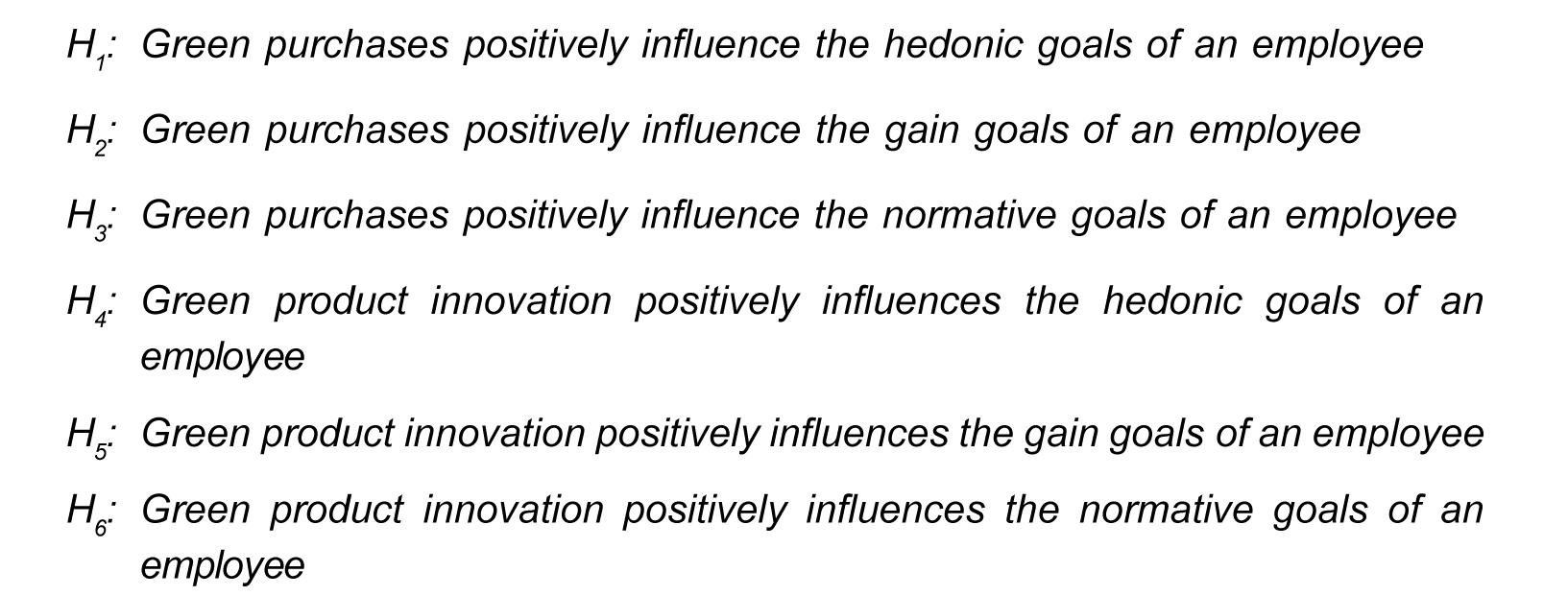
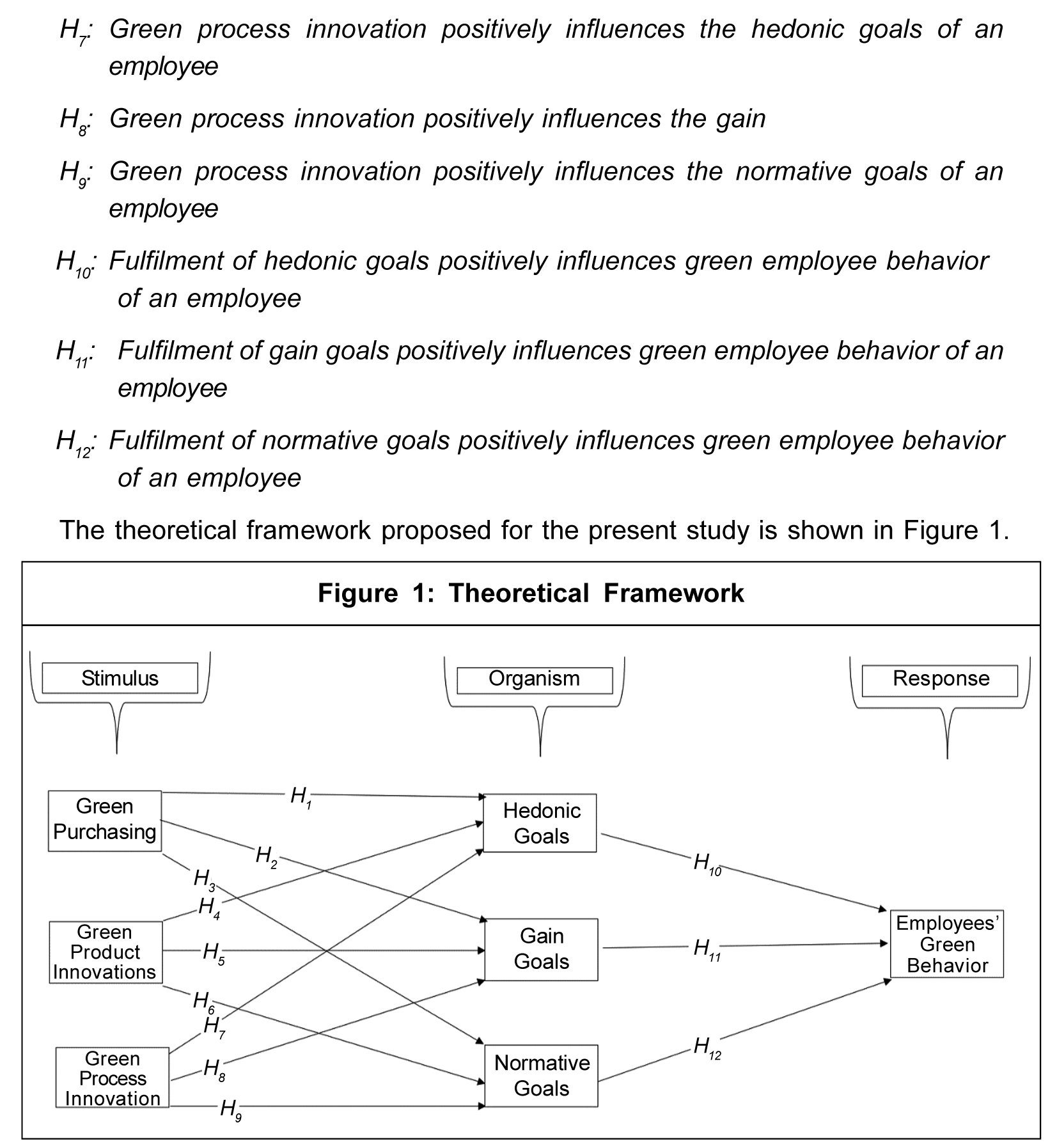
Based on the literature review, the following hypotheses are formulated.
Data and Methodology
A quantitative cross-sectional research design was used for the study. G*Power software was used to do an a priori power analysis to determine an ideal sample size for the investigation. The test produced a minimal sample size of 199 with the goal to achieve a power of 0.95 at a significance level of 0.05 and a medium effect size (Cohen's f = 0.15) for a repeated measures linear multiple regression design. However, due to methodological requirements, the study included 220 employees from ten famous Indian green hotels in Assam, Gujarat, Goa, Karnataka, Ladakh, Madhya Pradesh, New Delhi, Puducherry, Rajasthan, and Uttarakhand, which exceeds the minimum requirement, thereby ensuring the robustness and generalization of the findings. The locations were chosen based on the recommendations of Sabharwal (2019) and Modi (2023). The employees chosen for the study were sustainability managers whose primary duty was to create and execute sustainable initiatives across the hotel like waste management initiatives, eco-friendly procurement practices, and the conservation of electricity and water. A field investigator was assigned to each contact point and paid ₹5/- for each questionnaire retrieved within fourteen days. Each field investigator visited 22 hotels and interviewed 22 possible respondents using a structured questionnaire (Appendix 1). The period of the study ranged for four months starting from May 29, 2023 to September 29, 2023.
The two portions of the questionnaire included both open-ended and closed-ended questions. The first segment addressed the demographics and eligibility of respondents. The second component used a Likert scale ranging from 1 (Strongly Disagree) to 5 (Strongly Agree) to evaluate employee green behavior elements. Using recognized measuring instruments, the research variables for this study were selected (for review, see Yang et al., 2020; Tang et al., 2020; Chiou et al., 2011; Kam-Sing Wong, 2012; Amores-Salvado et al., 2014; Su and Scott, 2019; and Fawehinmi et al., 2022). However, the verbiage was changed to fit the purpose of the study.
The initial survey contained 48 questions. Its validity was evaluated by four psychology and HRM specialists from two prestigious universities in India. Based on their findings, each expert thoroughly reviewed the questionnaire and excluded ten ambiguous and four misleading questions (Appendix 2). The total number of measurement items was reduced to 34 as a result.
Results
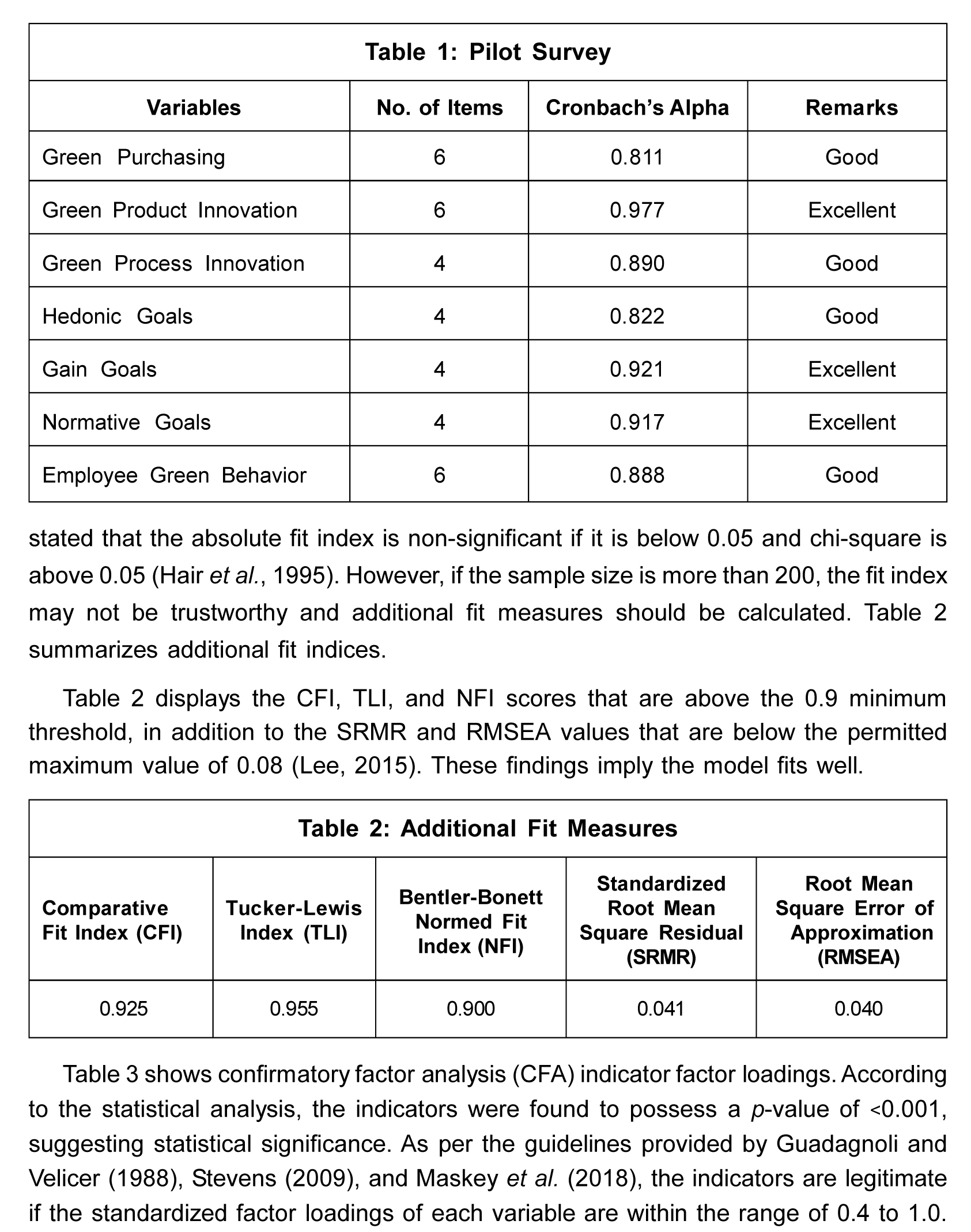
Preliminary research with 30 green hotel employees assessed the questionnaire's accuracy and dependability. According to Nunnally (1978), Wells and Wollack (2003) and Lehman and Norm (2005), Cronbach's alpha must be greater than or equal to 0.70. The range of measured Cronbach's Alpha values was between 0.82 and 0.97, which satisfies this requirement. The results of reliability tests are displayed in Table 1.
SEM is a powerful tool for studying complex and multiple constructs, particularly in psychological studies (Bharadwaj and Susmita, 2021; and Bharadwaj, 2022). Bharadwaj and Susmita (2021) employed Kaiser-Meyer-Olkin (KMO) analysis to assess the data's eligibility for factor analysis and the sampling of the suggested model.
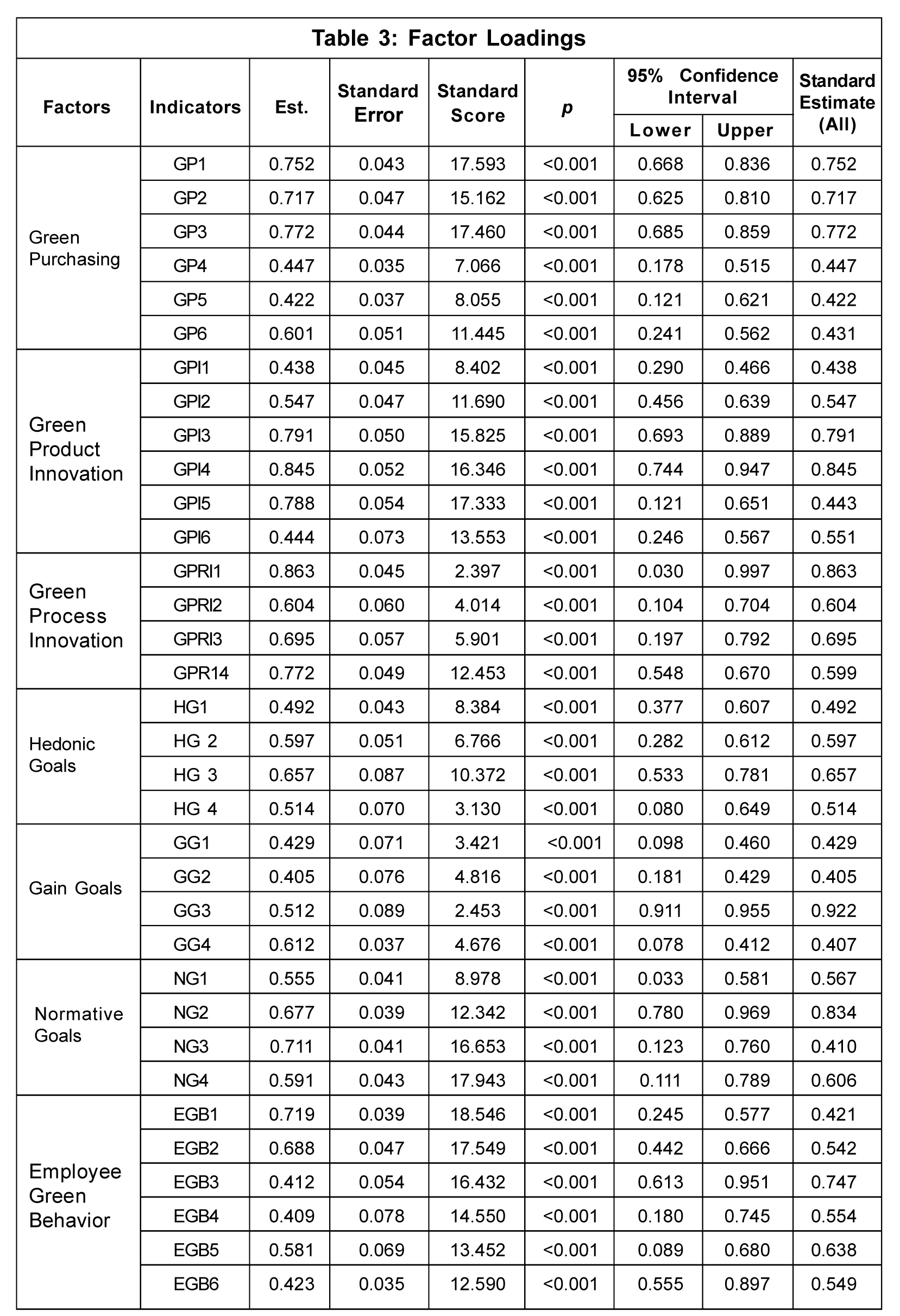
Kaiser and Rice (1974) classified the KMO scale as 'Meritorious' with a score of 0.817. Next, CFA assessed the model's latent components' measurement quality. The factor model's chi-square test yielded 617.233 with a p-value of 0.001. Meyers et al. (2005)
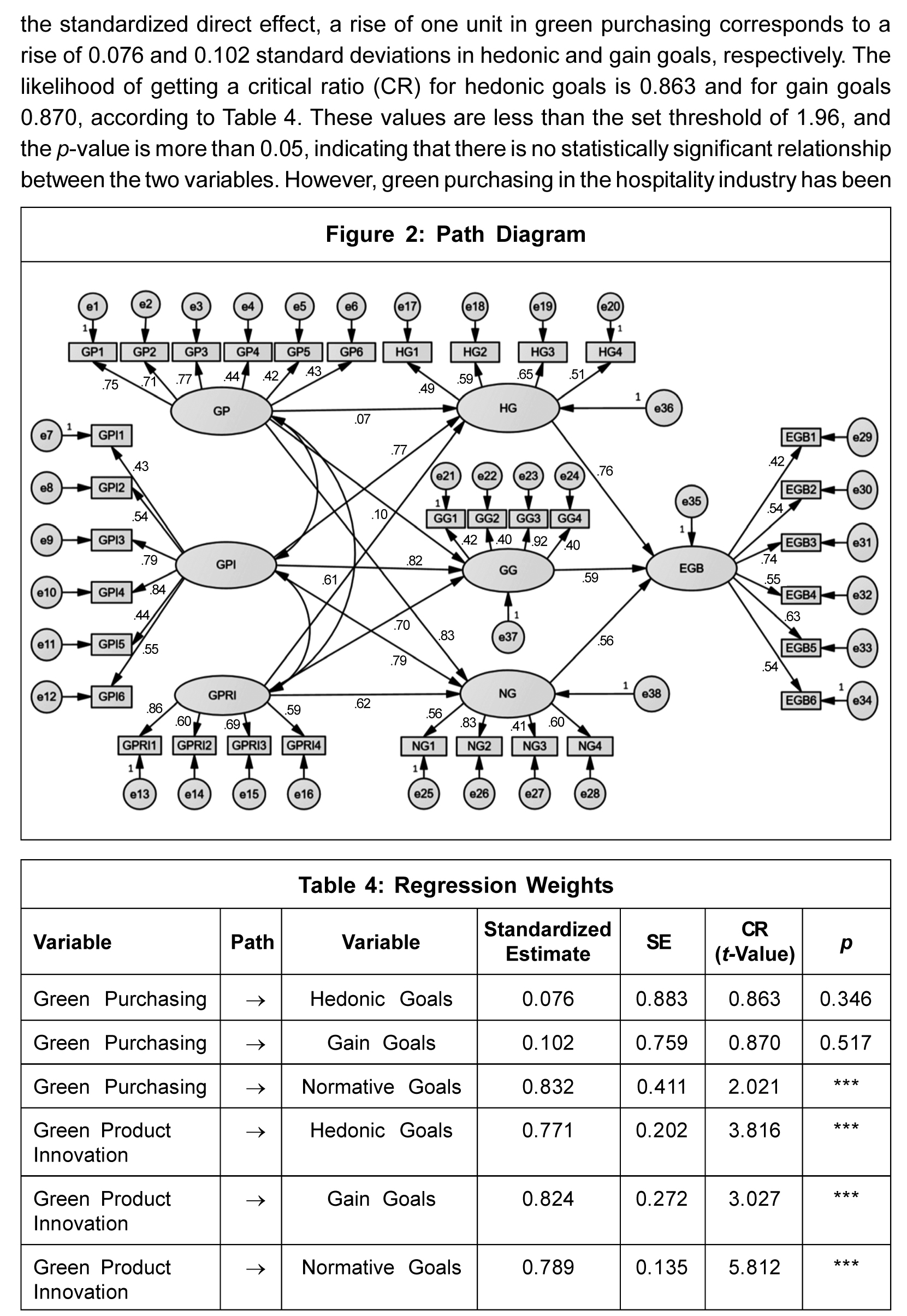
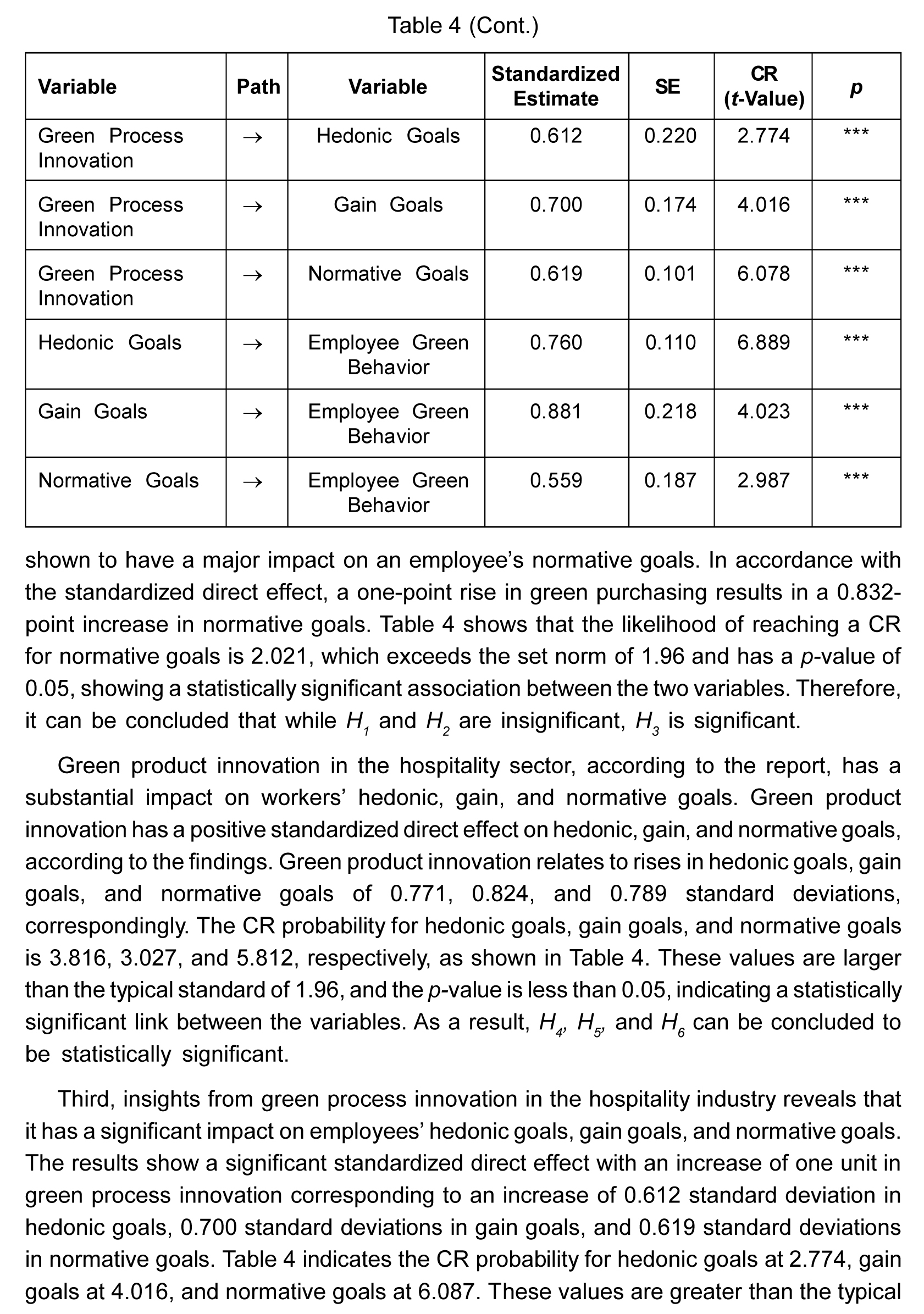
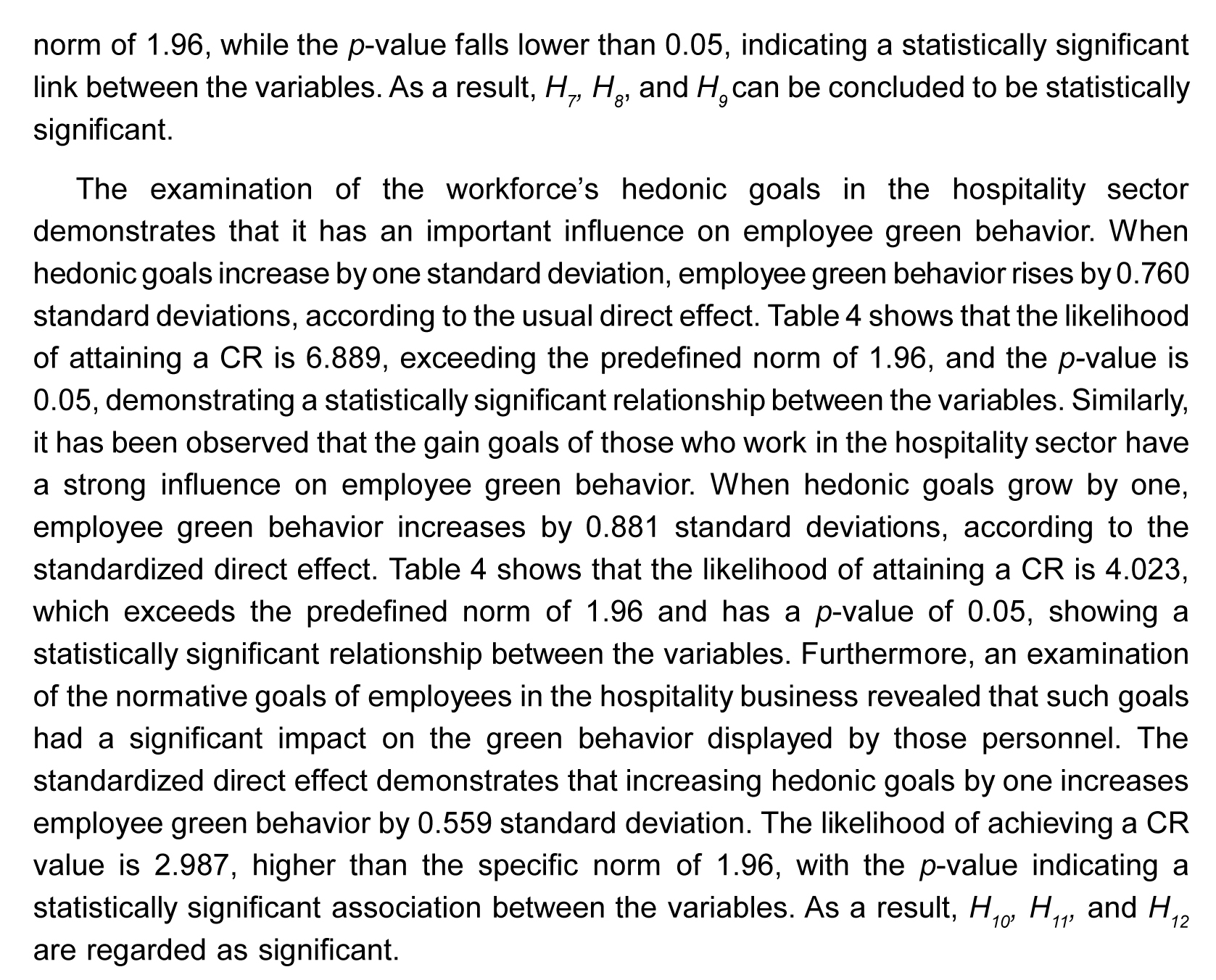
The path diagram of the proposed structural model is depicted in Figure 2. The regression weights are further shown in Table 4.
According to the findings, implementing green purchasing practices in the hotel business has no substantial impact on employees' hedonic and gain goals. Based to
Discussion
The results suggest a considerable knowledge gap regarding the human resource aspects of green hotels due to a lack of past research on the topic. Furthermore, considering the scarcity of earlier research committed to establishing a link between the elements under discussion, the current study is one of the preliminary efforts to fill this gap. Despite many studies on green behavior, no study has been undertaken to establish a link between green hotels and their employees' green behavior. This study is an innovative effort to understand the viewpoints on sustainability practices in the Indian tourist and hospitality business. The study produced a number of novel findings by including HRM in the tourist and hospitality industries using the S-O-R framework.
The study's findings show that green purchasing has no impact on an employee's hedonic or gain goals. This implies that green shopping does not satisfy an employee's personal goals other than their status in society, as it solely affects normative goals. This assertion runs counter to the findings of Iqbal et al. (2023) and Abrar et al. (2021), who asserted that customers feel positively about green purchases. It is worth noting that the findings of this study show that green product innovation has an impact on all hedonic, gain and normative goals. This study adds to the work of Shaikh (2019) and Ozsungur (2020) by suggesting that implementing green product innovations can boost employee happiness and generate a sense of belonging. According to Awan et al. (2019), the launch of innovative green products can boost employee competitiveness, aligning with the field of employees' gain aspirations. The current study's findings add to the current trend of green product innovations by broadening it to include green process innovations. This is accomplished by proving the impact of such improvements on hotel employees' hedonic, gain, and normative goals. According to Kim et al. (2019), Yu et al. (2020), and Shahriari et al. (2023), putting green process innovations into practice can increase employee commitment, stress levels, and satisfaction. These findings are consistent with the observed tendency. According to the findings of this study, the fulfilment of hedonic, gain, and normative personal goals has a significant influence on individuals' green behavior. This is a unique contribution to the body of literature. According to the survey, it is critical to execute green initiatives on a regular basis to influence environmentally conscious employee behavior.
Theoretical Implications
A survey of the literature indicates that numerous studies on green hotels have been conducted. On the other hand, the present study uses a novel approach to bridge the gap between green hotel initiatives and employee green behavior in India's tourism and hospitality industry: S-O-R, a fundamental theory of human behavior. The study establishes the foundation for important advancements in HRM theory concerning environment-friendly activities by scholars and researchers. The study's findings are made more significant overall since they either call into question accepted norms or help to further develop already existing trends. Moreover, most of the research has focused on analyzing how green initiatives affect travelers' preferences for hotels, but this study explores how common green programs are on employees' environmental advocacy, contributing fresh insights to the body of knowledge already available. In the wake of Covid-19, this study represents a groundbreaking attempt to examine how people's preferences and attitudes about eco-friendly behavior are changing. The results of the study will impact future investigations in tourism-related fields like green tourist behavior and green infrastructure. Scholars and researchers will find this study valuable because it is the first of its kind to integrate the S-O-R consumer psychology theory with HRM. It is anticipated that by combining many previously unconnected concepts into a single study, it will aid in the conceptualization of the notions of the constructs by scholars and researchers.
Practical Implications
The results of the study would really help managers of green hotels learn more about what employees desire from their workplace. Through the identification of the key factors that encourage eco-friendly behavior among employees in India's green hotels, the study seeks to help HR managers enhance their current approaches. Moreover, the study would increase managers' and practitioners' understanding of the psychological aspects that impact environment-friendly behavior among hotel staff members. Managers and professionals can effectively address the demands of their staff and optimize the advantages of their environment-friendly initiatives by utilizing this expertise. The study indicates that employees in green hotels have no opinion on making green purchases. It is suggested that managerial strategies be devised to solve this issue with a stronger emphasis on green product and green process developments. Incorporating a workplace social cause initiative can offer workers not only instant gratification and happiness but also foster a competitive spirit to enhance productivity and elevate social standing, thereby fostering a sense of accomplishment in supporting an ethically sound objective. In the current situation, it has been revealed that green purchases solely benefit normative purposes while neglecting hedonic and gain goals. This means that such initiatives may not contribute fully to improved performance or benefit maximization. Rather, they might just offer a chance to promote moral principles and good intentions. Managers need to encourage their staff to have a favorable attitude toward the hotel. Assisting workers in building trust in their organization can boost productivity and competitiveness while fostering a long-lasting work environment. Additionally, the study makes a substantial contribution to the creation of a workplace that is more sustainable and environmentally sensitive. The analysis found areas where personnel would need more support and training as well as possible places to reduce costs (green product innovation and green process innovation in the existing setting). Additionally, the study on the behavior of employees at green hotels provided valuable information for the creation of procedures and policies that encourage environmental responsibility. Organizations may enhance their workforce's capacity to make informed decisions that advance both economic viability and environmental wellbeing by getting to know their employees' motivations and viewpoints on green behavior.
Conclusion
Since employee green behavior in the context of green hotels has not been covered before in the HRM literature, this study is unique in the field. The study addresses a need because prior research on green variables (for review, see Awan et al., 2019; Shaikh, 2019; Ozsungur, 2020; Abrar et al., 2021; and Iqbal et al., 2023) had not been examined in connection with HRM. The study attempts to comprehend employees' opinions on sustainable practices in Indian tourism and hospitality organizations using the S-O-R theory. The study is unusual since S-O-R has never been examined and validated in the context of HRM and the sustainable tourism industry. It is imperative to acknowledge that the present analysis has a restricted scope due to its primary focus on green hotels in India. Consequently, the study creates the groundwork for other researchers to carry out comparable investigations on various hotel operations, including resorts and boutique hotels. To further strengthen the study's worldwide significance, it is advised that similar studies be carried out by researchers and academics in the future from an international standpoint. The study examined just three green criteria; other green human resource methods like green hiring, green training, and education, and so forth may be the subject of future research.
References
- Abbas Jaffar, Zhang Q, Hussain I, et al. (2020), "Sustainable Innovation in Small Medium Enterprises: The Impact of Knowledge Management on Organizational Innovation through a Mediation Analysis by Using SEM Approach", Sustainability, Vol. 12, No. 6, p. 2407. https://doi.org/10.3390/SU12062407
- Abdou Ahmed Hassan, Shehata H S, Mahmoud H M E et al. (2022), "The Effect of Environmentally Sustainable Practices on Customer Citizenship Behavior in Eco-Friendly Hotels: Does the Green Perceived Value Matter?", Sustainability (Switzerland), Vol. 14, No. 12. https://doi.org/10.3390/su14127167
- Abrar Muhammad, Sibtain M M and Shabbir R (2021), "Understanding Purchase Intention towards Eco-Friendly Clothing for Generation Y & Z", Cogent Business & Management, Vol. 8, No. 1, pp. 1-19. https://doi.org/10.1080/23311975.2021.1997247
- Al-Gharibah, Owais Barkat and Joma Omran Mahfod (2022), "The Influence of Personality Traits on Tourists' Intention To Visit Green Hotel in Qatar: The Role of Attitude and Perceived Value", Geojournal of Tourism and Geosites, Vol. 45, No. 4, pp. 1602-09. https://doi.org/10.30892/gtg.454spl09-980
- Aman Shahrukh, Hassan N, Khattak M, Moustafa et al. (2021), "Impact of Tourist's Environmental Awareness on Pro-Environmental Behavior with the Mediating Effect of Tourist's Environmental Concern and Moderating Effect of Tourist's Environmental Attachment", Sustainability, Vol. 13, No. 23, pp. 1-15. https://doi.org/10.3390/su132312998
- Amandeep (2017), "Green Hotels and Sustainable Hotel Operations in India", International Journal of Management and Social Sciences Research, Vol. 6, No. 2, pp. 13-16. www.greenglobe.com
- Amores-Salvad0 Javier, Amores-Salvado J, Castro G M, De and Navas-Lopez J E (2014), "Green Corporate Image: Moderating the Connection between Environmental Product Innovation and Firm Performance", Journal of Cleaner Production, Vol. 83, pp. 356-65. https://doi.org/10.1016/j.jclepro. 2014.07.059
- Awan Usama, Awan U, Sroufe R and Kraslawski A (2019), "Creativity Enables Sustainable Development: Supplier Engagement as a Boundary Condition for the Positive Effect on Green Innovation", Journal of Cleaner Production, Vol. 226, pp. 172-85. https://doi.org/10.1016/J.JCLE PRO.2019.03.308
- Bharadwaj Samrat and Susmita Deka (2021), "Behavioral Intention towards Investment in Cryptocurrency: An Integration of Rogers' Diffusion of Innovation Theory and the Technology Acceptance Model", Forum Scientiae Oeconomia, Vol. 9, No. 4, pp. 137-59. https://doi.org/10.23762/FSO_VOL9_NO4_7
- Bharadwaj Samrat (2022), "Weight-Related Teasing as a Source of Consumer Motivation for Impulsive Purchase Intention of Weight Loss Dietary Supplements: Insights from Generation Z", Young Consumers. https://doi.org/10.1108/YC-11-2021-1424
- Bhatia Manjot Singh (2021), "Green Process Innovation and Operational Performance: The Role of Proactive Environment Strategy, Technological Capabilities, and Organizational Learning", Business Strategy and the Environment, Vol. 30, No. 7, pp. 2845-57. https://doi.org/10.1002/bse.2775
- Bhutto T A, Farooq R, Talwar S et al. (2021), "Green Inclusive Leadership and Green Creativity in the Tourism and Hospitality Sector: Serial Mediation of Green Psychological Climate and Work Engagement", Vol. 29, No. 10, pp. 1716-37. https://doi.org/10.1080/09669582.2020.1867864
- Biswas S R, Dey M, Bhattacharjee S et al. (2021), "How Does Corporate Environmental Strategy Contribute to Voluntary Environmental Behavior?", Influence of Psychological Green Climate, Firms' Size, and Employees' Age, Vol. 11, No. 1, SAGE Open. https://doi.org/10.1177/21582440211006054/ASSET/IMAGES/LARGE/10.1177_21582440 211006054-FIG1.JPEG
- Chen G, So K K F, Hu X et al. (2022), "Travel for Affection: A Stimulus-Organism-Response Model of Honeymoon Tourism Experiences", Journal of Hospitality & Tourism Research, Vol. 46, No. 6, pp. 1187-219. https://doi.org/10.1177/10963480211011720
- Chen Yu-Shan (2008), "The Driver of Green Innovation and Green Image - Green Core Competence", Journal of Business Ethics, Vol. 81, No. 3, pp. 531-43. https://doi.org/10.1007/s10551-007-9522-1
- Cheng W, Tsai H, Chuang H, et al. (2020), "How Can Emerging Event Sustainably Develop in the Tourism Industry? From the Perspective of the S-O-R Model on a Two-Year Empirical Study", Sustainability, Vol. 12, No. 23, p. 10075. https://doi.org/10.3390/SU1223 10075
- Chiou T Y, Chan H K, Lettice F et al. (2011), "The Influence of Greening the Suppliers and Green Innovation on Environmental Performance and Competitive Advantage in Taiwan", Transportation Research Part E: Logistics and Transportation Review, Vol. 47, No. 6, pp. 822-36. https://doi.org/10.1016/J.TRE.2011.05.016
- Demir M, Id H R and Yesiltas M (2021), "Environmental Awareness and Guests' Intention to Visit Green Hotels/: The Mediation Role of Consumption Values", pp. 1-22. https://doi.org/10.1371/journal.pone.0248815
- Dwivedi R K, Pandey M, Vashisht A et al. (2022), "Assessing Behavioral Intention toward Green Hotels during COVID-19 Pandemic: The Moderating Role of Environmental Concern", Journal of Tourism Futures, pp. 1-17. https://doi.org/10.1108/JTF-05-2021-0116
- Eid R, Agag G and Shehawy Y M (2020), "Understanding Guests' Intention to Visit Green Hotels", Vol. 45, No. 3, pp. 494-528. https://doi.org/10.1177/1096348020947800
- Elsaman Hosam Azat and Rommel Pilapil Sergio (2021), "The Psychographics of Green Marketing Strategy Vis-A-Vis Corporate Social Responsibility: Implications to Organisational Growth", International Journal of Entrepreneurship, Vol. 25, No. 4S. https://www.abacademies.org/articles/the-psychographics-of-green-marketing-strategy-visavis-corporate-social-responsibility-implications-to-organisational-growth-12139.html
- Fahim F, Khan N R, Ahmad A and Ali A (2019), "Green Human Resource Management and Firm's Environmental Performance: Mediating Role of Employee Commitment, Green Involvement and Eco-Friendly Behavior", Paradigms, Vol. 13, No. 2, pp. 18-25. https://doi.org/10.24312/1969130203
- Fawehinmi O, Yusliza M Y and Ogbeibu S (2022), "Academic Employees' Green Behaviour as Praxis for Bolstering Environmental Sustainable Development: A Linear Moderated Mediation Evaluation", Business Strategy and the Environment, Vol. 31, No. 7, pp. 3470-90. https://doi.org/10.1002/BSE.3095
- FICCI (2020), "Travel and Tourism Survive, Revive and Thrive in Times of COVID-19", June.
- Gill A A, Ahmad B and Kazmi S (2021), "The Effect of Green Human Resource Management on Environmental Performance: The Mediating Role of Employee Eco-Friendly Behavior", Management Science Letters, Vol. 11, pp. 1725-36. https://doi.org/10.5267/j.msl. 2021.2.010
- Guadagnoli and Velicer (1988), "Relation of Sample Size to the Stability of Component Patterns", Psychological Bulletin, Vol. 103, No. 2 pp. 265-75.
- Hair J F, Anderson R E, Tatham R L et al. (1995), Multivariate Data Analysis with Readings, 4th Edition, Englewood Cliffs, Prentice Hall, NJ.
- Hameed A A, Anjum Z U Z and Waqas M (2022), "Does Ethical Leadership Enhance Employee Green Behaviour Examining the Mediating Influence of Employee Green Commitment", Middle East J. of Management, Vol. 9, No. 2, p. 127. https://doi.org/10.1504/MEJM.2022.121391
- Iqbal Asif et al. (2023), "Impact Of Green Marketing On Green Purchase Intention and Green Consumption Behavior: The Moderating Role Of Green Concern", Journal of Positive School Psychology, Vol. 2023, No. 2, pp. 975-93. https://www. journalppw. com/index.php/jpsp/article/view/15806
- Jaipuria S, Parida R and Ray P (2020), "The Impact of COVID-19 on Tourism Sector in India", Vol. 46, No. 2, pp. 245-60. https://doi.org/10.1080/02508281.2020.1846971
- Jian Y, Yu I Y, Yang M X et al. (2020), "The Impacts of Fear and Uncertainty of COVID-19 on Environmental Concerns, Brand Trust, and Behavioral Intentions Toward Green Hotels", Sustainability, Vol. 12, No. 20, p. 8688. https://doi.org/10.3390/SU12208688
- Jiang Jinde (2020), "The Role of Natural Soundscape in Nature-Based Tourism Experience: An Extension of the Stimulus-Organism-Response Model", Current Issues in Tourism, Vol. 25, No. 5, pp. 707-26, 2020, https://doi.org/10.1080/13683500.2020. 1859995
- Jyoti Koshish (2019), "Green HRM - People Management Commitment to Environmental Sustainability", SSRN Electronic Journal, January. https://doi.org/10.2139/SSRN.3323800
- Kaiser H F and Rice J (1974), "Little Jiffy, Mark IV", Educational and Psychological Measurement, Vol. 34, p. 111117. https://doi.org/10.1177/00131644740 3400115
- KamSing Wong Stanley (2012), "The Influence of Green Product Competitiveness on the Success of Green Product Innovation", European Journal of Innovation Management, edited by Barbara Bigliardi, Vol. 15, No. 4, pp. 468-90. https://doi.org/10.1108 /14601061211272385
- Kim M J, Lee C K and Jung T(2020), "Exploring Consumer Behavior in Virtual Reality Tourism Using an Extended Stimulus-Organism-Response Model", Journal of Travel Research, Vol. 59, No. 1, pp. 69-89. https://doi.org/10.1177/0047287518818915/ASSET/IMAGES/LARGE/10.1177_0047287518818915-FIG4.JPEG
- Kim Yong Joong et al. (2019), "The Effect of Green Human Resource Management on Hotel Employees' Eco-Friendly Behavior and Environmental Performance", International Journal of Hospitality Management, Vol. 76,January, pp. 83-93. https://doi.org/10.1016/J.IJHM.2018.04.007
- Lee G J (2015), Business Statistics Made Easy in SAS, Silk Route Press, Randtjiesfontein, South Africa.
- Lehman Ann and Norm O Rourke (2005), "JMP for Basic Univariate and Multivariate Statistics A Step-by-Step Guide", JMP® for Basic Univariate and Multivariate Statistics: Methods for Researchers and Social Scientists, 2nd Edition, SAS Institute Inc. http://books.google.com/books?id=1nlApuloc0AC&pgis=1
- Lepananon Prutyumon (2022), "Thai Generation Y Tourists' Perception of Hotel's Environmental Roles Green Hotels and Green Practices", APHEIT International Journal, Vol. 11, No. 2, pp. 116-124.
- Li W, Bhutto T A, Xuhui W, et al. (2020), "Unlocking Employees' Green Creativity: The Effects of Green Transformational Leadership, Green Intrinsic, and Extrinsic Motivation", Journal of Cleaner Production, Vol. 255, May. https://doi.org/10.1016/J.JCLEPRO. 2020.120229
- Liew Venus Khim-Sen (2022), "The Effect of Novel Coronavirus Pandemic on Tourism Share Prices", Journal of Tourism Futures, Vol. 8, No. 1, pp. 109-24. https:/doi.org/10.1108/JTF-03-2020-0045
- Ly Bora (2023), "Green HRM and Eco-Friendly Behavior in Cambodian Public Organizations: The Mediation of Organizational Commitment", Environmental Challenges, Vol. 10, January. https://doi.org/10.1016/j.envc.2022.100674
- Maskey R, Fei J and Nguyen H O (2018), "Use of Exploratory Factor Analysis in Maritime Research", Asian Journal of Shipping and Logistics, Vol. 34, pp. 91-111. doi: 10.1016/j.ajsl.2018.06.006.
- Mehrabian A and Russell J A (1974), An Approach to Environmental Psychology, The MIT Press.
- Meng J, Murad M, Li C et al. (2023), "Green Lifestyle: A Tie between Green Human Resource Management Practices and Green Organizational Citizenship Behavior", Sustainability (Switzerland), Vol. 15, No. 1, p. 44. https://doi.org/10.3390/SU15010044/S1
- Merli Roberto et al. (2019), "Why Should Hotels Go Green? Insights from Guests Experience in Green Hotels", International Journal of Hospitality Management, Vol. 81, August, pp. 169-79. https://doi.org/10.1016/J.IJHM.2019.04.022
- Meyers L, Gamst G and Guarino A (2005), Applied Multivariate Research: Design and Interpretation, Sage Publications, Thousand Oaks. http://library.mpib-berlin.mpg.de/toc/ze_2006 _1176.pdf
- Min Z, Jie Z, Xiao X et al. (2020), "How Destination Music Affects Tourists' Behaviors: Travel with Music in Lijiang, China", Asia Pacific Journal of Tourism Research, Vol. 25, No. 2, pp. 131-44. https://doi.org/10.1080/10941665.2019.1683046
- Minh-Duc Le and Nguyen Huu-Lam (2019), "Transformational Leadership, Customer Citizenship Behavior, Employee Intrinsic Motivation, and Employee Creativity", Journal of Asian Business and Economic Studies, Vol. 26, No. 2, pp. 286-300. https://doi.org/10.1108/JABES-10-2018-0070/FULL/PDF
- Modi Raghav (2023), "The Best Eco-Friendly Hotels in India Promise Sustainable Stays in Stunning Locations across the Country", The Hotel Journal. https://thehotel journal.com/best-eco-friendly-hotels-india/
- Nunnally J C (1978), Psychometric Theory, McGraw-Hill, New York.
- Ogiemwonyi Osarodion and Amran Bin Harun (2020), "Consumption of Green Product as a Means of Expressing Green Behaviour in an Emerging Economy: With the Case Study of Malaysia", Vol. 11, No. 2, pp. 297-312. https://doi.org/10.1177/09754 25320 938538
- Ozsungur Fahri (2020), "The Effects of Workplace Belongingness on Exploratory Innovation: The Mediating Role of Exploitative Innovation", Journal of Business Research - Turk, Vol. 12, No. 2, pp. 1788-800. https://doi.org/10.20491/isarder. 2020.944
- Paille P, Amara N and Halilem N (2018), "Greening the Workplace through Social Sustainability among Co-Workers", Journal of Business Research, Vol. 89, August, pp. 305-12. https://doi.org/10.1016/J.JBUSRES.2017.12.044
- Park Jeong Eun and Eungoo Kang (2022), "The Mediating Role of Eco-Friendly Artwork for Urban Hotels to Attract Environmental Educated Consumers", Sustainability, Vol. 14, No. 7, p. 3784. https://doi.org/10.3390/SU14073784
- Patwary A K, Rasoolimanesh S M, Rabiul M K et al. (2022), "Linking Environmental Knowledge, Environmental Responsibility, Altruism, and Intention toward Green Hotels through Ecocentric and Anthropocentric Attitudes", International Journal of Contemporary Hospitality Management, Vol. 34, No. 12, pp. 4653-73. https://doi.org/10.1108/IJCHM-01-2022-0039/FULL/XML
- Qiu L, Jie X, Wang Y et al (2020), "Green Product Innovation, Green Dynamic Capability, and Competitive Advantage: Evidence from Chinese Manufacturing Enterprises", Corporate Social Responsibility and Environmental Management, Vol. 27, No. 1, pp. 146-65. https://doi.org/10.1002/CSR.1780
- Ribeiro N, Gomes D R, Ortega E et al. (2022), "The Impact of Green HRM on Employees & rsquo; Eco-Friendly Behavior: The Mediator Role of Organizational Identification", Sustainability, Vol. 14, No. 5. https://doi.org/10.3390/SU14052897
- Roscoe S, Subramanian N, Jabbour C J C et al. (2019), "Green Human Resource Management and the Enablers of Green Organisational Culture: Enhancing a Firm's Environmental Performance for Sustainable Development", Business Strategy and the Environment, Vol. 28, No. 5, pp. 737-49. https://doi.org/10.1002/BSE.2277
- Sabharwal Latika (2019), "Top 20 Eco-Friendly Hotels & Resorts in India", Tour My India. https://www.tourmyindia.com/blog/top-eco-friendly-hotels-resorts-india/
- Shah Naimatullah and Bahadur Ali Soomro (2023), "Effects of Green Human Resource Management Practices on Green Innovation and Behavior", Management Decision, Vol. 61, No. 1, pp. 290-312. https://doi.org/10.1108/MD-07-2021-0869/FULL/XML
- Shahriari M, Tajmir Riahi M, Azizan O et al. (2023), "The Effect of Green Organizational Culture on Organizational Commitment: The Mediating Role of Job Satisfaction", Journal of Human Behavior in the Social Environment, Vol. 33, No. 2, pp. 180-97. https://doi.org/10.1080/10911359.2022.2029789
- Shaikh Aijaz A (2019), "Identifying Critical Determinants of 'Digital Customer Services' Usage - An Exploratory Study", Springer Proceedings in Business and Economics, Springer Science and Business Media B.V., pp. 190-96. https:/doi.org/10.1007/978-3-030-18911-2_24/COVER
- Sharma S, Prakash G, Kumar A et al. (2021), "Analysing the Relationship of Adaption of Green Culture, Innovation, Green Performance for Achieving Sustainability: Mediating Role of Employee Commitment", Journal of Cleaner Production, Vol. 303, June. https://doi.org/10.1016/J.JCLEPRO.2021.127039
- Singh Sonal and Vikas Nath (2020), "An Assessment in the Green HRM Practices with Job Satisfaction and Its Impact on Organisational Commitment", International Journal of Management (IJM), Vol. 11, No. 9, pp. 1482-93. https://doi.org/10.34218/IJM.11.9.2020.143.
- Stevens J P (2009), Applied Multivariate Statistics for the Social Science, 5th Edition, Taylor & Francis.
- Su Lujun and Scott R Swanson (2019), "Perceived Corporate Social Responsibility's Impact on the Well-Being and Supportive Green Behaviors of Hotel Employees: The Mediating Role of the Employee-Corporate Relationship", Tourism Management, Vol. 72, June, pp. 437-50. https://doi.org/10.1016/j.tourman.2019.01.009
- Sun Zhao Qi and Sung Joon Yoon (2022),"What Makes People Pay Premium Price for Eco-Friendly Products? The Effects of Ethical Consumption Consciousness, CSR, and Product Quality", Sustainability, Vol. 14, No. 23. https://doi.org/10.3390/SU142315513
- Suswadi Irawan N C and Aulia N N (2022), "The Nexus between Green Strategic Consensus, Innovation, and Performance Evidence from Eco-Friendly Food Agro-Industry Companies in Indonesia", IOP Conference Series: Earth and Environmental Science, Vol. 1108, No. 1. https://doi.org/10.1088/1755-1315/1108/1/012033
- Tang Y, Chen S and Yuan Z (2020), "The Effects of Hedonic, Gain, and Normative Motives on Sustainable Consumption: Multiple Mediating Evidence from China", Sustainable Development, Vol. 28, No. 4, pp. 741-50. https://doi.org/10.1002/SD.2024
- The Association of Southeast Asian Nations (ASEAN) (2016), "Asean Green Hotel Standard", The Asean Secretariat.
- Usman M, Rofcanin Y, Ali M et al. (2023), "Toward a More Sustainable Environment: Understanding Why and When Green Training Promotes Employees' Ecofriendly Behaviors Outside of Work", Human Resource Management, Vol. 62, No. 3, pp. 355-71. https://doi.org/10.1002/hrm.22148
- Wang C P, Zhang Q, Wong P P W et al. (2023), "Consumers' Green Purchase Intention to Visit Green Hotels: A Value-Belief-Norm Theory Perspective", Frontiers in Psychology, Vol. 14, March, pp. 1-14. https://doi.org/10.3389/fpsyg.2023.1139116
- Wang Lei (2020), "Determinants of Consumers Purchase Attitude and Intention Toward Green Hotel Selection", Journal of China Tourism Research, Vol. 18, No. 1, pp. 203-22. https://doi.org/10.1080/19388160.2020.1816241
- Wang Lei, Philip Pong and Weng Wong (2021), "Marketing of Environmentally Friendly Hotels in China through Religious Segmentation: A Theory of Planned Behaviour Approach", Tourism Review, Vol. 76, No. 5, pp. 1164-80. https://doi.org/10.1108/TR-08-2019-0327
- Wang M, Li Y, Li J et al. (2021), "Green Process Innovation, Green Product Innovation and Its Economic Performance Improvement Paths: A Survey and Structural Model", Journal of Environmental Management, Vol. 297, November. https://doi.org/10.1016/J.JENVMAN.2021.113282
- Wells C S and Wollack J A (2003), "An Instructor's Guide to Understanding Test Reliability", Testing and Evaluation Services. https://testing.wisc.edu/Reliability.pdf
- Wong S K S (2012), "The Influence of Green Product Competitiveness on the Success of Green Product Innovation: Empirical Evidence from the Chinese Electrical and Electronics Industry", European Journal of Innovation Management, Vol. 15, No. 4, pp. 468-490. https://doi.org/10.1108/14601061211272385
- Xess A, Bhargave H and Kumar P (2021), "A Study on Influence of Eco-Friendly Technologies in Hospitality Industry", Journal of Physics: Conference Series, Vol. 1950, No. 1. https://doi.org/10.1088/1742-6596/1950/1/012024
- Xie X, Huo J and Zou H (2019), "Green Process Innovation, Green Product Innovation, and Corporate Financial Performance: A Content Analysis Method", Journal of Business Research, Vol. 101, pp. 697-706. https://doi.org/10.1016/j.jbusres.2019.01.010
- Yang X et al. (2020), "Promoting Sustainable Development: A Research on Residents' Green Purchasing Behavior from a Perspective of the Goal-Framing Theory", Sustainable Development, Vol. 28, No. 5, pp. 1208-1219. https://doi.org/10.1002/sd.2070
- Yu W, Chavez R, Feng M et al. (2020), "Green Human Resource Management and Environmental Cooperation: An Ability-Motivation-Opportunity and Contingency Perspective", International Journal of Production Economics, Vol. 219, June, pp. 224-35. https://doi.org/10.1016/j.ijpe.2019.06.013
- Zhang G, Yue X, Ye Y, et al. (2021), "Understanding the Impact of the Psychological Cognitive Process on Student Learning Satisfaction: Combination of the Social Cognitive Career Theory and SOR Model", Frontiers in Psychology, Vol. 12, August, pp. 1-14. https://doi.org/10.3389/FPSYG.2021.712323/BIBTEX
- Zhang Yajun et al. (2020), "Effect of Authoritarian Leadership on User Resistance to Change: Evidence from IS Project Implementation in China", Industrial Management and Data Systems, Vol. 120, No. 10, pp. 1813-34. https://doi.org/10.1108/IMDS-11-2019-0619/FULL/XML
- Zhang Y, Gao P, Zhang J et al. (2019), "How Green Human Resource Management Can Promote Green Employee Behavior in China: A Technology Acceptance Model Perspective", Sustainability, Vol. 11, No. 19, p. 5408. https://doi.org/10.3390/SU11195408
- Zimmerman Jonelle (2012), "Using the S-O-R Model to Understand the Impact of Website Attributes on the Online Shopping Experience", ProQuest Dissertations and Theses. https://digital.library.unt.edu/ark:/67531/metadc149694/m2/1/high_res_d/thesis.pdf