April'23
The IUP Journal of Organizational Behavior
Archives
Work from Home During Pandemic: Commitment, Work Stress and Job Satisfaction Among University Teachers in Bangladesh
Salahuddin Ahmed
Senior Research Fellow, School of Management Studies, University of Hyderabad, India; and is the
corresponding author. E-mail: salahuddinahmed@uohyd.ac.in
Sapna Singh
Associate Professor, School of Management Studies, University of Hyderabad, India.
E-mail: drsapnasingh2727@gmail.com
Covid-19 had an adverse impact not only on our health but also on the way we work. It altered the way people live and work, and affected industries and organizations globally. Many organizations have started to bring in a new approach to working to adapt to these changes effectively using a Work From Home (WFH) policy. The academic fraternity adapted to this change within no time and conducted classes in the online mode with the help of technology. The objective of this study is to examine the challenges encountered by the teachers in online teaching and its impact on overall job satisfaction, commitment and work stress. Using a quantitative approach, 372 faculty members from various universities who immediately adapted to WFH across Bangladesh were surveyed, and the responses were analyzed. The study reveals that WFH, commitment, and work stress have a significant effect both directly and indirectly on job satisfaction.
Introduction
The recent Covid-19 pandemic is considered to be one of the worst crises of all time, which profoundly shattered the lives of common people across the world and largely impacted the economies, organizations, and service holders throughout the world (Acter et al., 2020; and Margherita et al., 2021). The pandemic caused an unprecedented economic shock and steep job losses (Schleicher, 2020; and Moens et al., 2022). Primary research has observed the negative repercussions of this crisis and the related preventive steps (i.e., curtailing free movement of people, forced maintaining of distance, lockdowns, working from home, etc.) have amplified the concern (Usher et al., 2020), loss of productivity (Goodell, 2020) and stress (Mimoun et al., 2020). Following the pandemic, people are bound to adopt new behavior patterns, work style and also new commuting patterns and work preferences like WFH.
Covid-19 has brought about a significant change in the work sphere such as WFH strategy for employees across sectors (Kramer and Kramer, 2020). The academic fraternity had to particularly continue their activities employing the distance mode, since teaching involves face-to-face interaction. Although there has been a gradual shift to in-person, pre-Covid work settings, little is known about their work challenges during the pandemic, specifically university teachers who had to work prolonged hours in distant mode. Moreover, their job satisfaction also needs to be investigated since working from home for long has a profound impact on employees' job satisfaction. The current study attempts to bridge an important gap by examining the impact of remote working on university teachers' job satisfaction and various challenges faced by them during
Covid-19.
The extent of employee involvement is impacted by an organization's social context. An employee's commitment to the employer is largely dependent on the time an employee can spare significantly for the institution. Since employees performed their duty mostly from home, there is a sheer possibility of inconsistency in their commitment level towards the organization. However, it has been observed that employee commitment improves when institutions offer work-friendly atmosphere to help employees carry out family and non-work responsibilities (Kossek et al., 2001; and Halpern, 2005). The current study explores this aspect in the WFH context. The study focuses on normative commitment because normative commitment is the core that binds the employees to the organization. Normative commitment has been observed as possibly 'strong' and 'advantageous' consequence as it is being 'noticed as a feeling of ethical duty rather than owing a favor' (Meyer and Parfyonova, 2010, p. 292).
The policy relating to WFH has some possible benefits and perceived risks that should be taken into consideration. Working from home is said to be productive in the sense that it raises the value of life (Azarbouyeh and Jalali, 2014), work satisfaction and pleasure (Kazekami, 2020) as well as triggers sincerity and inspiration that will result in innovation (Ellis and Webster, 1998). However, the advantages could be fruitful if peer support, managerial assistance, and technological backing are provided to the employees. On the other hand, the absence of existing overseer and lower level of formal supervision in the workplace reduces work stress for employees.
The associated impacts and perils need to be taken into consideration when commencing WFH; for example, social isolation could be a major issue that can result in decreased motivation and accomplishment (Martin and MacDonnell, 2012). WFH often leaves employees with blurred lines between job and individual life, increasing work-related anxiety (Liu and Lo, 2018) and tension, which also impacts their job satisfaction. The present study seeks to investigate the following research questions:
Does WFH have an impact on job satisfaction for university teachers?
Does WFH have an impact on employee commitment?
Does WFH have an impact on work stress?
Based on the following literature review, the study proposes a model to describe the association between WFH, commitment, work stress, and job satisfaction.
Literature Review and Hypotheses Development
JD-R Model
The JD-R model (Demerouti et al., 2001; and Schaufeli and Bakker, 2004) states how work environment encourages and fosters better health conditions. The said model constitutes two distinct yet connected cognitive processes to describe job stress (e.g., burnout) and inspiring results (e.g., commitment, engagement). The model presupposes that while job holders across occupations encounter differing working environments, the attributes of these work environments raise further two different facets, i.e., job resources and job demands. JD refers to staff's psychological and physical vigor and the consequent stress reactions and wellbeing problems (Demerouti et al., 2001; and Bakker and Demerouti, 2007). Conversely, job resources nurture work encouragement and encourage robust work practices, for example, job engagement (Schaufeli and Bakker, 2004; and Hakanen et al., 2006), organizational commitment (Bakker et al., 2003; and Boyd et al., 2011) and work participation (Bakker et al., 2003).
Demerouti et al. (2001) observed that job resources are those facets of one's job that are useful in accomplishing job targets. Emerging experiential evidence proposes that job resources are meant to be not only motivational process, but also energetic process and the absence of those resources escalates job stress. Thus, job resources play an inherent as well as extrinsic motivational role. When job resources employ an inherent inspirational approach, it is likely to satisfy fundamental individual requirements for relatedness, autonomy (societal assistance), and capability. Subsequently, employees' wellbeing and commitment will increase which will prevent them from exiting the organization (Hackman and Oldham, 1980; and Deci and Ryan, 1985).
WFH
WFH first emerged way back in the early 1970s as telecommuting or telework, a novel concept of doing job from distant places (from home or other places) through tech support (van Meel, 2011) that entirely changed task-associated travel (Nilles, 1997). However, WFH in times of crisis like a pandemic varies from earlier working from distant arrangements in the following ways: (a) The arrangement was not discretionary for both the parties, i.e., employer and employee; (b) It ignored individual characteristics or institutional culture; (c) it was rigorous, in a manner that it did not have specific time period to do the job since the work needed to be completed in usual manner; and lastly (d) it harmonized work-life balance. Previous literature is not consistent in explaining the significance of working from distance and its impact on several facets like job stress, work-life balance, etc. On the other hand, supporting WFH arrangements are likely to increase employee's commitment level towards the organization. The research findings revealed that working from home helps in minimizing attrition and uplifting employee morale, making them more committed and improving their performance (Tumen and Zeydanli, 2016; Denver, 2021; Sridhar and Bhattacharya, 2021; and Ollo-Lopez et al., 2021).
Working from home may bring a number of benefits like time management skills (Nakrosiene et al., 2019). Empirical results also disclosed several advantages of working from home, for example, augmented performance in job, better work satisfaction, lesser intention to leave, and lower level of stress (Kossek et al., 2006; Fonner and Roloff, 2010; Coenen and Kok, 2014; Anderson et al., 2015; and Contreras et al., 2020). However, recent empirical studies show an inverse relationship between work associated anxiety or work stress as a consequence of Covid-19 and job satisfaction. The results show a significant and considerable negative correlation. A possible explanation for such an outcome could be ascribed to employees' reluctance to adapt to the new working pattern due to increased level of anxiety (Mohammed et al., 2022). Hence, working from home may generate mixed results (Schieman and Glavin, 2017; and Kim and Behr, 2019). Working from home may also produce increased level of stress (Gajendran and Harrison, 2007; Fonner and Roloff, 2010; Contreras et al., 2020; and Galvez et al., 2020) which may lead to aggression and low job satisfaction. However, one can reduce stress levels if he/she gets a suitable work arrangement (Azarbouyeh and Naini, 2014; and Kim and Chung, 2019). Therefore, the following hypotheses were formulated:
H1: Working from home is negatively related to job satisfaction.
H2: Working from home has a significant positive effect on employee commitment.
H3: Working from home has a significant influence on work stress.
Commitment
Work-life harmony which may be derived from WFH may bring many benefits for both the employees and the managers. Suitable work schedule, lesser space needs, enhanced efficiency, little scope for office politics, higher motivation for employees, relatively cleaner atmosphere, reduced absenteeism, and lower level of attrition, are all advantages of WFH. Due to favorable work arrangements, the commitment towards job is also likely to increase. Golden (2006) indicated that the frequency of working from home strengthens organizational commitment. Golden et al. (2008) also asserted that actual remoteness of employees could lower their intention to leave their jobs.
The current study focuses on normative commitment because normative commitment refers to the discerning 'accountability to stay' in the organization (Allen and Meyer, 1996). Normative commitment has been defined as a powerful societal influence on the responsibilities and the propensity of individuals to stay (Hameed and Anwar, 2018). The employees might stay due to their obligated duty towards the organization, or towards their respective owners (Faraj et al., 2021). The significance of 'normative commitment is that it is a vital inspiring force that may have been overlooked and not fully exploited' (Meyer and Parfyonova, 2010, p. 292). Moreover, the pandemic left the employees with no other option but to stay with their respective employers since there was lot of job cuts during that period.
Job satisfaction, on the other hand, is distinguished as the feeling of the job holders in respect of their work environment and the job aspects, for instance, the organization, work atmosphere, relationship with peers and so on (Anwar and Louis, 2017). Job satisfaction is an enjoyable affirmative condition arising out of one's work and work environment (Anwar and Abdullah, 2021). Employees must feel satisfied with their jobs because of commitment. Meyer and Herscovitch (2001) confirmed an affirmative association between normative commitment and satisfaction. Hence, the study postulates:
H4: Employee commitment is significantly related to job satisfaction.
Work Stress
Job or work-related stress influences one's feelings, deliberation, and evaluation stages. The difference between the expectation from work and prevailing job resources results in worry and leads individuals to negativity and make them dissatisfied. Stress is supposed to be the outcome of "role burden" (Duxbury et al., 2018) and is often taken home from workplace and vice versa (Bolger et al., 1989), which generates or worsens conflicts in work-family sphere (Lim and Kim, 2014; and Fan et al., 2019). Studies have found that WFH decreases work role stress (Gazendran and Harrison, 2007; and Sandoval-Reyes et al., 2021). Some studies revealed that decrease in stress is facilitated by higher level of job freedom: the more freedom or autonomy the employee has, the lesser the stress levels. Conversely, a few other studies found that WFH is subject to higher levels of stress (Gao et al., 2020) particularly due to conflict in work-life settings (Russell et al., 2009).
Job stress is another crucial antecedent that has a notable influence on job satisfaction (Hsu et al., 2019). The cause for declining job satisfaction is the forcible social isolation that employees may experience. WFH negates interpersonal correspondence and lowers association with other employees, thus making them feel less connected (Allen et al., 2015). This requirement for congruence is essential for job satisfaction (Brunelle and Fortin, 2021). The study by Chao et al. (2015) revealed that work-related stress negatively influences job satisfaction.
H5: Work stress has a significant and negative influence on job satisfaction.
Among the many benefits of working from home mentioned in the literature, the major one is enhanced JS (Virick et al., 2010). JS or job satisfaction has been termed as a favorable approach to job (Abdullah and Anwar, 2021). Job satisfaction is a combination of any person's physiological, emotional as well as job-specific circumstances that make the person express his/her feelings of satisfaction related to his job (Anwar and Abdullah, 2021). Normative commitment indicates the devotion of a person to the company depending on upright obligation that gradually develops by virtue of social interactions, loyalty and duty (Abdullah et al., 2017). Normative commitment is termed as a powerful societal influence on the responsibilities and the propensity of individuals to stay (Hameed and Anwar, 2018).
In a WFH setting, the blurred boundaries between work and personal life have an impact on employee commitment. Normative commitment can improve when a person is devoted to his organization and is aware of the benefits gained from the organization (Anwar and Qadir, 2017). Supportive work arrangements (flexible work schedule, autonomy, lower level of office politics, etc.) can increase employees' commitment which ultimately reflects in improved JS. Conversely, due to social inaccessibility, remote worker's work stress may escalate and result in decreased job satisfaction. The reason for this reduced work satisfaction is associated with the augmented social remoteness that employees may experience. Working remotely has varied effects on employees' wellbeing, stress-related consequences, work-life balance, and satisfaction (Kim and Beehr, 2019; and Roz, 2019).
H6: Employee commitment mediates the effect of working from home on job satisfaction.
H7: Work stress mediates the effect of working from home on job satisfaction.
Data and Methodology
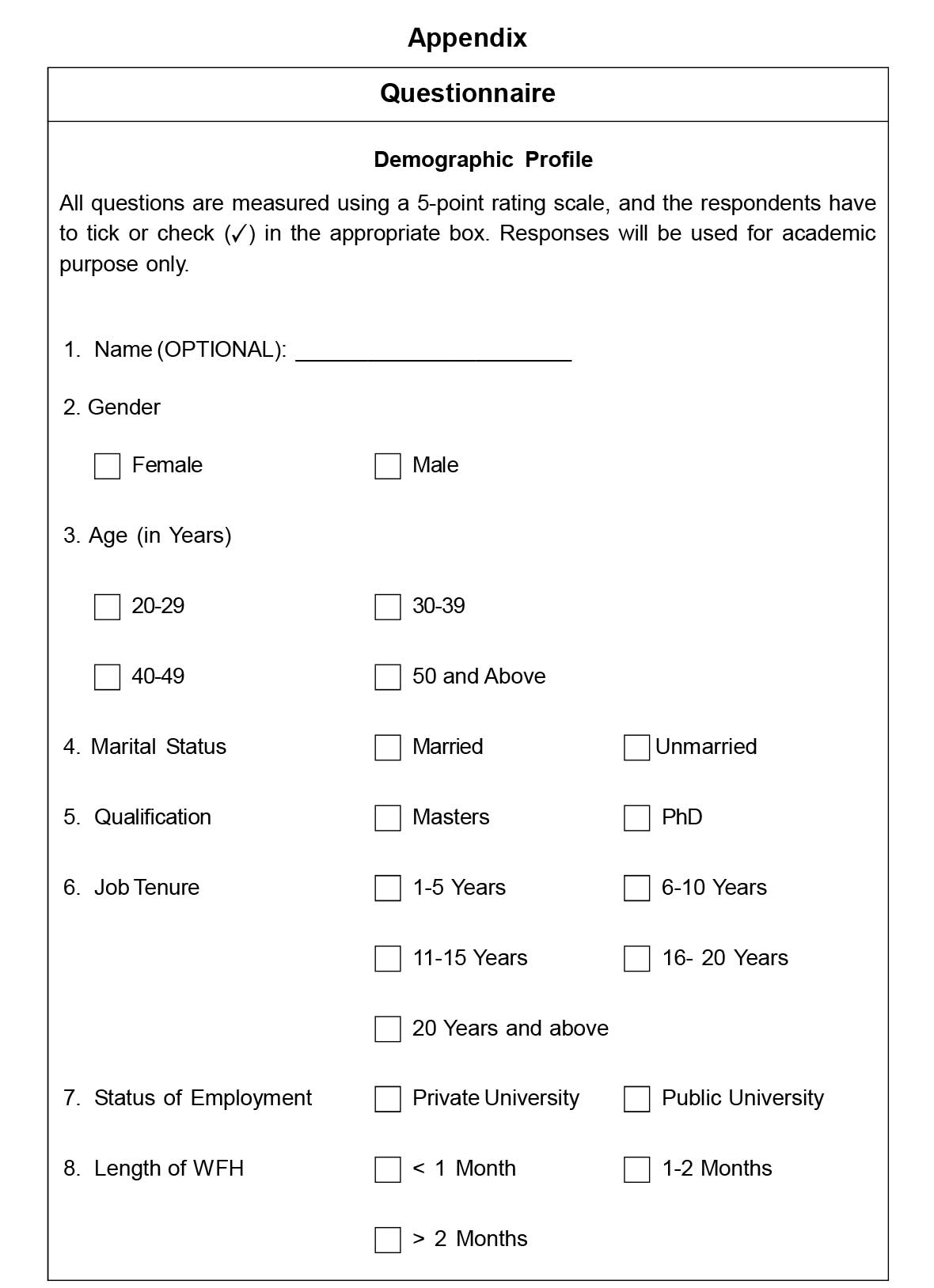
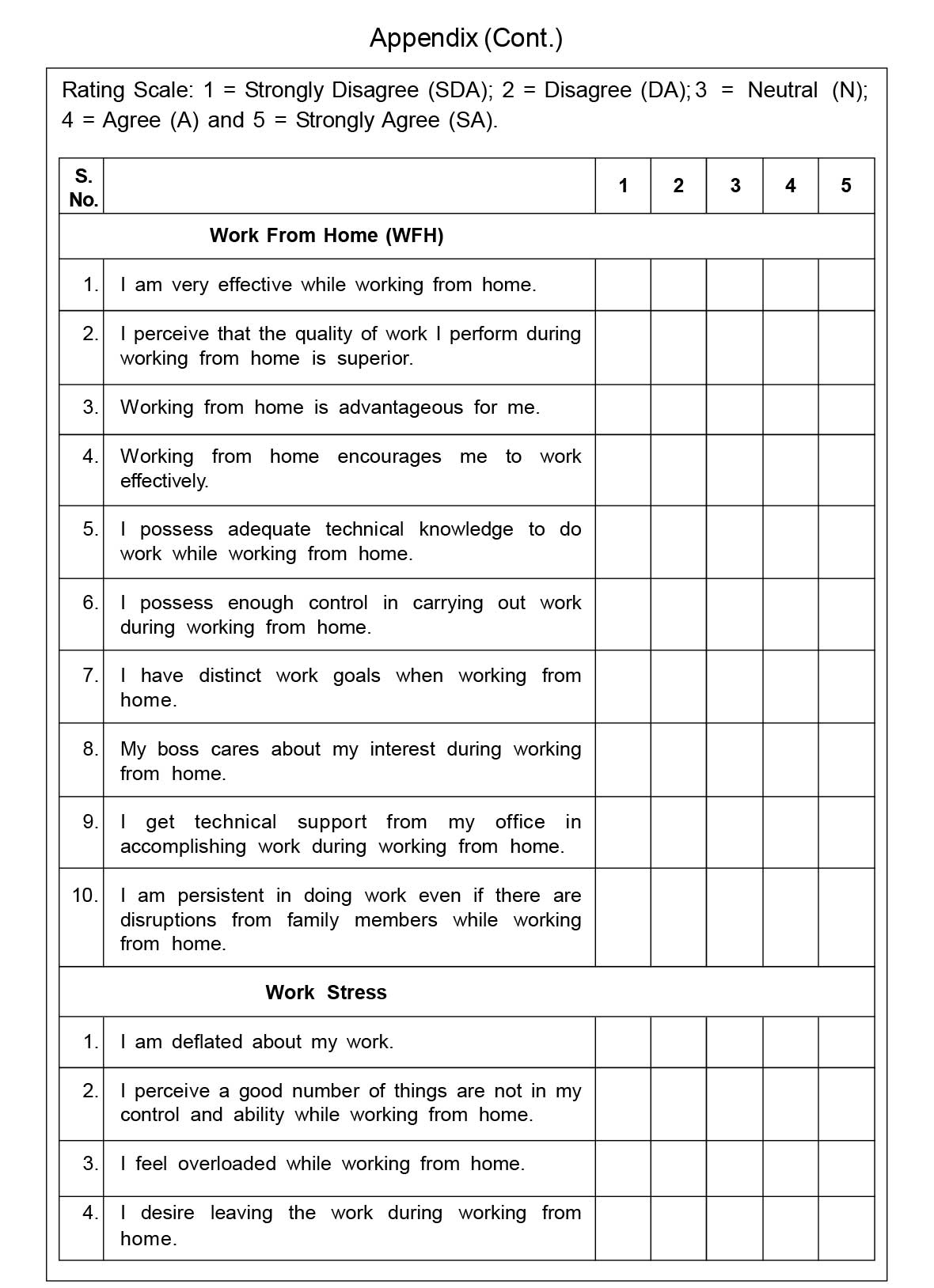
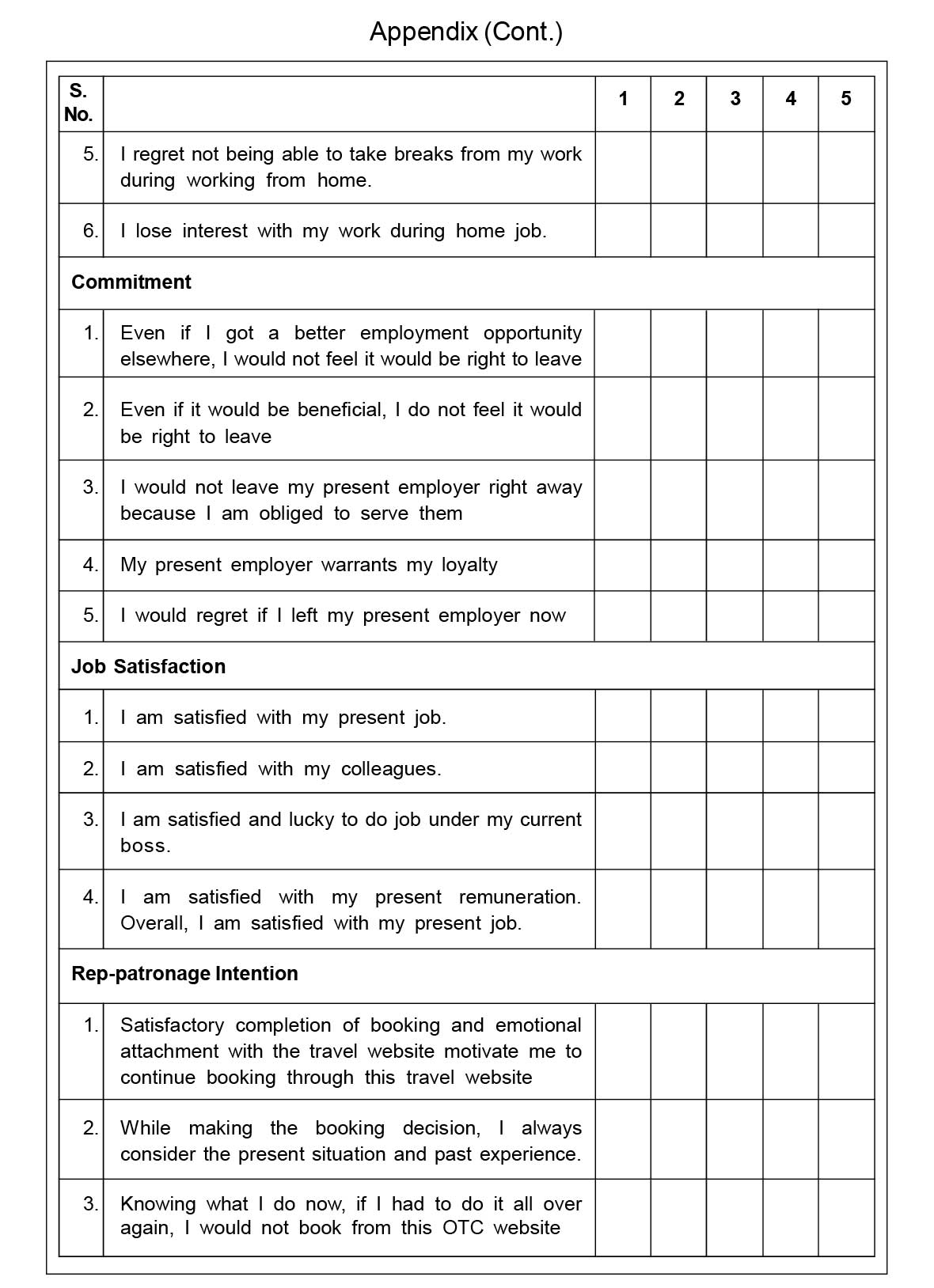
The study examines the relationship between WFH and JS among university teachers in Bangladesh with a conceptual model (Figure 1). The study is quantitative in nature and explores the association between the constructs proposed in the study. A self-administered questionnaire (see Appendix) was developed to obtain data from select university teachers. Teachers from both public and private universities who worked from home during the pandemic participated in the survey. Although they belonged to different parts of the country, most respondents were from Dhaka. Data was collected in two phases (i.e., May-June and September-October, 2022). Purposive and convenience sampling technique was followed to obtain the data and the questionnaires were sent through University Teachers' Forum Online. University teachers who have been teaching for the past three years were considered for the study.
Measures
The present study adopted a five-point Likert scale to examine the constructs. The scales used to analyze the constructs were adapted from prior studies and modified to align with the present work. WFH was analyzed through the modified scale of Neufeld and Fang (2005).

'Employee Commitment' was measured through the scale adapted from Bansal
et al. (2004). 'Work Stress' was scrutinized using the scale adapted from Lait and Wallace (2002). Finally, 'Job satisfaction' scale was adapted from Tsui and Schriesheim (1980).
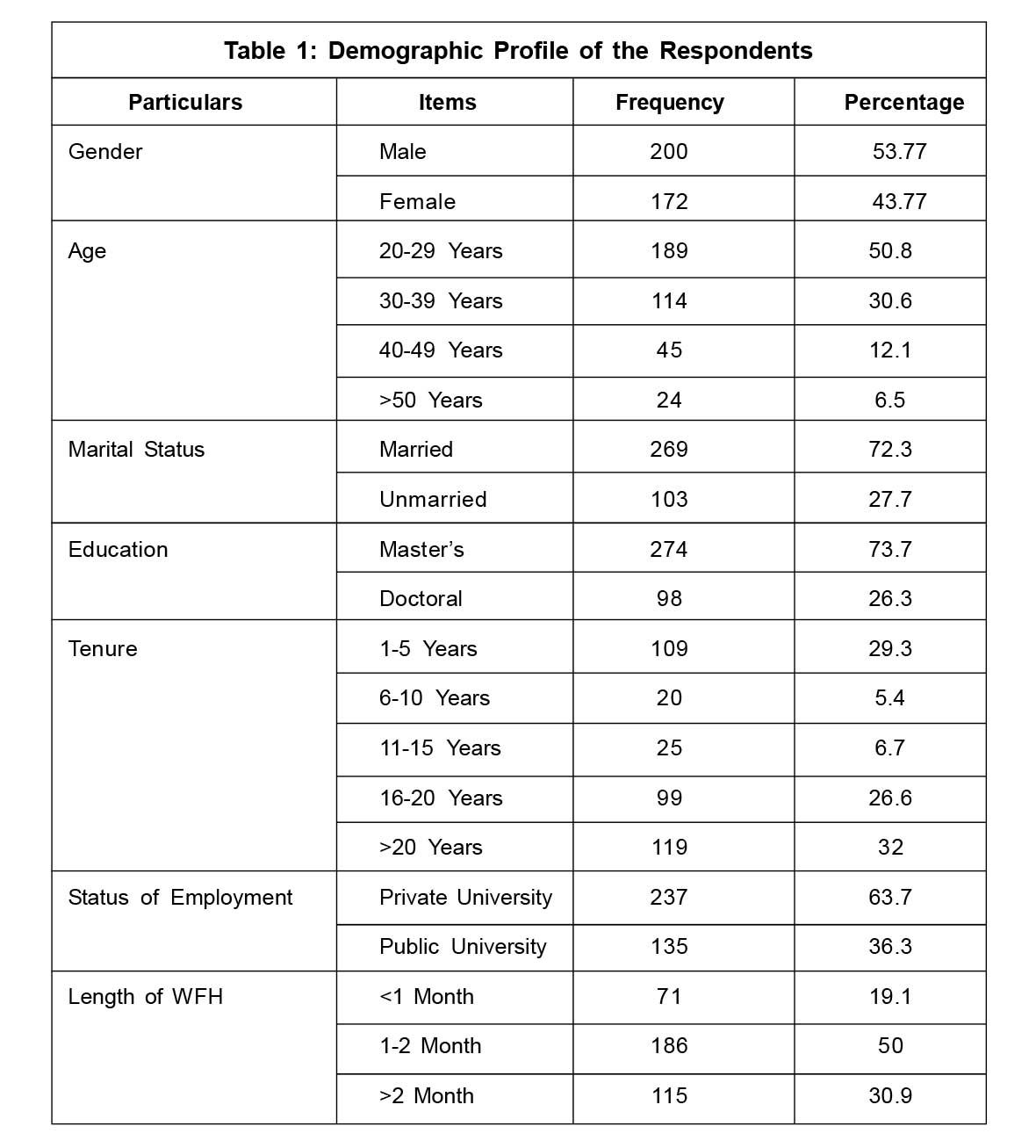
A total of 650 questionnaires were distributed, out of which 450 responses were received. After discarding the incomplete questionnaires, the study ended up with 372 responses, which implies 55% plausible responses for further analysis. Respondents' demographic details are shown in Table 1.
Common Method Bias
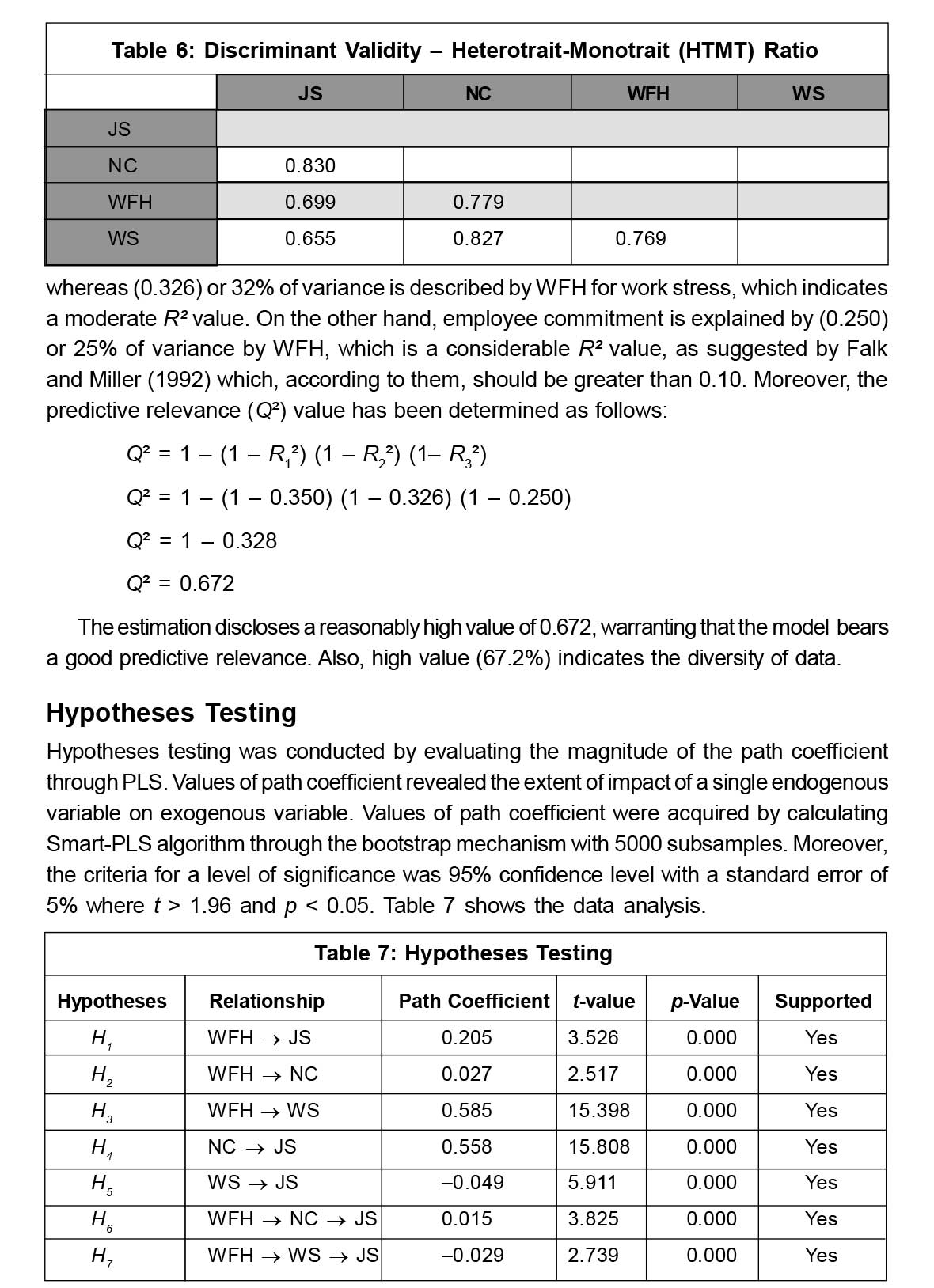
In social science research, there remains every possibility of biases which need to be checked and avoided. The present study followed appropriate measures to examine common method bias or Common Method Variance (CMV) before conducting Structural Equation Model (SEM). To determine CMV, Harman's first factor test was conducted to check the single factor where the covariance was 31.83% ( < 50%), which shows that the data did not contain prejudices (Podsakoff et al., 2012).
The study followed PLS-SEM partial least-squares-based structured equation modeling to examine the data. The current study employed four constructs, namely, WFH, Normative Commitment (NC), Work Stress (WS) and Job Satisfaction (JS), that comprised of 26 items. Reliability and validity tests were conducted to examine the degree to which the items of the study's constructs were reliable. After carrying out the initial validity for four constructs, it warranted to eliminate some of the items due to the lower threshold value (Outer Loadings). Out of the 25 items, 19 items were retained for examining measurement model.
Results
Measurement Model
For evaluating measurement model, the study surmised the reliability through Cronbach's Alpha (CA) and Composite Reliability (CR) of the constructs. As can be seen from
Table 2, basic outer loading value is >0.5. Cronbach's alpha values are beyond threshold value >0.7 (Nunnally, 1978) and CR values are above threshold value (>0.7). CV or convergent validity was evaluated through Average Variance Extracted (AVE) values. As shown in Table 3, values range from 0.538 to 0.684, which are greater than 0.5 (Fornell and Lacker, 1981). Based on the values generated through CR and AVE, the measurement model can be said to have high convergent validity and reliability (Figure 2).


Discussion
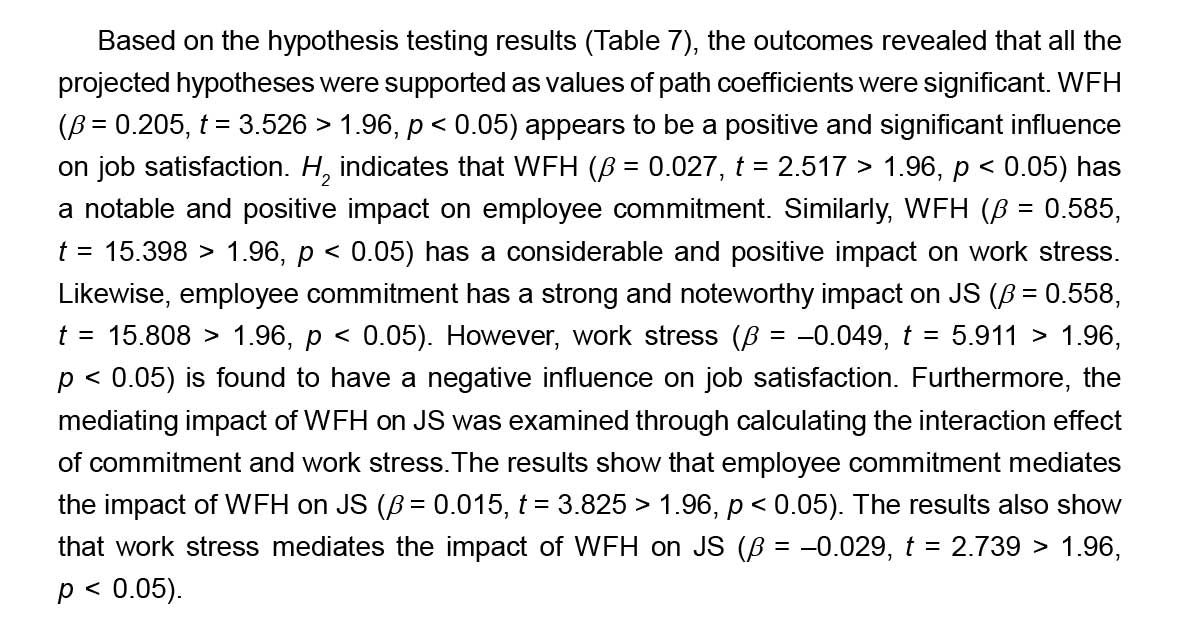
The study investigated the association between WFH and employees', specifically university teachers', job satisfaction. Hypotheses related to the said constructs was further segregated into three other hypotheses that are in association with other constructs researched in this context. Although, the study hypothesized a negative relationship between WFH and job satisfaction, surprisingly the results show a positive association between the two. This may be due to the fact that working from home offers flexibility for teachers to enjoy work-life balance. Moreover, Blanch (2016) suggested that supportive family/social circumstances at the workplace can significantly reduce the adverse effects of stress on satisfaction.
The Government of Bangladesh mandated all educational institutions to shut down amidst the virus spread. At the same time, academic fraternity across the educational institutions were obliged to carry out the academic activities from home. In the wake of this situation, the teachers had to adapt to this new working style. Although access to strong ICT was an issue especially in this working style, the whole process was continued with the support of mobile data and other IT system. The findings are in line with the previous studies of Cohen and Liani (2009), Coenen and Kok (2014),
Chung (2018) and Contreras et al., (2020).
The findings also show that WFH has a significant influence on employees' commitment. Remote working throughout the pandemic was an affirmative way to let the work continue. Working remotely during the pandemic implies improved job attachment.
The study also reveals that WFH has a noteworthy influence on job stress. The Covid-19 pandemic brought about a paradigm shift in terms of working style. Social distancing made the teachers stay away from their usual work environment, which led to stress. Gajendran and Harrison (2007) found that higher level of stress is a major consequence of huge workload in the WFH setup.
The study further demonstrates that employee commitment has considerable impact on job satisfaction. Employee commitment, specifically normative commitment, will grow due to the "psychological bond" that exists between an employer and the employee (Anwar and Climis, 2017). This indicates the emotions and obligations of employees to stay in the company or institution. Finegan (2000) observed that 'situations that encourage emotional attachment are key to enhancing the employee's moral responsibility towards the organization (normative commitment)'. Since teachers were away from other duties (administrative), they were mostly focused on teaching-related activities. Moreover, the absence of immediate supervisor and reduced formal supervision in the supporting work arrangements (WFH settings) permit teachers to perform their respective job duties with ease which would otherwise be a struggle if they had to attend the workplace and carry out their duties. In fact, these arrangements induce commitment to the organization, which ultimately leads to job satisfaction.
Furthermore, the study shows that work-related stress has substantial negative influence on JS. In normal work settings, work stress impacts JS. During the pandemic too, when the teachers were bound to stay at home, it had a negative influence on job satisfaction. Stewart and Barling (1996) observed that individual work stress may inversely impact job duties, which successively diminish job satisfaction. This shows that during the initial days of working from home, a vague order of what is supposed to be carried out could have increased employees' stress levels which ultimately had a negative influence on their job satisfaction.
Finally, the study examined the influence of employee commitment as a mediator between WFH and job satisfaction (H6) and the impact of work stress on the association between WFH and job satisfaction (H7). This study found that employee commitment mediated the effect of WFH on job satisfaction. Choi et al. (2020) observed that attachment, which is generated through comfort and support, is one of the driving factors in obtaining higher productivity and performance. The study findings confirmed how employee commitment influences the link between working from home and job satisfaction. On the other hand, the challenges of working from home include isolation due to social distancing, which is perhaps a major problem, as it leads to decreased level of motivation (Martin, 2012; and Roz, 2019), resulting in increased stress. Roloff and Fonner (2010) observed that work stress influences employee job satisfaction in WFH settings. Further, lack of appropriate workspace and social and technological support, and unsolicited tracking system cause increased level of stress, which ultimately reduces job satisfaction in WFH settings (Yu and Wu, 2021).
Conclusion
The study primarily focused on the factors determining job satisfaction among university teachers during the early stages of the Covid-19 in Bangladesh when there was no clear direction regarding WFH. The study shows that commitment, specifically normative commitment, of the teachers, increased in the WFH context. As the teachers had to work from home their autonomy level tends to increase. Apart from that working from home is persuasive in enhancing the openness to ingenuity that leads to innovation (Ellis and Webster, 1998). Innovativeness warrants dedication and attachment towards the organization. Moreover, WFH that triggers the commitment level of employees will also improve job satisfaction (Kazekami, 2020).
On the other hand, work stress also needs to get more attention. In the current study, it is found that work stress negatively impacts the job satisfaction of the university teachers. In the usual working environment, there are several aspects like (less support from the supervisor, job demand, work overload etc) can cause work stress. However, in the WFH context, even though teachers get more autonomy but as they are in close connection with the family, they face difficulty in managing time which put pressure in performing their job duties on time which tend to escalate stress (Lo and Liu, 2018) and worry, and also impacts their job satisfaction. However, Kim et al. (2019) and Azarbouyeh and Jalali (2014) observed that work stress can be reduced subject to one's flexible work schedule. Additionally, social isolation can cause work stress for employees that impacts their job satisfaction.
In these circumstances, organizations need to map out a suitable work condition by lessening workload, providing autonomy in time management, etc. to ensure improved commitment from the employees. Ensuring suitable working atmosphere will also reduce work stress. Moreover, it is crucial to remove the barriers to WFH like lack of IT infrastructure, poor network, etc. These obstacles to working remotely may result in decreased job satisfaction.
The study sheds new light on the importance of employee normative commitment in association with WFH and JS, which prior studies have not highlighted. Moreover, the influence of working from home on job satisfaction, through commitment and job stress, in a single framework has rarely been explored in the literature.
Limitations and Future Scope: Like any other study, the current study also has got some limitations. The study uses convenience sampling technique which limits the generalizability of the results. Moreover, future studies could consider the employees from other sectors, specifically those whose work is predominantly dependent on IT, and conduct a comparative study. The study examined the mediating effect of commitment and work stress, future studies may examine job burnout and organizational culture as mediators.
References
- Abdullah M I, Ashraf S and Sarfraz M (2017), "The Organizational Identification Perspective of CSR on Creative Performance", The Moderating Role of Creative Self-Efficacy, Sustainability, Vol. 9, No. 11, p. 2125.
- Acter T, Uddin N, Das J et al. (2020), "Evolution of Severe Acute Respiratory Syndrome Coronavirus 2 (SARS-CoV-2) as Coronavirus Disease 2019 (COVID-19) Pandemic: A Global Health Emergency", Science of the Total Environment, Vol. 730, pp. 138996.
- Allen N J and Meyer J P (1996), "Affective, Continuance and Normative Commitment to the Organization: An Examination of Construct Validity", Journal of Vocational Behavior, Vol. 49, No. 3, pp. 252-276.
- Allen T D, Golden T D and Shockley K M (2015), "How Effective is Telecommuting? Assessing the Status of Our Scientific Findings", Psychological Science in the Public Interest, Vol. 16, No. 2, pp. 40-68.
- Anderson A J, Kaplan S A and Vega R P (2015), "The Impact of Telework on Emotional Experience: When, and for Whom, Does Telework Improve Daily Affective Well-Being?" European Journal of Work and Organizational Psychology, Vol. 24, No. 6, pp. 882-897.
- Anwar G (2021), "Employee Turnover Intention and Job Satisfaction", International Journal of Advanced Engineering, Management and Science, Vol. 7, No. 6, pp. 22-30.
- Anwar K and Climis R (2017), "Analyzing the Relationship Between Types of Advertisement and Customer Choice: A Study of Retailer Stores in Erbil", The International Journal of Accounting and Business Society, Vol. 25, No. 2, pp. 43-52.
- Anwar K and Louis R (2017), "Factors Affecting Students' Anxiety in Language Learning: A Study of Private Universities in Erbil, Kurdistan", International Journal of Social Sciences & Educational Studies, Vol. 4, No. 3, p. 160.
- Anwar K and Qadir G H (2017), "A Study of the Relationship Between Work Engagement and Job Satisfaction in Private Companies in Kurdistan", International Journal of Advanced Engineering, Management and Science, Vol. 3, No. 12, pp. 239944.
- Azarbouyeh A and Naini S (2014), "A Study on the Effect of Teleworking on Quality of Work Life", Management Science Letters, Vol. 4, No. 6, pp. 1063-1068.
- Bakker A B and Demerouti E (2007), "The Job Demands-Resources Model: State of the Art", Journal of Managerial Psychology, Vol. 22, No. 3, pp. 309-328.
- Bakker A B, Demerouti E, De Boer E and Schaufeli W B (2003), "Job Demands And Job Resources as Predictors of Absence Duration and Frequency", Journal of Vocational Behavior, Vol. 62, No. 2, pp. 341-356.
- Bakker A B, Demerouti E, Taris T W et al. (2003), "A Multigroup Analysis of The Job Demands-resources Model in Four Home Care Organizations", International Journal of Stress Management, Vol. 10, No. 1, p. 16.
- Bansal H S, Irving P G and Taylor S F (2004), "A Three-component Model of Customer To Service Providers", Journal of The Academy of Marketing Science, Vol. 32, No. 3, pp. 234-250.
- Blanch A (2016), "Social Support as a Mediator Between Job Control and Psychological Strain", Social Science & Medicine, Vol. 157 (C), pp. 148-155.
- Bolger N, DeLongis A, Kessler R C and Wethington E (1989), "The Contagion of Stress Across Multiple Roles", Journal of Marriage and the Family, Vol. 51, pp. 175-183.
- Boyd D, Grossman P, Ing M et al. (2011), "The Influence of School Administrators on Teacher Retention Decisions", American Educational Research Journal, Vol. 48, No. 2, pp. 303-333.
- Brunelle E and Fortin J A (2021), Distance Makes The Heart Grow Fonder: An Examination of Teleworkers' and Office Workers' Job Satisfaction Through the Lens of Self-Determination Theory, Vol. 11, No. 1, pp. 1-11, Sage Open, Newbury Park, CA, USA.
- Calvert E, Russell H, O'Connell P and McGinnity F (2009), "Reconciling Work and Family Life: Workplaces, Occupation and the Experience of Work-Life Conflict", ESRI Research Bulletin, Vol. 3, No. 4, pp. 55-59.
- Chao M C, Jou R C, Liao C C and Kuo C W (2015), "Workplace Stress, Job Satisfaction, Job Performance, and Turnover Intention of Health Care Workers In Rural Taiwan", Asia Pacific Journal of Public Health, Vol. 27, No. 2, NP1827-NP1836.
- Choi S L, Heo W, Cho S H and Lee P (2020), "The Links Between Job Insecurity, Financial Wellbeing and Financial Stress: A Moderated Mediation Model", International Journal of Consumer Studies, Vol. 44, No. 4, pp. 353-360.
- Chung E, Kamri T and Mathew V N (2018), "Work-Family Conflict, Work-family Facilitation And Job Satisfaction: Considering The Role of Generational Differences", International Journal of Education, Psychology and Counseling, Vol. 3, No. 13, pp. 32-43.
- Coenen M and Kok R A (2014), "Workplace Flexibility and New Product Development Performance: The Role of Telework and Flexible Work Schedules", European Management Journal, Vol. 32, No. 4, pp. 564-576.
- Cohen A and Liani E (2009), "Work Family Conflict Among Female Employees in Israeli Hospitals", Personnel Review, Vol. 38, No. 2, pp. 124-141.
- Contreras C M, Metzger G A, Beane J D et al. (2020), "Telemedicine: Patient-Provider Clinical Engagement During the COVID-19 Pandemic and Beyond", Journal of Gastrointestinal Surgery, Vol. 24, No. 7, pp. 1692-1697.
- Deci E L and Ryan R M (1985), "The General Causality Orientations Scale: Self-Determination in Personality", Journal of Research In Personality, Vol. 19, No. 2, pp. 109-134.
- Demerouti E, Bakker A B, Nachreiner F and Schaufeli W B (2001), "The Job Demands-resources Model of Burnout", Journal of Applied Psychology, Vol. 86, No. 3, p. 499.
- Denzer M and Grunau P (2021), The Impacts of Working from Home on Individual Health and Well-being (No. 2106).
- Duxbury L, Stevenson M and Halinski M (2018), "Too Much To Do, Too Little Time: Role Overload and Stress in Multi-Role Environment", International Journal of Stress Management, Vol. 25, No. 3, p. 250.
- Ellis T S and Webster R L (1998), "IS Managers' Innovation Toward Telecommuting: A Structural Equation Model", In Proceedings of the Thirty-First Hawaii International Conference on System Sciences, Vol. 4, January, pp. 161-168, IEEE.
- Falk R F and Miller N B (1992), A Primer for Soft Modeling, University of Akron Press.
- Fan W, Lam J and Moen P (2019), "Stress Proliferation? Precarity and Work-Family Conflict at The Intersection of Gender and Household Income", Journal of Family Issues, Vol. 40, No. 18, pp. 2751-2773.
- Faraj S, Renno W and Bhardwaj A (2021), "Unto the Breach: What the COVID-19 Pandemic Exposes About Digitalization", Information and Organization, Vol. 31, No. 1, p. 100337.
- Finegan J E (2000), "The Impact of Person and Organizational Values on Organizational Commitment", Journal of Occupational and Organizational Psychology, Vol. 73, No. 2, pp. 149-169.
- Fonner K L and Roloff M E (2010), "Why Teleworkers are More Satisfied With Their Jobs Than are Office-based Workers: When Less Contact is Beneficial", Journal of Applied Communication Research, Vol. 38, No. 4, pp. 336-361.
- Fornell C and Lacker D F (1981), "Evaluating Structural Equation Models With Unobservable Variables And Measurement Error", Journal of Marketing Research, Vol. 18, No. 1, pp. 39-50.
- Gajendran R S and Harrison D A (2007), "The Good, The Bad and The Unknown About Telecommuting: Meta-Analysis of Psychological Mediators and Individual Consequences", Journal of Applied Psychology, Vol. 92, No. 6, pp. 1524-1541.
- Galvez A, Tirado F and Alcaraz J M (2020), "Oh! Teleworking!" Regimes of Engagement and the Lived Experience of Female Spanish Teleworkers", Business Ethics: A European Review, Vol. 29, No. 1, pp. 180-192.
- Gao S, Rao J, Kang Y et al. (2020), "Mapping County-Level Mobility Pattern Changes in the United States in Response to COVID-19", SIG Spatial Special, Vol. 12, No. 1, pp. 16-26.
- Golden T D (2006), "The Role of Relationships in Understanding Telecommuter Satisfaction", Journal of Organizational Behavior: The International Journal of Industrial, Occupational and Organizational Psychology and Behavior, Vol. 27, No. 3, pp. 319-340.
- Golden T D, Veiga J F and Dino R N (2008), "The Impact of Professional Isolation on Teleworker Job Performance and Turnover Intentions: Does Time Spent Teleworking, Interacting Face-to-face, or Having Access to Communication-Enhancing Technology Matter?", Journal of Applied Psychology, Vol. 93, No. 6, p. 1412.
- Goodell J W (2020), "COVID-19 and Finance: Agendas for Future Research", Finance Research Letters, Vol. 35, pp. 1-5, doi: 10.1016/j.frl.2020.101512
- Gujarati D (2003), Basic Econometrics, 4th Edition, pp. 638-640, McGraw Hill, New York.
- Hackman J R and Oldham G R (1980), Work Redesign, Reading, Addison-Wesley, MA.
- Hakanen J J, Bakker A B and Schaufeli W B (2006), "Burnout and Work Engagement Among Teachers", Journal of School Psychology, Vol. 43, No. 6, pp. 495-513.
- Halpern D F (2005), "How Timeflexible Work Policies Can Reduce Stress, Improve Health, and Save Money", Stress and Health, Vol. 21, No. 3, pp. 157-168.
- Hameed A A and Anwar K (2018), "Analyzing the Relationship between Intellectual Capital and Organizational Performance: A Study of Selected Private Banks in Kurdistan", International Journal of Social Sciences & Educational Studies, Vol. 4, No. 4, p. 39.
- Harker Martin B and MacDonnell R (2012), "Is Telework Effective for Organizations? A Metaanalysis of Empirical Research on Perceptions of Telework and Organizational Outcomes", Management Research Review, Vol. 35, No. 7, pp. 602-616.
- Hsu H C (2019), "Age Differences in Work Stress, Exhaustion, Well-Being, and Related Factors from an Ecological Perspective", International Journal of Environmental Research and Public Health, Vol. 16, No. 1, p. 50.
- Kazekami S (2020), "Mechanisms to Improve Labor Productivity By Performing Telework", Telecommunications Policy, Vol. 44, No. 2, p. 101868.
- Kim M and Beehr T A (2019), "Leaders Empower Positive Thinking Via Employee Engagement, Spilling Over to the Home", In Poster Session Presented at the 34th Annual Conference of the Society for Industrial and Organizational Psychology National Harbor, MD.
- Kim S J and Chung E K (2019), "The Effect of Organizational Justice as Perceived By Occupational Drivers on Traffic Accidents: Mediating Effects of Job Satisfaction", Journal of Safety Research, Vol. 68, February, pp. 27-32.
- Kossek E E, Colquitt J A and Noe R A (2001), "Caregiving Decisions, Well-being, And Performance: The Effects of Place And Provider as A Function of Dependent Type and Work-family Climates", Academy of Management Journal, Vol. 44, No. 1, pp. 29-44.
- Kossek E E, Lautsch B A and Eaton S C (2006), "Telecommuting, Control, and Boundary Management: Correlates of Policy Use and Practice, Job Control, and Work-Family Effectiveness", Journal of Vocational Behavior, Vol. 68, No. 2, pp. 347-367.
- Kramer A and Kramer K Z (2020), "The Potential Impact of The Covid-19 Pandemic on Occupational Status, Work From Home and Occupational Mobility", Journal of Vocational Behavior, Vol. 119, May, pp. 1-4.
- Lait J and Wallace J (2002), "Stress at Work: A Study of Organizational-professional Conflict and Unmet Expectations", Relations Industrielles/Industrial Relations, Vol. 57, No. 3, pp. 463-490.
- Lim V K and Kim T Y (2014), "The Long Arm of The Job: Parents' Work-Family Conflict And Youths' Work Centrality", Applied Psychology, Vol. 63, No. 1, pp. 151-167.
- Liu H L and Lo V H (2018), "An Integrated Model of Workload, Autonomy, Burnout, Job Satisfaction, and Turnover Intention Among Taiwanese Reporters", Asian Journal Of Communication, Vol. 28, No. 2, pp. 153-169.
- Margherita A and Heikkila M (2021), "Business Continuity in the COVID-19 Emergency: A Framework of Actions Undertaken by World-Leading Companies", Business Horizons, Vol. 64, No. 5, pp. 683-695.
- Martin B H and MacDonnell R (2012), Is Telework Effective for Organizations? A Metaanalysis of Empirical Research on Perceptions of Telework and Organizational Outcomes, Management Research Review, Vol. 35, No. 7, pp. 602-616.
- Meyer J P and Herscovitch L (2001), "Commitment in the Workplace: Toward a General Model", Human Resource Management Review, Vol. 11, No. 3, pp. 299-326.
- Meyer J and Parfyonova N (2010), "Normative Commitment in The Workplace: A Theoretical Analysis and Re-Conceptualization", Human Resource Management Review, Vol. 20, No. 4, pp. 283-294.
- Meyer J, Irving P and Allen N (1998), "Examination of the Combined Effects of Work Values And Early Work Experiences on Organisational Commitment", Journal of Organisational Behaviour, The International Journal of Industrial, Occupational and Organizational Psychology and Behavior, Vol. 19, No. 1, pp. 29-52.
- Mimoun E, Ben Ari A and Margalit D (2020), "Psychological Aspects of Employment Instability During The Covid-19 Pandemic", Psychological Trauma: Theory, Research, Practice and Policy, Vol. 12, No. S1, p. S183.
- Moens E, Lippens L, Sterkens P et al. (2022), "The COVID-19 Crisis and Telework: A Research Survey on Experiences, Expectations and Hopes", European Journal of Health Economics, Vol. 23, No. 4, pp. 729-753.
- Mohammed Z, Nandwani D, Saboo A and Padakannaya P (2022), "Job Satisfaction While Working from Home During The Covid-19 Pandemic: Do Subjective Work Autonomy, Work-family Conflict, and Anxiety Related to The Pandemic Matter?", Cogent Psychology, Vol. 9, No. 1, p. 2087278.
- Nakrosiene A, Buciuniene I and Gostautaite B (2019), "Working from Home: Characteristics and Outcomes of Telework", International Journal of Manpower, Vol. 40, No. 1, pp. 87-101.
- Neufeld D J and Fang Y (2005), "Individual, Social and Situational Determinants of Telecommuter Productivity", Information & Management, Vol. 42, No. 7, pp. 1037-1049.
- Nilles J M (1997), "Telework: Enabling Distributed Organizations: Implications for IT Managers", Information Systems Management, Vol. 14, No. 4, pp. 7-14.
- Nunnally J C (1978), "An Overview of Psychological Measurement", In Clinical Diagnosis of Mental Disorders, pp. 97-146, Springer, Boston, MA, USA.
- Ollo-Lopez A, Goni-Legaz S and Erro-Garces A (2021), "Home-based Telework: Usefulness and Facilitators", International Journal of Manpower, Vol. 42, No. 4, pp. 644-660.
- Podsakoff P M, MacKenzie S B and Podsakoff N P (2012), "Sources of Method Bias in Social Science Research and Recommendations on How to Control It", Annual Review of Psychology, Vol. 63, No. 1, pp. 539-569.
- Roz K (2019), "Job Satisfaction as a Mediation of Transformational Leadership Style on Employee Performance in the Food Industry In Malang City", International Journal of Economics, Business and Accounting Research (IJEBAR), Vol. 3, No. 2, pp. 47-58.
- Russell H, O'Connell P J and McGinnity F (2009), "The Impact of Flexible Working Arrangements on Work-Life Conflict and Work Pressure in Ireland", Gender, Work & Organization, Vol. 16, No. 1, pp. 73-97.
- Salmeron Gomez R, Garcia Perez J, Lopez Martin M D M and Garcia C G (2016), "Collinearity Diagnostic Applied In Ridge Estimation Through The Variance Inflation Factor", Journal of Applied Statistics, Vol. 43, No. 10, pp. 1831-1849.
- Sandoval-Reyes J, Idrovo-Carlier S and Duque-Oliva E J (2021), "Remote Work, Work Stress, And Work-Life During Pandemic Times: A Latin America Situation", International Journal of Environmental Research and Public Health, Vol. 18, No. 13, p. 7069.
- Schaufeli W B and Bakker A B (2004), "Job Demands, Job Resources, and Their Relationship With Burnout And Engagement: A Multisample Study", Journal of Organizational Behavior: The International Journal of Industrial, Occupational and Organizational Psychology and Behavior, Vol. 25, No. 3, pp. 293-315.
- Schleicher A (2020), "The Impact of COVID-19 on Education: Insights from Education at a Glance", OECD, Paris.
- Song Y and Gao J (2020), "Does Telework Stress Employees Out? A Study on Working at Home and Subjective Well-being for Wage/Salary Workers", Journal of Happiness Studies, Vol. 21, No. 7, pp. 2649-2668.
- Sridhar V and Bhattacharya S (2021), "Significant Household Factors that Influence an IT Employees' Job Effectiveness While on Work from Home", International Journal of Innovation Science, Vol. 13, No. 1, pp. 105-117.
- Stewart W and Barling J (1996), "Fathers' Work Experiences Effect Children's Behaviors via Jobrelated Affect and Parenting Behaviors", Journal of Organizational Behavior, Vol. 17, No. 3, pp. 221-232.
- Teo T S H, Srivastava S C and Jiang L (2008), "Trust and Electronic Government Success: An Empirical Study", Journal of Management Information Systems, Vol. 25, No. 3, pp. 99-132.
- Tsui A S and Schriesheim C A (1980), "Exploring Individual and Organizational Boundaries: A Tavistock Open Systems Approach", Academy of Management Review, Vol. 5, No. 2, pp. 308-310.
- Tumen S and Zeydanli T (2016), "Social Interactions in Job Satisfaction", International Journal of Manpower, Vol. 37, No. 3, pp. 426-455.
- Usher K, Bhullar N, Durkin J et al. (2020), "Family Violence and COVID19: Increased Vulnerability and Reduced Options for Support", International Journal of Mental Health Nursing, Vol. 29, No. 4, p. 549.
- Van Meel J (2011), "The Origins of New Ways of Working: Office Concepts in the 1970s", Facilities.
- Virick M, DaSilva N and Arrington K (2010), "Moderators of the Curvilinear Relation Between Extent of Telecommuting and Job and Life Satisfaction: The Role of Performance Outcome Orientation and Worker Type", Human Relations, Vol. 63, No. 1, pp. 137-154.
- Yu J and Wu Y (2021), "The Impact of Enforced Working from Home on Employee Job Satisfaction During COVID-19: An Event System Perspective", International Journal of Environmental Research and Public Health, Vol. 18, No. 24, p. 13207.