July '21
The IUP Journal of Organizational Behavior
Archives
The Impact of Lifestyle Orientations on Professionals: A Study of Academicians and Public Executives
Irna Ishrat
MBA, Department of Business Administration, Aligarh Muslim University, Aligarh; and is the
corresponding author. E-mail: irnaishrat18@gmail.com
Mohammad Hasan
Research Scholar, Department of Business Administration, Aligarh Muslim University, Aligarh.
E-mail: mhasanahmad@gmail.com
Fateh Mohd Khan
Research Scholar, Department of Business Administration, Aligarh Muslim University, Aligarh.
E-mail: fatehmohd.khan20@gmail.com
Ayesha Farooq
Professor, Department of Business Administration, Aligarh Muslim University, Aligarh.
E-mail: ayeshafarooq4@gmail.com
The study aims to prove that lifestyle orientation is constructed on personalized values and beliefs without significant professional background interference, job roles, and age. Furthermore, the study discusses the changing perception of self-actualization in professional life. The study was conducted on a sample of 51 government employees of Aligarh with different job profiles, comprising academicians and public executives. The propensity towards two lifestyle orientations (enfolding/enlarging) of professionals was developed by Udai Pareek (2002). Further, a qualitative approach was used where respondents were asked to state whether self-actualization is a significant contributor towards their success or not. Statistically, no significant difference was found between academicians and public executives on the constructs of enlarging and enfolding lifestyle based on their job role, age group, and work experience. However, every respondent attributed self-actualization differently by adding a different meaning to it according to their personal and professional experiences. The study provides a brief idea about the difference between enlarging and enfolding lifestyle, which results in the difference in employees' work patterns in the organization. The knowledge of two lifestyles would help draft strategies accordingly.
Introduction
Businesses, corporate organizations, and non-corporate organizations generally have a hard time managing their internal dynamics. In the race for higher returns and financial well-being, companies most often neglect the social force that binds the organization together. In this contemporary era, companies should drive themselves strategically by sowing the seeds of loyalty and trust among their employees. This approach requires an understanding of the employee's attitude. Keeping that in mind, the authors structured the study with a comprehensive knowledge of lifestyle orientations by studying government employees of two completely different job profiles. The study attempts to explain that every individual differs irrespective of the job role, age, and work experience. We tend to perceive individuals based on their work and lifestyle; it is true that our demographics affect our personality but does not necessarily build it. This study hypothesized that academicians and public executives cannot be differentiated based on their work background and job roles. By analyzing the study results, it has been successfully interpreted that it is true that we all are individuals with our personal choices and aspirations.
Literature Review
Enlarging and Enfolding Lifestyle-Orientation
How Enlarging/Enfolding Lifestyle Emerged?
Lifestyle orientation means how people perceive their life which provides meaning to every individual's life and helps them define their goals and objectives (Adler et al., 1979). Adler (1930) originally gave the concept of lifestyle. Adler (1956) suggested three characteristics of lifestyle: origin in childhood, self-consistency, and constancy in an in-depth and longitudinal study of successful (fast upward movement) and less successful people in a well-known organization. Bray et al. (1974) identified several factors associated with career and role success and failure. Two distinct patterns emerged from grouping these. The one related to career/job success was called 'enlarging style', while the other associated with less success was called 'enfolding style'.
Definition of Enlarging and Enfolding Lifestyle
An enlarging lifestyle is a forward-oriented approach that focuses on growth and success. People having an approach to innovation, change, and prosperity are enlargers (Lowman, 2008). These people are more concerned about their self-development rather than their family and relationships. Enlargers are opportunity seekers and make the best use of those opportunities. They extend their influence outward and achieve higher positions in the organizations at the expense of their parents and religious ties. Enlargers prefer themselves over the community and society.
The opposite of the above is enfolding style, concerned about the traditional norms and goals rather than coming out of their shells and embarking upon journeys of their own. Enfolders pitch their strength inward and try to be stable in life. They are not after higher salaries and returns; instead, they value parental ties and societal relationships. He/she values parental relations and, if he/she can, seeks to keep an active relationship with boyhood chums. He/she may find it quite upsetting to leave his/her hometown even if it gives job advancement. People having an enlarging lifestyle are liberal in their ways, whereas enfolders are hesitant to give away their old methods and practices (Pandit and Thomas, 2014).
Comparison Between the Two Lifestyle Orientations
Bray et al. (1974) performed a study on 400 bell managers who were followed up after evaluation at an assessment center and reported a comprehensive analysis. However, it concluded that enlargers gained professional interest, and it found that more successful managers were enlargers, less successful managers were enfolders. Enlargers won professional interest and lost concern for parents and family; enfolders either suffered small losses in such matters or remained the same. Enlargers reduced their investment in recreational and social activities, enfolders showed a slight loss in such benefits (Ann et al., 1983; and Mumford et al., 2000).
As managers rise faster and higher, they may have less time for family ties and recreation. At the same time, they obtain increasingly higher satisfaction from their job as they rise in rank. Less successful managers derive less pleasure from their job and have more time for family ties and recreation. However, it is reported that successful people are more likely to be career-oriented before they began to work, suggesting that they bring some semblance of lifestyle that contributes to their work life (Bass et al., 1990).
Are These Two Lifestyle Orientations Completely Distinct from Each Other?
Rychlak (2017) found in his study that though enlargers tend to be heavily represented in the broadly committed category, some enfolders are also included there. However, the selectively determined designation is a refinement that applies to enfolders only, though enlargers also fall under this classification. The selectively committed and narrowly involved nominations were predominant by the cluster III lifestyle (recreational-material), which includes both enfolders and enlargers in both categories.
Furthermore, Rychlak (2017) suggested that these styles are viewed as self-opinionated extensions of meanings that have been affirmed by the subjects over their lives and brought forward into their behavior as responses.
Also, questions rose under the above study about enlargers and enfolders' wives, like what happened when a liberated wife of an enfolder leaves home to attend college and strike off on a career of her own? She is, in this sense, begins to exhibit an enlarger lifestyle. What effect does this have on her enfolding husband? Can a husband with enlarging lifestyle orientation sustain these moves in their marriages more readily than enfolders?
London (2014) identified four patterns of career development and their relevance to enlarging and enfolding life orientation. Career development's patterns possessed by enlargers are healthy development, redirection, intervening self-doubt, breaking away from an ineffective pattern. People who experienced redirection and intervening self-doubt in their career may be enlargers who lose support (they are passed over for promotion, their mentor retires, or lose their job). They become runner-ups. If they have high resilience, they are likely to recoup quickly, otherwise, it turns out into anger, panicking, avoiding future risks, becoming defensive, blaming others, or denying their problems.
Indian Inclination
Singh et al. (2013) explored the role of lifestyle orientation and perceived organizational functioning in psychological empowerment perceptions of Information Technology (IT) professionals. Their study stated that Indians value relationships at the workplace and loyalty to the organization, and most of the time, they focused on their relationships rather than their performance. Junior employees in India tend to take care of their seniors at their workplace, and they also give less importance to material wealth and possessions than Western countries. The study's findings indicated that professionals with aggressive, individualistic, and resistive lifestyle orientations are likely to feel more psychologically empowered.
Self-Actualization
Self-actualization can be referred to as the attainment of satisfaction through self-fulfillment (Melinda et al., 2019), which is the peak motivation for a person (Sivakumar, 2019) and is responsible for overall growth (Mabrouk, 2019). It is an appropriate form of manifestation of individuals who are psychologically well-adjusted (Bulut, 2018). However, this decade-old idea has undoubtedly become a topic of research in modern psychology. Nevertheless, most of us still know it as the top or highest level of need for Maslow's motivational pyramid. Nevertheless, a person can feel self-actualized at any stage of his/her work life or career and can harness its strength into his/her work commitment (El Bedawy et al., 2017) as the hierarchy of Maslow's need has been questioned because of its non-applicability to everyone (Cherry, 2018). Self-actualization might differ from person to person as other motivational or behavioral factors may affect the need for self-actualization among individuals (Taormina and Gao, 2013). It has also been identified that if the employees feel self-actualized, they will be more committed to their work and feel satisfied (Gopinath, 2021). Therefore, in this study, the authors attempts to show one such changed perspective about self-actualization among employees.
Research Gap
Until now, there has been more explanatory research about enfolding and enlarging lifestyle orientations. The practical implication of these lifestyle orientations with personality, age, and work experience has not been much explored yet, especially in the Indian context.
The study, therefore, defined whether these two lifestyle orientations are related to the job demographics (type and level of the job) or not. This study also examines the relevance of age and work experience in having a particular lifestyle orientation.
The study also shows the change in people's perception about the meaning of success, satisfaction, and self-actualization, which were earlier seen as higher-order needs.
Objective
The research aims to study the behavioral inclination of academicians and public executives based on two divergent lifestyle orientations by surveying them and deciding whether these two lifestyle orientations are related to job demographics or not. The study also attempts to examine what aspects are acknowledged as successful by the professionals in their lives.
Data and Methodology
Conceptual Framework
Job demographics affect the overall efficiency and satisfaction an employee holds during his/her work tenure (Khalid et al., 2011). Hence, in this study, job demographics are measured as influential variables to showcase employees' overall orientation in their work lives. Academicians and public executives, the job profiles considered for the study, fall under the government sector yet exhibit different work-life patterns regarding job role and work experience. While academicians differ in their soft skills, public executives are more rigorous and transformative (Zulkifli and Binti Ali, 2017). Academicians are motivated by different organizational rewards, reciprocal benefits, and self-efficacy (Mansor and Saparudin, 2015). Age, job role, and work experience affect academicians' knowledge- sharing behavior (Omar and Adruce, 2017).
Therefore, the conceptual framework (Figure 1) crystallized for the study is about evaluating the significant difference between the lifestyle orientation of academicians and public executives by considering three job demographics: job role, age group and work experience.
Job Role: Job roles or job profiles selected for the study are academicians and public executives. The determinants of both the job profiles taken for the study are similar, viz., age, gender, educational level, monthly income, and length of service (Khalid et al., 2011).
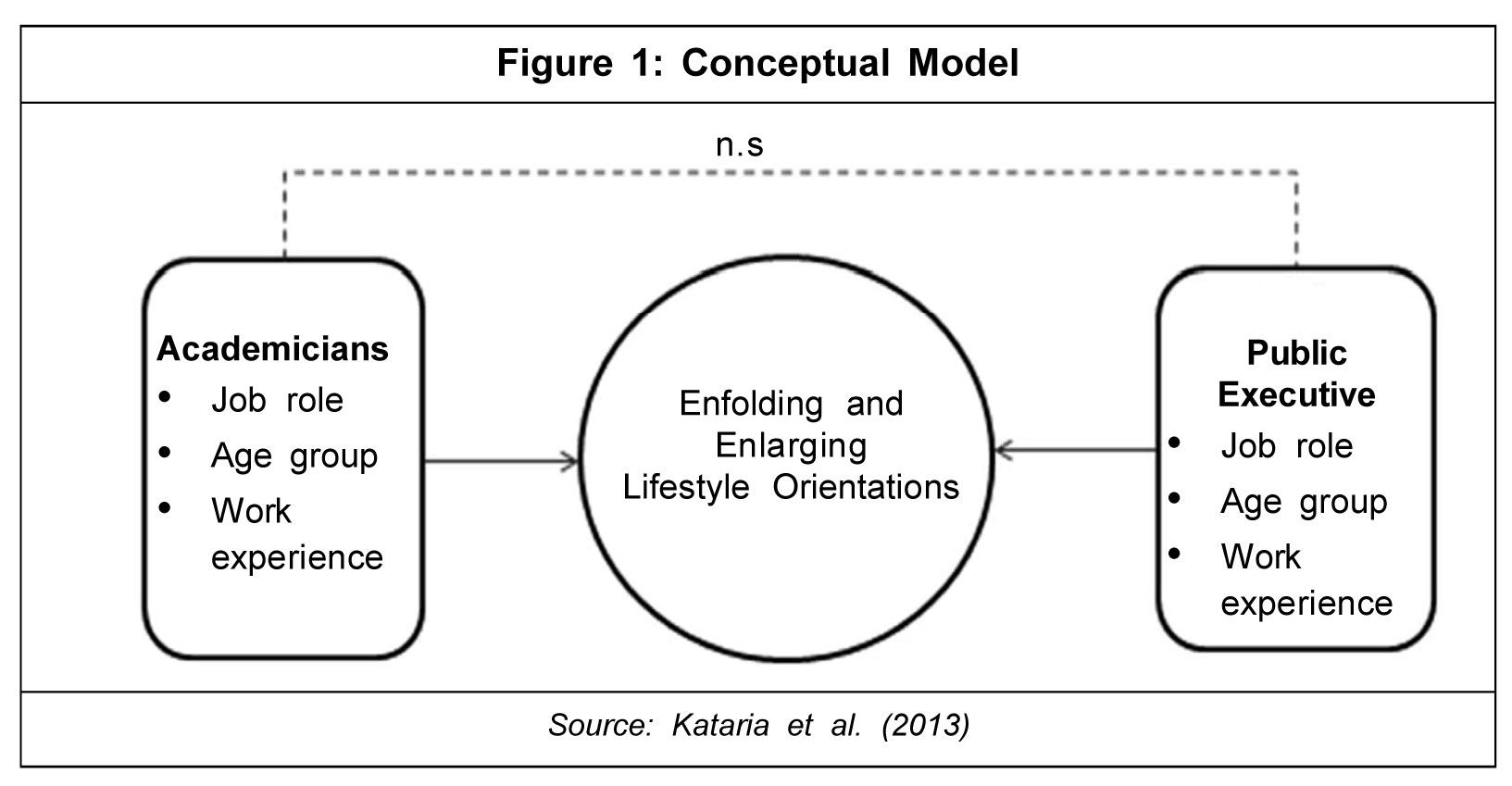
Age Group: Age is a significant factor while reporting the employee's overall competence in the organization (Gorgievski et al., 2010).
Work Experience: Level of workforce or work experience is crucial to decision making, fostering an innovative environment and contributing to the firm's overall success (Borah and Science, 2017; and Malik and Pooja, 2017).
Hypothesis Framing
H01: Academicians and public executives exhibit a different enlarging and enfolding lifestyle.
H02: Various age groups exhibit a different enlarging and enfolding lifestyle.
H03: Different levels of experience exhibit a different enlarging and enfolding lifestyle.
H04: Enlarging and enfolding lifestyle orientations are closely related.
Proposition: Self-actualization is not perceived as a related construct of success.
The study is limited to the departments of Aligarh Muslim University and government offices in Aligarh. Academicians and public executives are divided into categories according to their job roles as the upper level, middle level, and lower level.
Survey Technique
The present study is based on a single cross design. It is descriptive and based on survey technique.
Primary Data: Primary data has been collected through questionnaires from various departments in Aligarh. For this purpose, a standard survey by Pareek (2002) on Life Orientation Inventory has been used from his book: Training Instruments on HRD and OD.
Secondary Data: Secondary data has been gathered to gain a better insight into the topic. It has been collected from text books, online sources, researches, papers, and journals of the reputed database.
The Sample: The sample comprises academicians teaching at Aligarh Muslim University and public executives working under different public sectors in Aligarh. The sample size is 51 professionals randomly chosen from different departments of Aligarh Muslim University and government offices of Aligarh. The authors managed to collect only 51 responses as the response rate was low.
|
|
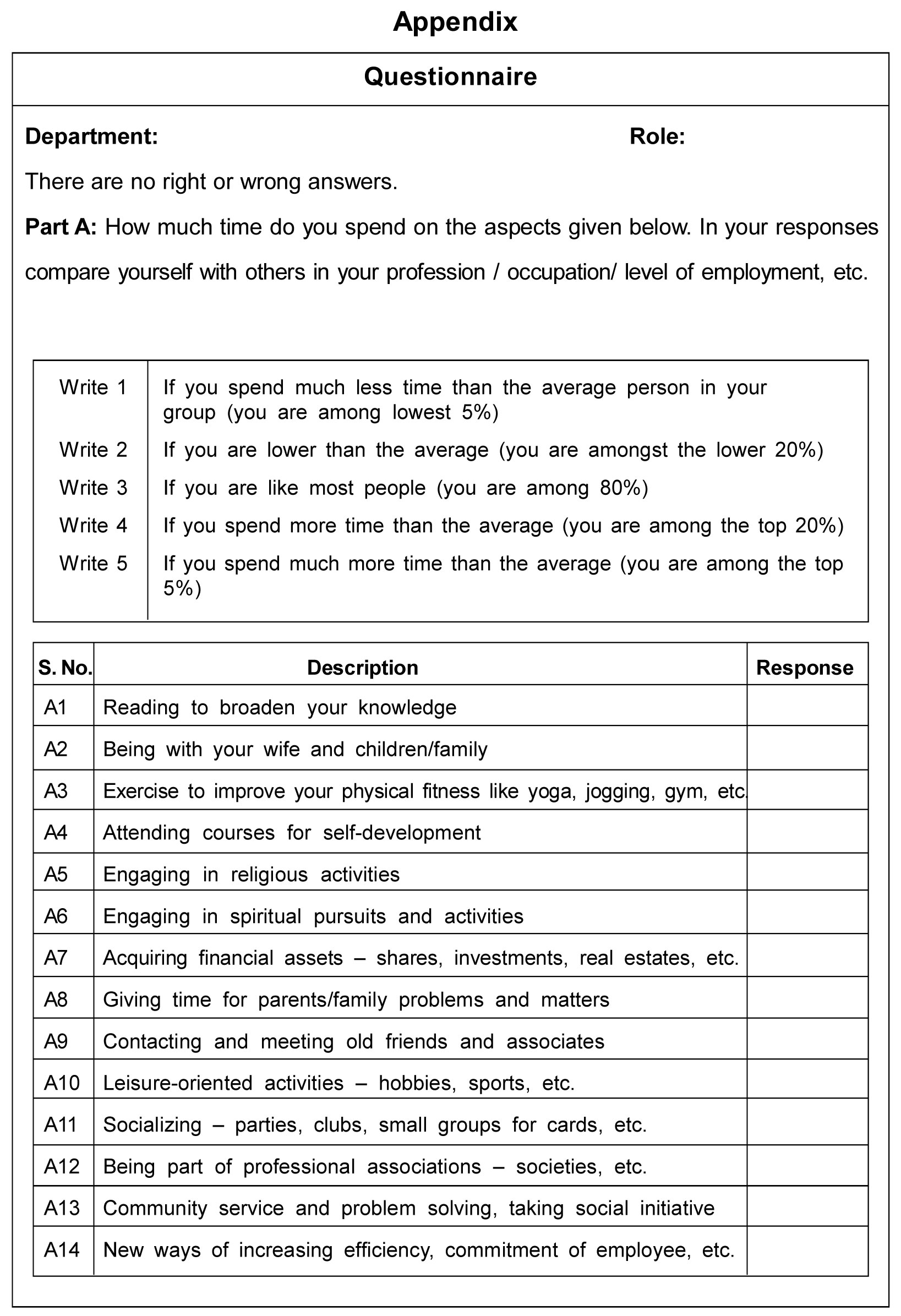
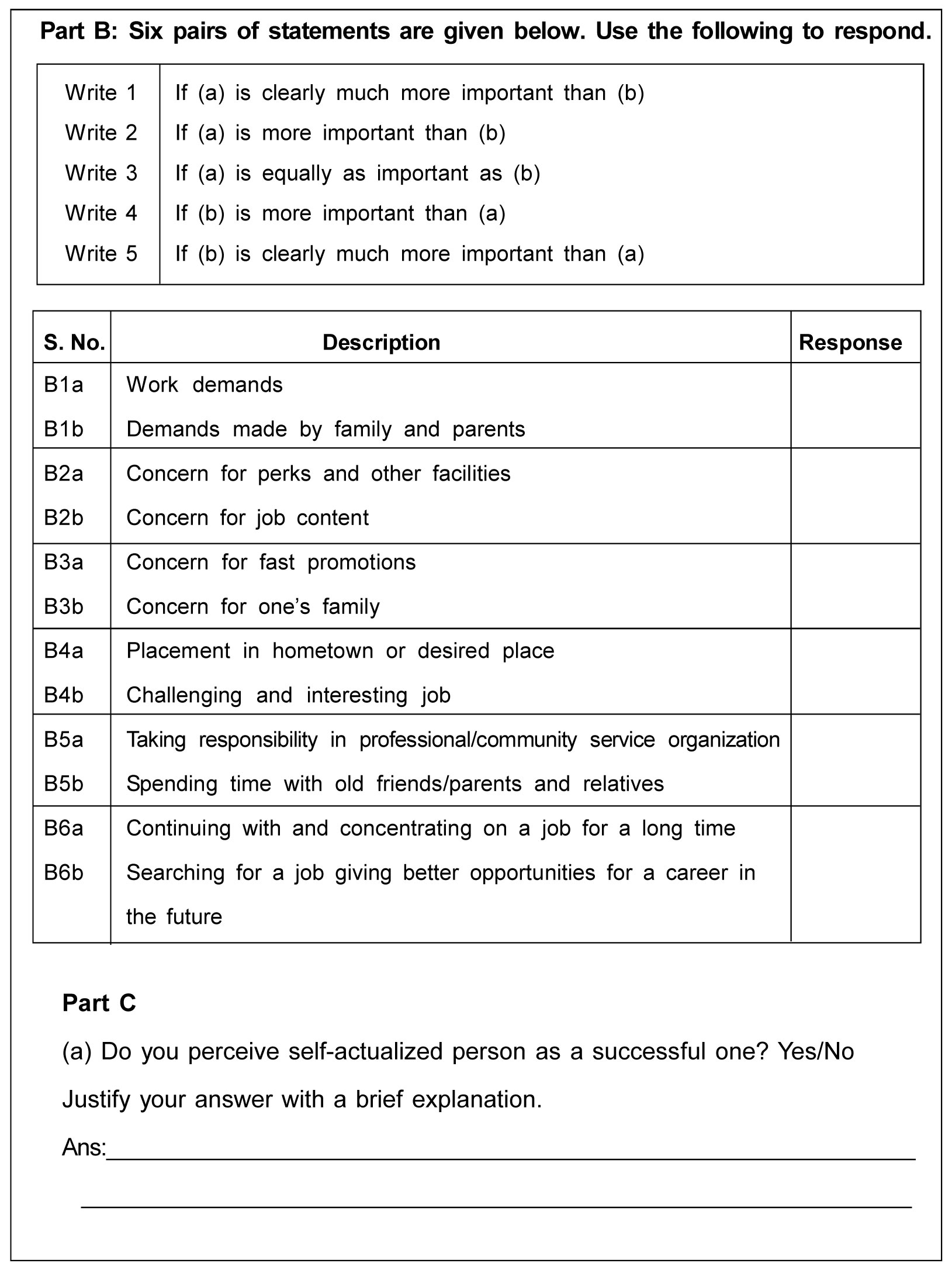
To conduct the study, the standard questionnaire (see Appendix) on Human Resource Development was used-Life Orientation Inventory segmented into three parts (A-14 items), (B-12 items) and (C-1 open-ended question). The respondents were required to rate each item of A and B section on a 5-point scale, based on time and energy they spent on each aspect.
The score sheet was used to score an individual's responses. It was designed so that all the items are grouped into two columns, representing the two lifestyle orientations. The score for each item was written on the scoring sheet. Each column's ratings are totaled, and then each total is subtracted by 10; the resulting figure is multiplied by 2.5. Thus, each column score will range from 0 to 100. The higher the score, the higher is the inclination towards a particular life orientation.
This is the first of its kind work about enlarging and enfolding lifestyle considering academicians and public executives' lifestyle orientations.
Results and Discussion
To validate the hypotheses about the prominence of lifestyle orientation between academicians and public executives, the authors conducted several tests using SPSS software to get accurate results quickly.
The responses received from the respondents are analyzed as per the requirement of the study. In the light of the hypotheses framed, responses are analyzed with regard to the following aspects:
- Job role (Academicians and Public Executives)
- Age group (More than 30-40, 40-50, 50-60)
- Work experience (Upper, middle, lower level employees)
- Correlation between enfolding and enlarging lifestyle
- Impact of self-actualization aspect on success
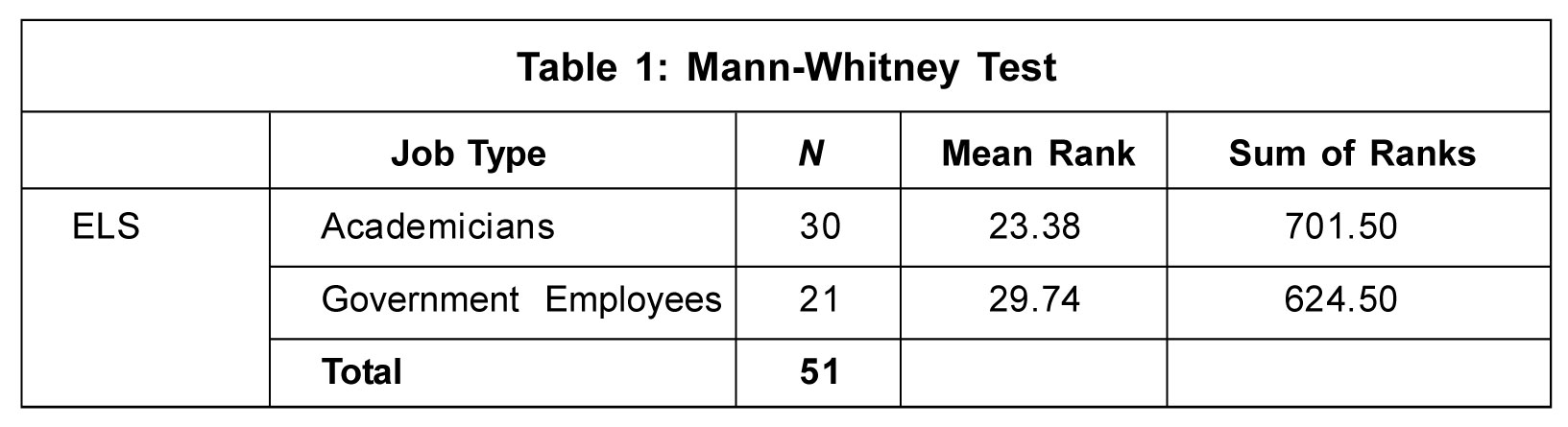
Total number of respondents are 51, and their mean score concerning two lifestyle orientations are shown in Table 1:
Test Statistics
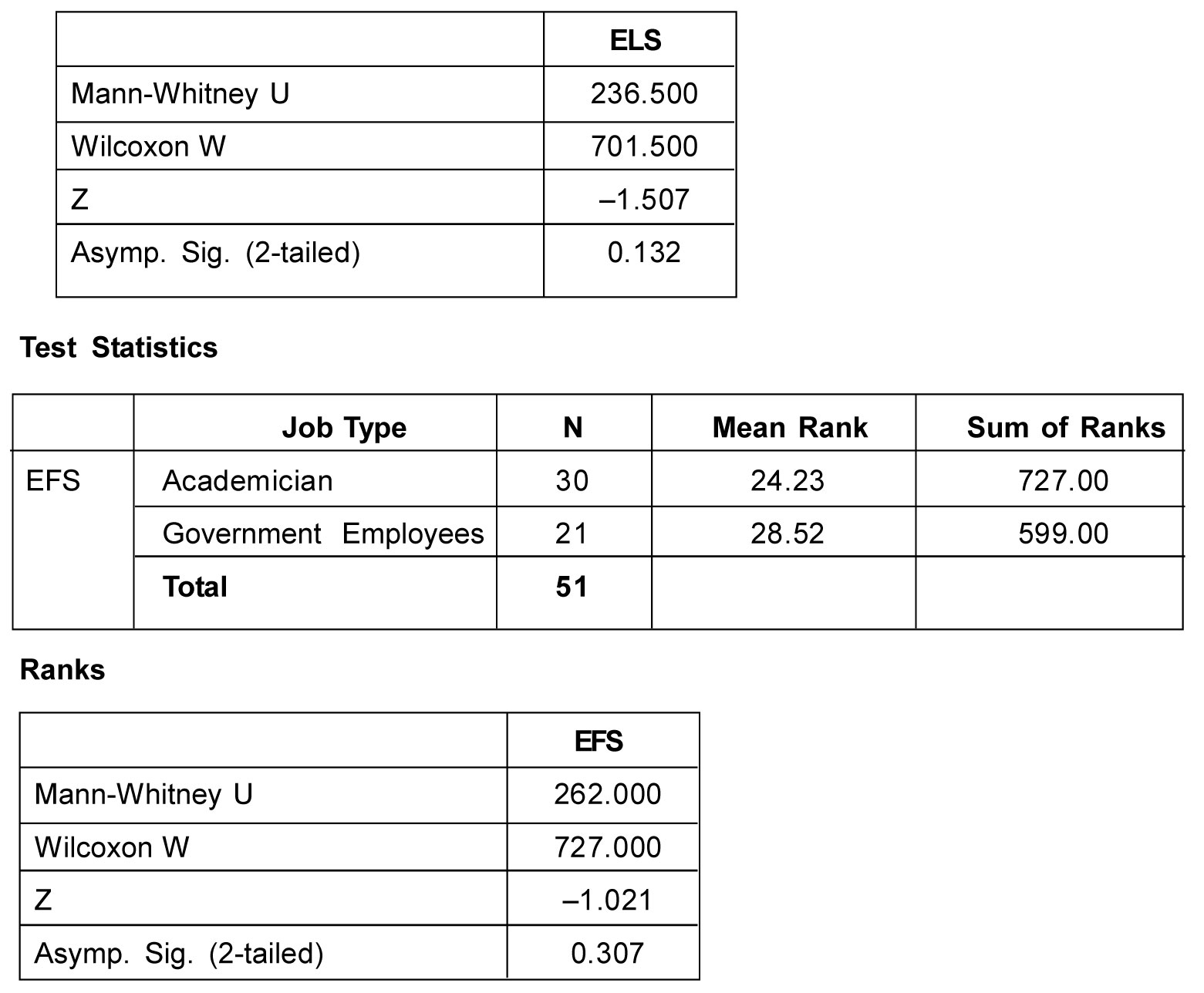
Job Role: Mann-Whitney U test was conducted as the individual sample of academicians and public executives was less than 30. The analysis based on enlarging and enfolding scores between academicians and public servants revealed a significant difference vis-a-vis learning since the results of the test signify that in both the cases, the p-value is 0.132 and 0.307, respectively (Table 1), which is greater than the significant difference (0.05), and thus fails to reject hypothesis (H01).
Age Group: To check the statistical variance between enlarging and enfolding lifestyle based on age group and work experience, ANOVA is used for three variables (upper, middle, and lower-level employees).
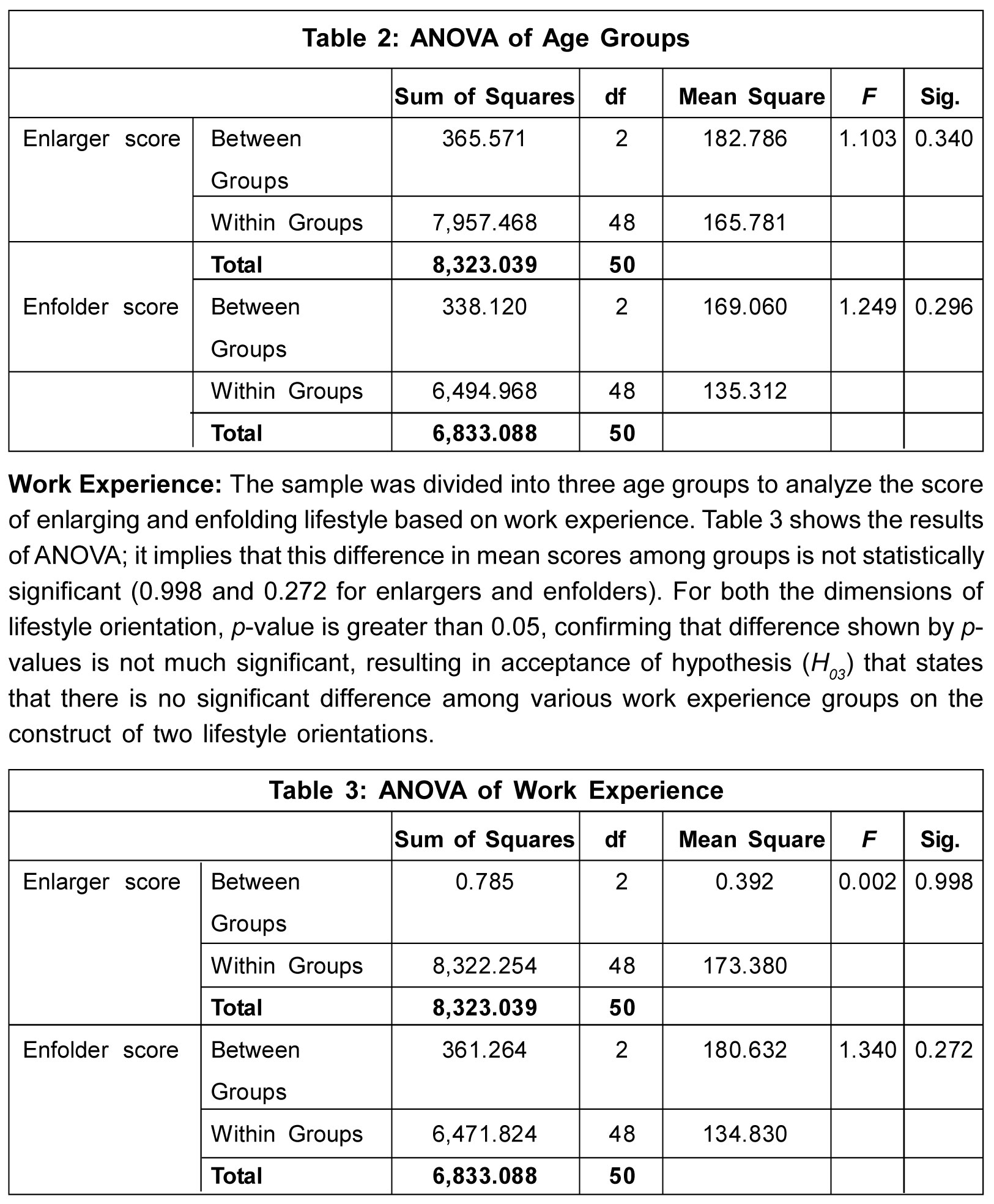
By analyzing the results, it can be concluded that this difference has no significance, as the p-value (0.340 and 0.296 for enlarging and enfolding scores, respectively) is more than 0.05 (Table 2). Thus, hypothesis (H02) "Various age groups exhibit a different enlarging and enfolding lifestyle" holds. Hence, it is accepted.
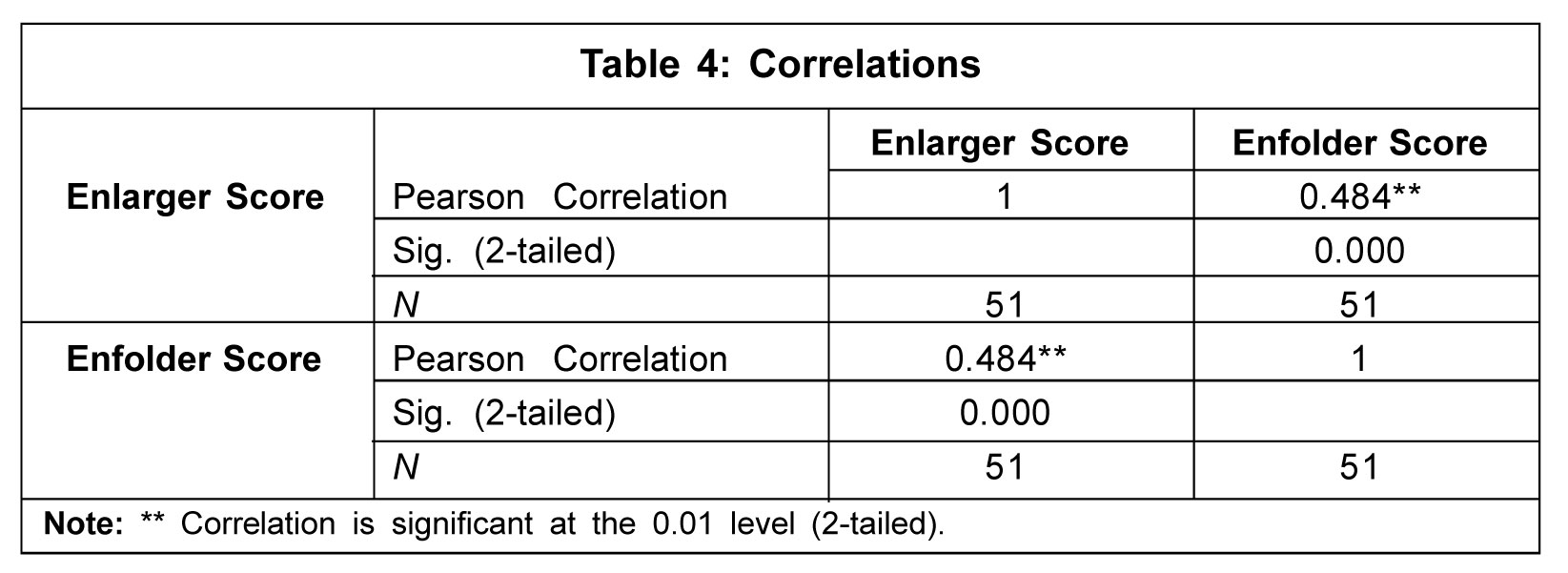
Correlation Between Two Life Orientations: To analyze the relationship between two lifestyle orientations, the correlation is calculated and displayed in Table 4, which shows a positive correlation (0.484) between the two. Hence, hypothesis (H04) that states that correlation between the two lifestyle orientations is accepted.
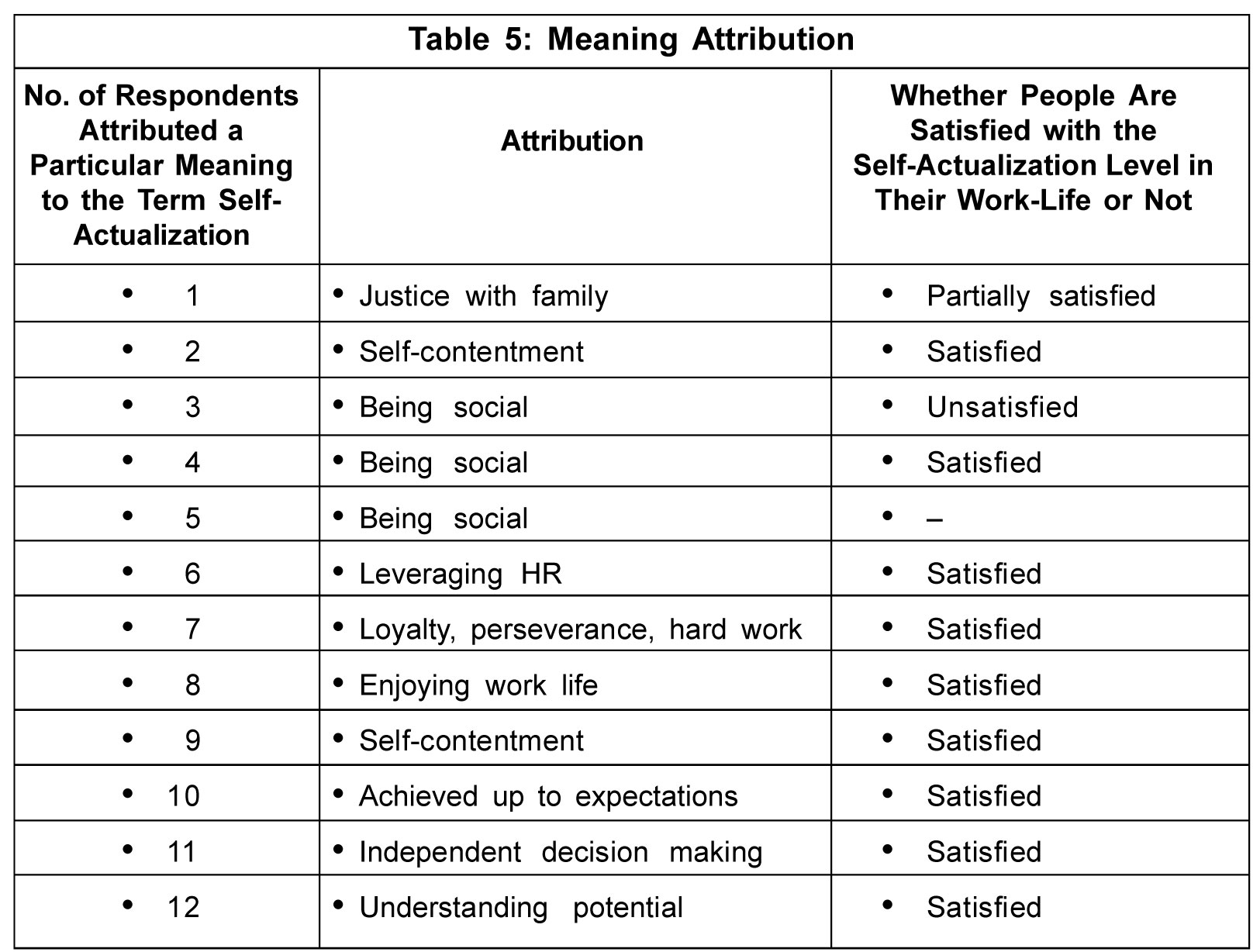
Self-actualization is a success indicator or not: An open-ended question was added to the questionnaire to ask about the perception about the term "Self-actualization". The authors did not adopt the statistical procedure. Instead, a qualitative approach has been used. The respondents have been asked to state whether self-actualization is a significant contributor to their success or not. The responses were recorded and studied. The selection of successful academicians and executives was made on the judgment of the authors. The study has not conducted any empirical analysis to measure the success. However, considering the positions the respondents have attained, it is clear that their careers have been a success.
Most of the people surveyed acknowledged the fact that self-actualization is the real success in life. They attributed many aspects of self-actualization, including peace with family and society, self-contentment, loyalty and perseverance, and so on, proving that self-actualization is not just confined to a higher-order need. Everyone needs the feeling of contentment to keep our peace of mind intact regardless of the pressures of the hectic life where everyone is busy following their end impulsively (Lester, 1990; and Gopinath, 2020). Therefore, the proposition "Self-actualization is not perceived as a related construct of success" is not accepted.
Interpretation of Test Results: The results show that people do not exhibit their professional background in their lifestyle orientation approach. Their behavior is not biased by the type of professional space they are in (Mukherjee, 2012). The results of this study did not show that different professions have a significant impact on people's lifestyle orientation. It could not be verified that academicians behave differently from public executives as there is no significant difference between public executives and academicians on the construct of lifestyle orientation supported by the scores (0.132 and 0.307 significance level for enlargers and enfolders, respectively) as depicted in Table 1. The reasons for this result might be the surroundings or the state of affairs of the place they belong to; and we can also say people are fairly balancing their personal and professional life in Aligarh.
Table 2 shows the significant difference of 0.340 and 0.296 among various age groups based on enlarging and enfolding style, respectively, which states that individuals' life orientation is not deterred by age. People can exhibit any kind of behavior at any age; it is not necessary that people are committed to their work and passionate about their dreams only at a young age and showed static behavior at an older age. They can be passionate about things at a higher age as well. It depends upon the need for selves. The study examined people over age fifty onwards who possess an enlarging lifestyle, and young professionals displayed strong enfolding lifestyle orientation.
Table 3 also exhibited the difference between various workgroups (junior, middle, and senior-level employees) on the grounds of two lifestyle orientation which shows no evident difference among people with varying levels of work experience and their perception toward life supported by the significance level 0.998 and 0.272 for enlargers and enfolders. These scores suggest that people at the peak of their profession can exhibit enlarging and enfolding style during work experience, or that job profile does not express the orientation one has towards his/her life (Thakre, 2009).
Lifestyle emerges out of our construction of selves depending upon our conscious understanding of life, which does not necessarily mean that we are aware of all the inherent qualities we have; maybe we get to understand our caliber later in our lives. It was also found in the study that a positive correlation exists between enfolding and enlarging lifestyle (Table 4), which states that both styles impact each other and there seem to be some common elements between the two forms.
Table 5 can be interpreted as how every individual perceives self-actualization differently by adding a different meaning to it according to their personal and professional experiences. Studying the impact of self-actualization on the process was beyond the scope of this paper. The paper was mainly concerned about whether it was a significant contributor or not. This paper aimed to highlight the enfolders and enlargers among the respondents who were considered successful. Attributing self-actualization to a successful career adds a new dimension to this study.
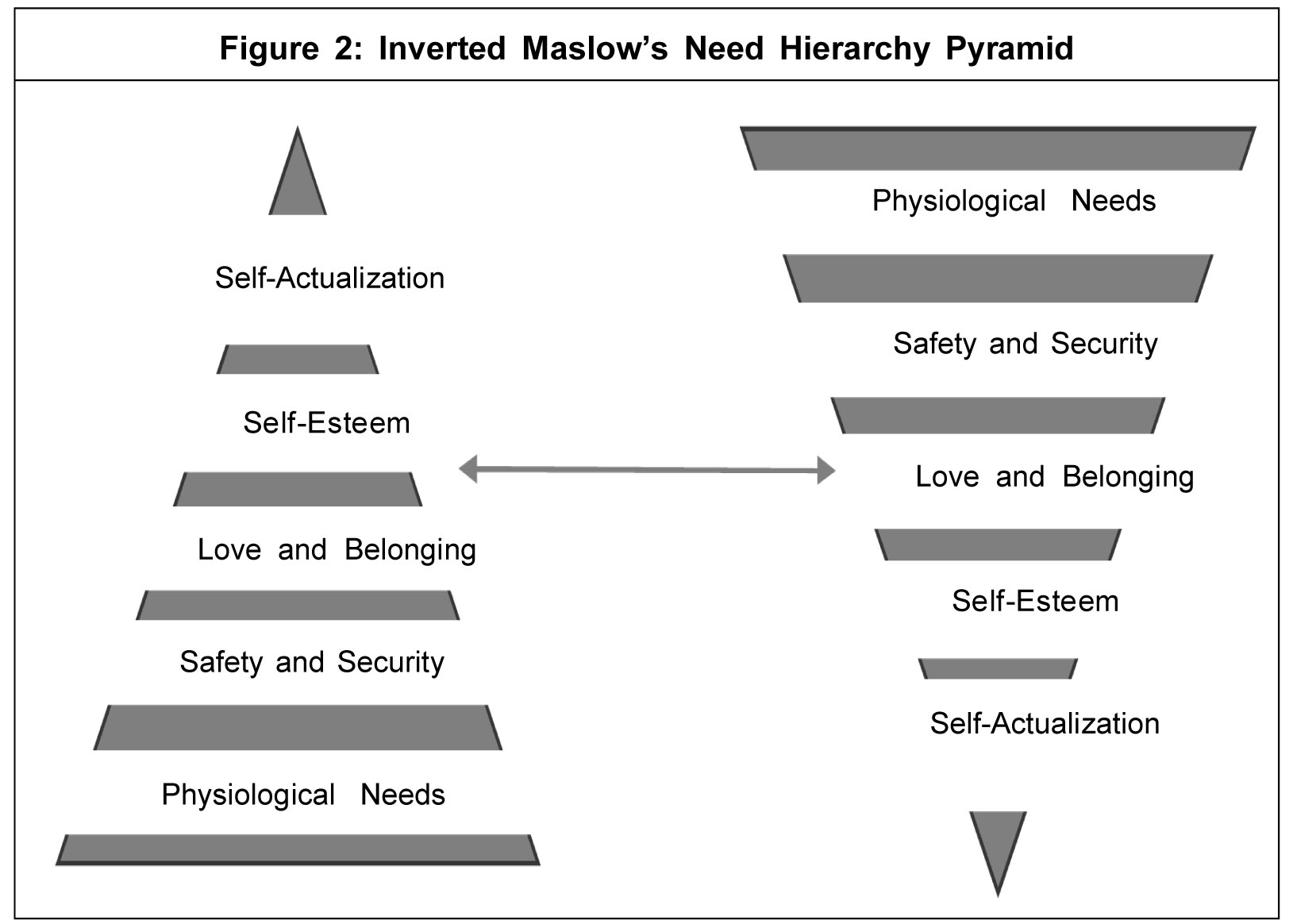
In the contemporary world, it is being witnessed by various scholars and psychologists that Maslow's motivational pyramid is hanging upside down (Abramovich, 2020), need for self-actualization is becoming essential for people. They are more focused on their personal development, inculcation of new skills and becoming the best version of themselves. This drift in the motivational needs is caused by changing lifestyles or life-orientations of people in this ever-changing world (Cabanas and Sanchez-Gonzalez, 2016). People with strong desire for success and achievements are motivated by higher-order needs like self-actualization and self-esteem, which are at the top of Maslow's motivational pyramid, and people possessing requirements are known as 'enlargers'. In contrast, the one who enjoys stability and pitches his/her strength inward is likely to be motivated by physiological or safety needs and termed 'enfolders'. Therefore, Maslow's motivational pyramid is gradually changing in this manner (Figure 2 conceptualized by the authors).
These findings set the ground for further research to understand how these needs are changing among millennials, their perspective of life orientation, or any other lifestyles. Studies conducted centuries ago have laid the foundation for behavioral sciences and proved their findings, but human beings are the most irrational selves. Their dynamic behavior gives more research attributable to different management fields (Geller, 1982; and Maslow, 1991).
Conclusion
Lifestyle orientation is a broader concept and cannot be restricted to just dimensions of job profile, work experience and age. That is what the study intended to show by studying lifestyle orientations of academicians and public executives. Consequently, the findings infer that there is no difference in lifestyle orientations of professionals with different job profiles on the constructs of job role, work experience and age group. However, the results also suggest the interrelationship between enfolding and enlarging lifestyles, which further states that it is not constrained that an enlarger cannot exhibit traits of the enfolder and vice versa. Other behavioral factors such as organizational environment and decision-making power (Dargie, 2000) might impact the lifestyle orientation of employees, which is beyond the scope of the study.
Moreover, the study also provides insightful knowledge about the self-actualization need of employees, and a brief idea is presented as to how it contributes to the sense of being successful. Therefore, most people attributed self-actualization need as one of many parameters of success.
Managerial Implications: The study could help managers assess and evaluate employees' behavioral aspects based on their lifestyle orientation. This study gives keen insights into how employees behave in contradiction to traditional norms and ethos and are proactive to the current scenario's needs, realizing that change is the need of the hour.
- The study gives managers diagnostic insights on the past, current, and prospective future life orientation trends prevailing in the organization.
- It gives a brief idea about the difference between enlarging and enfolding lifestyle, which results in the difference in employees' work patterns in the organization.
- A fair idea about overall scores vis-a-vis age, work experience, etc., can be gauged, which helps managers to devise strategies to reduce the disparity (if any).
- The study will be helpful to research scholars, managers, and executives interested in behavioral psychology.
- The top management scores of enlargers and enfolders can diagnose the organization's strength in human resources. Policies could be developed according to the lifestyle patterns of employees for motivating them.
- The managers can use this study to evaluate employees' work on different parameters like self-actualization, motivation, competitiveness, etc.
- Managers can assess employees' productivity by analyzing the nature of job, whether the work is self-actualizing or not, and whether employees enjoy it.
- The study's coverage can be increased by including other sectors like corporate executives and teachers of other private universities; the sample size can also be more extensive (Mansor and Saparudin, 2015).
- Employees of other regions outside Aligarh can be incorporated to widen the scope and make comparisons on a regional basis.
- By contacting both female and male public executives, a gender-based study can be conducted (Beamish, 2005).
- Abramovich A (2012), "Theory of Needs and Problems", Bulletin of the South Russian State Technological University, Vol. 4, pp. 2075-2067.
- Adler A (1930), "Alfred Adler's Personality Theory and Personality Types", Journal Psyche, Journalpsyche.Org.
- Adler A (1956), "The Individual Psychology of Alfred Adler/: A Systematic Presentation in Selections from His Writings", 1st Edition, Basic Books.
- Adler A, Ansbacher H L and Ansbacher R R (1979), "Superiority and Social Interest/: A Collection of Later Writings", Norton.
- Ann H, Shudo K and Miyo U (1983), "Motivation and Values Among Japanese", Personnel Psychology, pp. 883-899.
- Bass B M, Stogdill R M, Ralph M and Stogdill R M (1990), Bass & Amp; Stogdill's Handbook of Leadership Theory, Research and Managerial Applications, Free Press.
- Beamish G (2005), "How Chief Executives Learn and What Behaviour Factors Distinguish them from Other People", Industrial and Commercial Training, Vol. 37, No. 3, pp. 138-144
- Borah N and Science A (2017), "Can Engaged Employees Help Create Positive Organizational Behaviour?", Impact of Employee Engagement on Organizational Citizenship Behaviour, October, available at https://doi.org/10.9790/487X-1910042025
- Bray D W, Campbell R J and Grant D L (1974), Formative Years in Business: A Long-Term AT & T Study of Managerial Lives, Wiley.
- Bulut S S (2018), "Obstacles to Self-Actualization of College Students: The Case of Gazi Faculty of Education", Universal Journal of Educational Research, Vol. 6, No. 10, pp. 2271-2279, available at https://doi.org/10.13189/ujer.2018.061026
- Cabanas E and Sanchez-Gonzalez J C (2016), "Inverting the Pyramid of Needs: Positive Psychology's New Order for Labor Success", Psicothema, Vol. 28, No. 2, pp. 107-113, available at https://doi.org/10.7334/psicothema2015.267
- Cherry K (2018), "The Five Levels of Maslow's Hierarchy of Needs", Verywellmind.com, pp. 1-5, available at http://blogs.jefftwp.org/wordpress/rzegas/files/2014/02/Maslow-Reading.pdf
- Dargie C (2000), "Observing Chief Executives: Analyzing Behaviour to Explore Cross-Sectoral Differences", Public Money and Management, Vol. 20, No. 3, pp. 39-44, available at https://doi.org/10.1111/1467-9302.00222
- El Bedawy R, Ramzy O, Maher A and Eldahan O H (2017), "The Role of Training, Democratization and Self-Actualization in Addressing Employee Burnout", International Business Research, Vol. 10, No. 8, p. 93, available at https://doi.org/10.5539/ibr.v10n8p93
- Geller L (1982), "The Failure of Self-Actualization Theory: A Critique of Carl Rogers and Abraham Maslow", Journal of Humanistic Psychology, Vol. 22, No. 2, pp. 56-73, available at https://doi.org/10.1177/0022167882222004
- Gopinath R (2020), "Prominence of Self-Actualization in Organization", Vol. 29, No. 3, pp. 11591-11602.
- Gopinath R (2021), "An Investigation on Mediating Role of Job Involvement, Organizational Commitment and Job Satisfaction of Academic Leaders' Self-Actualization in Tamil Nadu Universities", European Journal of Molecular and Clinical Medicine, Vol. 8, No. 1, pp. 1493-1508, available at https://www.embase.com/search/results?subaction=viewrecord&id=L2011070043& from=export
- Gorgievski M J, Bakker A B and Schaufeli W B (2010), "Work Engagement and Workaholism: Comparing the Self-Employed and Salaried Employees", Journal of Positive Psychology, Vol. 5, No. 1, pp. 83-96, available at https://doi.org/10.1080/17439760903509606
- Kataria A, Garg P and Rastogi R (2013), "Psychological Climate and Organizational Effectiveness: Role of Work Engagement", The IUP Journal of Organization Behaviour, Vol. 12, No. 3, pp. 33-46, available at http://search.ebscohost.com login.aspx?direct=true& db=bth&AN=89529689&site=ehost-live
- Khalid S, Zohaib Irshad M and Mahmood B (2011), "Job Satisfaction among Academic Staff: A Comparative Analysis between Public and Private Sector Universities of Punjab, Pakistan", International Journal of Business and Management, Vol. 7, No. 1, available at https://doi.org/10.5539/ijbm.v7n1p126
- Lester D (1990), "Maslow's Hierarchy of Needs and Personality", Personality and Individual Differences, Vol. 11, No. 11, pp. 1187-1188, available at https://doi.org/10.1016/0191-8869(90)90032-M
- London M (2014), "Career Barriers?: How People Experience, Overcome, and Avoid Failure", (1st Edition), Psychology Press, available at https://doi.org/https://doi.org/10.4324/9781315805764
- Lowman R L (2008), Douglas W Bray (1918-2006): Career and Personal "Life Themes", The Psychologist-Manager Journal, Vol. 11, No. 1, pp. 185-199, available at https://doi.org/10.1080/10887150801967720
- Mabrouk D M M (2019), "The Dilemma of Guarding Self-Actualization from Fear Claws", Open Journal of Social Sciences, Vol. 7, pp. 1-6, available at https://doi.org/10.4236/jss.2019.77001
- Malik Parul and Pooja Garg (2017), "Learning Organization and Work Engagement: Exploring the Nexus in Indian IT Sector", Asia-Pacific Journal of Business Administration, Vol. 34, No. 1, pp. 1-5.
- Mansor Z D and Saparudin I N (2015), "Motivational Factors for Academicians in Private Universities to Participate in Knowledge-Sharing Activities", Pertanika Journal of Social Science and Humanities, Vol. 23, January, pp. 101-116.
- MASLOW A H (1991), Critique of Self-Actualization Theory, The Journal of Humanistic Education and Development, Vol. 29, No. 3, pp. 103-08, available at https://doi.org/10.1002/j.2164-4683.1991.tb00010.x
- Melinda D, Emzir and Akhadiah S (2019), Self-actualization of The Main Characters in Ford County, By Grisham, Journal of Education, Teaching, and Learning, Vol. 4, No. 1, pp. 157-162.
- Mukherjee D (2012), "Facilitating Productive Work Life With Respect to Life-Orientation, Gender and Occupational Stress", Journal of Organisation & Human Behaviour, Vol. 1, No. 3, pp. 12-17.
- Mumford M D, Zaccaro S J, Johnson J F, Diana M, Gilbert J A and Threlfall K V (2000), "Patterns of Leader Characteristics: Implications for Performance and Development", Leadership Quarterly, Vol. 11, No. 1, pp. 115-133, available at https://doi.org/10.1016/S1048-9843(99)00045-4
- Omar A S B H and Adruce S B A Z (2017), "The Role of Demographic Variables on Knowledge-Sharing Behaviour Among Academicians", Journal of Telecommunication, Electronic and Computer Engineering, Vol. 9, Nos. 3&11, pp. 111-114.
- Pandit P and Thomas A (2014), "Impact of Decision Making Style and Life Orientation on Retention Decision on Employees At MSME", Prestige E-Journal of Management & Research, Vol. 1, April, ISSN 2350-1316.
- Pareek U N (2002), Training Instruments in HRD and OD, Tata McGraw-Hill.
- Rychlak J F (2017), Personality and Lifestyle of Young Male Managers: A Logical Learning Theory Analysis, Elsevier.
- Singh S, Kodwani A D and Agrawal R K (2013), Role of Lifestyle Orientation and Perceived Organizational Functioning in Psychological Empowerment of IT Professionals", Benchmarking, Vol. 20, No. 3, pp. 396-418, available at https://doi.org/10.1108/14635771311318153
- Sivakumar A (2019), "Self-actualization Among School Teachers in Coimbatore District", Zenith International Journal of Multidisciplinary Research, Vol. 5, May, pp. 229-236, available at https://doi.org/10.5958/2278-4853.2019.00139.3