July '22
The IUP Journal of Organizational Behavior
Archives
Friendship at Work: Do Women and Men Have Different Perspectives on Its Influence on Productivity, Emotional Support and Career?
Rita Rangnekar
Dean, IBACO, ICFAI Business School, Mumbai, India. E-mail: ritar@ibsindia.org
This paper explores the association of workplace friendship with productivity, emotional support at work, personal disclosure and career progression of co-workers, and the difference in the meaning of this association to women and men. After examining how workplace friendship originates and progresses, the study examines how women and men perceive its influence on productivity, career progression, workplace dynamics such as performance demands, growth and equity issues, compensation, rewards, hierarchy and job continuity. The study has been conducted through a literature review and a quantitative analysis after collecting data through a survey. The findings show that while workplace friendship may hold slightly different meaning to different genders, it works in favor of productivity, helps in reducing workplace loneliness and provides emotional support to co-workers in troubled times. The study also indicates that equity issues in reward and compensation may alter workplace relations with variations in the way different genders perceive them.
Introduction
Friendship is important for all. While being a universal and critical aspect of the human social framework, friendship as a social institution is integral to all studies on personal wellbeing and is given a status similar to that of a close familial network, sometimes even taking precedence over the emotional support provided by family. Literature, across the world, abounds in work that has friendship as its main foundation. As an institution, studies show that friendship has a role in health, wellbeing, happiness, social survival, emotional support and the basic fabric of human interaction (Peiqi et al., 2021).
Naturally, this institution seeps into the fabric of a formal organization or the workplace, where, even though people go to work and earn a living, they form social relationships. Behavioral studies in organizational behavior, such as Maslow's Theory of Human Needs, LMX Theory and others, on why people work show that people also go to the workplace to satisfy their social needs. Sapiens have an inherent need to interact and connect with other humans beyond the boundaries of "work-related" interactions. Relations at work, therefore, often cross the confines of 'work only' definitions and merge working life with human relations through daily interactions within the social framework and work culture of any organization. People cannot work in isolation; inter-dependence and the role of the co-worker in the success of any task is critical. This can even make it necessary for co-workers to start 'work' by first forming a 'relationship' with those they work with, crossing defined work spaces and stepping into personal domains, thereby assuming dimensions of friendship. Some relationships could dissolve after the task or on project completion, while some relationships may continue as 'workplace friendship' or deeper personal bonds.
Workplace friendship can exist between co-workers, co-workers and superiors, co-workers and subordinates, and form complex matrices and relationship entanglements, leading consciously or unconsciously to influence workplace practices, behavior and overall work culture.
Global research on workplace friendship highlights the therapeutic value and utility of friendship within work-teams and the extent of emotional support that workplace friendships provide, as well as case studies of successful business/entrepreneurial associations formed by friendship dyads. Research also examines the foundation of friendly relations at work and how they evolve in different work contexts. At work, friendship is said to increase resilience, alleviate loneliness or boost professional development. The psycho-social context and the lasting value of workplace friendships in post-retirement life and attrition reiterates that workplace friendship provides meaning beyond work and can serve the social or humane intent of reducing overall loneliness and in enriching employees' quality of life.
The new normal has escalated business networking practices through renewal of lost and existing friendships. Prolonged working schedules and excessive work commitment in highly demanding workplaces have pushed people to put their personal lives on the backburner, leading to estranged friendships. Employees then seek companionship at work.
The dark side of workplace friendship, highlights dimensions of workplace possessiveness, bias, hate, intimacy, prejudice, cross-cultural barriers, gender barriers and their influence on work culture and employee morale. Workplace friendship has deep and complex social effects, equating it to its institutionalization similar to 'family' or 'marriage'.
Friendship is complex and can mean different things to different people, because it involves the effort and struggle of equals in fulfilling their part of the friendship dyad. Perceptions of different genders do play a role there. It is therefore worth examining complexities of workplace friendship and how they relate to organizational goals and how men and women perceive these dimensions.
The current study is an exploratory research on the nature of workplace friendship, with respect to how men and women find meaning out of workplace friendship and how they make it function differently. What psycho-social and emotional support, productivity and career levers does workplace friendship provide to people? How do they evolve in the real context of career growth, productivity demands, growth pressures and equity- related issues such as compensation, rewards, promotions and position of power? The study explores how gender nuances of workplace friendship translate into buddy support and long-term career decisions made by employees such as moving on or staying on the job, relationships of workplace friends with other stakeholders in the organization, personal disclosure and also attempts an in-depth exploration of the influence of their workplace friendship on productivity, career progression, workplace dynamics such as performance demands, growth and equity issues, compensation, rewards, hierarchy and job continuity.
Need for the Study
Workplace friendship has been widely researched in Western work contexts. However, performance components such as productivity, reward and equity and their relationship with workplace friendship in India remains unexplored. Social groups in organizations and their impact on work find their place in industrial relations, industrial unrest. Workplace friendship is sometimes viewed negatively as an undesirable offshoot of group formation at work. Gossip, grapevine and unionism are often attributed to friendship. The life-skill dimension of workplace friendship as also the organizational experience that workplace friendship provides, is often ignored. This study is essential to understand friendship at work and its impact on workplace behavior and performance from the gender perspective.
The study does not include workplace romance, workplace attraction and cross-gender intimacy, which are often associated with studies related to friendship at work and gender association.
Theoretical Framework
The study is based on the framework of workplace friendship as follows:
1. Is there such a thing as Workplace Friendship?
Prolonged and stressful working hours, shared workspaces, extended spells of family alienation and close proximity during critical projects and assignments lead to the formation of relationships which transcend the requirements of a workplace relationship, thereby developing into friendship. Longer hours spent together lead to greater personal disclosure. "A living being is completely alive when he lives his 'feeling' life" (Harari, 2016). "If a man spends most of his time at work, he naturally seek companions at the workplace"; Co-workers continue to be friends even after they leave the organization. People change jobs but do not always break ties with those they worked with. Employees often reside in private or company provided accommodation close to the workplace, like defense services, government service and large corporations or conglomerates. Frequent socializing outside of work are by-products of such lifestyles and form the cultural norm, sometimes even a professional requirement. Can these relationships be considered under the umbrella of 'friendships'? Or are they friendship-like associations?
A more formal and structured definition is provided by Evan et al. (2002) who say that workplace friendships can be defined as non-exclusive workplace relations that involve mutual trust, commitment, reciprocal liking and shared interests.
Working life provides various avenues for employees to interact, meet, move together such as the daily work commute, lunchtime interaction, annual gatherings, picnics, recreational platforms, outbound assignments, work-related travel as well as company quarters. These too can lead to extended interaction among co-workers leading to relationships outside the work context. Sociological studies in institutions like family, marriage and friendship prove that workplace friendship has a lasting, lifetime value and has often been institutionalized in marriage or long-lasting social ties. Workplace friendship can be deemed to exist as a social institution.
Literature Review
Laura and Fasbender (2021) presented an age-diverse workplace friendship framework and model through a systematic, comprehensive literature review which takes us through the process of individual and interpersonal such as friendship chemistry as well as organizational antecedents, which, if put through a cognitive, affective and behavioral maintenance process, can lead to positive individual and organization outcomes such as increased job satisfaction, employee engagement, meaningful work, buffer from bullying, improved wellbeing and employee health in turn leading to innovation, creativity and work performance. The review views covers workplace friendship through the Similarity Attraction Theory, Social Identity Theory, Socio-Emotional Selectivity Theory, LMX Theory and others. The study indicates that age, gender and ethnicity are part of the surface level factors in the identification of social group, whereas attitudes, values and work style are deeper level characteristics that determine continuity and belonging in a workplace social group.
Li Guohao et al. (2021), in their empirical survey comprising 266 Pakistani service employees, drew a linkage between workplace friendship, supervisor behavior integrity, affective commitment and employee proactive behavior, whereby the words and deeds of leaderships and their authenticity combined with a friendly approach can lead employees to accept their leaders, develop attachment to the organization and be more proactive and productive. Workplace friendship, as per the authors, becomes a moderator in minimizing negativity.
Nancy et al. (2021) found that forced remote working during the pandemic led to a shrinkage in people's networks. Calling workplace friendship by the name of social capital, critical for productivity, they found that close networks increased but distant networks decreased. The authors advise companies to decrease employee workload to make workplace relationships a priority for the emotional wellbeing of employees and to increase engagement and productivity.
Waal (2018) fleetingly referred to the role of workplace friends in increasing happiness at work. The study whets the role of workplace friendship in people-sourcing and employee referrals. This research has hope for people joining an organization based on friends' recommendations. The study also provides interesting insights into the prospect of making workplaces attractive by fostering close relationships.
Paul and Noshir (2016) spoke of relationship analytics as an emerging discipline, based on people's interactions and provide a framework for understanding relational analytics through six signatures: Ideation, Influence, Efficiency, Innovation, Silos and Vulnerability. Recommending the use of people's interactions patterns and relations to study performance, the paper highlights the benefits of friendly liaisons to build inter-departmental ties and understand interdepartmental conflicting stances. The study establishes the necessity of workplace friendships for conflict resolution, enhancing interdepartmental understanding and performance orientation.
Pillemer and Nancy (2016) presented a theoretical framework of four features of friendship: informality, voluntariness, communal norms and socio-emotional goals: and how they collide with four fundamental elements of organizational life-formal roles, involuntary constraints, exchange norms and instrumental goals. The study presents the negative role and effect of mutual self-disclosure in workplace friendship and how it creates a downside for personal and organizational growth.
Akila and Priyadarshini (2018) conducted a survey to determine the most preferred type of workplace friendships between 'Work Spouse; Special Peer; Collegial Peer; and Information Peer'. While a work spouse is a platonic special workplace friend who shares a close bond, high-disclosure, high level of support, mutual trust, honesty, loyalty and respect, a special peer is considered as a best friend in the organization holding more regard than a co-worker, irrespective of working or not working together, a collegial peer is a work buddy with whom a co-worker may not disclose personal details but would often meet and interact with, and an information peer is someone who is considered an acquaintance, with the relationship lasting only till the peers work in the same organization. The study found that the Information peer and Special peer to be the most preferred friends at work with the 'Work Spouse' being the least frequent in organizations despite providing immense emotional support to the friendship dyad.
McKee (2017) spoke of the downside of conforming and belonging at work, in a section of her book, explaining why you need friends at work. The author stated that when people try to fit too well into groups to show that they are together and when they over-conform, they end up into inauthentic relationships, which stunt creativity and obstruct unique talent. The author alludes to the utility of fun element at work in building resonant relationships, providing possible keys to happiness and effectiveness. The author reiterates that the inherent remoteness of the virtual world requires conscious efforts and commitment to build relationships with people who do not sit in the same office as oneself.
D'Hont et al. (2016) examined the potential influence of friendship on entrepreneurial partners. Their comprehensive literature review cites dimensions of workplace friendship, such as 'time spent'; 'emotional intensity' and 'mutual confiding.' Discussing how friendships evolve into professional ties, the authors speak of the fusion between friendship and professional ties, such as spending weekends and holidays together. The paper also highlights the need to discontinued workplace friendship at particular intervals to prioritize business, thereby ascertaining that professional ties reduce closeness.
Rumens (2016) reflected on prioritizing social and humanistic aspects of workplace friendship in the interest of employee wellbeing over reaping of organizational benefits through friendship duos or teams. The research highlighted the 'sociology of friendship' and the power of workplace friendship in providing meaning to employees' lives.
D'Cruz and Ernesto (2011) made a path-breaking discovery on workplace bullying at call centers and found workplace friendship playing an inclusive as well as exclusivist role in buffering bullying of their friends at work. While workplace friends gave moral support to the bullied, by helping the bullied victims make sense of the bullying phenomenon and giving them the courage to report the bullies, workplace friends who were bystanders also felt 'helpfully helpless' when they had to maintain covert distance from the situation, lest the bullied get into trouble with the HR for being associated with them.
This research provides insights into the invisible yet supportive role of workplace friends and draws a constructive connection between workplace friendship and alleviation of workplace bullying.
Seok-Hwi and Olshfski (2008) tested the impact of two aspects of workplace friendship on the employees' attitude towards work; friendship opportunity and friendship strength. The researchers focused on friendship between 'employee and supervisor', with the feeling that this was the most influential relationship in the organization. The study, which was an evaluation of two countries through the goodness-of-fit measurement, South Korea and the United States, found that workplace friendships have a positive impact on employees' work attitudes-the more opportunities for the subordinate to make friends with his supervisor, the higher would be his positive work attitude. The research implications recommended that managers should not hold back from friendships with subordinates.
Grey and Sturdy (2007) discussed intensely of friendship as a high-order of thinking, neglect of friendship in organizational analysis of yester years, the relationship of friendship with kinship, and paid work in organizations, friendship as an organizing principle and as an organizing element. The paper signifies four high-level propositions with regard to friendship: The four propositions are (1) that friendship must be handled as a folk concept and must be studied from that angle; (2) that there is a need to look beyond the functional patterns of friendship to counter the risk of friendship at work getting lost in generic aspects such as trust, social capital and informal relations; (3) that friendship exists both as an organizing principle and as an organizing element; and
(4) that there is a social patterning in friendship and friendship is not a pure expression of choice. Friendship as a folk concept refers to the multiple ways in which people in organizations experience friendship, similar to the sociology of everyday life. The research also stresses on the need to decide what 'not' friendship is, and how it is different from a relation with a work colleague or a 'casual acquaintance' at work. As a folk concept, friendship is a deeper connect that may include mutual affection, support, intimacy and freedom as well as shared activities and interests.
As an organizing principle, the research refers to friendships between two people can be the reason for organizing an academic conference or an event. Friendship as an organizing element refers to the use of systems such as buddying or rural networking that might be harnessed by organizations on the basis of employees' existing friendships. The paper stresses on the need to stop viewing workplace friendship merely from rational interest to an organization and instead, look at the deeper perspective of 'organizational experience'. Calling for deep and meaningful look at workplace friendship, the paper looks at the legacy of friendship studies over centuries of business and discovers that the concepts of separating the personal from the professional and paid work and institution of friendship itself, have always been complex, entangled and difficult to separate. As an organizing element, the study uses the two-way intimacies that arise out of workplace friendships such as eating together, doing work together, which also mark behavioral norms, making workplace friendship act as extensions of other relationships. The study raises a question asked about which relationship takes priority when someone is promoted. This question is highly relevant to the study at hand.
Laufenberg and Schultz (2021) referred to the parochial dimension of care while referring to people as members of a caring circle of loved ones and members of national community with a common destiny. The study indicates that this aspect of care, wherein social distancing and work from home was imposed as home is a haven of safety and a shield from external threats, health or otherwise. However, care may not be available at home to people who do not have families. The study dwells extensively on Germany's pandemic care situation during the Covid-19 outbreak, calling it a 'care crisis' because 'of the excessive focus on care familialism' which is about assuming that the family or home situation would take care of people's problems. The paper refers to the importance of friendship networks and alternate modes of community which act as sources of care and kin-making, especially for migrant workers. The study brings a new dimension of care-giving in trying times, for women and men and especially for people without an established familial system.
Greti-Iulia (2020) researched the work-life balance of migrants from Romania to Sweden, and found the significance of long-distance friendship in the context of globalization, increased mobility and transnational traveling. The author observed a link between migrant behavior and work-life balance, and the need of migrant workers to form work bonds for life outside of work. Being isolated from their native land, social networks formed at work helped alleviate social isolation. Workers of both genders were seen relying on these bonds that are closer than is typical of a professional network; respondents of the research admitted that a great deal of their lived experience in working abroad, i.e., in Sweden, was shaped by the presence, or co-presence of personal bonds created through work, i.e., transnational habitus. The paper signifies that people form long-term ties through their profession and reach out to these workplace friends to discuss important issues and to cope with a new culture.
Ece (2019) cited trustworthiness, value, life interests, similarity and similar competencies as foundations for workplace speaking of caring personal relationship at work, the study calls for wider research on cross-cultural workplace friendship.
Daniel et al. (2021) spoke of the expansion of social media apps to create lifelines for families, friends and societies for continual communication and bridging distance gaps. Communication concepts have changed with the use of emojis, stickers and picture sharing utilities. Calling it scalable sociality and the expansion of friendship, the authors refer to privacy issues that arise out of co-workers sharing posts in different WhatsApp groups or WeChat. Employees often do not want their workplace friends to know much about their personal and private lives. A protagonist faced difficulty in continuing her friendship with her new workplace contacts without jeopardizing her privacy. The book chapter highlights the emerging critical role of social media and the Internet in workplace friendship and the outcome of friendships overlaps across social networks and the workplace. It is worth studying the issue of personal disclosure and privacy in workplace friendship and social media.
The literature review thus highlights that
- Workplace friendship leads to amalgamation of personal and professionality;
- Workplace friendship has a sociological value and can assume multiple dimensions within an organization such as reducing negativity, buffering bullying and lending solace to lonely employees;
- Workplace friendship is deeper and more complex than casual workplace relationship and includes parameters of intimacy, mutual understanding and support;
- Workplace friendship can act as a support and coping mechanism for victims of workplace bullying;
- Superior-subordinate friendship is valuable and should be encouraged;
- Remote working can affect relationship forming which is critical for productivity;
- The sense of isolation of remote workers can be minimized by fostering remote friendships;
- Interdepartmental conflict can be overcome through workplace friendship;
- Workplace friendship has a dark side which can hamper unbiased working; and
- Further studies in workplace friendship must look beyond its functional utility and view it as an organizational experience, giving it a folk concept.
- Is there a difference in the way men and women treat workplace friendships?
- Is there a difference in the way men and women derive meaning out of workplace friendship?
- Is there a difference between the way workplace friendship affects performance of individuals at the workplace and friendship otherwise?
- What are the most salient psychological and emotional factors that impact friendship at work feeling comfortable, sharing personal problems?
- What are the salient performance and productivity-related factors that impact friendship at work?
- What are the salient career growth and compensation-related factors that impact friendship at work?
- What are the salient esteem, status and hierarchy-related factors that impact friendship at work?
Research Questions - Workplace Friendship
The study aims to find answers to the following research questions:
Data and Methodology
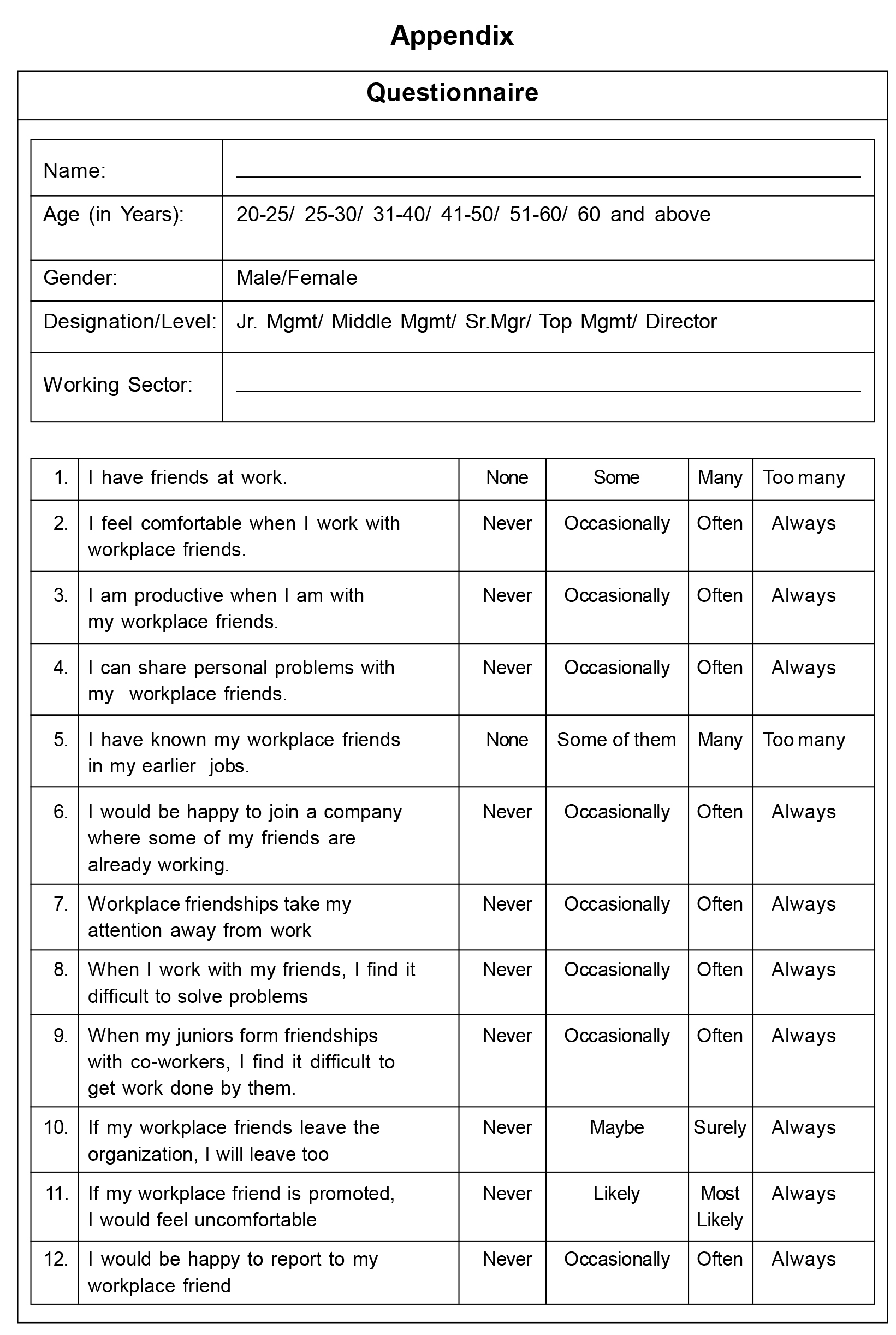
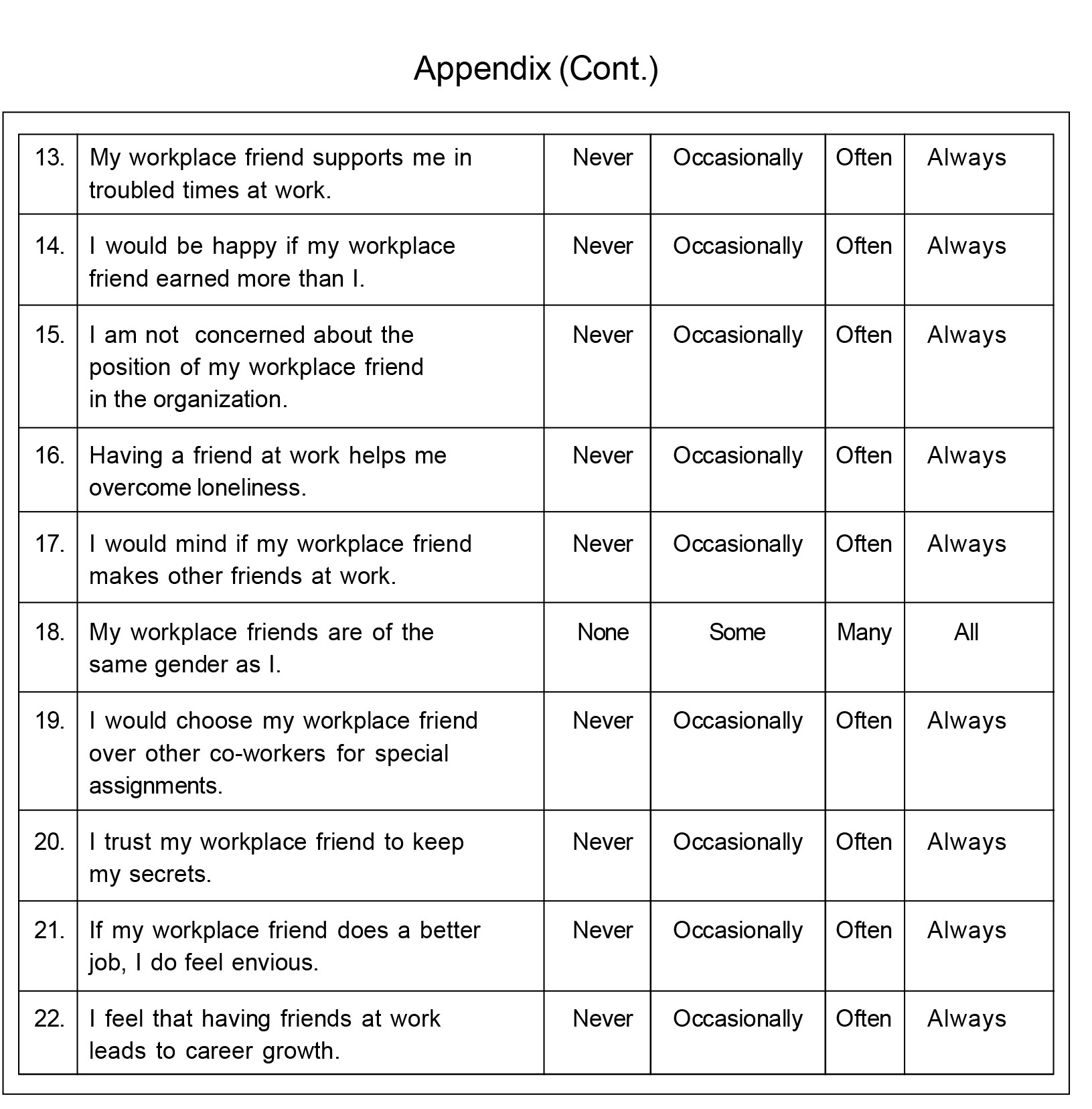
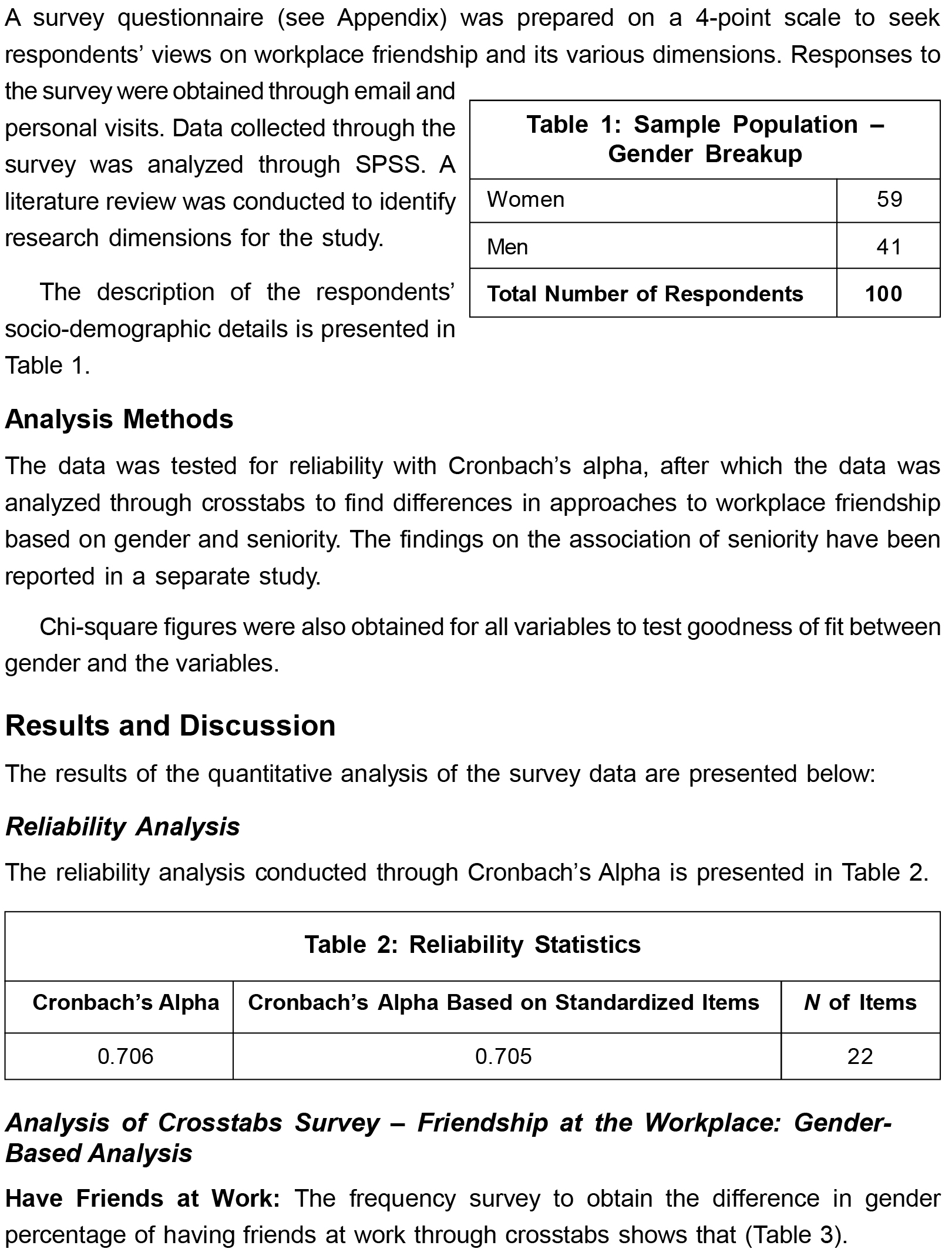
A survey questionnaire (see Appendix) was prepared on a 4-point scale to seek respondents' views on workplace friendship and its various dimensions. Responses to the survey were obtained through email and personal visits. Data collected through the survey was analyzed through SPSS. A literature review was conducted to identify research dimensions for the study.
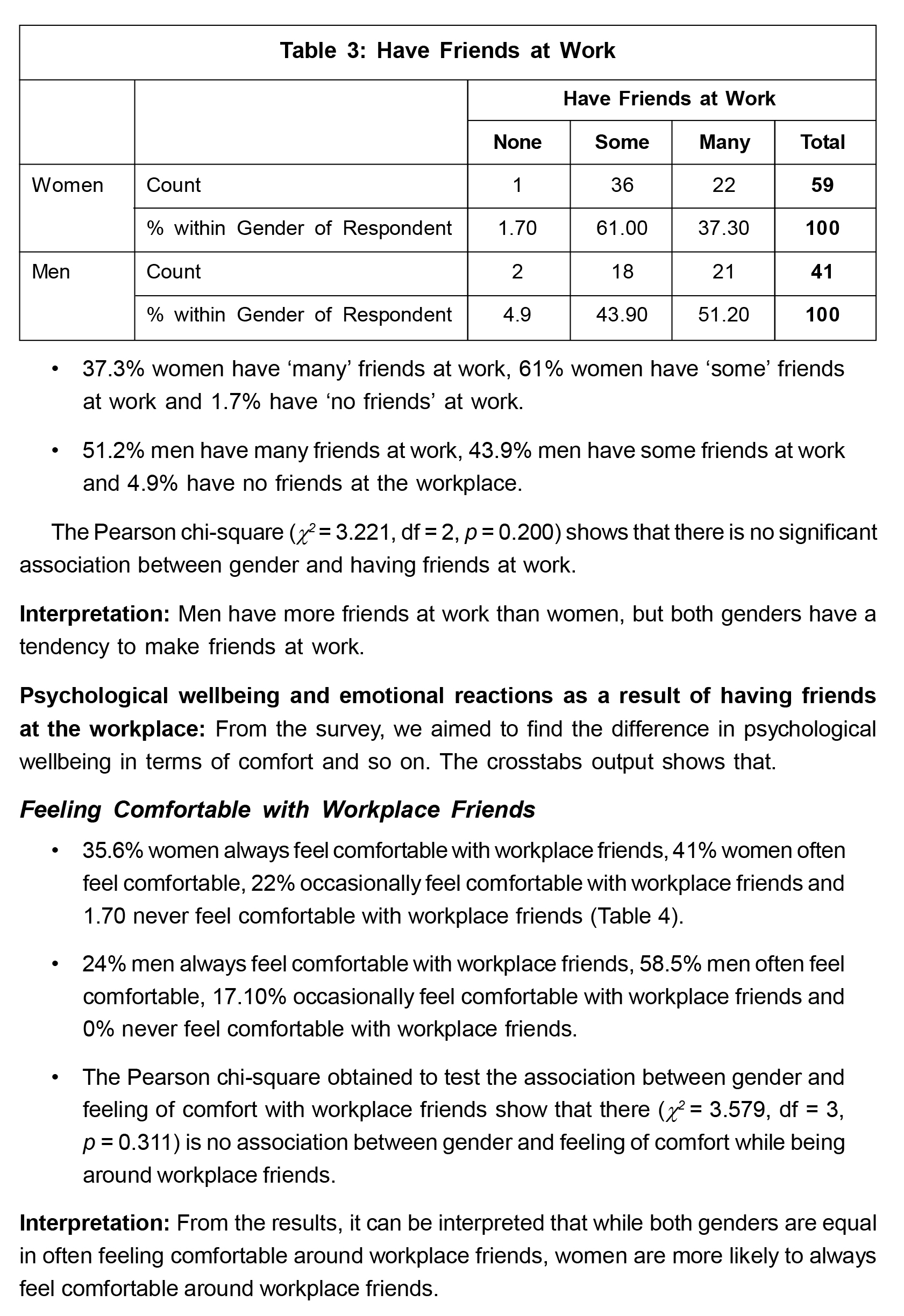
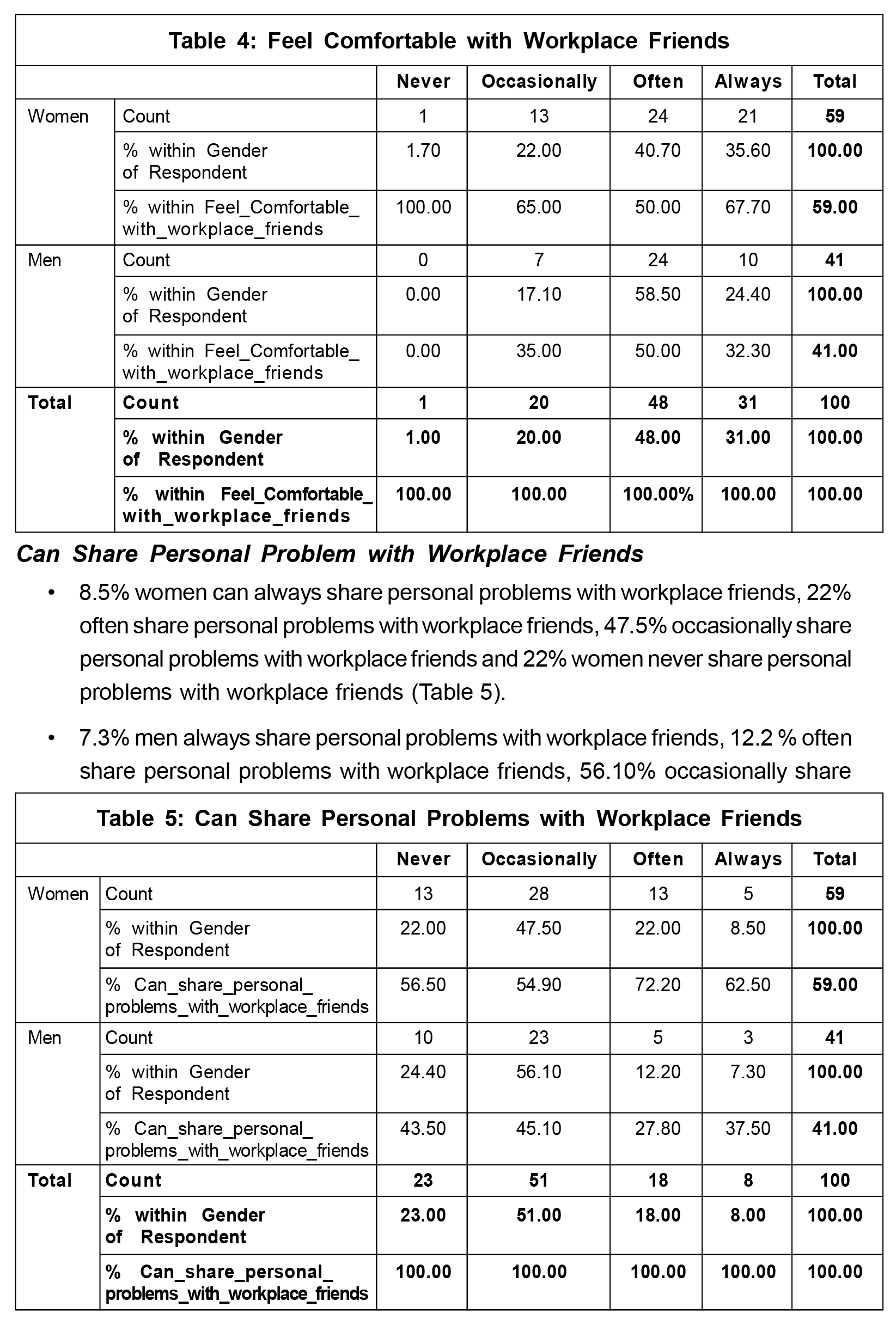
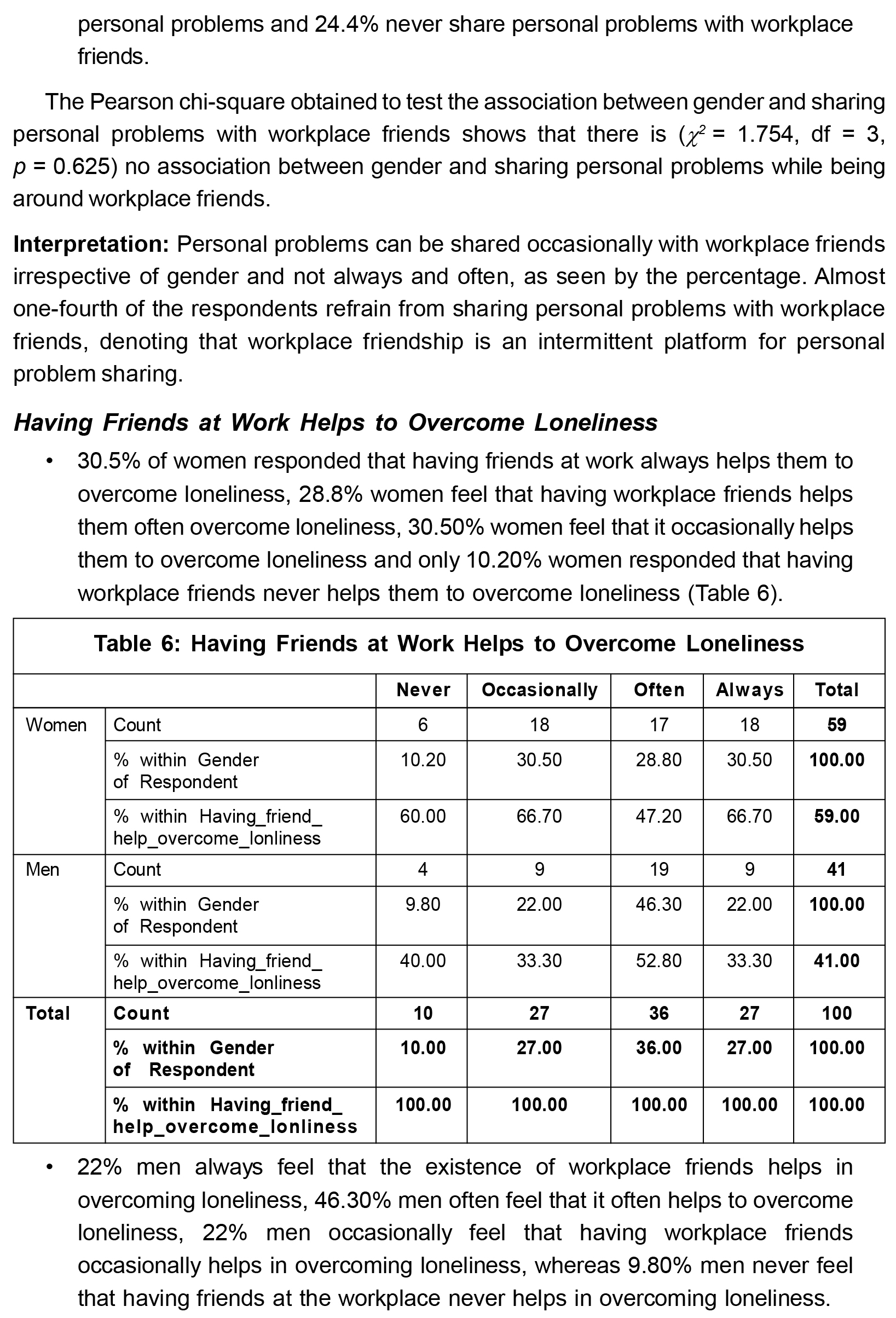
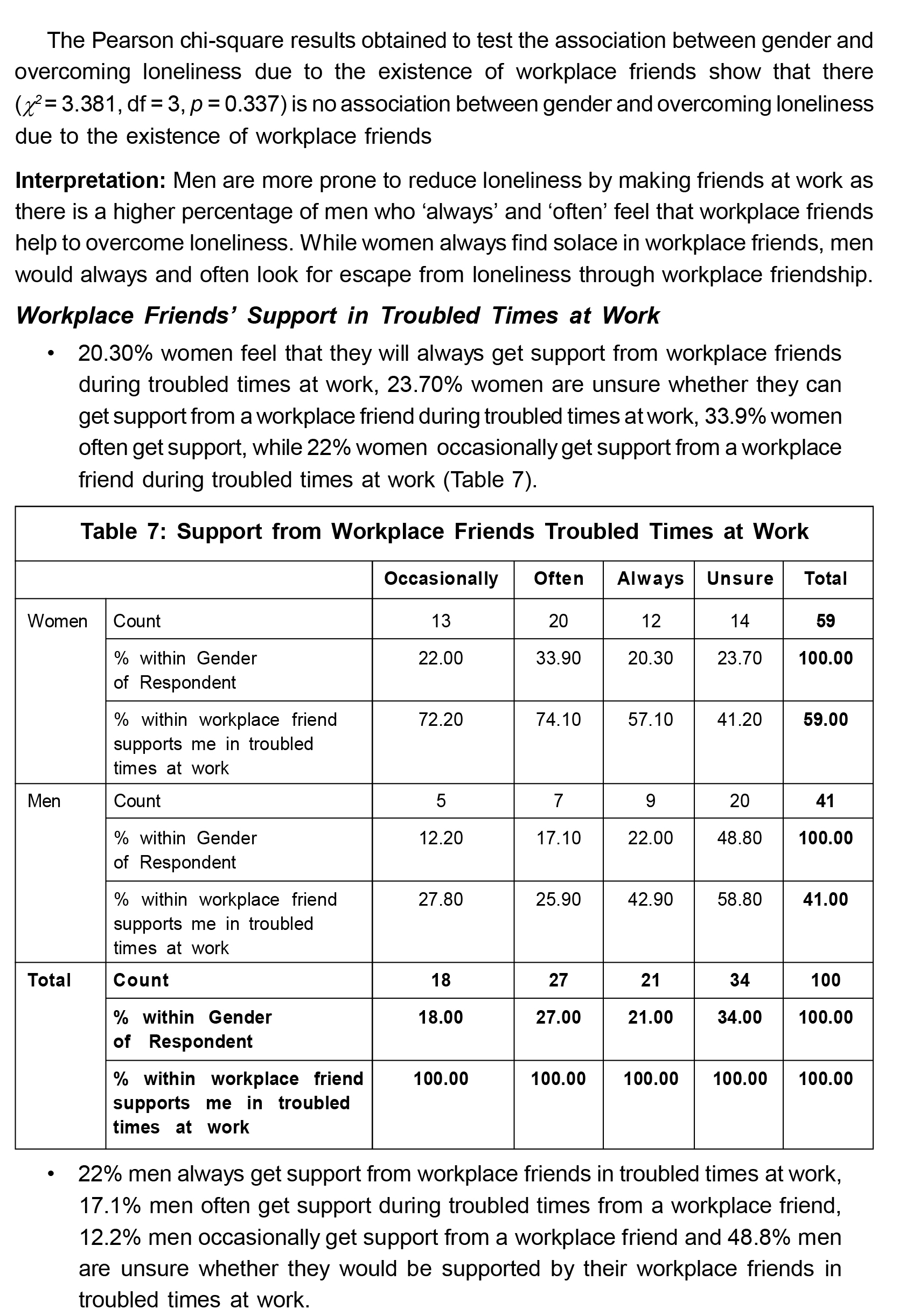
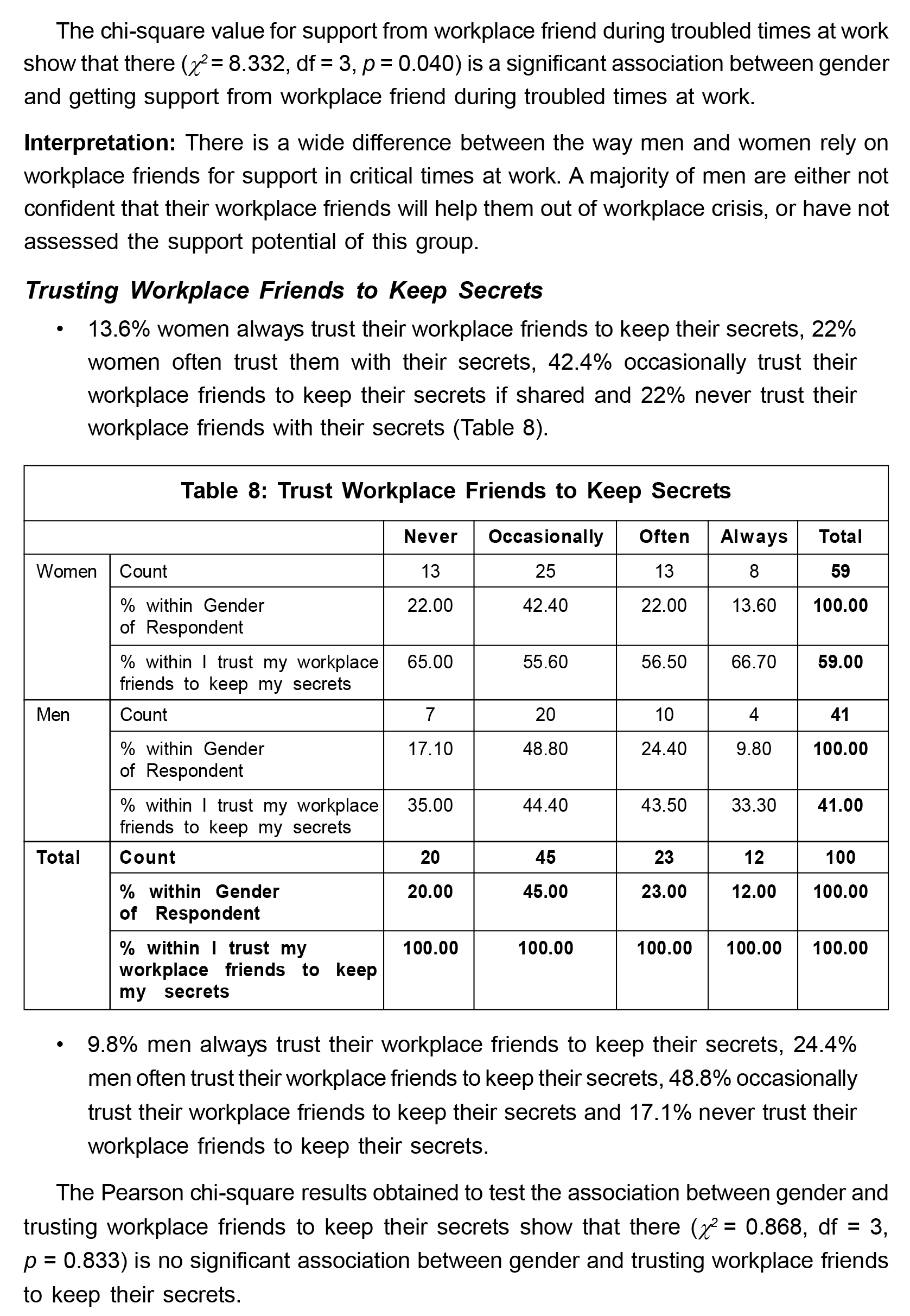
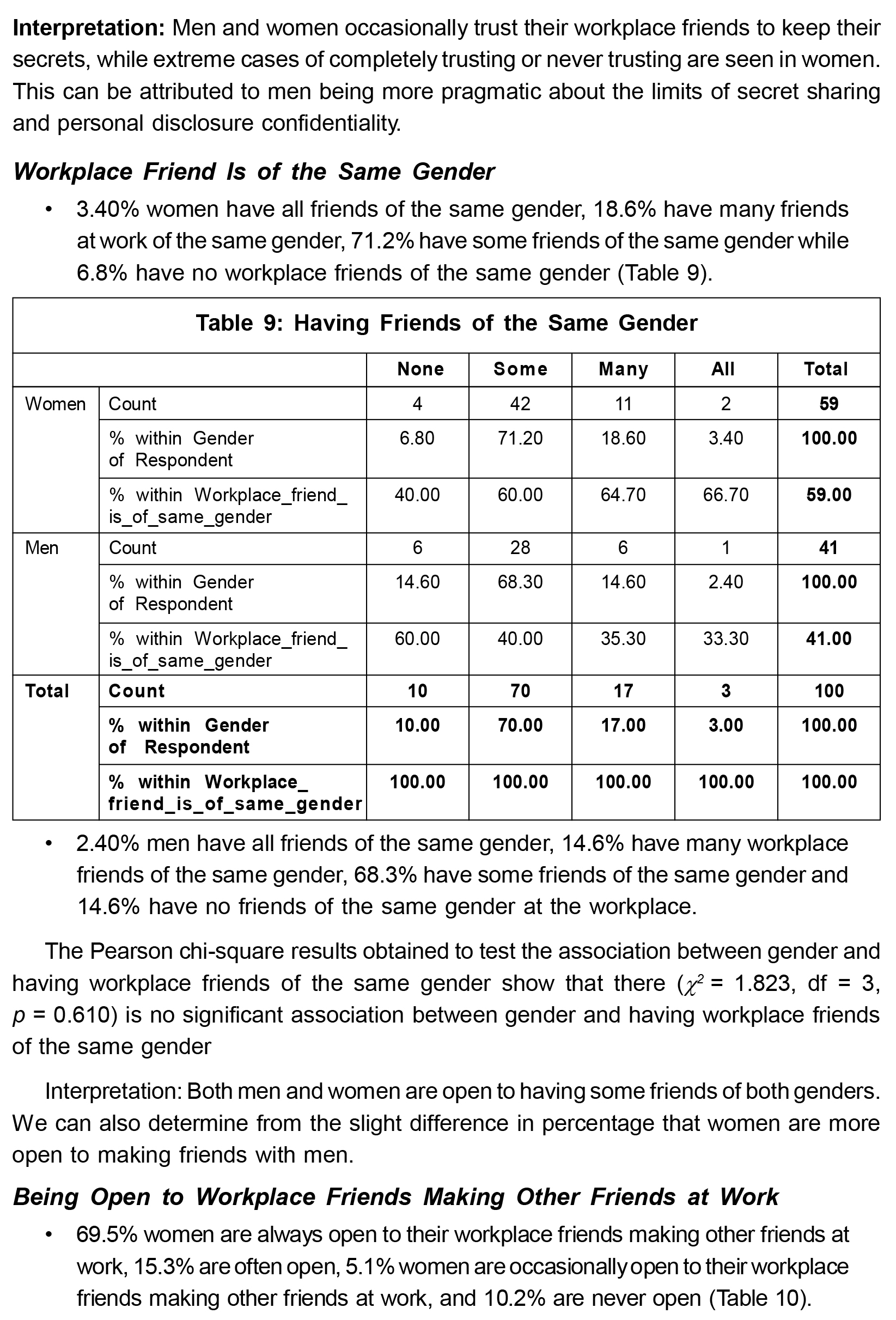
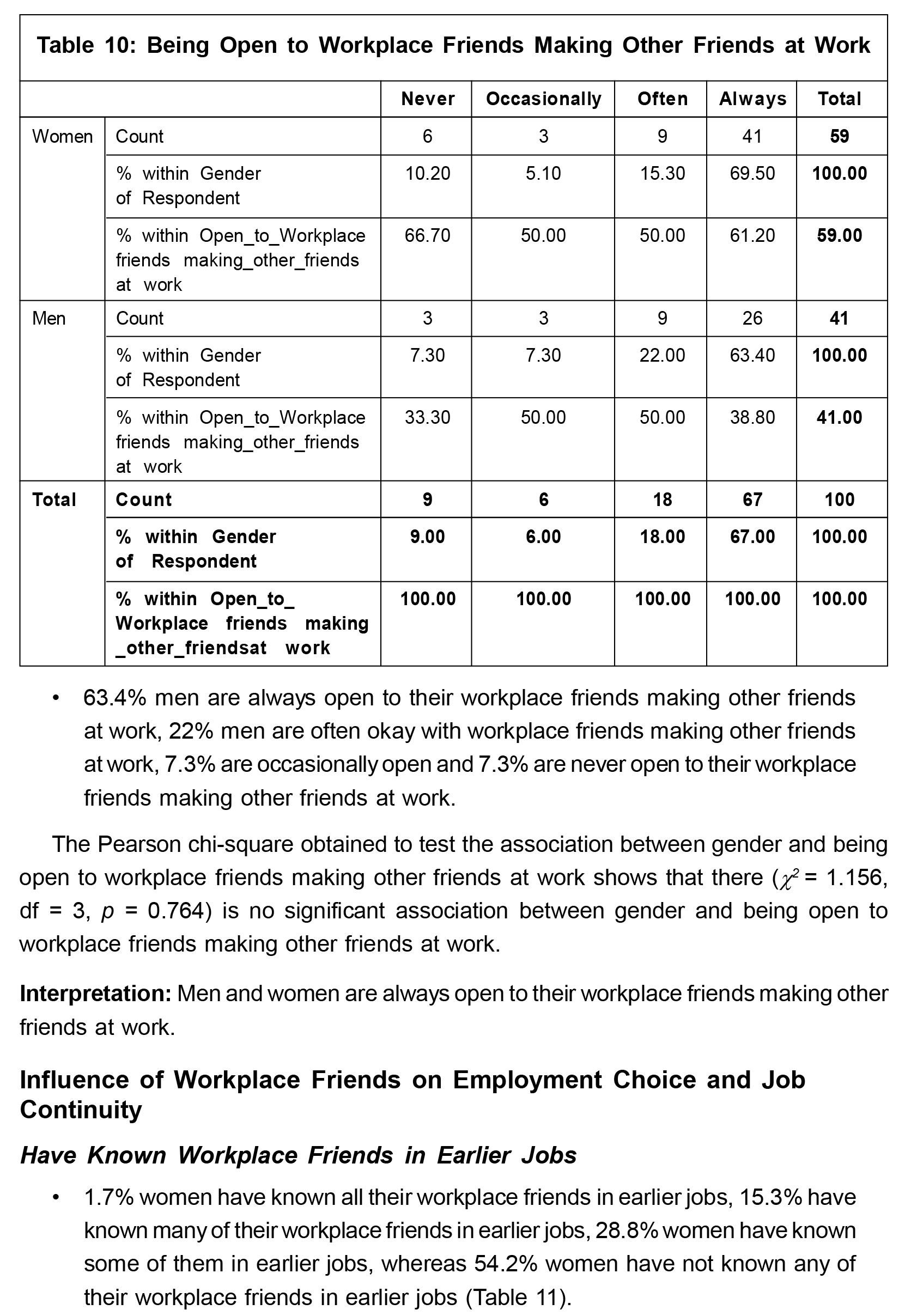
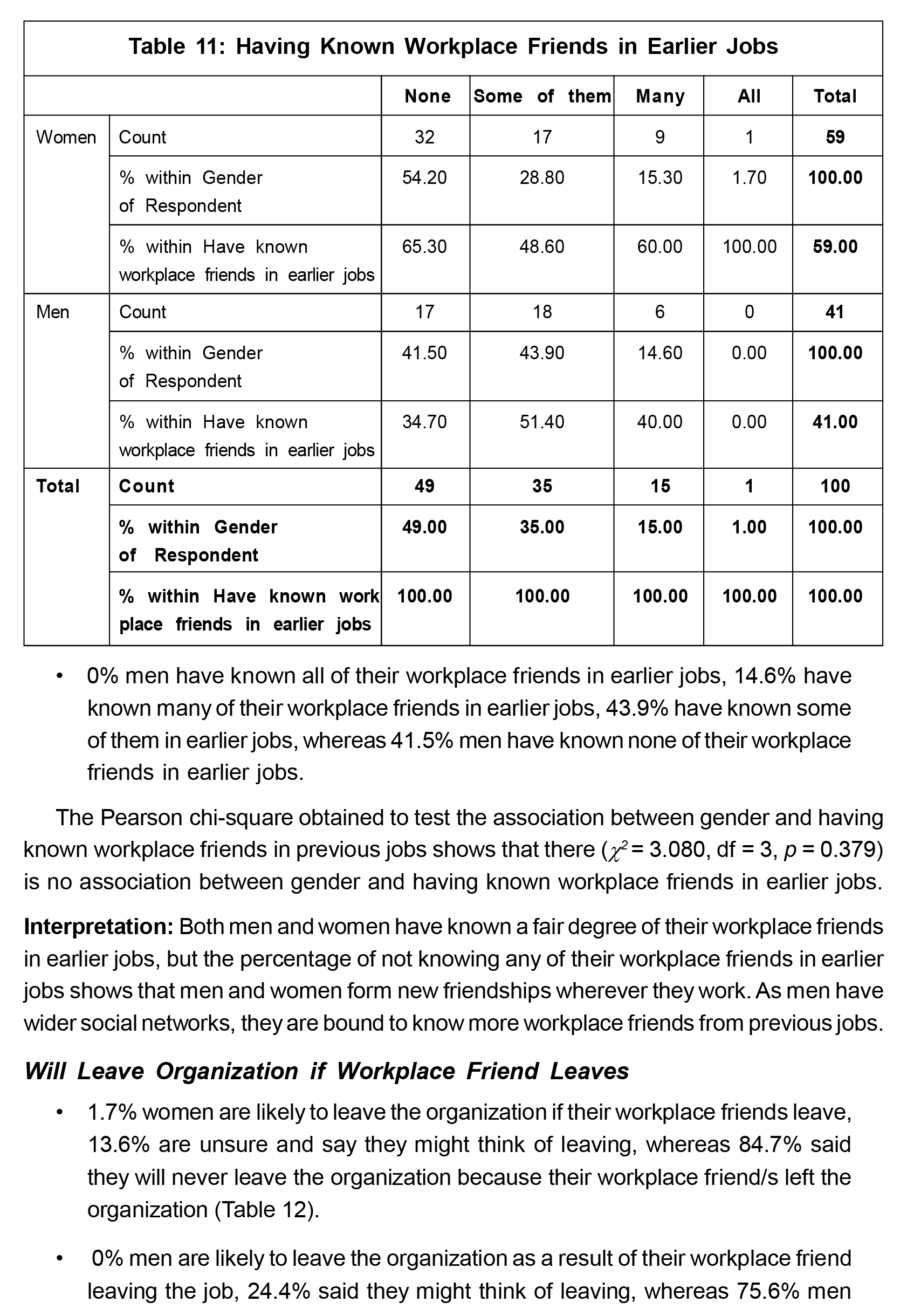
Discussion
The study provides critical insights on workplace friendship and its relationship with gender. From the perspective of psychological wellbeing, women are always comfortable with making workplace friends. Women and men intermittently share personal problems with workplace friends and men look to alleviate loneliness through workplace friendship. The study shows that women and men occasionally trust workplace friends and share personal secrets. Personal disclosure is intermittent in workplace friendship. Men engage in more same gender friendships at work than women.
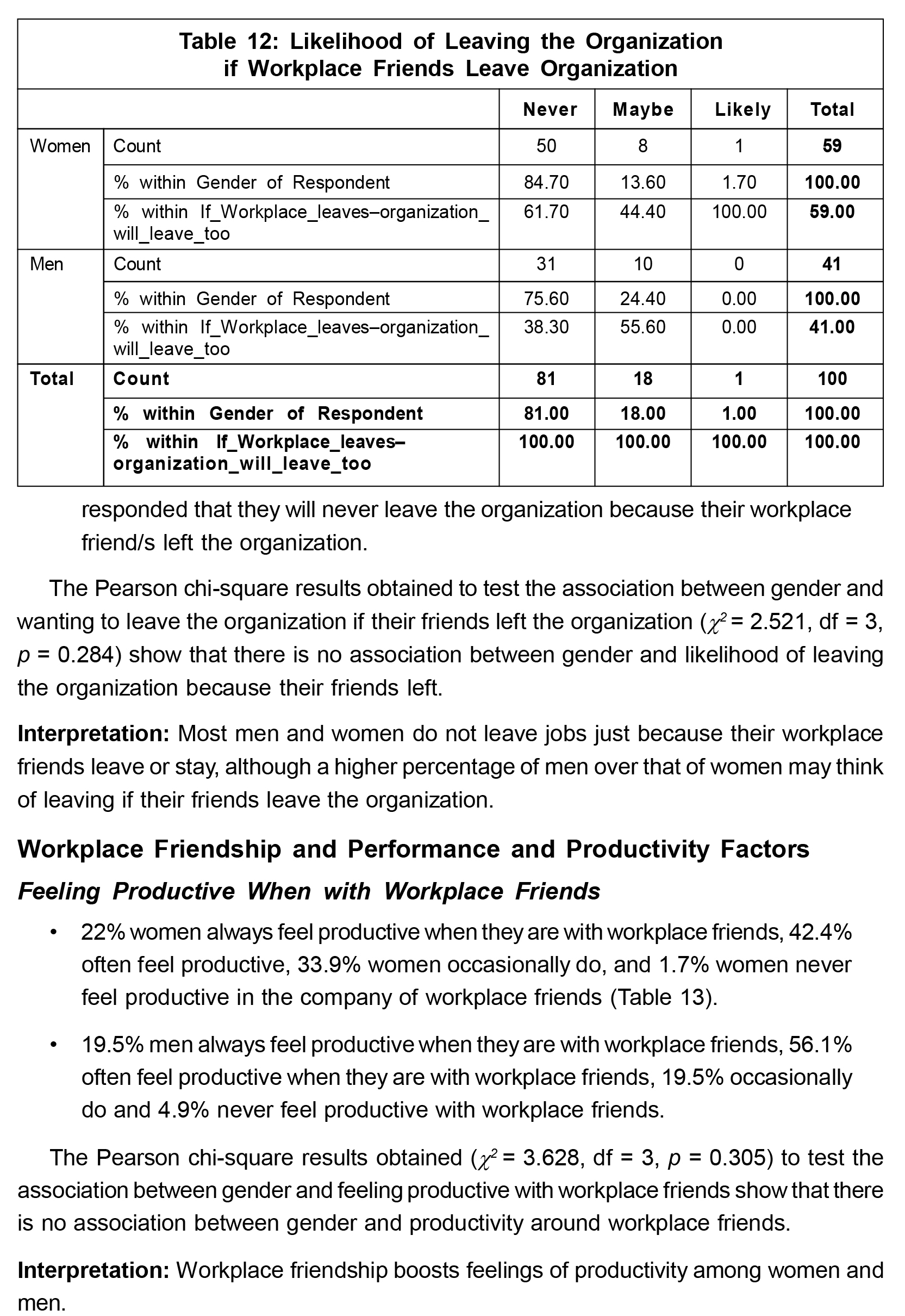
While joining an organization may depend to some degree on one's friends already being there, a friend leaving the organization may not influence employee exit, though the thought may occur to the employee.
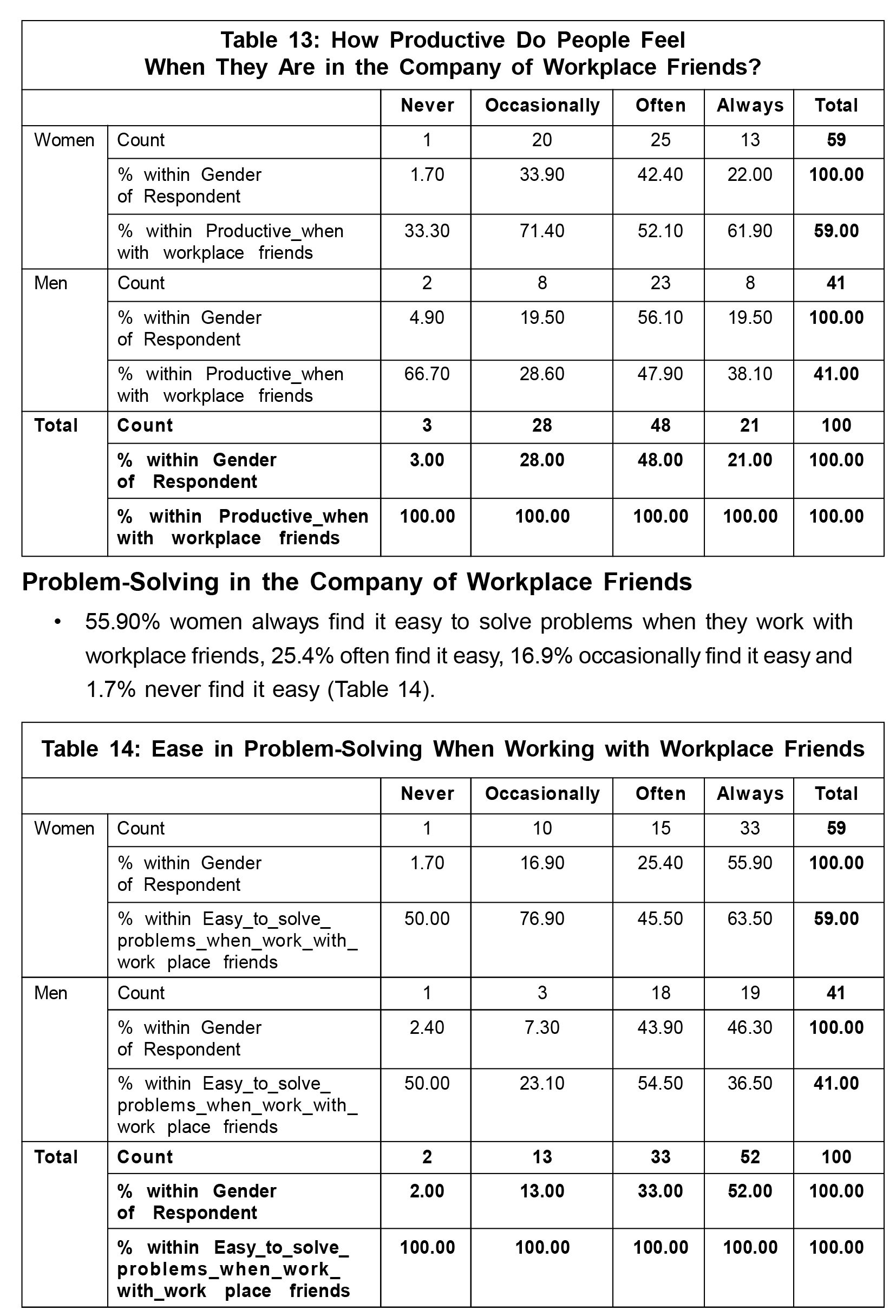
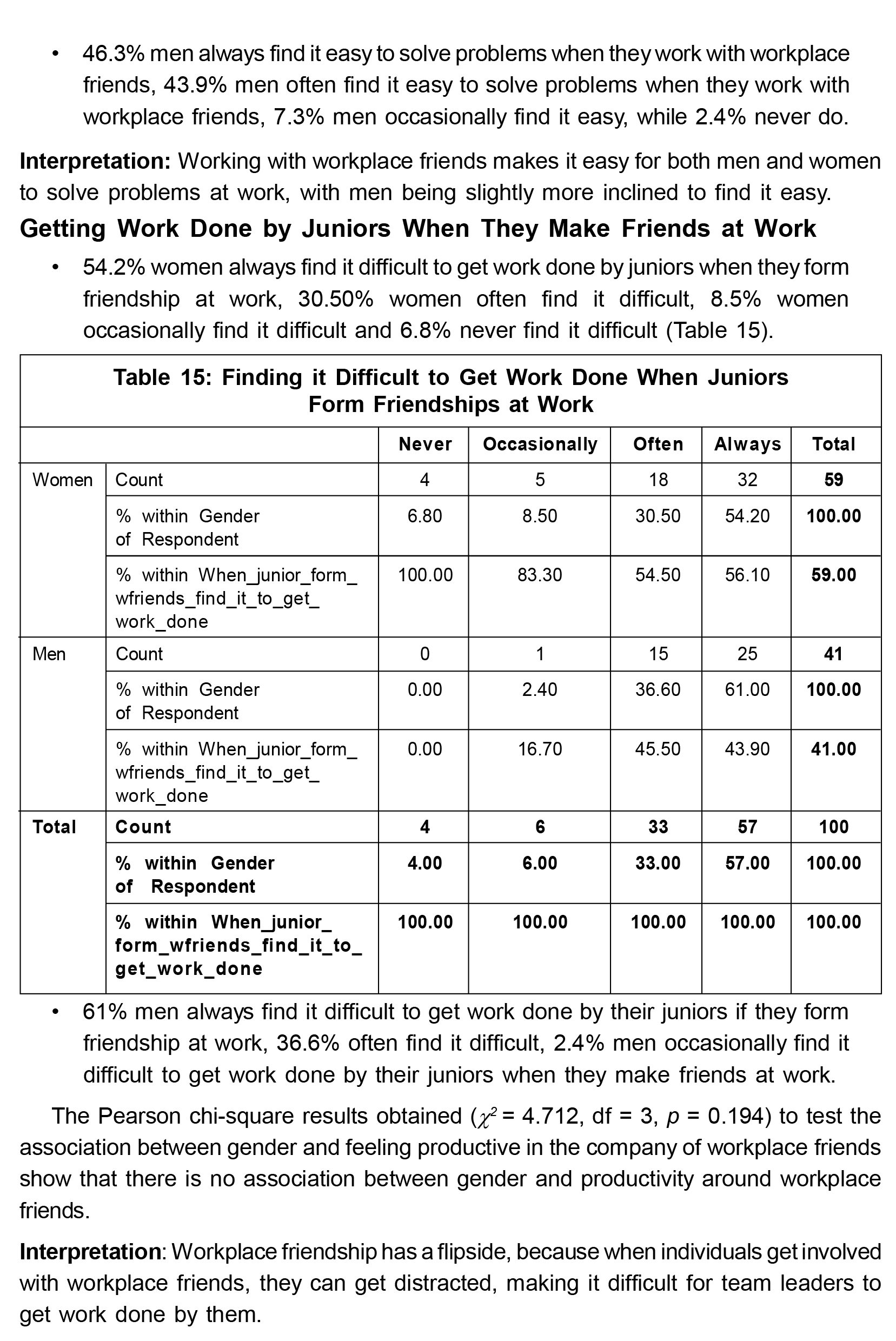
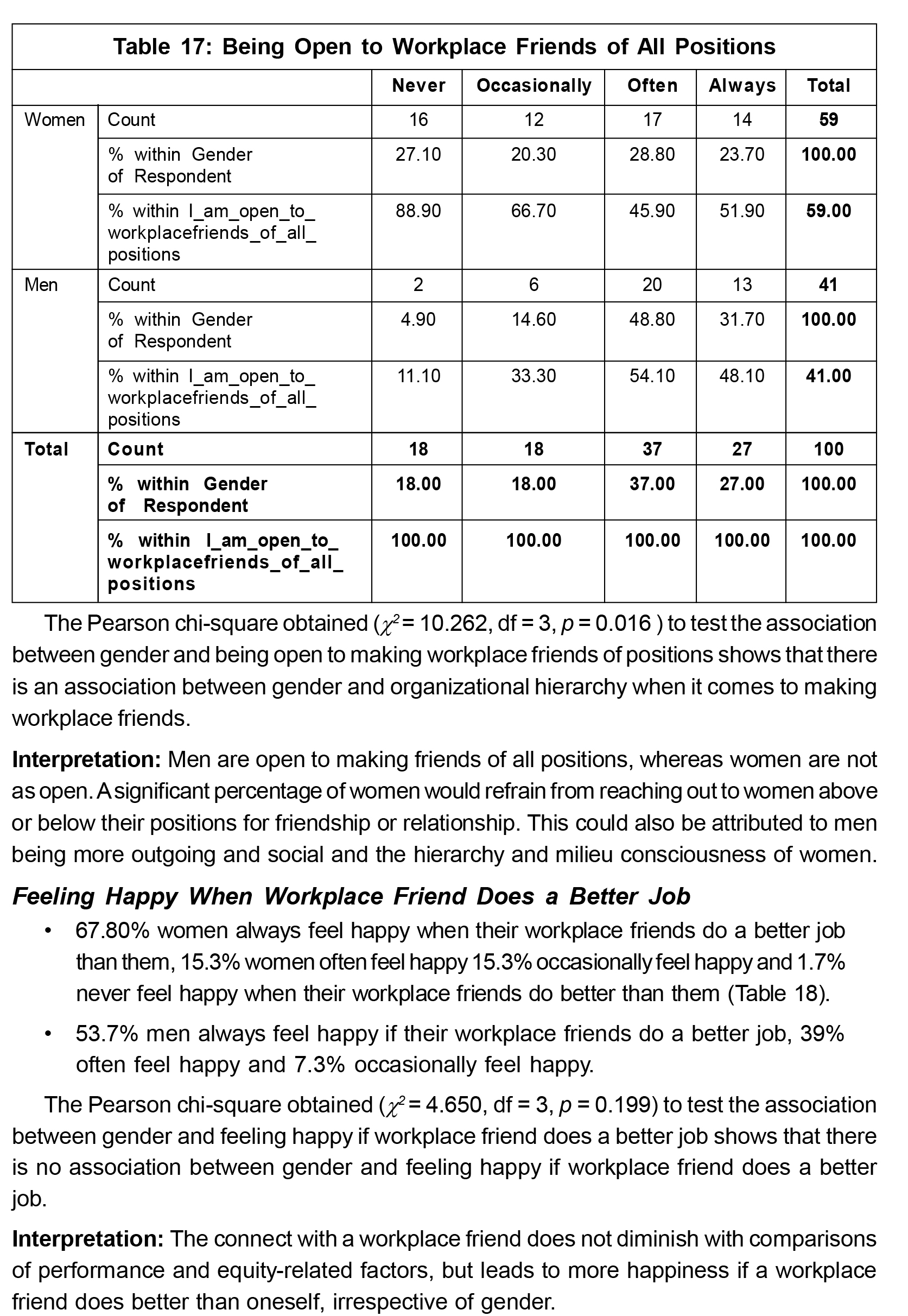
Workplace friendship boosts productivity and enables problem solving, especially among men. Paradoxically, while respondents agree that workplace friendship boosts productivity, they also find it difficult to delegate work to subordinates who form friendships at work.
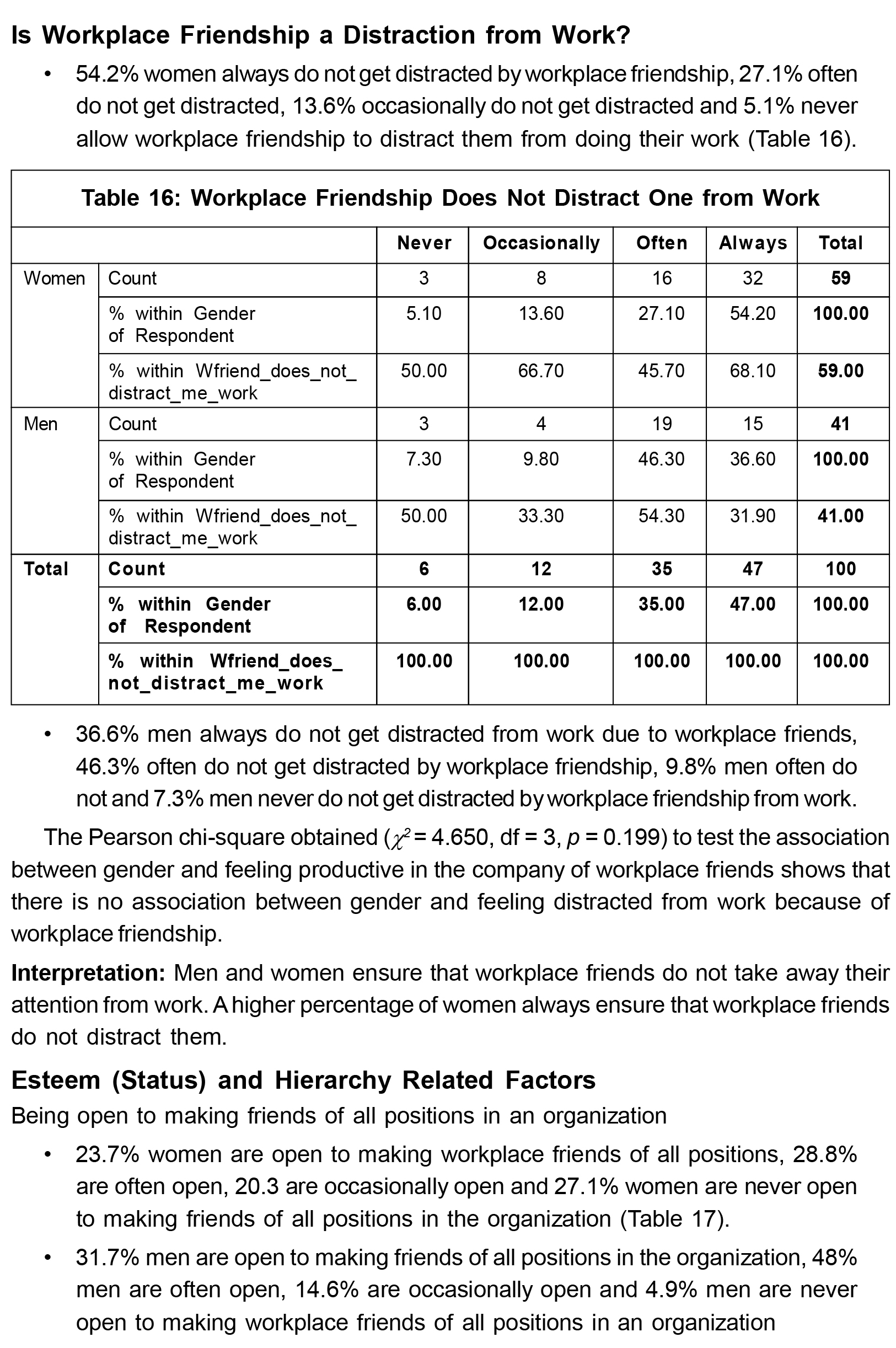
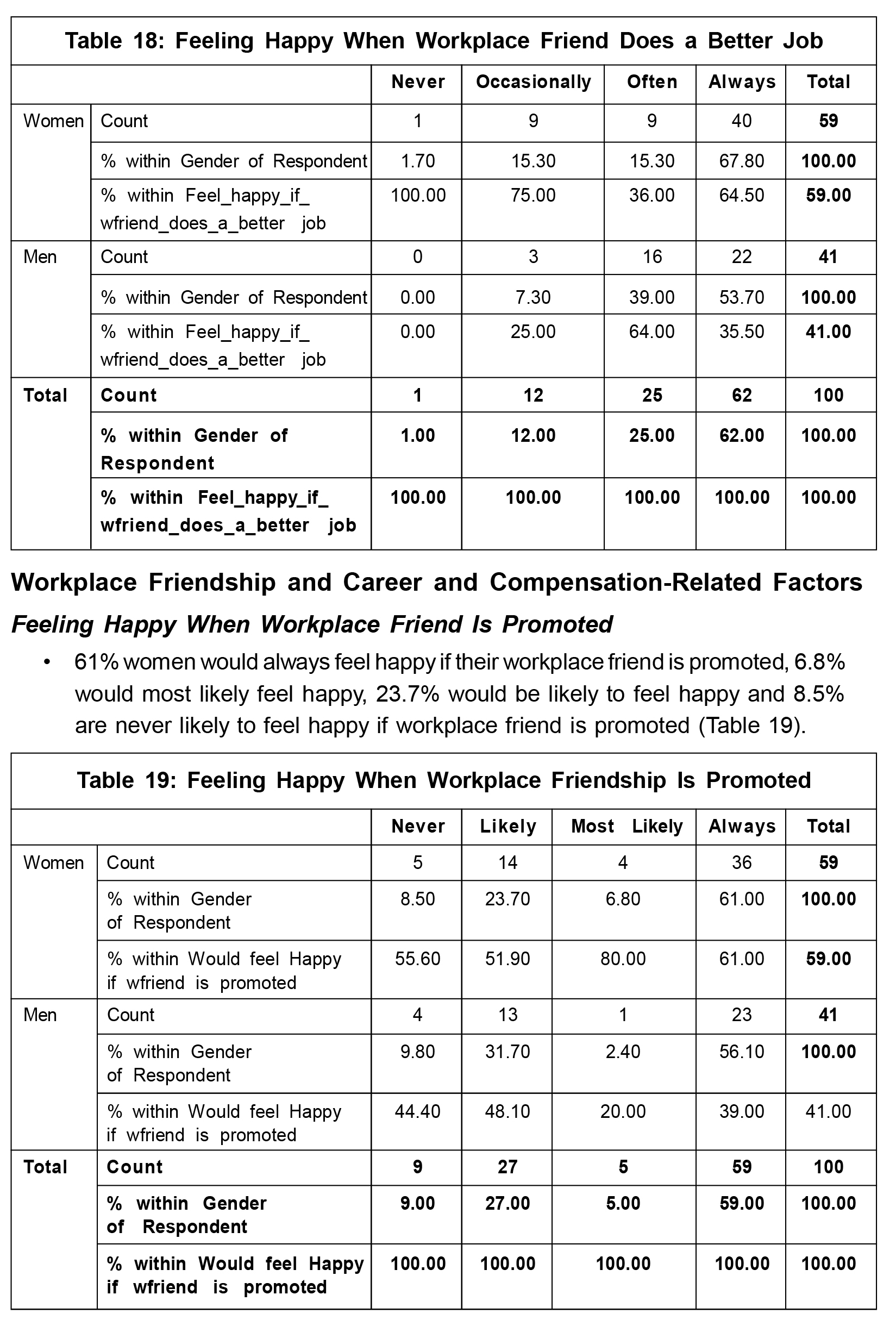
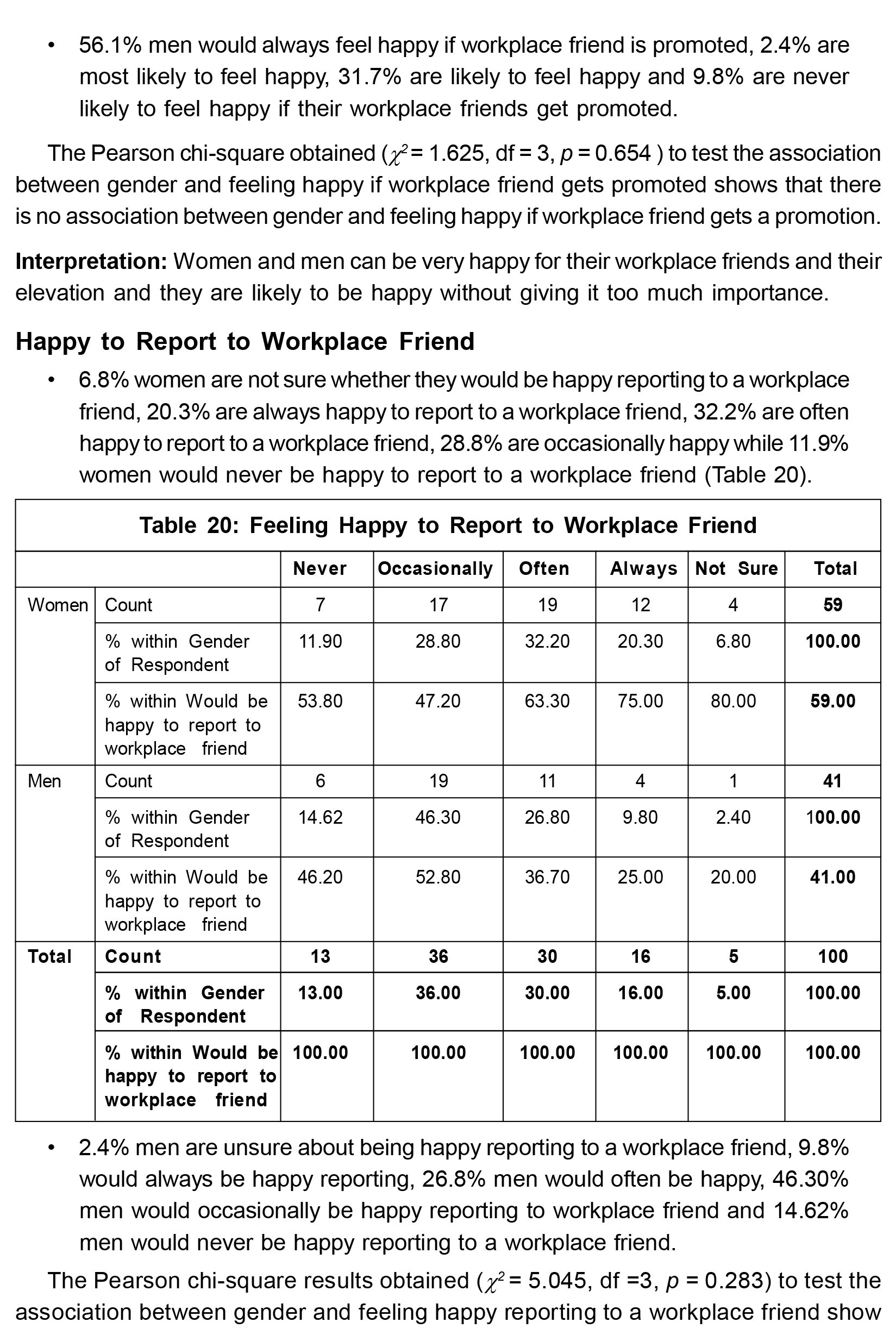
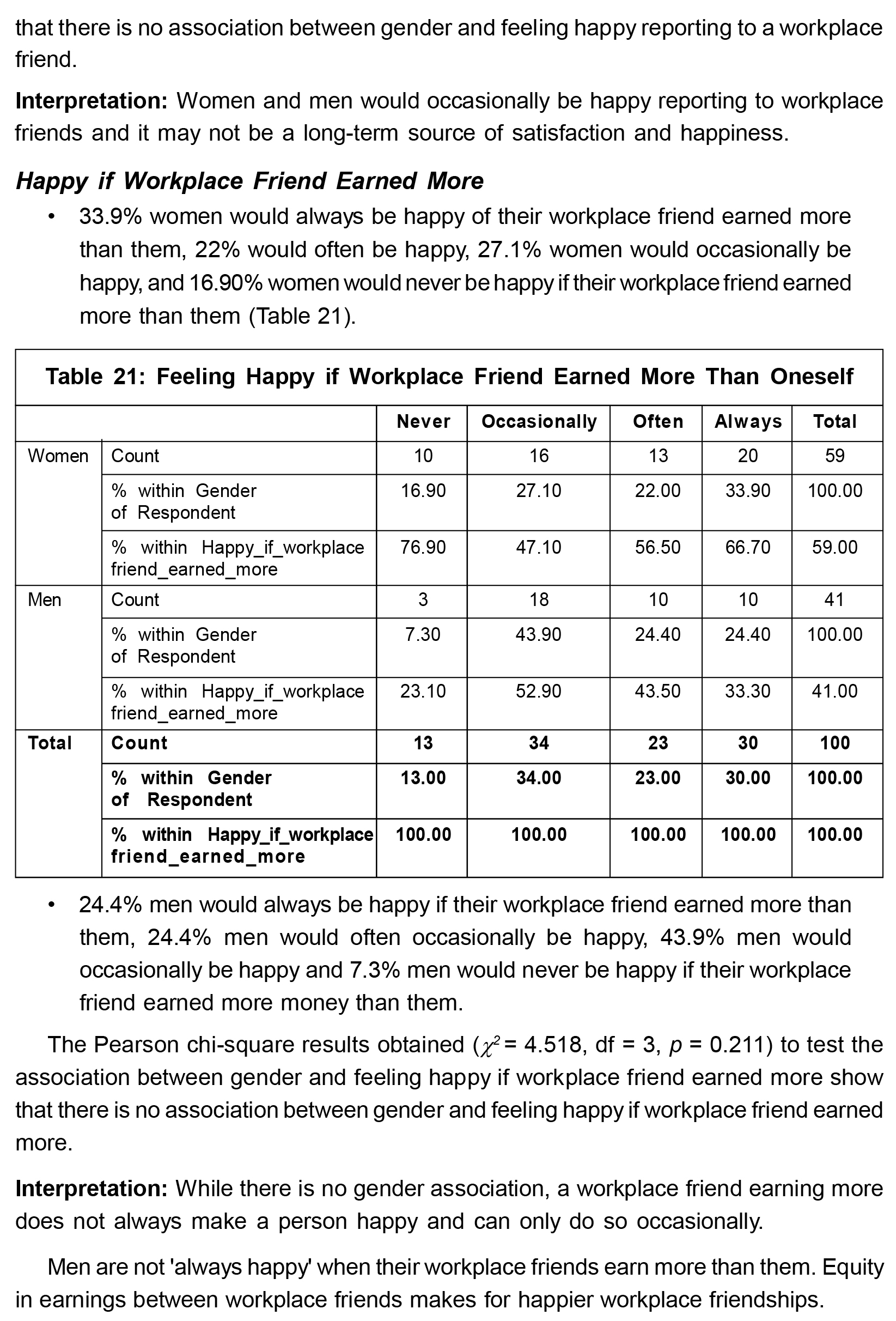
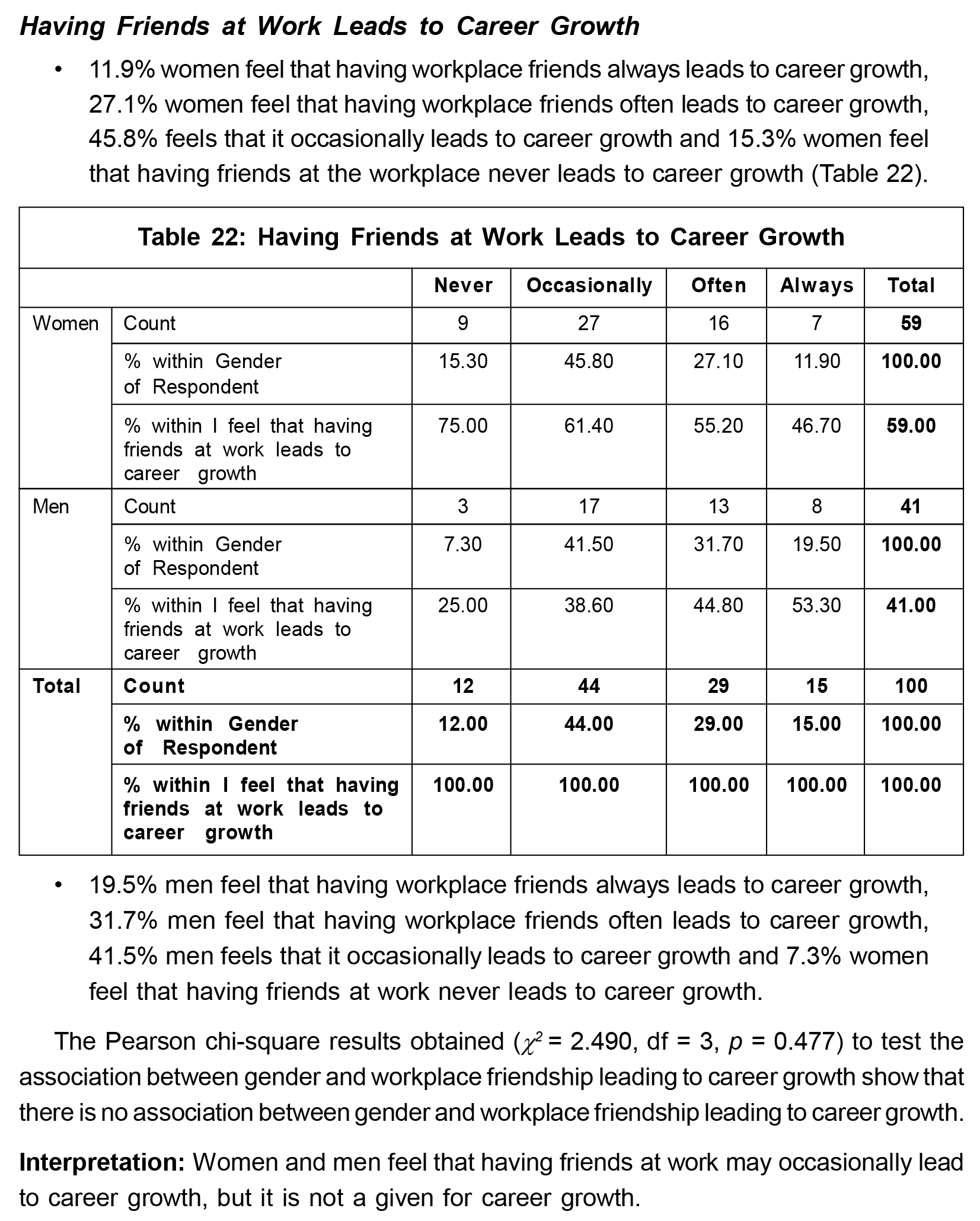
Hierarchy within the organization does not come in the way of friendship for men. Women and men are equally happy when workplace friends do better than them and get promoted, but reporting to a promoted workplace friend may not be a long-term choice. As for equity in earnings, women and men are not very happy with their workplace friends earning higher pay packages than them. Women and men agree that 'having a vital friend' at work leads to career growth.
Conclusion
Keep thy friend
Under thy own life's key
William Shakespeare, All's Well That End Well
The future workplace promises to provide a technical companion in the form of 'bots' or digital companions (assistants) who will replicate human interaction through artificial intelligence. The technical workplace companion could emulate friendly emotions in technical counselling and mentoring relationships, but they also need the wherewithal to support employees in troubled times.
Despite minor differences in gender association with workplace friendship, this relationship could be harnessed as a strategic tool to enhance positive organizations and to enrich the 'organizational experience'. Gender nuances in workplace friendship can be strategically aligned to design comfortable, productive workplaces and meaningful social structures. To conclude, workplace friendship can nurture a culture of camaraderie, emotional support and enable productivity. Workplace friendship does not obstruct careers of co-workers. Instead, it enriches employee experience, and this holds true for both women and men at work.
Implications: The study implies that workplace friendship lends value in developing a positive work culture and managing performance. However, these sensitive bonds between people need authentic nurturing, should the organization wish to reap its long-term benefits, by ensuring equity in compensation and paying attention to the feelings of the significant other in the dyad, while taking decisions on career growth, promotions, assigning responsibility and forming strategic partnerships. For future research, there is immense scope for examining dimensions of virtual workplace friendship and the change in existing workplace friendships brought about by pandemic isolation, virtual jobs and work from home. The study provides ample food-for-thought on avenues for professionals to find the sweet spot between friendship and professional ties, in a way that one aspect does not dominate the other and both friendship and professional ties can blend harmoniously to benefit the organization and the individual in a fruitful way.
References
- Akila and Priyadarshini (2018), "The Impact of Workplace Friendships on Organizational Commitment and Intention to Leave", IOP Conference Series Materials Science and Engineering, Vol. 390, No. 1, 012064 DOI:10.1088/1757-899X/390/1/012064 https://www.researchgate.net/publication/326692061_The_impact_of_ workplace_friendships_on_organizational_commitment_and_intention_to_leave
- Daniel Miller, Laila Abed Rabho, Patrick Awondo et al. (2021), Chapter Title: "The Heart of the Smartphone: LINE, WeChat and WhatsApp", Book Title: The Global Smartphone: Beyond a Youth Technology, pp. 181-216, Published by UCL Press.
- D'Cruz Premilla and Ernesto Noronha (2011), "The Limits to Workplace Friendship: Managerialist HRM and bystander Behaviour in the Context of Workplace Bullying", Employee Relations, Vol. 33, No. 3, pp. 269-288, available at https://doi.org/10.1108/01425451111121777, Permanent link to this document:https://doi.org/10.1108/01425451111121777: https://www.emeraldinsight.com/doi/full/10.1108/014254511111 21777
- D'Hont L, Doern R and Delgado Garcia J (2016), "The Role of Friendship in the Formation and Development of Entrepreneurial Teams and Ventures", Journal of Small Business and Enterprise Development, Vol. 23, No. 2, pp. 528-561, DOI: http://dx.doi.org/10.1108/JSBED-02-2015-0027.
- Ece Omuris (2019), "Workplace Friendship in Hospitality Organizations: A Scale Development", International Journal of Contemporary Hospitality Management, ISSN: 0959-6119, available at https://www.emerald.com/insight/content/doi/10.1108/IJCHM-10-2017-0658/full/htm.
- Evan M Berman, Jonathan P West and Maurice N Richter Jr. (2002), "Workplace Relations: Friendship Patterns and Consequences (According to Managers)", by Public Administration Review, Vol. 62, No. 2, pp. 217-230, Published by Wiley available at https://www.jstor.org/stable/10.2307/27081875?seq=1&cid=pdfreference# references _tab_contents
- Grey C and Sturdy A (2007), "Friendship and Organizational Analysis: Toward a Research Agenda", Journal of Management Inquiry, Vol. 16, No. 2, pp. 157-172, doi:10.1177/1056492606295500, available at https://journals.sagepub.com/doi/10.1177/1056492606295500
- Greti-Iulia Ivana (2020), "Work-Life Balance for Transnational Skilled Workers in Sweden", Work Organisation, Labour & Globalisation, Vol. 14, No. 2, pp. 64-80, DOI: 10.13169/workorgalaboglob.14.2.0064.
- Harari Y N (2016), Homo Deus: A Brief History of Tomorrow, Harvill Secker, London, England.
- Laufenberg M and Schultz S (2021), "The Pandemic State of Care: Care Familialism and Care Nationalism in the COVID-19-Crisis: The Case of Germany", Historical Social Research, Vol. 46, No. 4, pp. 72-99, available at https://doi.org/10.12759/hsr.46.2021.4.72-99
- Laura Dietz and Ulrike Fasbender (2021), "Age-Diverse Workplace Friendship: A Systematic Literature Review and Recommendations for Future Research Work", Aging and Retirement, pp. 1-35, available at https://doi.org/10.109, https://academic. oup.com/workar/advance-article/doi/10.1093/workar/waab028/6428117 , https://doi.org/10.1093/workar/waab028
- Li Guohao, Sabeeh Pervaiz and He Qi (2021), "Workplace Friendship is a Blessing in the Exploration of Supervisor Behavioral Integrity, Affective Commitment, and Employee Proactive Behavior - An Empirical Research from Service Industries of Pakistan", Psychology Research and Behavior Management, Vol. 14, pp. 1447-1459, available at https://www.ncbi.nlm.nih.gov/pmc/articles/PMC8464366/, https://doi.org/10.2147/PRBM.S329905
- McKee Annie (2017), "How To Be Happy At Work", Harvard Business Review Press, Boston, Massachusetts, available at https://store.hbr.org/product/how-to-be-happy-at-work-the-power-of-purpose-hope-and-friendship/10073
- Nancy Baym, Jonathan Larson and Ronnie Martin (2021), "What a Year of WFH Has Done to Our Relationships at Work", available at https://hbr.org/2021/03/what-a-year-of-wfh-has-done-to-our-relationships-at-work
- Peiqi Lu, Jeewon Oh, Katelin E Leahy and William J Chopik (2021), "Friendship Importance Around the World: Links to Cultural Factors, Health, and Well-Being", Front. Psychol., available at https://www.frontiersin.org/articles/10.3389/fpsyg.2020.570839/full, January 18, 2021, https://doi.org/10.3389/fpsyg.2020.570839)
- Paul Leonardi and Noshir Contractor (2018), "Better People Analytics: Measure Who They Know, Not Just Who They Are", available at https://store.hbr.org/product/better-people-analytics-measure-who-they-know-not-just-who-they-are/R1806E
- Pillemer Julia and Nancy P Rothboard (2016), "Friends Without Benefits: Understanding the Dark Sides of Workplace Friendship", available at https://journals.aom.org/doi/10.5465/amr.2016.0309
- Rumens Nick (2016), "Researching Workplace Friendships: Drawing Insights from the Sociology of Friendship", Journal of Social and Personal Relationships, available at https://doi.org/10.1177/0265407516670276, https://journals.sagepub.com/doi/abs/10.1177/0265407516670276
- Seok-Hwi Song and Dorothy Olshfski (2008), "Friends at Work: A Comparative Study of Work Attitudes in Seoul City Government and New Jersey State Government", Administration & Society, available at https://journals.sagepub.com/doi/10.1177/0095399707312827
- Waal Andre de (2018), "Increasing Organisational Attractiveness: The Role of the HPO and Happiness at Work Frameworks", Journal of Organizational Effectiveness: People and Performance, available at https://doi.org/10.1108/JOEPP-10-2017-0080 Permanent link to this document: https://doi.org/10.1108/JOEPP-10-2017-0080 https://www.hpocenter.com/wp-content/uploads/2018/04/2018-Increasing-organisational-attractiveness.pdf