July '22
The IUP Journal of Organizational Behavior
Archives
Relationship Between Career Growth and Organizational Commitment of Employees
Bitopi Gogoi
Assistant Professor, The Assam Royal Global University, Guwahati, Assam, India; and is the corresponding
author. E-mail: bitopi.gogoi@gmail.com/bitopi.gogoi@rgi.edu.in
Chiranjeeb Gogoi
MBA, The Assam Royal Global University, Guwahati, Assam, India. E-mail: chiranjeeb_g@outlook.com
Today's business world is very dynamic wherein the strategic business planning of firms involves inputs from all staff, for which their commitment and loyalty is required. However, finding suitable talent is not an easy task and neither is retaining them. By ensuring employees' commitment to the organization, there can be huge reductions in costs and time lost. The paper makes an attempt to explore the relationship between career growth and organizational commitment and provides possible directions for future research. The results can be identified as empirical evidence to this relationship.
Introduction
A career is a choice made by an independent person in the way of staying involved, committed and associated with any particular type of work in some particular industry or field for his livelihood. A career can also be called a "career path" since it is synonymous with a journey. The career path involves education-both formal and informal, and also internships and training. Any additional apart from capability choosing a vocation that best matches someone's skills is regarded as good to improve one's efficiency and effectiveness in the career. In fact, the provision of continuous learning by organizations may be advantageous (Bambacas, 2010).
People usually tend to spend many years in their work life with their career, jobs and field of work. So it is really important for them to enjoy the job and work done. A career should itself be a factor that motivates an employee to keep going and stay interested, giving him a sense of purpose with the work. There is always an urge or necessity to grow and excel by means of hard work, dedication and effort by a person in his career. Economic and technological developments have resulted in working careers becoming more unpredictable due to changing work opportunities and shifts in labor (Kuijpers et al., 2006). So career planning is essential to ensure a successful and enriching worklife.
Career prospects may include assessments about promotion chances, likelihood of future job satisfaction in either the current job or other jobs in the same organization, or even simply the chance of keeping a job in that organization (Jans, 1989). Absence of the above factors will possibly lead the employee to put an end to his career with the organization. He might have to find a career in a different organization or even industry. The change may force him to start from the entry level lower position jobs causing reduction in monetary gains or relevant experience or expertise. While the presence of the factors may be good to ensure organizational commitment by the employees.
If we inspect closely, we may find a variety of conditions resulting in the formation of organizational commitment in employees. Family, career and organizational issues, all have their major influence on organizational commitment (Jans, 1989). Apart from these, age and job tenure are significant predictors of organizational commitment, may be because the longer the workers stay with an organization or the older they are, the more time they have to evaluate their relationship with the organization (Salami, 2008). The stage of tenure in an organization may make a difference to the relationship between career attitude, development opportunities and organizational commitment (Briscoe and Finkelstein, 2009). Individuals may become more attached and feel obligated towards the organization when the organization provides opportunities for them to manage their own careers (Bambacas, 2010). It is also likely that workers with higher educational qualifications occupy higher ranks and therefore have more responsibilities, which invariably require more commitment to the organization (Salami, 2008). Jans (1989) mentioned that organizational commitment emerges more from career issues than it does from job issues, while acknowledging that career issues and job issues will however usually overlap and often coincide with each other.
Organizational commitment similarly also has great significance to any organization. An employee who believes in shared goals, vision, and mission of his organization adopts them at both professional and personal levels. They tend to actively support the organization's products, services and policies. Likewise they turn out to be more motivated and therefore more productive at the workplace. A motivated employee keeps a positive attitude towards his organization and shows positive behavior through cooperation, collaboration and working in teams with fellow employees. This boosts the team members' morale and increases the performance of these members. There is less occurrence of absenteeism as the employees enjoy their work. Similarly, turnover intention decreases due to their love for the work and their organization.
Literature Review
Career Growth
Weng and Zhu (2020) conceptualized career growth as "referring to one's career progress within or across organizations" or "a form of upward career mobility within and between organizations". However, this definition is not universal, since it is interpreted differently from one individual to another (Thurasamy et al., 2011). For instance, Thurasamy et al. (2011) stated that "past literatures have found that between the two measurement items mentioned of upward movement in job level or title and an increase in earnings, increase in earnings is more frequently chosen as a scale in quantifying career advancement (growth)". Also, according to Weng and Zhu (2020), only the features, skills, and behaviors that are valued by the established elite can lead to employee career growth. Moreover, the organizational system is now in a mode of all change, all dynamic, total fluidity, and thus careers are unpredictable, vulnerable, and multidirectional (Baruch, 2006). In contrast to prior generations, today's employees are responsible for their own careers and can no longer rely on lifelong employment in one organization (Kuijpers et al., 2006). The study by Struges et al. (2002) failed to show a direct causal link between organizational career management and commitment to the organization, it has shown the importance of aspects of career self-management for enhancing organizational help in career management. Those who do more networking appear to attract more informal help, while those who increase their visibility report increased formal career support.
However, other studies have opposite findings. For instance, Moon and Choi (2016) proved the positive relationship between Organizational Support for Career Development (OSCD) and organizational commitment. They suggested that organizations must offer challenging or value-fit jobs or provide career development programs for their employees. Afterall, since individual career management behavior is linked to experience of organizational help, it appears that individual and organizational career management activities should be considered to be complementary and inter-related activities, which together constitute the career deal that facilitates employee development, commitment, and performance (Sturges et al., 2005). Also, career development support and role modeling are both linked to career growth opportunities and trust in managers (Kohlmeyer III et al., 2017). If a person is compatible with his job, he develops a psychological identification and commitment with it, which ultimately affect his motivation and effort towards career growth in the same organization (Jyoti et al., 2020). Career growth opportunities and trust in superiors, in turn, are linked to both organizational commitment and turnover intentions (Kohlmeyer III et al., 2017). If employees perceived higher salaries, fair and just appraisal system and high career growth within the organizations, they become positively attached to the organization and chances to quit the organization could be reduced. So, to overcome employee turnover issue, an organization should focus on career growth policies that could create psychological contract with its employees. As such, employees who expect progress and growth in their career will ultimately stay longer in the organization, which means turnover intention will become less (Nawaz and Pangil, 2016). The management should consider and care about the career growth of the employees when planning for their training programs. The management should also explore various options for structuring career paths within the organizational structure to secure career commitment of the employees (Jyoti et al., 2020).
According to Weng and Zhu (2020), career growth is dependent upon both the individual and the organization. On the one hand, career is the 'property' of the individual, who may be inspired by new social norms; on the other hand, for employed people, it is planned and managed to a large extent by their organizations (Baruch, 2006). Individuals within the organization with influence over the individual's career prospects (such as supervisors) influence and have control over the individual's career outcomes, which include skill development, salary progression and number of working hours (Bambacas, 2010). Individuals become affectively committed to the organization when they perceive that the company is pursuing internal promotion, that the company provides proper training, and that supervisors do a good job in providing information and advice concerning their careers (Chang, 1999). Career support from the work situation and a dynamic work environment are related to both internal and external career success (Kuijpers et al., 2006). Empirical research has supported the idea that career growth can bring about positive outcomes to both individuals and organizations, but with the coming of a new career era, the effect of it on organizations and individuals needs further exploration (Weng and Zhu, 2020).
The thirst for career advancement (growth) is unquenchable and thus has led to many researchers' spending time and effort analyzing career advancement (growth) factors (Thurasamy et al., 2011). Recent research has shown career growth opportunities to be an important determinant of employee-organizational relationship (Weng and McElroy, 2012). Building organizational career growth is one avenue for increasing the contribution of employees toward organizational success through employee voice behavior (Wang
et al., 2014). Common to the new concepts of career is the assumption that individuals are, or should be, increasingly mobile and self-directed in their careers (Redondo and Hernandez-Lechuga, 2019). Given the increased likelihood of inter-organizational mobility in the new career era, coupled with the aging of the workforce, it is incumbent on organizations to develop programs to facilitate the career growth of their highly talented employees, so that they remain with the organization and foster continued success (Weer and Greenhaus, 2017). Managers are suggested to consider employee career goals during recruitment, selection and placement processes as career goal progress is linked to all three forms of commitment and so would enable them to place a candidate in a position that best fits his career goals (Weng et al., 2010). A study by Wang et al. (2014) suggested that employees who perceive their organization to be interested in their career growth and individuals who do not lack career development opportunities within their current organization respond positively on behalf of their organization. Career development has a positive relationship and it enhances the commitment of employees to their organization. Employee commitment is a function of how actual management is capable of planning and implementing good career development program in the organization (Kiran et al., 2019). Employees with high organizational commitment are motivated to maintain membership in the organization, including continuing the career path the employees are having within the organization (Herachwati and Rachma, 2018).
Weng and Hu (2009) conceptualized career growth to be a multi-dimensional function of both individual and organizational efforts. They proposed that employee career growth could be captured by four factors: career goal progress, professional ability development, promotion speed, and remuneration growth.
Organizational commitment
Meyer and Allen (1991) conceptualized organizational commitment as a multi-dimensional concept and gave a three-component framework/model about how employees feel about the organization, as the effect of three distinct components surrounding three characteristically different mutually exclusive psychological state of the employee. These were affective commitment, continuance commitment and normative commitment.
Knowing which employees are high in occupational commitment provides information on what is important to those employees and their expectations, which, if met, would increase the organization's chances of retaining those employees (Weng and McElroy, 2012). Further, the company's philosophy of whether to use traditional or contemporary viewpoint is instrumental in achieving certain commitment and in applying specific career practices (Baruch, 2006).
Employees who manage their own careers become mobile and take advantage of career opportunities as they arise (Bambacas, 2010). However, organizational commitment cannot be dismissed simply based on protean attitude or a boundary-less mindset and therefore reconsidered as a necessary outcome of the "new career" (Briscoe and Finkelstein, 2009). Talented employees drive their own career path; they have higher possibilities of choosing the organization that best suits them, increasing their organizational commitment and satisfaction, which indirectly functions as a barrier to leave the organization, providing reassurance to managers who worry about employee turnover intentions (Redondo and Hernandez-Lechuga, 2019). Young adults with higher levels of protean career orientation, who are not having their needs met and not given the opportunity to operationalize their values in the workplace, experience a decline in job satisfaction, see the organization as less relevant to them, reduce their commitment to the organization, and show interest in leaving it (Supeli and Creed, 2015). On the other hand, this may be not true for the old adults. Herrbach et al. (2009), by focusing on closely related practices (training opportunities, assignment to new roles, and provision of flexible working conditions) and on encouragement to retire, argued that such practices were significantly associated with organizational commitment and predicted whether older workers actually would decide to retire early or stay employed longer. Also, the data of Allen and Meyer (1993) suggested that the way career stage is operationalized influences its relationships with the three components of organizational commitment. Affective and normative commitment increase across employee age, while continuance commitment increases as organizational and positional tenure increase. According to Brooks and Seers (1991), understanding the changing influences on commitment across career stages should enable individuals to predict and cope constructively with changes which stem from internal psychological reassessments of their roles as employees of organizations. Anticipating the changes in values, perceptions, and roles as one progresses through a career enables one to plan for that change and to control its consequences. The individuals who find a good match between their knowledge, skills and ability and the demands of the job, are committed to the organization and like to work for the benefit of the organization (Jyoti et al., 2020).
The turnover of a company can be managed through employees' career experiences and organizational career growth with its most likely impact on employees with high occupational commitment (Weng and McElroy, 2012). Weng et al. (2010) suggested that the ability of employees to personally grow and develop within their place of employment affects their psychological attachment to employers. This can be compared with the results found by Kondratuk et al. (2004), which suggested that normative commitment may be the aspect of commitment that most closely approximates the view of "corporate loyalty" in the popular media and therefore reflects an overall attitude towards career and employment. Organizations can influence employee commitment by recognizing and rewarding such growth. It is likely, therefore, that organizational commitment will vary according to how strongly an individual believes in the basic value system practiced in and by the organization (Jans, 1989). Aryee and Tan (1992) hypothesized and argued that organizational opportunity for development showed both a significant direct path to career commitment and indirectly through organizational commitment, while organizational commitment showed a significant positive path to career commitment. Also, Career Management Behavior (CMB) and OSCD affected Subjective Career Success (SCS), which in turn contributed positively to organizational commitment (Moon and Choi, 2016). Similarly, survey results by Kohlmeyer III et al. (2017) suggested that social support is a direct antecedent of organizational commitment. If career-related advice is specific to the employing organization (e.g., pursuing one's career ladder within the current organization), such mentoring is likely to foster commitment to that organization. In a supervisor-career-related mentorship, affective commitment is enhanced by increased identification with one's organization and career growth opportunities. A protege's continuance commitment is also enhanced in a supervisor-career-related mentorship by the additional opportunities made available through the relationship that would have to be given up should the protege leave the organization (Payne and Huffman, 2005). According to Chew and Chan (2008), remuneration and recognition positively predicted organizational commitment and intention to stay. However, protean talented workers who do not derive fulfilment from their job are more likely to leave the organization, thereby making high involvement HR practices that must boost employees' organizational commitment and satisfaction and reduce turnover intention (Redondo and Hernandez-Lechuga, 2019). The results of the study by Jyoti et al. (2020) demonstrated that job involvement is a potent weapon to increase career commitment and ultimately organizational commitment.
Employees identify more with their employers' goals, find it harder to leave their organizations and develop a moral bond with their employers when reinforced through promotion and pay, all building additional commitment to their employers (Weng et al., 2010). The enhanced work engagement and extra-role performance displayed by employees had positive effects on managers' perceptions of employees' organizational commitment (Weer and Greenhaus, 2017). Engaged employees are better committed towards their career, which in turn helps to generate higher level of organizational commitment (Jyoti et al., 2020). Managers and employers who provide opportunities for self-direction as well as value expression and internal opportunities will be more likely to gain the organizational commitment of employees with protean and boundary-less attitudes alike (Briscoe and Finkelstein, 2009). Also, the effect of employees' justice perceptions on their commitment varies with respect to their perceptions of "career growth opportunities" ensured by their organization. This suggests that fair procedures are necessary but not sufficient to achieve employees' organizational commitment (Bashir et al., 2020).
Organizations can ensure employee organizational commitment by supporting employee career success because most employees are interested in their own careers and employability (Moon and Choi, 2016). There should be provision of flexitime and job autonomy to promote organizational commitment (Jyoti et al., 2020). Career prospects within the organization will shape organization commitment as much as, if not more than, job satisfaction or job involvement (Jans, 1989). The findings from the research work of Weer and Greenhaus (2017) suggested that employees should understand how best to convey their organizational commitment to their manager (through their extra-role performance, work engagement, or other means) because of the importance that managers place on employees' commitment in providing them with growth opportunities, especially in their current job. The lower levels of continuance commitment prior to an internal move may reflect an organizational signal to employees, indicating that they are promotable before positions actually become available (Kondratuk et al., 2004). Those with a more boundary-less mindset will respond positively to development opportunities in terms of their organizational commitment (Briscoe and Finkelstein, 2009). Career management in either form (managed by the organization or by the individual) plays an important role in facilitating employee commitment to the organization (Bambacas, 2010).
Based on the employees' perception of the organization's commitment, they reciprocate by adjusting their attitudes to the organization (Chew and Chan, 2008). New-comers' low investments, low professional skills and, low prestige may result in their lack of commitment to the organization (Kaur et al., 2010). Psychological meta-capacities like psychological career resources and career adaptability resources might influence other career or work-related outcomes such as job tenure and organizational commitment impacting the retention of valuable and talented staff (Ferreira et al., 2013). Professional stress has a negative impact on organizational commitment and ultimately reduces the organizational commitment of employees. So, each organization needs to reduce the level of stress (Kiran et al., 2019). Moreover, supervisors who provide employees with more positive than negative exchanges, will not only reduce employee turnover intentions but will also increase the organizational commitment and career satisfaction of employees (Kang et al., 2014).
Objective
The primary purpose of the study is to determine the relationship between career growth and organizational commitment.
Data and Methodology
The sample consisted of 81 employees working in the Guwahati plant of a private packaging company as of March 2021. While 54% of them were lower level employees, 35% were middle level employees and the remaining 11% were senior level employees. 95.06% of the employees were males and the remaining were females.
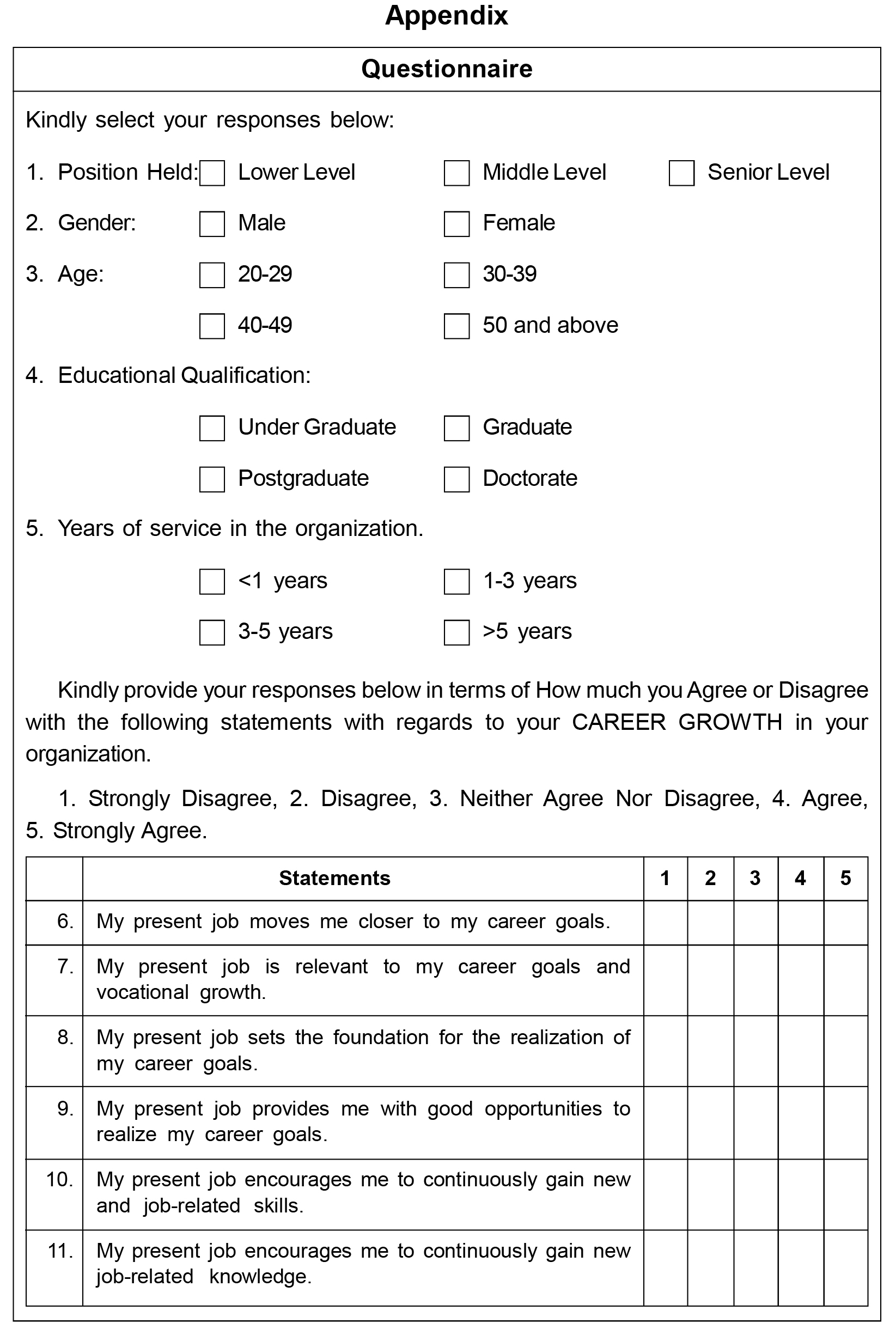
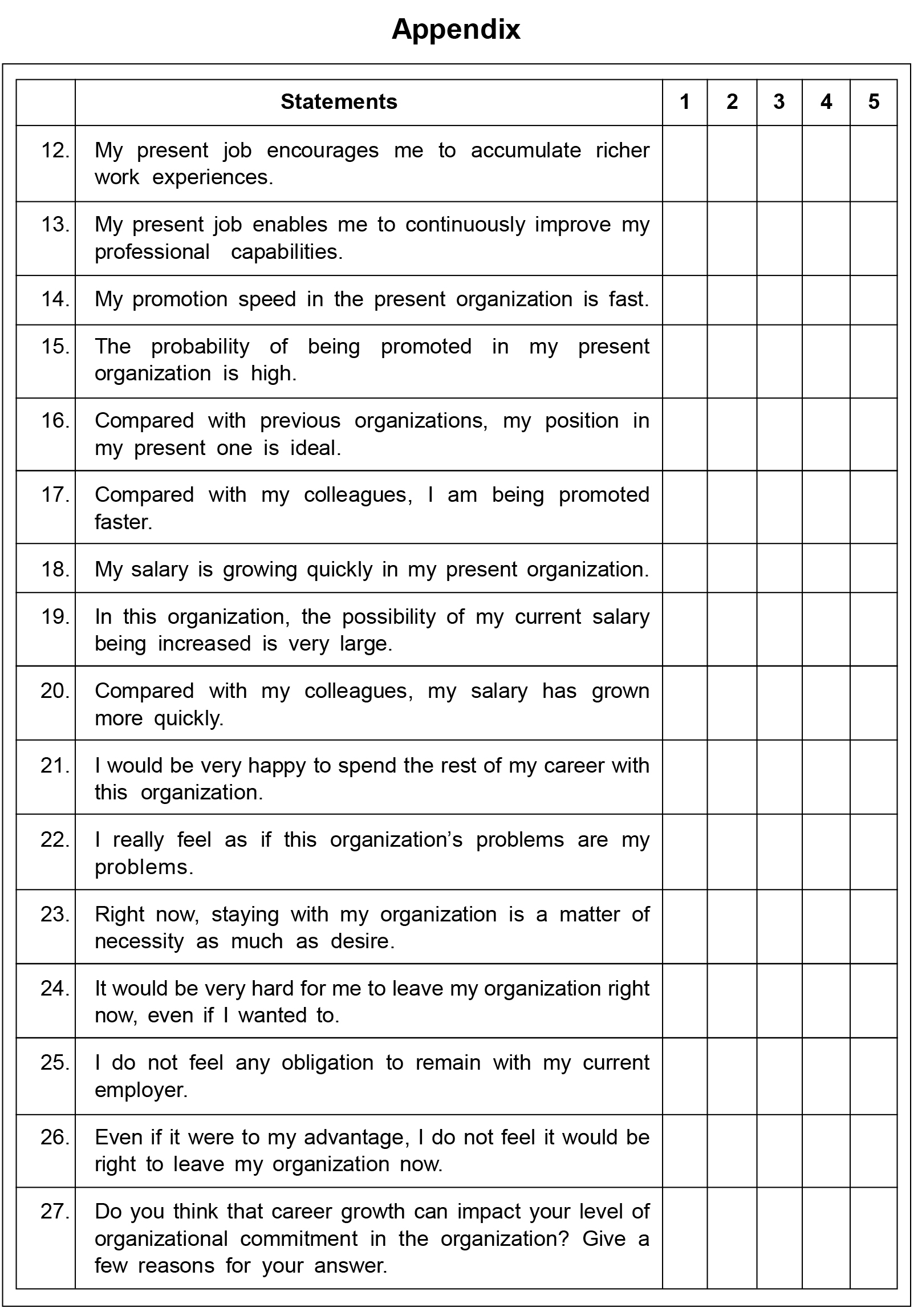
Career growth aspects (career growth progression, professional ability development, promotion speed, and remuneration growth) were measured using a 15-item scale given by Weng and Hu (2009). Whereas, organizational commitment constituents (affective commitment, continuance commitment, and normative commitment) were measured by using a 6-item scale of the three-component model given by Meyer and Allen (1991). Each of the 21 items were presented in the form of a statement with a five-point Likert scale from 1 (strongly disagree) to 5 (strongly agree).
The questionnaire (see Appendix) was distributed to all the employees of the selected private firm. Out of the 104 employees available, 81 usable questionnaires were filled up and returned (response rate of 77.88%). The respondents were informed about the purpose of the study and its confidentiality. Bivariate correlations and multiple linear regression were used for the purpose of analyzing the data.
Results and Discussion
Scale Reliability
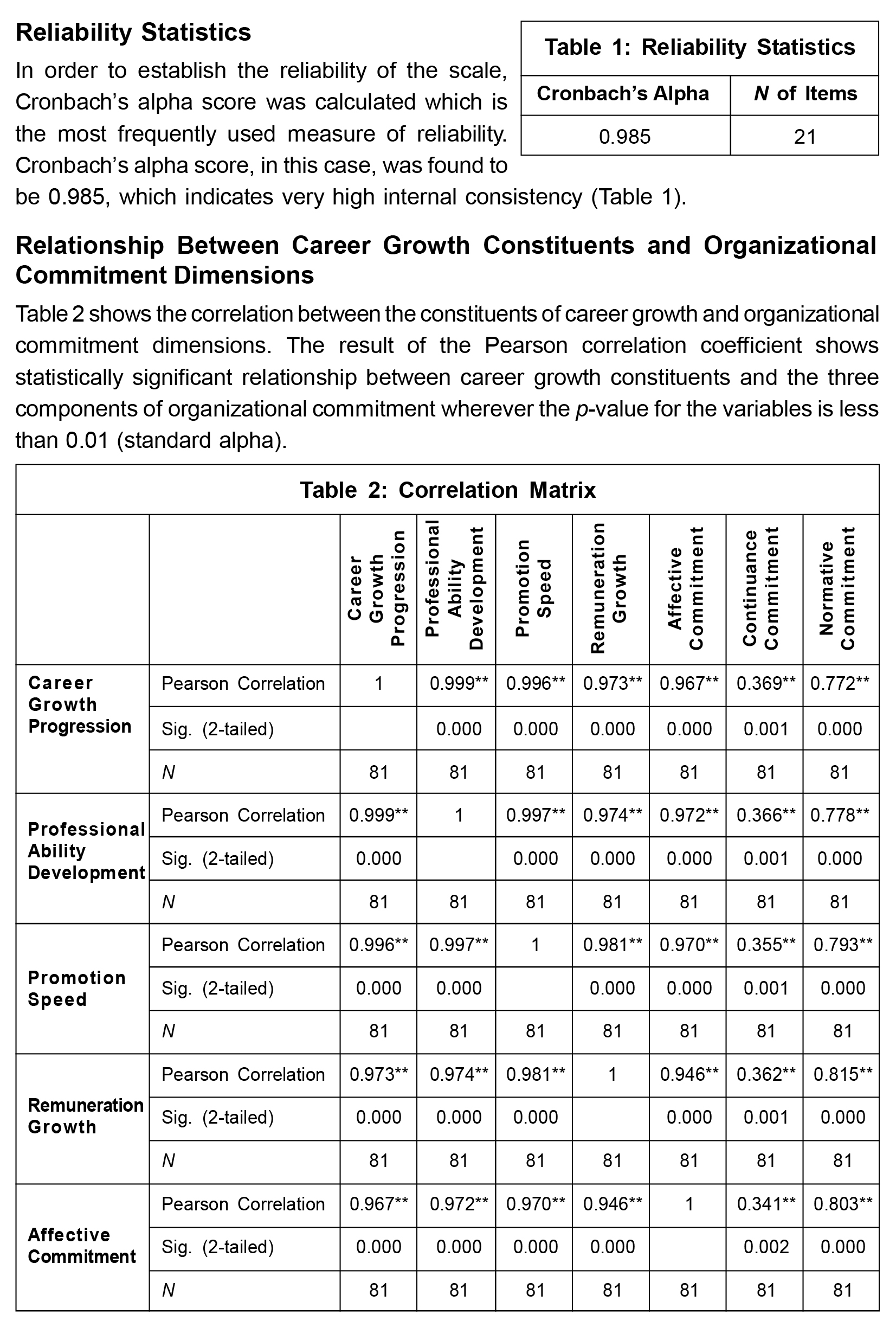
Reliability is the degree to which an assessment tool produces stable and consistent results. Reliability is the overall consistency of a measure. A measure is said to be highly reliable if it produces similar results under consistent conditions.
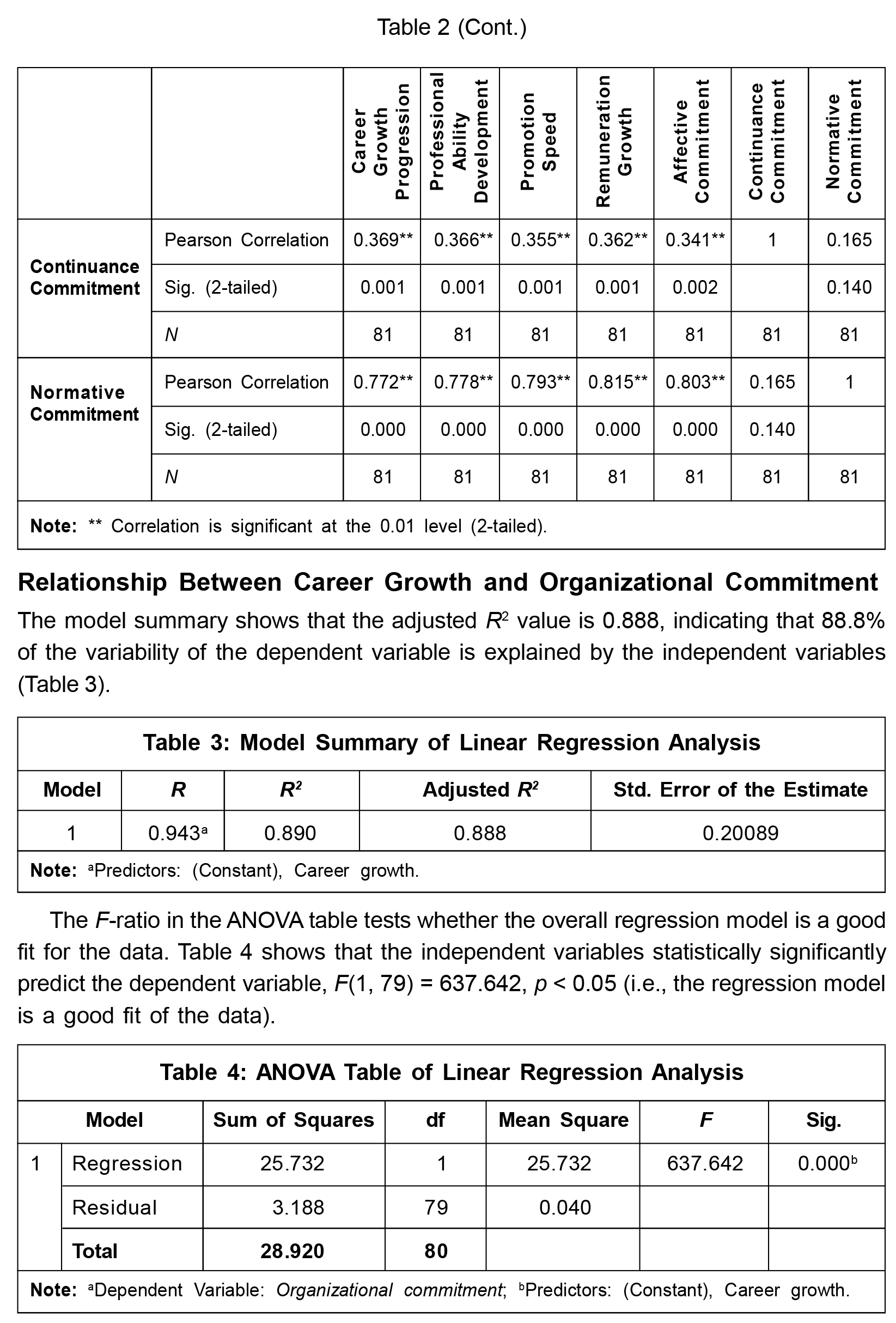
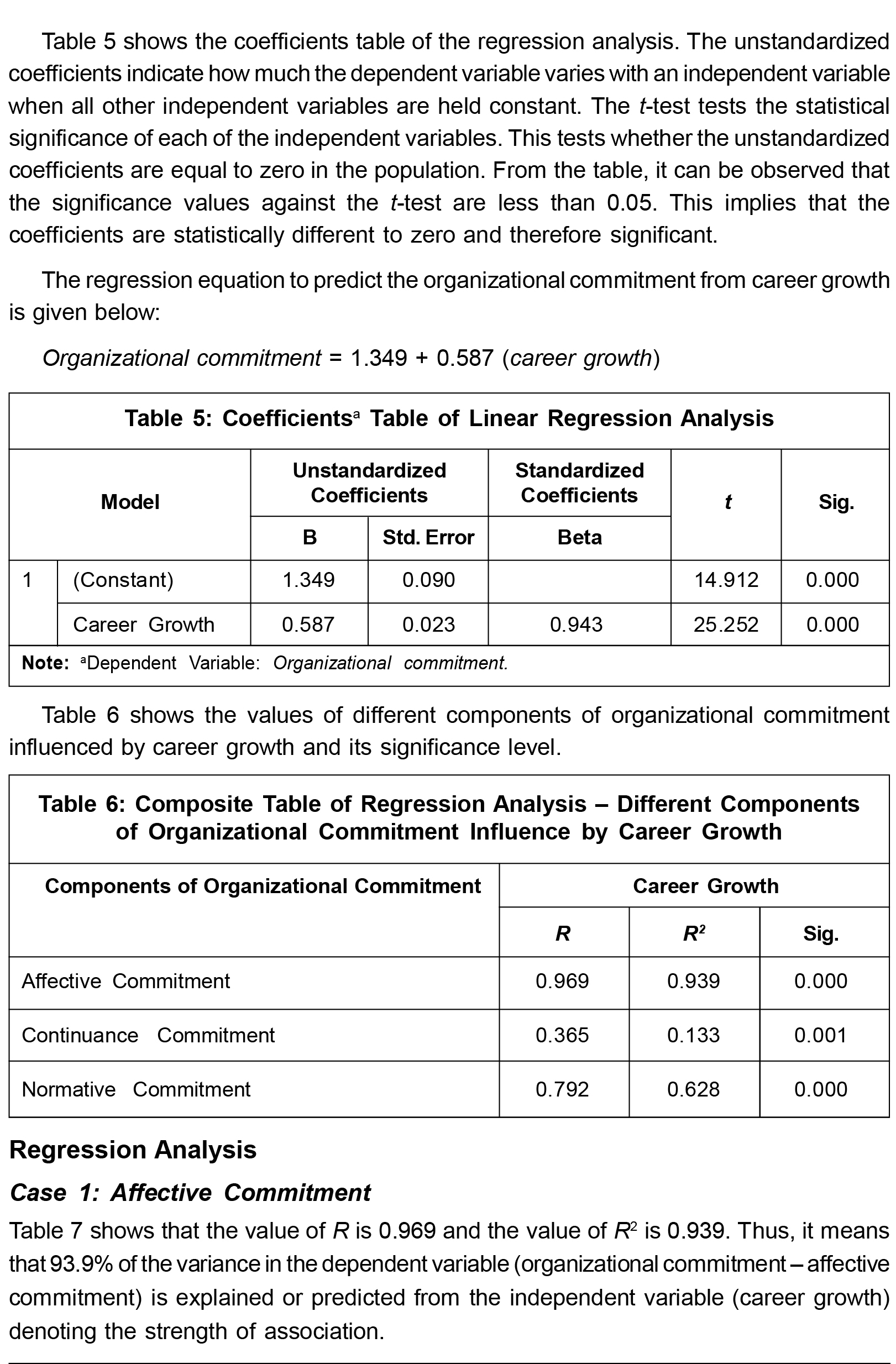
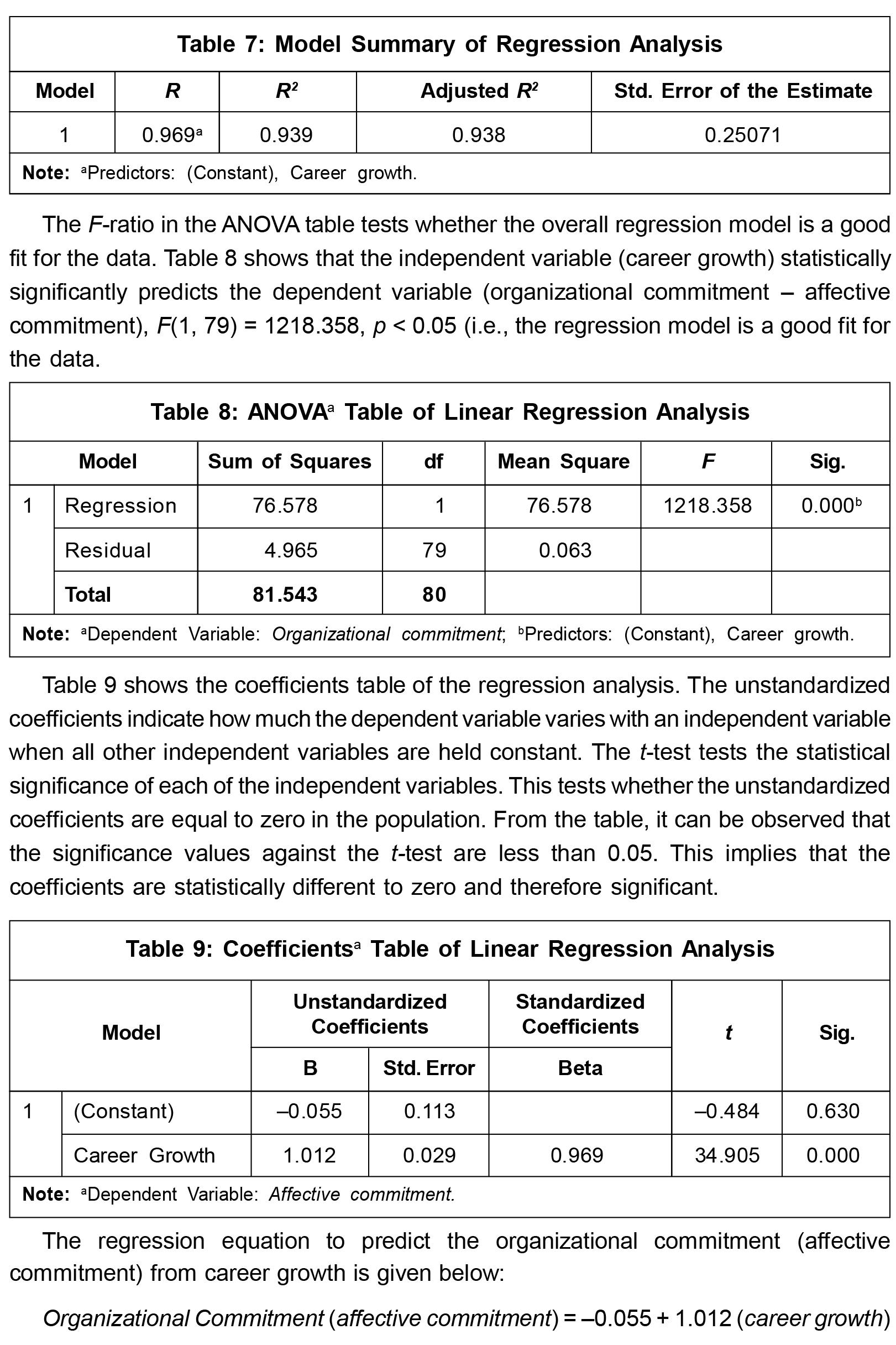
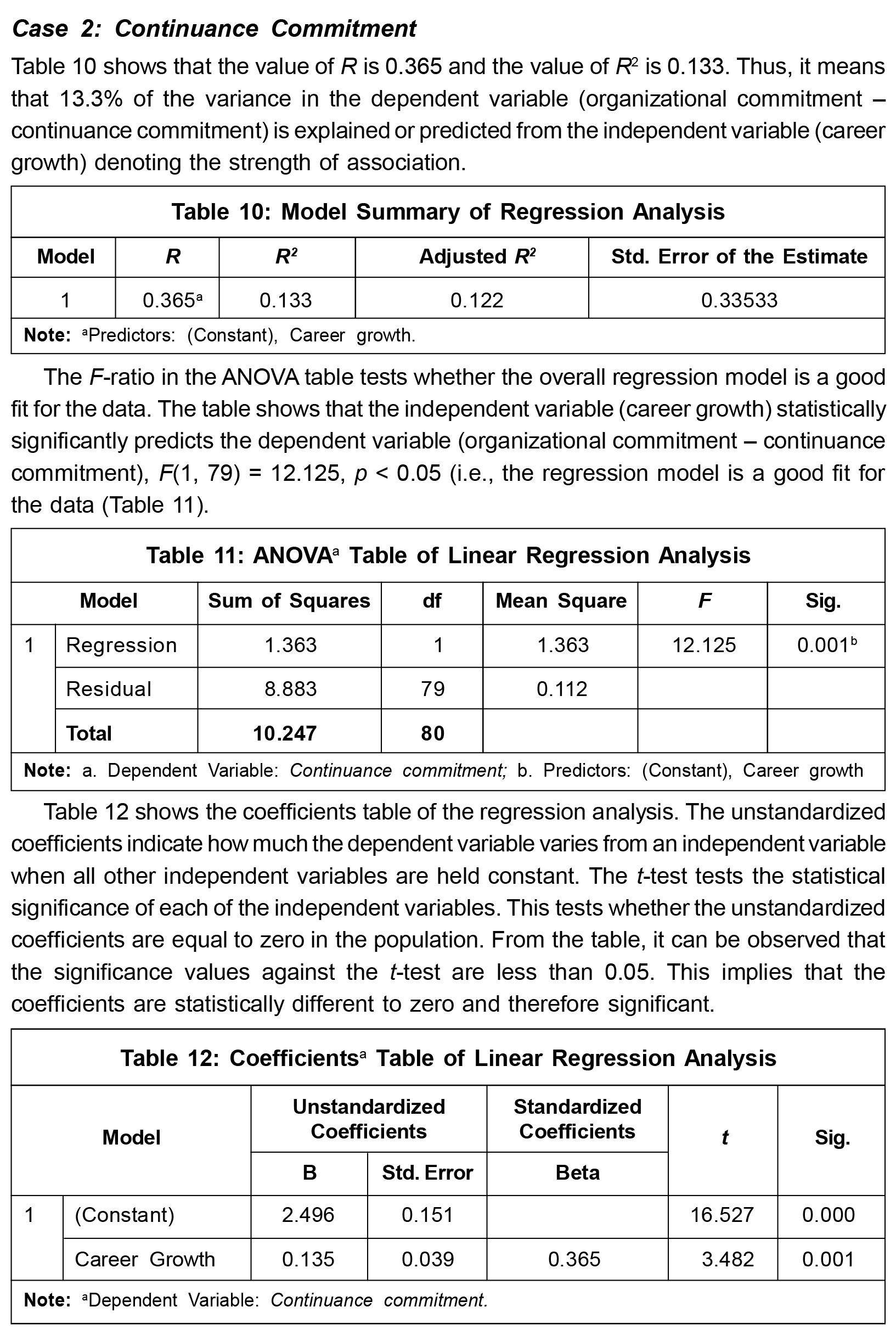
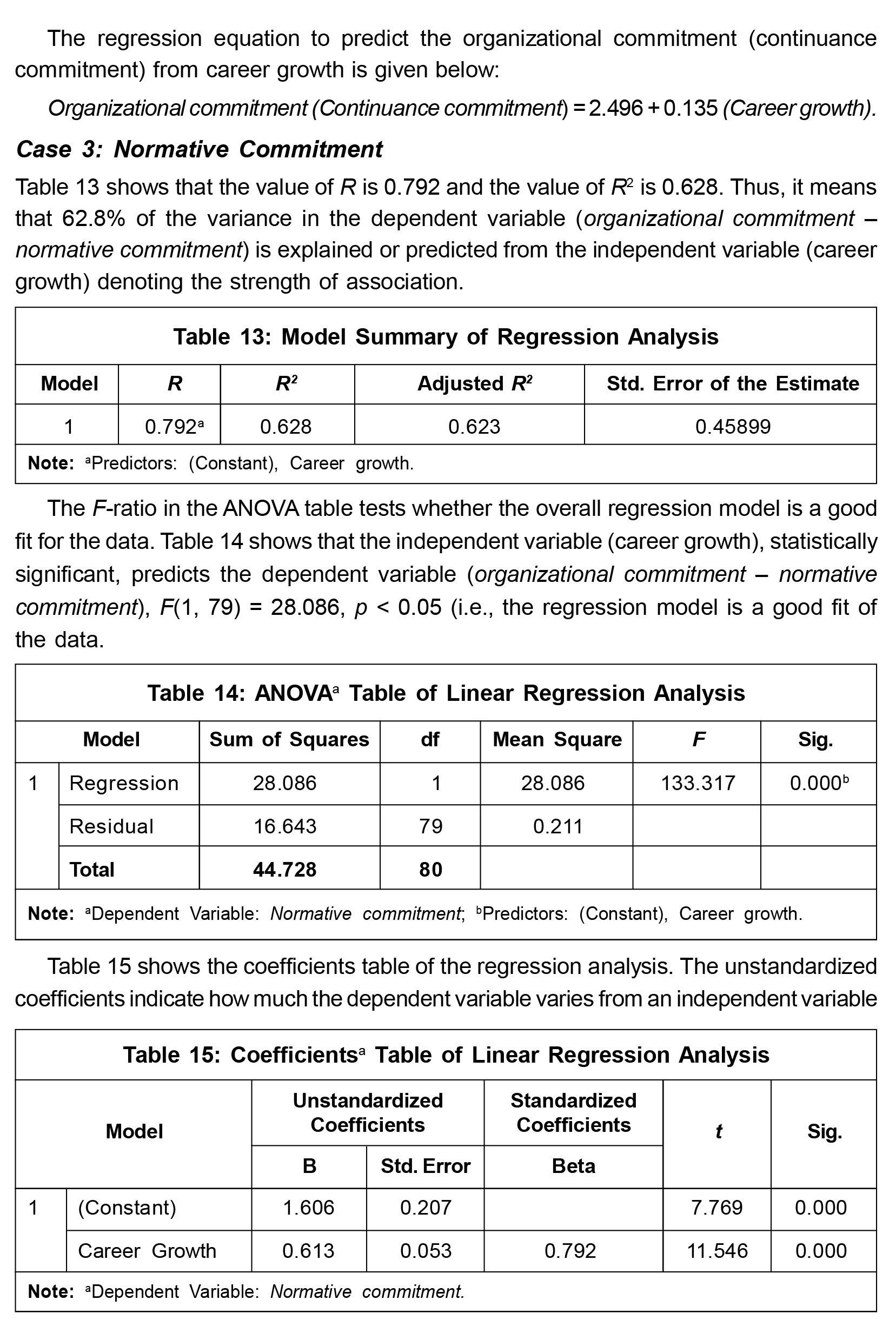
when all other independent variables are held constant. The t-test tests the statistical significance of each of the independent variables. This tests whether the unstandardized coefficients are equal to zero in the population. From the table, it can be observed that the significance values against the t-test are less than 0.05. This implies that the coefficients are statistically different to zero and therefore significant.
The regression equation to predict the organizational commitment (normative commitment) from career growth is given below:
Organizational commitment (Normative commitment) = 1.606 + 0.613 (Career growth)
Conclusion
The study made an attempt to give empirical evidence of the relationship between career growth and organizational commitment, for which it conducted a survey among the employees at a packaging firm in Guwahati, Assam. Cronbach's alpha score indicated a very strong reliability for the two scales used in the study. Both the inter-item and the total correlation of the variables were found to be statistically significant, proving that a relationship exists between career growth including its constituents and organizational commitment including its dimensions. A partial disagreement has been observed due to statistical non-significance with respect to the correlation between continuance commitment and normative commitment, which may be attributed to contextual differences or sample characteristics. The above regression analysis confirms the presence of significance and also gives the regression equations for the influence of career growth (constituted by career growth progression, professional ability development, promotion speed and remuneration growth) on organizational commitment and its individual constituents (three dimensions, namely, affective commitment, continuance commitment and normative commitment). This is also contextually true because career growth is somewhat antecedent to organizational commitment and so are its constituent dimensions. The existing relationship between these two variables makes it crucial for the employers to find the means and strategies for improving career growth opportunities in their organizations to retain talented individuals.
Implications: The study provides valuable insights to HR practitioners and employees on managing their careers. The anticipated changes in values, perceptions and roles of individuals over the course of their career span influence their commitment levels. Organizations need to equip themselves with new motivational and leadership strategies to predict and cope simultaneously with such changes.
Organizations cannot expect the same levels of attachment or loyalty from the employees over longer period of time. This necessitates the need for developing management techniques or strategies linked with career development opportunities, thereby enhancing their commitment to the organizations.
Increase in psychological career resources or career adaptability resources assists employees in managing their fit with the organization. Employees with strong commitment levels have lower intention to quit (Malloll et al., 2007). Clarity about future career directions is also important to increase the commitment levels of the employees.
In earlier literature on career growth and prospects, it has been proposed that commitment to organizations is synonymous with commitment to one's own career (Bambacas, 2010; De Vos and Segers, 2013; and Wesarat et al., 2014). This implies that providing necessary career support and systematic career development programs are quintessential for increasing employees' commitment to the organization. Training programs to enhance competencies and job skills (Abele and Spurk, 2009) and also a favorable learning ecosystem (Park, 2010) positively affect the overall growth of the employees. In this respect, it is also essential to pay attention to the subjective aspects involved in career growth. In the past, considerable emphasis was laid on extrinsic rewards such as promotion and financial support for ensuring organizational commitment. However, it is vital to pay attention to personal values as an additional criterion for ensuring career success (Zhang et al., 2006). Organizations should provide necessary facilities and conducive organizational climate and design interventions that result in better organizational commitment levels of the employees (Salami, 2008).
Limitations and Future Scope: The present study is cross-sectional in nature, and as such, it does not yield much information about the causation. This limitation can be overcome by conducting longitudinal studies to investigate the relationship between the study variables and how they influence the commitment of the employees over the long term. Another limitation of the study is the limited sample size considered for the study, thus constraining the generalizability of the research findings. Future research can be extended to cover a larger sample size to take care of this limitation. Future research may also involve analyzing other antecedents of organizational commitment at the workplace. Further, department or position-wise analysis may yield results oriented to specific requirements of different job roles as well as varied career phases. Thus, these issues can be considered for empirical investigation in future research studies.
References
- Abele A E and Spurk D (2009), "The Longitudinal Impact of Self-Efficacy and Career Goals on Objective and Subjective Career Success", Journal of Vocational Behaviour, Vol. 74, No. 1, pp. 53-62.
- Allen N J and Meyer J P (1993), "Organizational Commitment: Evidence of Career Stage Effects?", Journal of Business Research, Vol. 26, No. 1, pp. 49-61.
- Aryee S and Tan K (1992), "Antecedents and Outcomes of Career Commitment", Journal of Vocational Behavior, Vol. 40, No. 3, pp. 288-305.
- Bambacas M (2010), "Organizational Handling of Careers Influences Managers' Organizational Commitment", Journal of Management Development, Vol. 29, No. 9, pp. 807-827.
- Baruch Y (2006), "Career Development in Organizations and Beyond: Balancing Traditional and Contemporary Viewpoints", Human Resource Management Review, Vol. 16, No. 2, pp. 125-138.
- Bashir M S, Haider S, Asadullah M A et al. (2020), "Moderated Mediation Between Transformational Leadership and Organizational Commitment: The Role of Procedural Justice and Career Growth Opportunities", SAGE Open, Vol. 10, No. 2, 2158244020933336.
- Briscoe J P and Finkelstein L M (2009), "The "New Career" and Organizational Commitment", Career Development International, Vol. 14, No. 3, pp. 242-260.
- Brooks J L and Seers A (1991), "Predictors of Organizational Commitment: Variations Across Career Stages", Journal of Vocational Behavior, Vol. 38, No. 1, pp. 53-64.
- Chang E (1999), "Career Commitment as a Complex Moderator of Organizational Commitment and Turnover Intention", Human Relations, Vol. 52, No. 10, pp. 1257-1278.
- Chew J and Chan C C A (2008), "Human Resource Practices, Organizational Commitment and Intention to Stay", International Journal of Manpower, Vol. 29, No. 6, pp. 503-522.
- De Vos A and Segers J (2013), "Self-Directed Career Attitude and Retirement Intention", Career Development International, Vol. 18, No. 2, pp. 155-172.
- Ferreira N, Coetzee M and Masenge A (2013), "Psychological Career Resources, Career Adaptability and Hardiness in Relation to Job Embeddedness and Organizational Commitment", Journal of Psychology in Africa, Vol. 23, No. 1, pp. 31-40.
- Herachwati N and Rachma A (2018), "Organizational Commitment Versus Career Commitment", KnE Social Sciences, Vol. 3, No. 10, pp. 371-383.
- Herrbach O, Mignonac K, Vandenberghe C and Negrini A (2009), "Perceived HRM Practices, Organizational Commitment, and Voluntary Early Retirement Among Late-Career Managers", Human Resource Management, Vol. 48, No. 6, pp. 895-915.
- Jans N A (1989), "Organizational Commitment, Career Factors and Career/Life Stage", Journal of Organizational Behavior, Vol. 10, No. 3, pp. 247-266.
- Jyoti J, Sharma P, Kour S and Kour H (2020), "The Role of Job Involvement and Career Commitment Between Person-Job Fit and Organizational Commitment: A Study of Higher Education Sector", International Journal of Educational Management, ahead-of-print (ahead-of-print).
- Kang H J (Annette), Gatling A and Kim J (Sunny) (2014), "The Impact of Supervisory Support on Organizational Commitment, Career Satisfaction, and Turnover Intention for Hospitality Frontline Employees", Journal of Human Resources in Hospitality & Tourism, Vol. 14, No. 1, pp. 68-89.
- Kaur K, Sandhu H S and Kaur K (2010), "Career Stage Effect on Organizational Commitment: Empirical Evidence from Indian Banking Industry", International Journal of Business and Management, Vol. 5, No. 12, pp. 141-152
- Kiran M, Hussain M, Afzal M and Gillani S A (2019), "Impact of Professional Stress and Career Development on Organizational Commitment Among Nurses [Review of Impact of Professional Stress and Career Development on Organizational Commitment Among Nurses]", ResearchGate; Journal of Health, Medicine and Nursing, Vol. 62, No. 1, pp. 66-74.
- Kohlmeyer III, J M, Parker R J and Sincich T (2017), "Career-Related Benefits and Turnover Intentions in Accounting Firms: The Roles of Career Growth Opportunities, Trust in Superiors, and Organizational Commitment", Advances in Accounting Behavioral Research, Vol. 20, No. 1, pp. 1-21.
- Kondratuk T B, Hausdorf P A, Korabik K and Rosin H M (2004), "Linking Career Mobility with Corporate Loyalty: How Does Job Change Relate to Organizational Commitment?", Journal of Vocational Behavior, Vol. 65, No. 2, pp. 332-349.
- Kuijpers M A, Schyns B and Scheerens J (2006), "Career Competencies for Career Success", The Career Development Quarterly, Vol. 55, No. 2, pp. 168-178.
- Mallol C, Holtom B and Lee T (2007), "Job Embeddedness in a Culturally Diverse Environment", Journal of Business Psychology, Vol. 4, No. 1, pp. 35-44.
- Meyer J P and Allen N J (1991), "A Three-Component Conceptualization of Organizational Commitment", Human Resource Management Review, Vol. 1, No. 1, pp. 61-89.
- Moon J S and Choi S B (2016), "The Impact of Career Management on Organizational Commitment and the Mediating Role of Subjective Career Success", Journal of Career Development, Vol. 44, No. 3, pp. 191-208.
- Nawaz M S and Pangil F (2016), "The Relationship Between Human Resource Development Factors, Career Growth and Turnover Intention: The Mediating Role of Organizational Commitment", Management Science Letters, Vol. 6, No.2, pp. 157-176.
- Park Y (2010), "The Predictors of Subjective Career Success: An Empirical Study of Employee Development in a Korean Financial Company", International Journal of Training & Development, Vol. 14, No. 1, pp. 1-15.
- Payne S C and Huffman A H (2005), "A Longitudinal Examination of the Influence of Mentoring on Organizational Commitment and Turnover", Academy of Management Journal, Vol. 48, No. 1, pp. 158-168.
- Redondo R, Sparrow P and Hernandez-Lechuga G (2019), "The Effect of Protean Careers on Talent Retention: Examining the Relationship Between Protean Career Orientation, Organizational Commitment, Job Satisfaction and Intention to Quit for Talented Workers", The International Journal of Human Resource Management, Vol. 32, No. 9, pp. 2046-2069.
- Salami S O (2008), "Demographic and Psychological Factors Predicting Organizational Commitment Among Industrial Workers", The Anthropologist, Vol. 10, No. 1, pp. 31-38.
- Sturges J, Guest D, Conway N and Davey K M (2002), "A Longitudinal Study of the Relationship Between Career Management and Organizational Commitment Among Graduates in the First Ten Years at Work", Journal of Organizational Behavior, Vol. 23, No. 6, pp. 731-748.
- Sturges J, Conway N, Guest D and Liefooghe A (2005), "Managing the Career Deal: The Psychological Contract as a Framework for Understanding Career Management, Organizational Commitment and Work Behavior", Journal of Organizational Behavior, Vol. 26, No. 7, pp. 821-838.
- Supeli A and Creed P A (2015), "The Longitudinal Relationship Between Protean Career Orientation and Job Satisfaction, Organizational Commitment, and Intention-to-Quit", Journal of Career Development, Vol. 43, No. 1, pp. 66-80.
- Thurasamy R, Lo M C, Amri A Y and Noor N (2011), "An Analysis of Career Advancement Among Engineers in Manufacturing Organizations", International Journal of Commerce and Management, Vol. 21, No. 2, pp. 143-157.
- Wang Q, Weng Q, McElroy J C et al. (2014), "Organizational Career Growth and Subsequent Voice Behavior: The Role of Affective Commitment and Gender", Journal of Vocational Behavior, Vol. 84, No. 3, pp. 431-441.
- Weer C H and Greenhaus J H (2017), "Managers' Assessments of Employees' Organizational Career Growth Opportunities: The Role of Extra-Role Performance, Work Engagement, and Perceived Organizational Commitment", Journal of Career Development, Vol. 47, No. 3, pp. 280-295.
- Weng Q and Hu B (2009), "The Structure of Career Growth and Its Impact on Employees' Turnover Intention", Industrial Engineering and Management, Vol. 14, No. 1, pp. 14-21.
- Weng Q and McElroy J C (2012), "Organizational Career Growth, Affective Occupational Commitment and Turnover Intentions", Journal of Vocational Behavior, Vol. 80, No. 2, pp. 256-265.
- Weng Q and Zhu L (2020), "Individuals' Career Growth Within and Across Organizations: A Review and Agenda for Future Research", Journal of Career Development, Vol. 47, No. 3, pp. 239-248.
- Weng Q, McElroy J C, Morrow P C and Liu R (2010), "The Relationship Between Career Growth and Organizational Commitment", Journal of Vocational Behavior, Vol. 77, No. 3, pp. 391-400.
- Wesarat P, Sharif M Y and Majid A H A (2014), "A Review of Organizational and Individual Career Management: A Dual Perspective", International Journal of Human Resource Studies, Vol. 4, No. 1, pp. 101-113.
- Zhang K, Song L J, Hackett R D and Bycio P (2006), "Cultural Boundary of Expectancy Theory-Based Performance Management: A Commentary on De Nisi and Pritchard's Performance Improvement Model", Management and Organizational Review, Vol. 2, No. 2, pp. 279-294.