October '22
The IUP Journal of Organizational Behavior
Archives
Impact of Compensation, Job Satisfaction and Remote Working on Talent Retention in Indian Animation Industry
Priyanka S
Research Scholar, IBS Hyderabad (Under IFHE - A Deemed to be University u/s 3 of the UGC Act, 1956), Hyderabad, Telangana, India; and is the corresponding author. E-mail: priyankamum22@gmail.com
M Bhaskara Rao
Associate Professor, HR & OB, IBS Hyderabad (Under IFHE - A Deemed to be University u/s 3 of the UGC Act, 1956), Hyderabad, Telangana, India. E-mail: mbr@insindia.org
The animation sector is becoming increasingly vital to India's economic development, where attracting and retaining talent has become a top priority for studios operating in India. The animation industry operates on the same old capitalist premise-cut production costs by recruiting fewer regular and more irregular employees. Animators often move to wherever they find work, adding to the feeling of displacement and resentment. This paper reviews how the compensation practices in the animation industry in India impact the retention of artists and offers suggestions for improving workforce retention, which is currently at 25.6% for animators and 22.3% for 3D artists, with the turnover rates more than double the global average.
Introduction
The Indian Media and Entertainment (M&E) industry is a sunrise sector for an economy making significant strides. According to the FICCI EY March 2022 report, the animation sector has grown by 24%, and the animation and VFX industry is expected to reach 180 bn by 2024. EY estimates that the animation sector will grow to 39.7% in 2022 from 30.5% in 2021, with a capability to create close to 120,000 jobs over the next five years. The significance of animation has transformed post pandemic, with consumers increasingly adopting digital-first behaviors.
During the early 20th century, pioneers such as Dadasaheb Phalke, Gunamoy Banerjee, K S Gupte, and G K Gokhle, self-taught and inspired by international animation, kept the heritage of Indian animation alive (Lent, 1998). The Pea Brothers, directed by Gunamoy Banerjee and produced by New Theaters Limited, was the first Indian animation work to be released in theaters in June 1934. Before the invention of the cinema, audiences were entertained by shadow puppets and slide presentations, which foreshadowed modern animation. India currently has over 300 animation studios, employing over 1.5 million people. Cities such as Mumbai, Bengaluru and Hyderabad are prominent animation hubs, providing a full spectrum of services in 3D animation, Computer Graphics (CG), and VFX content by a substantial body of professionals and promising talent.
The geographically networked, clustered, and generally project-based structure of the animation and VFX segment, including its consumption of professional creative workers, has a significant impact on its Human Resource (HR) policies and practices. Human Resource Management (HRM), a topic of interest in the animation and VFX industries, must be understood in the context of the industry. The animation industry exemplifies amorphous careers and "free agent" employees, with workers willing to switch jobs or careers to find satisfaction (Harter, 2017). It is highly fragmented and characterized by long working hours, low pay, unstructured people practices, and uncertain working conditions. The industry is the quintessential model of an unequal power relationship between creative workers and capital owners (Mellander, 2015). The basic understanding at work of employees' loyalty in exchange for an organization's job security has become obsolescent in this industry (Pink, 2001). The organizational structure of companies active in the animation industry ranges from large media conglomerates such as Walt Disney, MPC, Technicolor, and Double Negative to smaller companies and first-time entrepreneurs operating out of their homes using cutting-edge technological aids. Traditionally, organizations in this industry hired only recruiters and talent acquisition managers with little regard for workforce management practices. The industry workforce is heavily gendered. Women make up only 6% of the workforce, compared to 47% of women overall in other industries, making the workforce heavily gendered. Women were underrepresented in art and animation roles (Bailey et al., 2021). According to Lucas (2015), the lack of women in the profession is primarily due to a scarcity of talented artists. However, unfavorable and frequently downright misogynistic views have persisted in the segment, discouraging women from entering the animation workforce. The industry employs 61% of people under the age of 35, making it millennial-dominated, who differ from previous generations in both attitude and approach to work.
The dispute between a merciless industry structure and creative idealism compels animators to endure exploitation in the name of art, with no end in sight.1 Artists in the animation industry face frequent job searches, mental health issues, and chronic illness as a result of potentially long hours and inadequate pay.2 Working conditions are bleak with artists frequently falling asleep at their desks. According to BuzzFeed News (2020), artists are hospitalized several times due to illness caused by exhaustion.
An examination of HR issues has revealed several intriguing discourses about HR practices in the animation and visual effects industries. As per Motionvillee, although animation is a highly creative process, skilled Indian animators are used as manual labor. Freelance work is the standard practice in the animation industry, and the high demand from international producers has exacerbated the exploitative working conditions in studios (Ristola, 2016). According to Henry Thurlow, an animation expert, it is not a 'tough' industry... It is an industry that is 'illegally harsh.' As reported by Business Standard (2018), the working conditions in the Indian animation industry are stressful and frantic, uninteresting and uncreative, have limited on-the-job training, suppressed voices on issues as well as a lack of organizational support, and poorly funded projects. Analyzing animators' working styles, such as working hours and type of contract bearing in mind the fact that most of the professionals working in this industry are freelancers, generally animators tend not to belong to any organization or enter into contracts (Okeda and Koike, 2011). The choice of staying a freelancer relates to the artist's dissatisfaction with the compensation and benefits being offered by the studios, which needs to be reconsidered.
The challenge for HR in animation companies is not only finding the right talent but also retaining them in a highly competitive environment and ensuring job satisfaction in remote working conditions imposed by the pandemic. This assertion that creative employees are somehow different from other employees and require different treatment and management is perhaps the most dominant discourse in the study of people management in the animation sector, resulting in the coining of new terms such as 'creative slacks' and 'deep smarts' (Shaw and Homan, 2013). The animation industry in India is dwarfed by the gigantic presence of Bollywood and its identity constructions are completely lacking in such narratives (Thussu, 2013).
Previous academic research into Indian animation practice is scarce. A historical survey in Gianalberto Bendazzi's Cartoons: One Hundred Years of Cinema Animation (1994); John A Lent's Animation in Asia and the Pacific (Kenyon, 2001; and Lent, 2001); and Harvey Deneroff's tantalizing examination of a single Mumbai animation studio, Famous House of Animation in Asian Cinema (2003) are among the brief academic interventions till date; the attention is extremely restricted. Each work subsequently focuses on the hardships of the budding industry business. Lent (2001) typifies the Indian animation industry as a significant outsourcing sector, whereas Deneroff (2003) suggests a budding "independent animation community" supported by government design education.
Animation is popular creative art, but artists are anonymous and unseen by the rest of the world (Furniss, 2009). According to a KPMG report (2019), there is a lack of human resource practices in the animation sector, and the industry is characterized by challenges of long hours, inconsistent pay, a lack of work credit, and the time required to attain expected quality. Given the cultural significance of creative workers and the animation industry, this is a significant research gap.
The purpose of this study is to assess whether a company's compensation system has an impact on employee retention in the animation industry in India. The authors also analyze the impact of job satisfaction on the retention of employees and how the combined effect of remote working and compensation is impacting the animation workforce's intention to stay.
Driven by research and industry requirements, the authors aim to evaluate how compensation in the animation industry is one of the biggest challenges impacting the retention of the creative workforce. Thus, the primary research question is, "How can Indian animation companies with limited human resources practices retain their talented workforce?" Through an in-depth single case study, four sub-questions will be addressed.
- How can compensation in animation and VFX companies be structured to improve the satisfaction of the artists and help them in retaining their talented and skilled workforce?
- How can animation studios ensure job satisfaction and remote working strategies as a tool for retaining the workforce?
- How remote work can compensate for the low salaries and lack of financial benefits to ensure retention in the Indian animation companies?
- How to maximize employee retention in the Indian animation industry?
Literature Review
Scholars argued that putting animation in a formal definition would inherently impose intellectual restrictions on exploration, while others argued that any definition broad enough to encompass "all things animated" must be too broad to be meaningful. International organizations of animation 'experts,' in pursuit of a definition, stated that a range of things qualifies as animation and that forcing a definition could create a dichotomy within the animation community of scholars (Wells, 2011). Wells stated that "Animation is a visual style of communication in which objects appear to move or change over a visible and discernible period known as 'frames' to demonstrate the physical properties of movement supported by some type of external action or force."
Animation functions within the dynamics of transnational geography and is constantly evolving as production centers are shifting to outsourcing mode and traditional outsourcing bases, such as India, in an attempt to transition from service work to co-production and original animation production (Westcott, 2011). This industry relies on a young creative workforce that finds a strong affinity between work, enjoyment, and personal identity. However, in terms of pay, job stability, working conditions, and security, the difficulties confronting animators appear to be similar to those described by the current literature on creative labor (McRobbie, 2002; and Gill and Pratt, 2008). Okeda and Koike (2011) presented a contemporary analysis of animators' working conditions which are strongly influenced by their passion for the art form, yet suffer from poor wages, lengthy working hours, and a lack of job security.
The interdisciplinary literature on the creative industries has mostly emerged along two lines of criticism. The first is concerned with the exploitative labor conditions, arguing that the creative industries are a modern site of capitalist labor exploitation (McRobbie, 2002; Gill and Pratt, 2008; and de Peuter, 2011), and the second emphasizes capitalism's dominance over artistic processes, viewing the interaction between management and creativity as a process of the latter's subordination to the former (Pritchard, 2002; and Banks, 2007).
Compensation
According to Adams' (1963) Equity Theory, pay is the outcome that the employee receives for the contribution made to the organization in terms of the performance of given work. According to Heathfield (2012), compensation is a fixed amount given to a worker by the organization in exchange for his/her services. Researchers report a significant association between staff remuneration, incentives, rewards, employee job satisfaction, and retention (Ferguson, 2001; and Terera and Ngirande, 2014). Compensation is valuable to employees and one of the primary reasons why people work, and effective remuneration can inspire, attract, and retain skilled employees of a company (Raihan, 2012). Compensation has a substantial influence on employee job satisfaction, which causes them to stay with the firm for a longer period (Abassi and Hollman, 2000), a crucial factor influencing employees' intention to stay (Tangthong et al., 2014). Researchers have also observed contradicting results. According to Griffeth et al. (2000), there is a moderate relationship between pay and employee retention, whereas Khatri et al. (2001) reported that pay is not the only important factor in retaining employees in the Asian context.
However, among the factors identified by Tseng and Wallace (2009) for employee retention, compensation, creativity, and job satisfaction rank highest. The factors related to compensation have the greatest impact on attrition (Adhikari, 2009). Compensation in the animation industry is highly unstructured and often referred to as an 'illegally harsh' industry that does not even pay remotely minimum wage (Meth, 2015).
A study on creative industry experts conducted by the Local Media Association in February 20223 indicated that remuneration, remote-work flexibility, and some adjustments to paid time off were the most effective measures for retaining the workforce. According to Randstad Employer Brand Research (2022)4, pay and perks are still the most important motivators for employees to change jobs.
Employee Retention
Employee retention refers to an employer's capacity to keep staff on board (Chandra, 2016). Employee retention is a process that encourages employees to stay with the company for as long as possible (Raminder, 2017). According to the Organizational Equilibrium theory (March and Simon, 1958), an individual stays with an employer as long as the incentives that are offered in terms of compensation, environment, growth, and learning are at par or superior to what the employee offers in return. Employers and supervisors must provide employees with opportunities such as challenging tasks and a certain level of autonomy and freedom in their jobs to retain talented employees (Ready, et al., 2008). Walker (2001) identified compensation as a factor influencing employee retention. The majority of employees would like to change jobs if offered a higher salary elsewhere (Damaris et al., 2016). Compensation is especially important in increasing retention for millennial workers (Abdelbaset et al., 2015), who have a strong preference for an extrinsic reward (Moncarz et al., 2009).
Job Satisfaction
Job satisfaction is defined as a pleasurable emotional state resulting from the appraisal of one's job and an affective reaction to one's job (Locke, 1976). Carr (2008) defined it as more of an attitude and internal state that reflects feelings, beliefs, and behaviors that shape our attitudes towards jobs. Job satisfaction, according to Lane et al. (2010) and Vidal et al. (2007), is a complex phenomenon influenced by factors such as salary, working environment, autonomy, communication, and organizational commitment. According to Sokoya's (2000), investigation of job satisfaction, compensation is the most important determinant of job satisfaction. Aprilia and Mukti (2018) found job satisfaction has a positive impact on employee retention. Several other studies have found a link between job satisfaction and employee retention (Seran et al., 2018; and Nguyen, 2020). Tang et al. (2000) determined that earning more money has only an indirect influence on employee retention; it is influential when an employee's job satisfaction is low.
While competitive pay is important for retaining employees, job satisfaction is also important (Wadhwa and Koul, 2012). Irrespective of the industry's precarious state, the desire of creative professionals to work in animation is primarily motivated by passion and creativity (Sarjiati, 2021). According to research, passion plays an important role in the development of creative talents (McRobbie, 2016; Duffy 2017; and Harvey and Sepherd, 2017). A well-known philosophy for establishing a successful career in the creative industry is 'passion'. Regardless of the obstacles, the desire to tell stories in new ways, as well as a passion for and understanding of art, influence the satisfaction and emotional impact of gaining experience working on blockbuster films, television, and advertising in the animation sector. Passion is a wellknown guiding principle for achieving success in the creative sector and has been studied from numerous perspectives in the form of individual experience, including enjoyment, job satisfaction, self-expression, and the underlying implications (Hope and Richards, 2015; Long and Baber, 2015; McRobbie, 2016; and DePalma, 2021).
Employees in animation companies believe everything in life is dreadfully miserable, yet the artist within is completely satisfied (Meth, 2015). According to Tokumitsu (2014), the catchphrase "do what you love" is a strategy for promoting corporate identification while obscuring collective labor problems. Hope and Richards (2015) stated that excitement and passion are critical cultural aspects where employees tend to commit a lot of energy and time with great exploitation potential. Acquiring fame through their passion or being hired in the creative business is supposed to compensate for the time, energy, and capital invested (Harvey and Sepherd, 2017). Passion fosters a desire in learning new skills and assists individuals in adapting to job problems, leading to higher job satisfaction (Johri and Mishra, 2014). Hence, despite the low pay and unfair compensation practices, the love for art and their creative passion make people stay and work in animation companies.
Remote Working
Working From Home (WFH)-also known as remote work, telecommuting, teleworking, homework, home office, mobile work, outwork, or flexible workplace-is a work arrangement in which employees do not commute to their company's workplace. The primary reference to remote working in literature is found in Olson (1983) who defined remote work as "the organizational work that is performed outside the normal organizational confines of space and time". Allen et al. (2015) defined remote working as flexible prearrangement whereby employees perform their organizational duties away from their office facilities, with bare minimum physical contact with co-workers, and use technology to communicate. As a work practice, WFH means that an employee performs work-related activities from their home rather than being physically present at an employer's location, typically using digital technology (Allen et al., 2015). Existing knowledge on remote working is being examined and revisited in the unexpected pandemic context. Before the pandemic, remote working was a privilege of a few senior and white-collared employees of best-in-class organizations. With the onset of the pandemic, remote working grew into an obligatory normal way of working which normalized remote working to support virtual collaboration, communication and work from a distance by adopting technology. WFH or remote working became the only option for many organizations after the Covid-19 pandemic broke out. Remote working was not a new concept (Hafermalz and Riemer, 2021), but when the global crisis hit, organizations were forced to let their employees work from home to stabilize the economy and ensure business continuity. While the sudden shift to remote working had significant implications for organizations, as companies did not have to spend on recurring infrastructure costs, remote working and its effects on the employee are a new area of study that has not been addressed significantly in the creative industry and is absent in the animation industry space. Research shows that the availability of remote work opportunities clearly affects employee satisfaction, which improves employee retention (Bichsel et al., 2021). While a competitive compensation package is still important, remote working is an important consideration to keep employees happy (Attarbashi et al., 2021). According to McKinsey's (2021) study, "What Employees Are Saying About the Future of Remote Work", employees want organizations to prioritize remote working flexibility, competitive compensation, and employee wellbeing. Employees' future hopes and fears reflect a focus on flexibility to work remotely, wellbeing, and compensation. Compensation package adjustments support the transition to remote work (Barrero et al., 2022). Remote working demands employees' creativity and innovation, however technology constraints serve as challenges in achieving the desired outcome and demand organizational support to strategize appropriate compensation plans. Azmy et al. (2022) revealed in their study that compensation is positively associated with remote working and can boost employee performance by 8.3%. The WFH policy could be carried out optimally in accordance with company policy, and compensation had a positive impact on remote working employees' performance. They also stated that compensation acts as a stimulant to keep employees' performance stable while working remotely.
Before the pandemic, researchers discovered inconsistencies in employee job satisfaction, job performance, and telecommuting in studies spanning two decades (Golden, 2006; and Gajendran and Harrison, 2007). Post-pandemic remote working had numerous advantages, aiding efficient and effective performance and increasing employee satisfaction. The removal of the boundaries between the employees' private and work areas, as well as staying away from the stressful work environment and not having to commute to work, had a significant and positive impact on job satisfaction (Sayin and Aybek, 2021). WFH proved to be financially advantageous for creative workers in the animation industry where pay is a challenge in terms of saving on travel costs, outside food, and entertainment expenses, resulting in an overall increase in emotional, physical, and mental wellbeing (Harper, 2020). In their study, Aslan et al. (2022) discovered that remote working had a positive impact on job satisfaction because employees were able to focus on saving time by not commuting, staying safe during the pandemic, being with family during work hours, dressing wishfully, and behaving and maintaining a comfortable life. They discovered that people who worked from home during the pandemic did better, which had a positive and significant impact on job satisfaction.
According to Kumar (2022), remote working would never work in the animation industry as this type of work necessitates on-premises infrastructure for a variety of security, technological, and economic reasons.
Wu and Chen (2020) argued that remote working has negative effects, leading to increased workload and a decrease in productivity. Employees work long hours at home, consuming more of their personal time (McDowell et al., 2020). As employees became more engaged when working from home, their job boundaries became increasingly blurred (Wonders, 2020). However, the flexibility of working from home has provided employees with the necessary work-life balance, and it is expected to become the norm in the future and demand for a segment of the workforce (Syazwani et al., 2020).
According to The Worklife Way (Organizational Development Consultancy) 2022 report, resistance campaigns from employees eager to keep their work-from-home privileges are on the rise as workers who have had more control over their working life than ever before are hesitant to trade it for the presentism and surveillance of the pre-pandemic age. According to research, for a variety of reasons, a higher-than-usual proportion of employees are considering leaving their jobs, a phenomenon known as the 'great resignation' (O'Connor, 2021). According to recent research from LiveCareer,5 30% of remote workers said they would quit if they were not allowed to continue remote work and another two-thirds said they prefer to work only for companies that offer remote work options. A similar trend can be observed in the animation industry where artists are declining to return to the office, offering to quit instead, since remote working offers them affordable living in their own parental houses, saving on house rents and traveling expenses of bigger cities. Remote work is essential to employee retention. Gartner's (2021)6 research states that employee retention rates have increased by 10% in organizations that embrace remote working.
When working from home, stress levels were lower, resulting in greater satisfaction with their daily job activities and a reduced inclination to quit (Gajendran and Harrison, 2007). Song and Gao (2018) established that remote working increased stress, while Bartel et al. (2012) highlighted the detrimental impact of physical isolation and its impact on organizational identity, which can impair job satisfaction. Golden et al. (2008) found no significant connection between job performance and job satisfaction in research conducted in a remote work context, underscoring the difficulties of unambiguously comprehending this relationship. Considering the contradictory findings of pre-pandemic researchers and post-Covid 19 studies, the relation between remote working and job satisfaction is a unique proposition to study in the animation industry where artists have never experienced remote working opportunities provided by their employers before the pandemic.
When working remotely, employees report higher levels of autonomy and job satisfaction (Gopner-Reinecke, 2019). Mojtahedzadeh et al. (2021) summarized various empirical studies that revealed that remote working results in increased job satisfaction. Gen Z and millennials value remote work flexibility and are willing to forego financial benefits to receive it (Business Insider, August 2022). Remote working has proven to be effective and has received favorable feedback and acceptance, leading to employee job satisfaction (Niebuhr et al., 2022).
Fair wages are the cornerstone of the implied and contractual tie between employers and employees, with the underlying assumption that money may influence attitude towards work (Parker and Wright, 2001). Wages are the biggest factor determining employee attraction and retention (Williams and Dreher, 1992). Compensation plays a significant role in determining the commitment levels of employees and their retention as one of the critical factors in attracting and keeping talent in organizations (Willis, 2000). According to Ganesan (2010), major indicators of job satisfaction for an employee include compensation, promotion, and the work itself. Job satisfaction is always linked to an employee's productivity, creativity, and devotion in the workplace and it is the most important element influencing employees' retention (Robyn, 2012). According to Yaseen (2013), effective compensation programs will boost job satisfaction and as a result, workforce retention. Hassan et al. (2021) discovered that job satisfaction moderates the relationship between compensation and retention of millennial employees. According to Harvard Business Review (2014), remote workers were more productive, more willing to work overtime, and more likely to stay with a company for a longer period than counterparts who worked in an office. According to FlexJobs (2022)7 research, 86% of people believe that working remotely allows flexible schedules, reduces stress, and fewer distractions, and those who work remotely are happier and more productive and 76% of employees are eager to stay with their current employer if they could work from home. The flexibility of creative workers to work remotely, manage their tasks, and have operational autonomy is associated with their wellbeing, job satisfaction, and dedication. Creative people with geographical autonomy have more favorable work attitudes and greater mental health (Rubin, 2012). Research suggests that allowing employees to work remotely is extremely helpful to their wellbeing, aids in attracting talent, and reduces attrition. Remote working also provides organizations access to the talented and high-ability workforce who prefer job flexibility.
Objective and Hypothesis Formulation
The primary objective of this study was to investigate the impact of compensation on employee retention in the animation industry in India, where pay structures follow no guidelines.
Based on the theoretical and prior empirical research reviewed, the following hypotheses are proposed:
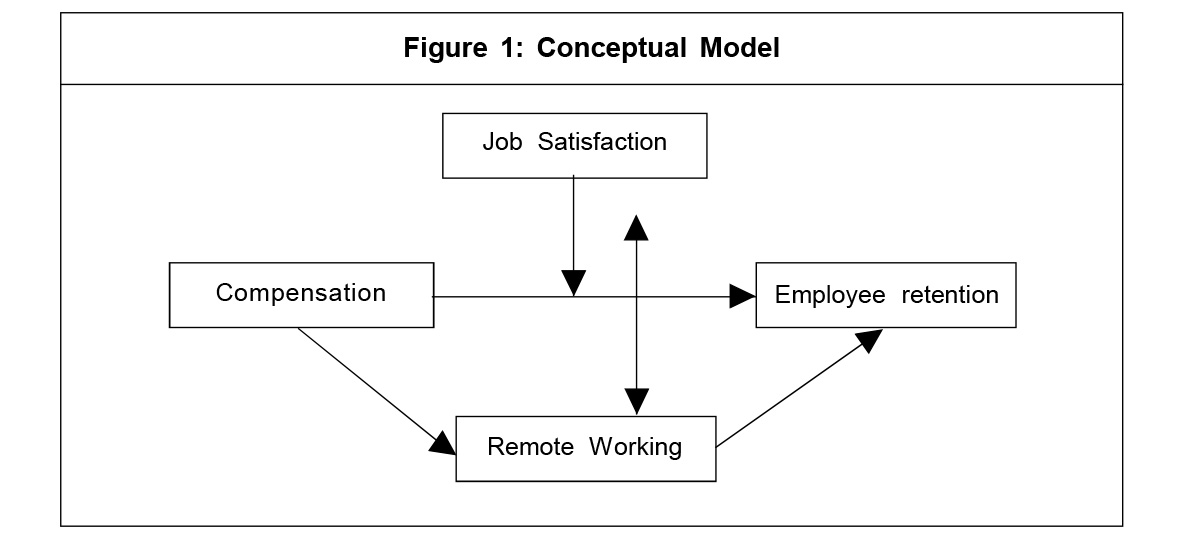
H1: Compensation impacts artists' retention in the animation industry.
H2: Job satisfaction moderates the relation between compensation and retention of artists in animation companies.
H3: Remote working mediates the relationship between compensation and employee retention in animation companies positively.
H4: Job satisfaction and remote working are correlated in the animation industry.
Based on the above hypotheses, we propose the conceptual model as below (Figure 1):
Data and Methodology
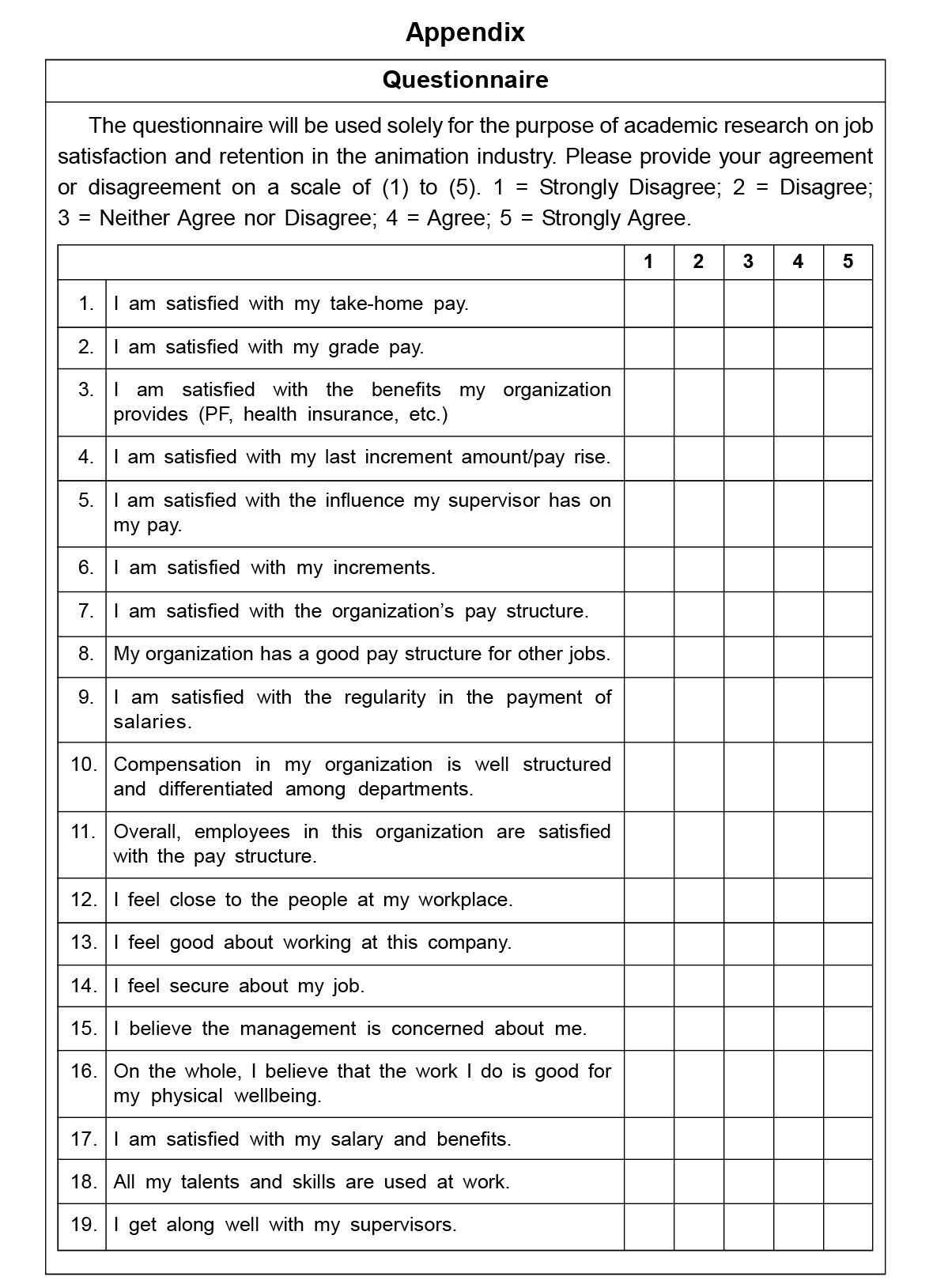
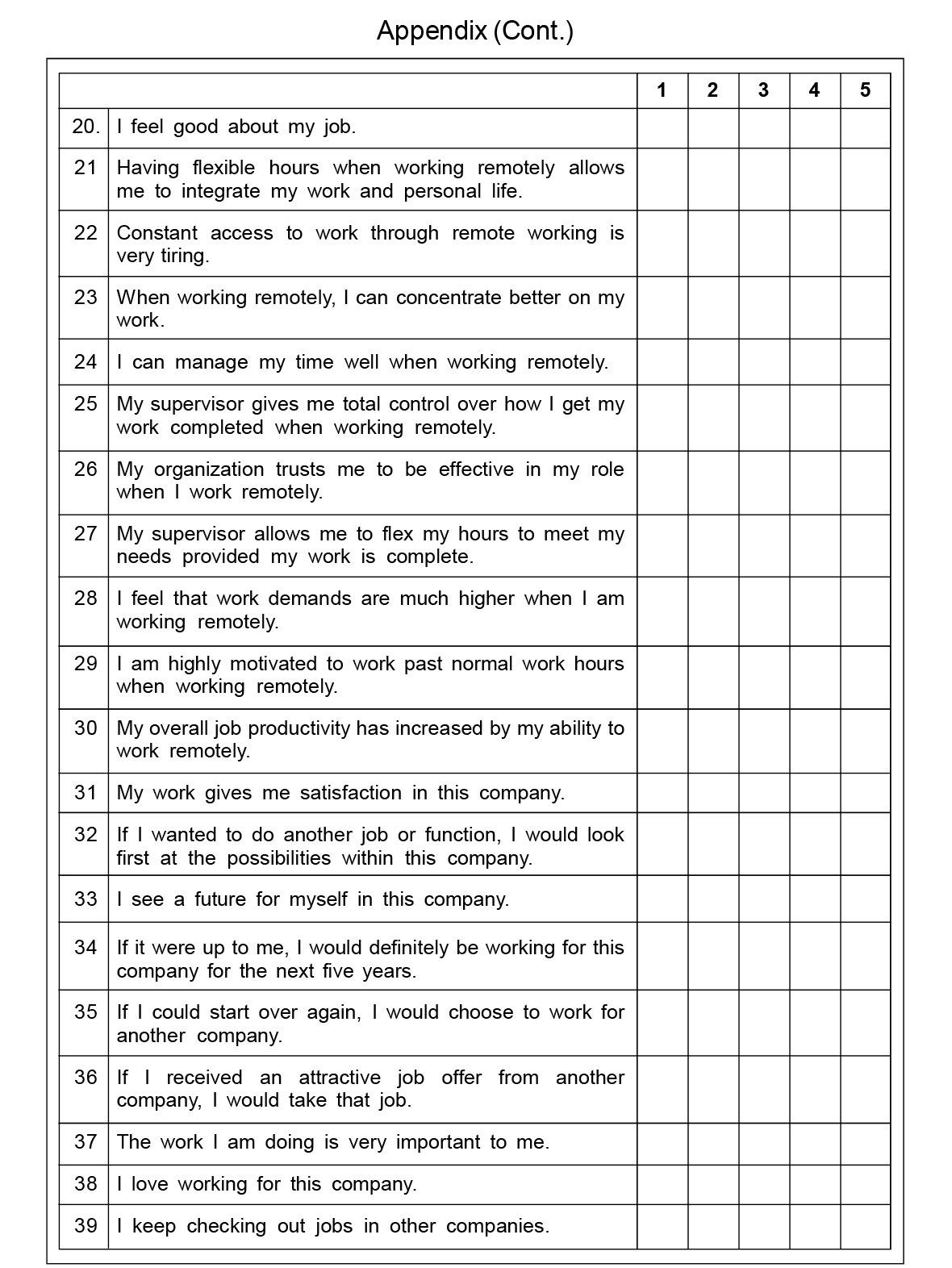
The Indian animation industry encompasses more than 300 animation and VFX studios operating in India with a workforce of 1.5 million. An online survey was conducted with various 3D and VFX artists working in animation companies in India. The sampling frame consisted of creative professionals with a minimum of two years of experience in animation companies in India and who were employed during the pandemic. The respondents were randomly chosen from social networking sites, professional networks, and professional WhatsApp groups across India. Questionnaires (see Appendix) were circulated to 900 professionals, out of which 430 responded to the online survey, a response rate of 47.7%. Out of the 430 responses, 411 forms were complete and valid for the study. The final sample size is 411.
All of the scale items utilized in the study were derived from pre-established scales. Retention was measured using 9-items from Kyndt et al. (2009), (α = 0.61). Compensation was measured using 10 items chosen from Henanan and Schwab's (1985) Pay Satisfaction Questionnaire (PSQ), (α = 0.93). Remote working was measured with 12 items from the E-Work Life (EWL) scale by Grant et al. (2019), (α = 0.74) and for measuring job satisfaction, relevant items from the Minnesota Satisfaction Questionnaire (MSQ) (Weiss et al., 1967), with 10 items were chosen (α = 0.78).
All items were measured on a five-point Likert scale (from 1 - strongly disagree to 5 - strongly agree). The overall reliability of the composite scale was 0.90, which is considered excellent.
Descriptive Analysis
Of the 411 respondents, 332 (80.8%) were males and 79 (19.2%) were females. 335 respondents were from big studios with manpower of 500 and more and 77 were from smaller studios with manpower of approximately 250. 143 respondents had 2-5 years' experience (35%) and an average age of 22 years; 114 had 6-9 years' experience (28%) and an average age of 27; 96 had 10-15 years of experience (23%) and an average age of 32; and 58 had more than 16 years' experience (14%) and an average age of 38.
Inferential Statistical Analysis
Linear regression was done to analyze the relationship between compensation and employee retention. Mediation and moderation analyses were done with the assistance of SPSS PROCESS (Hayes, 2013).
Results
H1: Compensation impacts artists' retention in the animation industry.
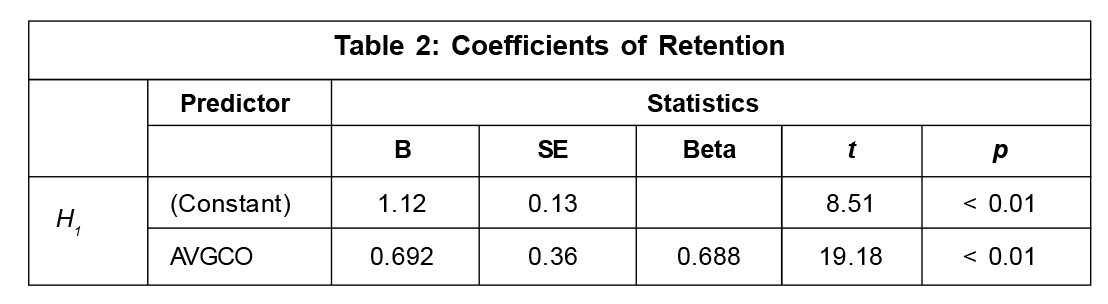
To test the hypothesis, linear regression analysis was done. The first hypothesis refers to examining the impact of compensation on the retention of employees in animation companies in India. The regression model summary was statistically significant and indicated R2 = 0.47 with the value of F = 367.904, p < 0.001 (Table 1). The results indicate a significant impact of compensation on employee retention (b = 0.69, t = 19.18, p < 0.01), implying a 47% variance in the retention of employees is explained by compensation, while the remaining variances are explained by other factors outside the model.
Hence, H1 is not rejected,

The results indicate that compensation significantly impacts employee retention (Table 2). This justifies that compensation strategy is still a significant tool to retain and succeed in the competitive market for many enterprises (Arthur, 1994) and that pay scale has a great influence on retention (Allen et al., 2003). The fundamental hypothesis is that money influences employee behavior by shaping their attitudes (Parker and Wright, 2001). Therefore, wages influence the attraction and retention of the workforce (Parker and Wright, 2001). In the animation sector, although the workload for animators has
changed, the pay for such labor has not. Animation positions at the initial phase of the career offer low wages, and living on these earnings is practically impossible. Kamimura (2015) mentions how animators are typically paid per frame of completion rather than a predetermined income or hourly wage. While the level of work per frame has increased, the compensation per frame has remained static, creating a culture of occupational segregation in which animators are overworked and underpaid. The economic situation of young animators is extremely precarious. Nonetheless, animators are dedicated to developing animations and are eager to engage in animation production (Fujita, 2009).
H2: Job satisfaction moderates the relationship between compensation and employee retention.
To test the moderating effect of job satisfaction on the relationship between compensation and employee retention, the study used Hayes Process Macro. The analysis indicates that job satisfaction significantly moderates the relationship between compensation and employee retention (F = 35.29, R2 = 0.60, p < 0.00).
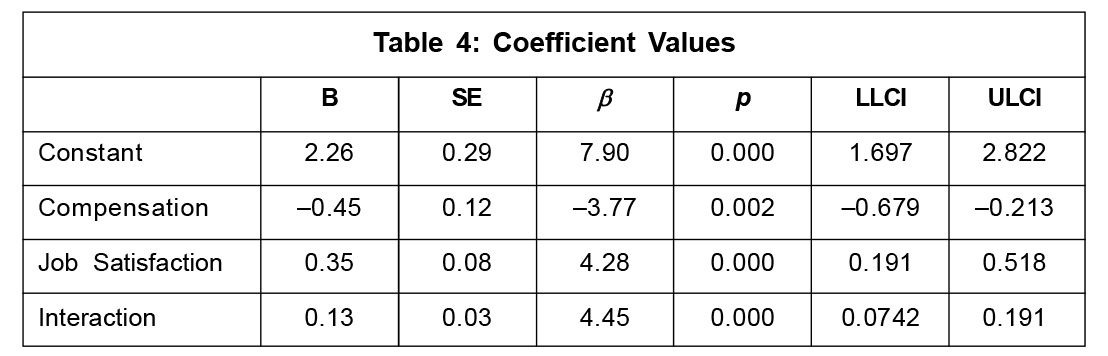
Table 3 shows that the interaction effect between compensation and job satisfaction is significant and that job satisfaction moderates the relationship between compensation and retention.
Hence, H2 is not rejected.

The results reveal that job satisfaction significantly moderates the relationship between compensation and employee retention. This affirms the findings of Biason (2019) that high levels of job satisfaction result in improved employee retention. This shows that employers should focus on employees' satisfaction in their jobs to retain their highly skilled staff. Job satisfaction has proved to be a very crucial factor in employee retention. Animation Mentor, a virtual animation school, states that a majority of animators are cheerful, creative individuals who are satisfied with their work. Although they work long hours and are dissatisfied with their compensation, they enjoy the challenge, cooperation, and opportunity that animation production provides. 'Animation Mentor' surveyed professionals, and many of them regarded their jobs as places where they could be creative, solve problems, and collaborate with others. Doing what they love is the most satisfying part for animation artists and it promotes their artistic abilities and creative solutions and allows them to exercise both their creative and technical abilities. Hence, this study is in alignment with the hypothesis that job satisfaction moderates the relationship between compensation and employee retention in the animation industry. Despite low compensation (Table 4), the satisfaction that artists derive from their work and the opportunities they get is a major contributor to employee retention in animation and VFX companies.
However, since the relationship between compensation and retention is significant, we can conclude that job satisfaction is a quasi-moderator and partially moderates this relationship.
H3: Remote working mediates the relationship between compensation and employee retention in animation companies.
Hypothesis 3 was tested using Hayes Process Macro model 4. The results (Table 5) indicate that remote working significantly mediates the relationship between compensation and employee retention (F = 606.5, R2 = 0.59, p < 0.00). This reaffirms Hoffman's (2018) study which stated that millennials and Gen Z employees who form the majority of the workforce in animation and VFX companies, feel that flexibility and the ability to work remotely are essential for them to decide on their intention to stay. The findings of this study align with McKinsey (2021) survey report that suggested that most employees would prefer a more flexible working model after the pandemic and would consider switching employers if their organization returned to fully on-site work. This also agrees with economists Barrero et al. (2022) who conducted a survey of businesses and discovered that companies are capitalizing on remote work by using it as a substitute

for lesser compensation. Offering remote work is a way for businesses to retain employees and reduce turnover costs.
The indirect effect examines if the indirect relationship between the independent (Compensation) and the dependent (Retention) variables is equal to zero. Table 6 shows that the indirect effect is 0.27 with a confidence interval of 0.172 (lower limit) to 0.390 (upper limit), which confirms the assertion that remote working mediates the relationship between compensation and employee retention.
Hence, H3 is not rejected.

The results show a significant impact of the mediating variable remote working, implying that remote working mediates the relationship between compensation and employee retention. Since the relationship between compensation and retention is significant, we can conclude that remote working partially mediates this relationship.
Research states that employees are willing to accept lower compensation or wage cut in exchange for the opportunity to work-from-home or quit if forced to return to the office.8
Employees prefer remote working options for the benefits of autonomy and flexibility over work schedule, elimination/reduction of commute time, saving on house rents, higher job satisfaction, and avoidance of office politics, and would stay with the organization if WFH options are provided.9
According to Monster India ( 2022), a job portal, artists in Indian animation companies are giving preference to employers offering permanent WFH options post pandemic and are accepting lower compensation in lieu of remote work.
Employee hopes and fears for the future reflect a focus on flexibility, wellbeing, and compensation. Remote working has proven its effectiveness and has also received positive response and acceptance which leads to employee job satisfaction.
H4: Job satisfaction and remote working are correlated.
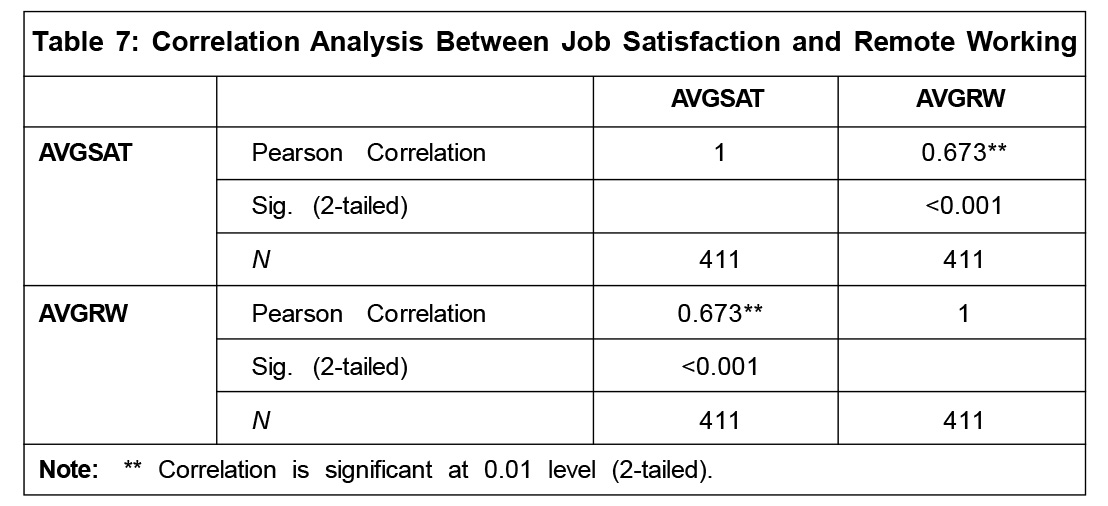
The correlational analysis revealed a statistically significant relationship between job satisfaction and remote working (R = 0.673, p < 0.001). From the results, it can be inferred that employees will perform better if they feel empowered at work. The findings agree with studies that have established that remote work is linked to higher levels of job satisfaction (Schall, 2019; and Zakaria et al., 2021) due to the absence of commuting, control over the working schedule, and benefits of being present at home (spending time with family, sparing time for hobbies, etc).
The results show that job satisfaction and remote working are significantly correlated (Table 7).
Hence, H4 is not rejected.
Discussion
The objective of this paper was to analyze the impact of compensation on employee retention in the Indian animation industry, as well as potential mediators and moderators, that lead to better employee retention. From the study, it became abundantly obvious that this was not a previously researched domain, and that there were significant gaps in the available information on the animation industry in general and the Indian animation sector in particular.
The findings indicate that compensation has a significant effect on employee retention within the animation industry. The results demonstrate that the better the level of compensation received by employees, the higher is employee retention. Empirically, the results of this study support previous research on the effect of compensation on employee retention by Willis (2000) who stated that salary is a crucial factor in motivating and retaining employees. Compensation has a significant impact on retention as it lowers absenteeism, low turnover, effective performance, and high monetary returns to the firm (Allen et al., 2003).
With the rising demand for animation, the impact on workers is harsh and a majority of artists and designers suffer from depression and overwork (Tak, 2020).10 Take further stated that the animation industry is infamous for low pay, sleep deprivation, various neuro and orthopedic health issues caused by long working hours, and socially fewer relationships and engagements, all of which contribute to a poor work-life balance. Compensation in the animation industry is muddled, lacks transparency and fairness, and defies logic and foundation. The compensation packages contain no structured incentives or reward systems. According to previous research, while most new employees were satisfied with their salary, experienced employees were extremely dissatisfied with their increments, indicating that their pay structure requires significant attention. The study concludes that compensation is a significant predictor of retention. Given the current scenario and the post pandemic conditions, job satisfaction has become a top priority for employees and organizations because it hugely impacts productivity, performance, turnover, and absenteeism. Bygren (2004) stated that when workers feel happy about their work and are satisfied, they will show a high level of job satisfaction and low intention to quit. The results of this study demonstrated that job satisfaction positively moderated the relationship between compensation and employee retention, which agrees with Bright's (2008) study that stated that compensation and job satisfaction are high motivators for employee retention.
Remote working was established as a significant mediator between compensation and employee retention. According to Mas and Pallais (2017), employees were willing to accept a wage cut in exchange for the opportunity to work from home. Employees prefer remote working options for the benefit of autonomy and flexibility over work schedule, elimination/reduction of commute time, saving on house rents, higher job satisfaction, and avoidance of office politics, and would stay with the organization if WFH options are provided. This study affirms Makridis and Schloetzer (2022), who established that employees working remotely have higher levels of job satisfaction and lesser intention to leave.
Suggestions: Creative people have a specific mix of individualistic work styles, meritocratic principles, and unconventional social behaviors that present unique challenges to human resource management. An organization aims to create conditions for such novelty to develop, while adhering to the imperatives of a vast, often bureaucratized structure. By stifling creativity, an organization frequently loses some of its most valued employees, who are at the heart of innovation and are also the most mobile workers. Individuality, meritocracy, variety, openness, professional quality, and a non-routine style of employment are important to creative artists. They are less structured and unorganized than others and exhibit more individuality, instead of identifying with the organization they work for. The animation industry is moving at a much faster pace with advances in technology and shifting viewers' preferences. Organizations are facing challenges with dynamic employees' needs compelling them to identify comprehensive strategies for job satisfaction and retention.
Based on the study's finding that compensation has a direct impact on job satisfaction and retention of skilled individuals, the study recommends that employers in the animation business should modify, update, and adopt market-based comprehensive compensation packages for skilled workers to motivate and retain them and to enhance productivity and remain competitive in the future. Companies in the animation space should refocus their attention not only on basic wage increases but also on additional financial benefits such as performance bonuses, gratuity, and merit-based annual increments, which have a direct impact on job satisfaction, loyalty, commitment, and employee retention.
For remote working to be successful, formal guidelines, policies, or laws must be strictly enforced, and HR must provide various strategies on how to manage time and work, focusing on work-life balance. HR must guarantee that employee agreements cover the agile working policy. Organizations should provide training on psychological interventions, and to achieve a boost in productivity, employers should provide adequate training and provisioning.
This study established the positive correlation between remote working and job satisfaction. However, previous studies have shown longer working hours are associated with decreased job satisfaction; hence, a hybrid policy must be implemented to ensure that employees working from home are more satisfied and have a better work-life balance.
Considering the millennial work attitudes in the light of Social Comparison and Equity Theory, we recommend job redesign for better work-life balance, a well-balanced compensation and benefits package adapted to the workforce's needs, and most importantly, continuous feedback and recognition. If embraced, these might help to achieve the ultimate goal of increasing employee engagement and lowering turnover.
Conclusion
The three key hypotheses this study examined are the moderating effects of job satisfaction, the mediating effects of remote work, and the impact of compensation on artists' retention in Indian animation production companies. The findings show a significant relationship between compensation and employee retention. Additionally, the study also found that job satisfaction partially moderates the relationship between compensation and retention, and remote work is also observed to have a significant mediating effect on the relationship between compensation and employee retention. The study recommends that Indian animation companies should adopt flexible working hours and models to ensure that artists feel happy and satisfied and are motivated to stay in spite of the demanding workloads, and companies should immediately focus on developing smarter remuneration policies and practices to facilitate the retention of their skilled workforce.
Limitations and Future Scope: There is no compensation benchmarking in the animation industry. Hence, it was difficult to compare the salary standards with other media and creative organizations.
The animation industry has a unique working style and culture, which needs researchers' attention. Future research can explore this aspect and conduct a comparative study on the performance of employees allowed to work from home and those forced return to workplace. Several other mediators and moderating variables such as employee engagement practices, employee benefits, leadership, learning, etc. can help understand the HR practices and improve the working conditions in animation companies.
References
- Abbasi S M and Hollman K W (2000), "Turnover: The Real Bottom Line", Public Personnel Management, Vol. 29, No. 3, pp. 333-342.
- Abdelbaset Q, Yusoff W F W and Dwaikat N (2015), "Explaining Generation-Y Employees' Turnover in Malaysian Context", Asian Social Science, Vol. 11, No.10, DOI:10.5539/ass.v11n10p126
- Adams J S (1963), "Towards an Understanding of Inequity", The Journal of Abnormal and Social Psychology, Vol. 67, No. 5, p. 422.
- Adhikari A (2009), "Factors Affecting Employee Attrition: A Multiple Regression Approach", The IUP Journal of Management Research, Vol. 8, No. 5, p. 38-43.
- Allen D G, Shore L M and Griffeth R W (2003), "The Role of Perceived Organizational Support and Supportive Human Resource Practices in the Turnover Process", Journal of Management, Vol. 29, No. 1, pp. 99-118.
- Allen T D, Golden T D and Shockley K M (2015), "How Effective is Telecommuting? Assessing the Status of Our Scientific Findings", Psychological Science in the Public Interest, Vol. 16, No. 2, pp. 40-68.
- Aprillia F and Mukti A H (2018), "Pengaruh Lingkungan Kerja Dan Perceived Organization Support (PoS) Terhadap Kepuasan Kerja Dan Dampaknya Terhadap Retensi Karyawan", Jurnal Ilmiah Bisnis, Pasar Modal dan UMKM, Vol. 1, No. 1, pp. 19-26.
- Arthur J B (1994), "Effects of Human Resource Systems on Manufacturing Performance and Turnover", The Academy of Manufacturing Performance, Vol. 37, No. 3, pp. 670-687.
- Aslan M, Yaman F, Aksu A and Gungor H (2022), "Task Performance and Job Satisfaction Under the Effect of Remote Working: Call Center Evidence", Economics & Sociology, Vol. 15, No. 1, pp. 285-297.
- Attarbashi Z S, Hashim A H A, Abuzaraida M A et al. (2021), "Teaching Lab-Based Courses Remotely: Approaches, Technologies, Challenges, and Ethical Issues", IIUM Journal of Educational Studies, Vol. 9, No. 3, pp. 37-51.
- Azmy A, Risza H and Adhykusuma A (2022), "Implications of Work Motivation, Employee Discipline, and Compensation on Employee Performance while Working from Home at a Digital Marketing Company", Jurnal Manajemen dan Pemasaran Jasa, Vol. 15, No. 1, pp. 13-36.
- Bailey E N, Miyata K and Yoshida T (2021), "Gender Composition of Teams and Studios in Video Game Development", Games and Culture, Vol. 16, No. 1, pp. 42-64.
- Banks M (2007), The Politics of Cultural Work, Palgrave Macmillan, New York.
- Barrero J M, Bloom N, Davis S J et al. (2022), "The Shift to Remote Work Lessens Wage-Growth Pressures", (No. w30197), National Bureau of Economic Research.
- Bartel C A, Wrzesniewski A and Wiesenfeld B M (2012), "Knowing Where You Stand: Physical Isolation, Perceived Respect, and Organizational Identification Among Virtual Employees", Organization Science, Vol. 23, No. 3, pp. 743-757.
- Biason R S (2019), The Effect of Job Satisfaction to Employee Retention, Retrieved on October 1, 2019 from https://www.researchgate.net/publication/315653880
- Bichsel J, Fuesting M and McCormack M (2021), "Providing Remote Work Opportunities Will Aid Your Retention Efforts", Research Report, College and University Professional Association for Human Resources.
- Bright L (2008), "Does Public Service Motivation Really Make a Difference on the Job Satisfaction and Turnover Intentions of Public Employees?", The American Review of Public Administration, Vol. 38, pp. 149-166.
- Bygren M (2004), "Pay Reference List Standards and Pay Satisfaction: What Do Workers Evaluate Their Pay Against?", Social Science Research, Vol. 33, No. 2, pp. 206-224.
- Carr C (2008), Front-line Customer Service: 15 keys to Customer Satisfaction, Wiley & Sons, Inc. Canada.
- Chandra S (2016), "Introducing the Hospitalist Morale Index: A New Tool that May be Relevant for Improving Provider Retention", Journal of Hospital Medicine, Vol. 11, No. 6, pp. 425-431.
- Damaris K, Gregory S N, Elizabeth N M and Aloys K N (2016), "Determinants of Intrinsic and Extrinsic Rewards on Employee Performance in Kapsara Tea Factory Company Trans Nzoia County Kenya", International Journal of Academic Research in Business and Social Sciences, Vol. 6, No. 10, pp. 369-380.
- De Peuter G (2011), "Creative Economy and Labor Precarity: A Contested Convergence", Journal of Communication Inquiry, Vol. 35, No. 4, pp. 417-425.
- DePalma L J (2021), "The Passion Paradigm: Professional Adherence to and Consequences of the Ideology of "Do What You Love"", Sociological Forum, Vol. 36, No. 1, pp. 134-158.
- Deneroff H (2003), "Famous's House of Animation - Creativity and Independence in Indian Animation", Asian Cinema, Vol. 14, No. 1, pp. 120-132.
- Duffy B E (2017), (Not) Getting Paid to do What You Love: Gender, Social Media, and Aspirational Work, Yale University Press.
- Ferguson A (2001), "Recruiting Strategies for Substitute Teachers", SubJournal, Vol. 2, No.1, pp. 62-71.
- Fujita G (2009), "World Soccer Winning Eleven 2009", in ACM SIGGRAPH ASIA 2009 Computer Animation Festival, p. 41.
- Furniss M (Ed.) (2009), Animation: Art and Industry, Indiana University Press.
- Gajendran R S and Harrison D A (2007), "The Good, the Bad, and the Unknown About Telecommuting: Meta-Analysis of Psychological Mediators and Individual Consequences", Journal of applied psychology, Vol. 92, No. 6, p. 1524.
- Ganesan S (2010), "Job Satisfaction and Turnover Intention Among Private Sector Employees in Kedah, Malaysia", Master of Science Management, Vol. 24, No. 2, pp. 18-28.
- Gill R and Pratt A (2008), "In the Social Factory? Immaterial labour, Precariousness and Cultural Work", Theory, Culture and Society, Vol. 25, Nos. 7-8, pp. 1-30.
- Golden T D (2006), "The Role of Relationships in Understanding Telecommuter Satisfaction", Journal of Organizational Behavior: The International Journal of Industrial, Occupational and Organizational Psychology and Behavior, Vol. 27, No. 3, pp. 319-340.
- Golden T D, Veiga J F and Dino R N (2008), "The Impact of Professional Isolation on Teleworker Job Performance and Turnover Intentions: Does Time Spent Teleworking, Interacting Face-to-Face, or Having Access to Communication-Enhancing Technology Matter?", Journal of Applied Psychology, Vol. 93, No. 6, p. 1412.
- Gopner-Reinecke C (2019), Arbeiten im Homeoffice-Hohere Arbeitszufriedenheit, aber Starkere Psychische Belastung. Wissenschaftliches Institut der AOK (WIdO) und AOK-Bundesverband Pressemitteilung zum Fehlzeiten-Report.
- Grant C A, Wallace L M, Spurgeon P C et al. (2019), "Construction and Initial Validation of the E-Work Life Scale to Measure Remote e-Working", Employee Relations, Vol. 41, No. 1, pp. 16-33.
- Griffeth R W, Hom P W and Gaertner S (2000), "A Meta-Analysis of Antecedents and Correlates of Employee Turnover: Update, Moderator Tests, and Research Implications for the Next Millennium", Journal of Management, Vol. 26, No. 3, pp. 463-488.
- Hafermalz E and Riemer K (2021), "Productive and Connected while Working from Home: What Client-Facing Remote Workers can Learn from Telenurses About 'Belonging Through Technology'", European Journal of Information Systems, Vol. 30, No. 1, pp. 89-99.
- Harper S (2020), "A Chance to Create a Better World?", Journal of Population Ageing, Vol. 13, No. 3, pp. 281-283.
- Harter J (2017), "Dismal Employee Engagement Is a Sign of Global Mismanagement", Gallup Blog, Washington, DC, December 20, 2017, available at http://news. gallup.com/opinion/gallup/224012/dismal-employee-engagement-sign-global-mismanagement.aspx
- Harvey A and Shepherd T (2017), "When Passion Isn't Enough: Gender, Affect and Credibility in Digital Games Design", International Journal of Cultural Studies, Vol. 20, No. 5, pp. 492-508. https://doi. org/10.1177/1367877916636140.
- Hassan M M, Jambulingam M and Narayan E A (2021), "Key Factors Influencing Generation Y Employee Retention: Mediating Role of Job Satisfaction", International Journal of Business Innovation and Research, Vol. 26, No. 3, pp. 296-327.
- Hayes A F (2013), Introduction to Mediation, Moderation, and Conditional Process Analysis: A Regression-Based Approach, The Guilford Press. New York.
- Heathfield S M (2012), "Salary". Retrieved on September 1, 2012 from http://humanresources.about.com/od/glossarys/g/salary.htm
- Hoffman B (2018), "Why Millennials Auit", Journal of Property Management, Vol. 83, No. 3, pp. 42-45.
- Hope S and Richards J (2015), "Loving Work: Drawing Attention to Pleasure and Pain in the Body of the Cultural Worker", European Journal of Cultural Studies, Vol. 18, No. 2, pp. 117-141.
- Hullet S (2016), The Political Economy of Disney: The Cultural Capitalism of Hollywood, Springer.
- Johri R and Misra R K (2014), "Self-Efficacy, Work Passion and Wellbeing: A Theoretical Framework", The IUP Journal of Soft Skills, Vol. 8, No. 4, pp. 20-35.
- Kamimura S (2015), Reality is that Rookie Animators Hourly Wage is 120 Yen. Retrieved July 20, 2017 from http://yaneurablog.blogspot.ca/2015/02/blog-post_33.html?spref=tw
- Kenyon H (2001), Animation for Development in South Asia. Animation in Asia and the Pacific, pp. 225-237, John Libbey, Sydney.
- Khatri N, Fern C T and Budhwar P (2001), "Explaining Employee Turnover in an Asian Context", Human Resource Management Journal, Vol. 11, No. 1, pp. 54-74.
- Kumar A (2022), "Introduction to Visual Effects (VFX)", in Beginning VFX with Autodesk Maya, (pp. 1-10), Apress, Berkeley, CA.
- Kyndt E, Dochy F, Michielsen M and Moeyaert B (2009), "Employee Retention: Organisational and Personal Perspectives", Vocations and Learning, Vol. 2, No. 3, pp. 195-215.
- Lane K A, Esser J, Holte B and McCusker M A (2010), "A Study of Nurse Faculty Job Satisfaction in Community Colleges in Florida", Teaching and Learning in Nursing, Vol. 5, No. 1, pp. 16-26.
- Lent J A (1998), "Comic Art in the Philippines", Philippine Studies, Vol. 46, No. 2, pp. 236-248.
- Lent J A (2001), "Animation in China Yesterday and Today-The Pioneers Speak Out", Asian Cinema, Vol. 12, No. 2, pp. 34-49.
- Locke E A (1976), "The Nature and Causes of Job Satisfaction", in M D Dunnette (Ed.), Handbook of Industrial and Organizational Psychology, pp. 1297-349, Rand McNally, Chicago, IL.
- Long P and Barber S (2015), "Voicing Passion: The Emotional Economy of Songwriting", European Journal of Cultural Studies, Vol. 18, No. 2, pp. 142-157, https://doi.org/10.1177/136754941456329S.
- Lucas B (2015), "Behind Every Great Man There Are More Men: Disparities for Women Filmmakers in the Film Industry", Political Science.
- March J G and Simon H A (1958), Organizations, John Wiley & Sons, New York.
- Makridis C and Schloetzer J D (2022), "Does Working from Home Increase Job Satisfaction and Retention? Evidence from the COVID-19 Pandemic", Georgetown University McDonough School of Business, Research Paper Series (January 24, 2022).
- Mas A and Pallais A (2017), "Valuing Alternative Work Arrangements", American Economic Review, Vol. 107, No. 12, pp. 3722-3759.
- McDowell C P, Herring M P, Lansing J et al. (2020), "Working from Home and Job Loss due to the COVID-19 Pandemic are Associated with Greater Time in Sedentary Behaviors", Frontiers in Public Health, Vol. 8, pp. 597-619.
- McRobbie A (2002), "Holloway to Hollywood: Happiness at Work in the Cultural Economy", in Cultural Economy: Cultural Analysis and Commercial Life, DOI:https://dx.doi.org/10.4135/9781446218440.n6.
- McRobbie A (2016), Be Creative: Making a Living in the New Culture Industries, Polity Press.
- Mellander C (2015), "Creativity, Clusters and the Competitive Advantage of Cities", Competitiveness Review, Vol. 25 No. 5, pp. 482-496.
- Meth Dan (2015), "One of the Only Non-Japanese Anime Artist Shares his Experience", Buzzfeed, Retrieved July 20, 2017 from https://www.buzzfeed.com/danmeth/this-american-is-one-of-the-only-non-japanese-working-in-ani?utm_term =.au1Yoqr5#.ghNlO5vb
- Moncarz E, Zhao J and Kay C (2009), "An Exploratory Study of US Lodging Properties' Organizational Practices on Employee Turnover and Retention", International Journal of Contemporary Hospitality Management, Vol. 21, No. 4, pp. 437-458.
- Mojtahedzadeh N, Rohwer E, Lengen J et al. (2021), "Gesundheitsfordernde Arbeitsgestaltung im Homeoffice im Kontext der COVID-19-Pandemie", Zbl Arbeitsmed, Vol. 71, pp. 69-74.
- Nguyen T L (2020), "Determinants of Talent Retention in Textile and Garment Companies in Binh Duong Province", The Journal of Asian Finance, Economics and Business, Vol. 7, No. 6, pp. 475-484.
- Niebuhr F, Borle P, Borner-Zobel F and Voelter-Mahlknecht S (2022), "Healthy and Happy Working from Home? Effects of Working from Home on Employee Health and Job Satisfaction", International Journal of Environmental Research and Public Health, Vol. 19, No. 3, p. 1122.
- O'Connor A (2021), "From Regeneration to Resignation: 'Crisis' and Crises in Revolutionary France", in Crisis and Renewal in the History of European Political Thought, pp. 149-170, Brill.
- Okeda D and Koike A (2011), "Working Conditions of Animators: The Real Face of the Japanese Animation Industry", Creative Industries Journal, Vol. 3, No. 3, pp. 261-271.
- Olson M H (1983), "Remote Office Work: Changing Work Patterns in Space and Time". Communications of the ACM, Vol. 26, No. 3, pp. 182-187.
- Parker O and Wright L (2001), "Pay and Employee Commitment: The Missing Link-The Company That Enhances Compensation Conditions and Practices Will Likely See an Improvement in Employee Commitment", Ivey Business Journal, Vol. 65, No. 3, pp. 70-73.
- Pink D H (2001), Free Agent Nation: How Americans New Independent Workers are Transforming the Way we Live, Business Plus.
- Pritchard C (2002), "Creative Selves? Critically Reading 'Creativity' in Management Discourse", Creativity and Innovation Management, Vol. 11, No. 4, pp. 265-276.
- Raihan J M H (2012), "Mediating Effects of Organizational Commitment and Perceived Organizational Support on HRM Practices and Turnover Intention: A Study of Private Universities in Bangladesh", (Doctoral dissertation, Universiti Utara Malaysia).
- Raminder K (2017), "Employee Retention Models and Factors Affecting Employees Retention in IT Companies", International Journal of Business Administration and Management, Vol. 7, No. 1, pp. 161-174.
- Ready D A, Hill L A and Conger J A (2008), "Winning the Race for Talent in Emerging Markets", Harvard Business Review, Vol. 86, No. 11, pp. 62-70.
- Ristola J (2016), "Blood, Sweat, Ink, and Tears: Exploitation of Labour in the Japanese Animation Industry", in GLRC Graduate Student Symposium 2016, pp. 85-93.
- Robyn A M (2012), "Intention to Quit Amongst Generation Y Academics at Higher Education Institutions", Doctoral Dissertation, Stellenbosch University, Stellenbosch.
- Rubin J (2012), "Technology's Impact on the Creative Potential of Youth", Creativity Research Journal, Vol. 24, Nos. 2-3, pp. 252-256.
- Sarjiati U (2021), "Shirobako: The Representation of Passion and Creative Labor in Japanese Animation Industry", Journal Kawistara, Vol. 11, No. 3, pp. 329-338.
- Sayin E and Aybek U A (2021), Uzaktan cal??ma salg?n sonras?nda devam edebilir mi? TRT Haber, https://www.trthaber.com/haber/yasam/uzaktan-calisma-salginsonrasinda-devam-edebilir-mi-556812.html
- Schall M A (2019), "The Relationship Between Remote Work and Job Satisfaction: The Mediating Roles of Perceived Autonomy, Work-Family Conflict, and Telecommuting Intensity", Doctoral Dissertation, San Jose State University.
- Seran I, Giri E E and Ndoen L M (2018), "Pengaruh Kepuasan Dan Lingkungan Kerja Terhadap Retensi Karyawan (Studi Kasus Pada PT. Surya Bataramahkota Kupang)", Jurnal Bisnis & Manajemen, Vol. 10, No. 1, pp. 44-57.
- Shaw S and Homan G (2013), "HR Issues in the Computer Games Industry: Survival at a Price", in Changing the Rules of the Game, pp. 122-141, Palgrave Macmillan, London.
- Sokoya S K (2000), "Personal Predictors of Job Satisfaction for the Public Sector Manager: Implications for Management Practice and Development in a Developing Economy", Journal of Business in Developing Nations, Vol. 4, No. 1, pp. 40-53.
- Song Y and Gao J (2018), "Does Telework Stress Employees Out? A Study on Working at Home and Subjective Well-Being for Wage/Salary Workers", IZA Discussion Paper, (11993), 2.
- Syazwani Aniyah Manja, Iylia Mohamad, Hazhari Ismail and Nurul Izzah Yusof (2020), "Covid 19: The Investigation on the Emotional Parental Burnout During Movement Control Order in Malaysia", European Journal of Molecular and Clinical Medicine, Vol. 7, No. 2, pp. 4912-4929.
- Tang T L P, J K Kim and D S H Tang (2000), "Does Attitude Towards Money Moderate the Relationship Between Intrinsic Job Satisfaction and Voluntary Turnover?, Human Relations, Vol. 53, No. 2, pp. 213-245.
- Tangthong S, Trimetsoontorn J and Rojniruntikul N (2014), "HRM Practices and Employee Retention in Thailand-A", International Journal of Trade, Economics and Finance, Vol. 5, No. 2, pp. 162-166.
- Terera S R and Ngirande H (2014), "The Impact of Rewards on Job Satisfaction and Employee Retention", Mediterranean Journal of Social Sciences, Vol. 5, No. 1, p. 481.
- Thussu D K (2013), "Culture as Soft Power-Bollywood and Beyond", in Communicating India's Soft Power, pp. 127-153, Palgrave Macmillan, New York.
- Tokumitsu M (2014), "In the Name of Love", Jacobin Magazine, p. 12.
- Tseng C Y and Wallace M (2009), "Retention of Software Employees in the IT Industry in Taiwan", in Sustainable Management and Marketing: Australian and New Zealand Academy of Management (ANZAM) Conference, Promaco Conventions Pty Ltd.
- Vidal M E S, Valle R S and Aragon M I B (2007), "Antecedents of Repatriates' Job Satisfaction and Its Influence on Turnover Intentions: Evidence from Spanish Repatriated Managers", Journal of Business Research, Vol. 60, No. 12, pp. 1272-1281.
- Wadhwa P and Koul S (2012), "Critical Factors Affecting Retention: Case of the Indian it Industry", in Ninth AIMS International Conference on Management, pp. 1-4.
- . Wonders J (2020), "Not Able to Lead a Healthy Life When You Need it the Most: Dual Role of Lifestyle Behaviors in the Association of Blurred Work-Life Boundaries with Well-Being", Frontiers in Psychology, Vol. 11, p. 607294.
- . Walker J W (2001), "Perspectives", Human Resource Planning, Vol. 24, No. 1, pp. 6-10.
- . Weiss D J, Dawis R V and England G W (1967), Manual for the Minnesota Satisfaction Questionnaire, Minnesota Studies in Vocational Rehabilitation.
- . Wells B (2011), "Frame of Reference List: Toward a Definition of Animation", Animation Practice, Process & Production, Vol. 1, No. 1, pp. 11-32.
- . Westcott T (2011), "An Overview of the Global Animation Industry", Creative Industries Journal, Vol. 3, No. 3, pp. 253-259.
- . Williams M L and Dreher G F (1992), "Compensation, System Attributes and Applicant Pool Characteristics", Academy of Management Journal, Vol. 35, No. 3, pp. 571-595.
- . Willis C (2000), "Go for Your Goals", Working Woman, March 6-7.
- . Wu H and Chen Y (2020), "The Impact of Work From Home (WFH) on Workload and Productivity in Terms of Different Tasks and Occupations", in International Conference on Human-Computer Interaction, pp. 693-706, July, Springer, Cham.
- . Yaseen A (2013), "Effect of Compensation Factors on Employee Satisfaction - A Study of Doctor's Dissatisfaction in Punjab", International Journal of Human Resource Studies, Vol. 3, No. 1, p. 142.
- . Zakaria Z, Abd Ghani A and Hamzah S N A (2021), "Covid-19, Workplace Challenges", Jurnal Intelek, Vol. 16, No. 2, pp. 151-161.