October '22
The IUP Journal of Organizational Behavior
Archives
Socially Responsible HRM Practices and Organizational Citizenship Behavior of Employees in a Sri Lankan Manufacturing Firm
C Vithya
Graduate, Eastern University, Sri Lanka. E-mail: chandravithya72@gmail.com
N Thevanes
Lecturer (probationary), Trincomalee Campus, Eastern University, Sri Lanka; and is the corresponding author. E-mail: nadesthev@gmail.com
A Anton Arulrajah
Senior Lecturer, Department of Management, Eastern University, Sri Lanka. E-mail: aantonarulrajah@yahoo.com
This study aims to examine the relationship between Socially Responsible-Human Resource Management (SR-HRM) practices and Organizational Citizenship Behavior (OCB) of employees. It examines the influence of three dimensions of SR-HRM, namely, Legal Compliance Human Resource Management (LC-HRM), Employee-Oriented Human Resource Management (EO-HRM) and General Corporate Social Responsibility Facilitation of Human Resource Management (GF-HRM), on employee OCB. In order to achieve the study objective, primary data was collected from 200 employees of a manufacturing company operating in Nuwara-Eliya district of Sri Lanka. Correlation analysis was used to test the research model. It was found that there is a significant and positive relationship between LC-HRM practices and employee OCB, EO-HRM practices and employee OCB and GF-HRM practices and employee OCB. The overall findings of the study suggest that SR-HRM practices have a significant and positive association with employee OCB.
Introduction
The amount of attention given to the area of social responsibility by both management and society has increased in recent years (Certo and Certo, 2015). According to Willard (2012), Corporate Social Responsibility (CSR) initiatives and practices have materialized as a powerful platform for meriting the organization's social performance to establish its image as a socially responsible organization. CSR is becoming an indispensable instrument for organizations to ensure organizational sustainability and turn them into sustainable development agents. In this sense, organizations have created codes of ethics, released CSR statements and reports, and hired independent auditors to review the execution of their CSR policies and procedures to exhibit their CSR (Buciuniene and Kazlauskaite, 2012). A CSR policy benefits a company's financial line and its employees, customers, communities, environment, and society as a whole (Kanji and Chopra, 2010). Carroll (1979) pointed out that socially responsible firms examine their ethical and discretionary duties to their employees and other stakeholders in society, in addition to their economic and legal requirements. In other words, CSR maximizes the positive impacts and minimizes the negative impacts on the organization's internal and external stakeholders. An organization can derive several benefits via implementation of CSR practices such as enhancing employee engagement (Stancu et al., 2011), organizational commitment (Shen and Zhu, 2011), job satisfaction (Gahlawat and Kundu, 2021), customer satisfaction (Azizi et al., 2014), customer loyalty (Aga et al., 2012) corporate reputation (Mousavi, 2013), and financial performance (Dzhavdatovna et al., 2015).
In this context, employees are considered as one of the significant internal stakeholders in determining the organization's success (Opatha, 2009). Organizations need a vibrant, energetic and committed workforce to reach the predetermined goals and objectives. An organization's performance heavily depends on its employees' performance. One of the most important stakeholders is employees, who are indeed impacted by CSR activities of organization and play a critical role in the successful implementation of CSR initiatives and practices (Collier and Esteban, 2007). Further, it is vital to treat the organization's employees exactly as the organization wants to treat its best customers. Hence, organizations need to act in a socially responsible manner to maximize the positive impacts and minimize the negative impacts on their employees. Organizations should protect the employees' rights and align them with the local and international labor laws by ensuring the employees' health and safety, worklife balance, fair pay and so on (Jenkins et al., 2002; and Shen and Zhu, 2011). Thus, contemporary organizations should focus more on the implementation of a new branch of Human Resource Management (HRM) called Socially Responsible-HRM (SR-HRM) to satisfy the interests and expectations of employees (Shen and Zhu, 2011; Shen and Benson, 2016; Barrena-Martinez et al., 2017; and Richards and Sang, 2019). The concept of SR-HRM was initially developed by Shen and Zhu (2011). Employee-focused CSR policies and strategies are known as SR-HRM (Shen and Zhu, 2011).
Some studies have suggested that SR-HRM affects organizational performance by influencing employees' workplace attitudes and behaviors (Shan and Zhu, 2011; Newman et al., 2016; and Gahlawat and Kundu, 2021). A study conducted by Shen and Zhu (2011) confirmed a positive relationship between SR-HRM and organizational commitment. Newman et al. (2016) came up with a study to explore the mediating effect of organizational identification on the relationship between SR-HRM and Organizational Citizenship Behavior (OCB). Gahlawat and Kundu (2021) carried out a study to identify the relationships among SR-HRM, work motivation, job satisfaction and OCB in selected companies in India. The results of this study show that SR-HRM is positively and significantly related to job satisfaction, work motivation and OCB. Further, work motivation and job satisfaction mediate the relationship between SR-HRM and OCB. The study by Chanda and Goyal (2019) revealed that SR-HRM practices improve job satisfaction, organizational commitment and organizational performance in Indian manufacturing sector organizations.
In this context, only a few studies (e.g., Shen and Zhu, 2011; Shen and Benson, 2014; Shen and Benson, 2016; Newman et al., 2016; Shen and Zhang, 2017; Chanda and Goyal, 2019; and Gahlawat and Kundu, 2021) are available regarding SR-HRM. Further, very little research has been conducted regarding SR-HRM in the Sri Lankan context. Hence, this study may be one of the pioneering studies in the context of Sri Lanka with regard to SR-HRM. Most previous studies on CSR practices tend to focus on external stakeholders and outcomes. However, the influence of CSR practices on employees remains a largely unexplored area of research. Further, prior studies have established OCB as an essential component in the effective functioning of organizations as it heightens adaptability, resource allocation and innovativeness among employees (Organ, 1988; and Turnipseed and Turnipseed, 2013). Therefore, OCB is considered crucial employee workplace behavior to enhance organizational performance (Priyanka et al., 2020). However, only a few studies (e.g., Newman et al., 2016; and Gahlawat and Kundu, 2021) have linked SR-HRM with OCB. Further, there is no empirical evidence on the relationship between SR-HRM and OCB in the Sri Lankan context. Chanda and Goyal (2011) pointed out that future studies must explain the effect of SR-HRM variables on different employee attitudes and behaviors. Considering the above shreds of evidence, this study seeks to bridge the theoretical and empirical knowledge gaps in connection with the relationship between SR-HRM and OCB. Hence, the objective of this study is to examine the relationship between SR-HRM practices and employee OCB in a selected manufacturing firm in Sri Lanka.
Literature Review and Hypothesis Development
Socially Responsible HRM
According to Opatha (2019, p.16), CSR is defined as the "extent to which a business organization will strive to improve the overall welfare of the society". Society includes internal and external stakeholders of an organization. Therefore, if an organization fulfills its obligations and responsibilities appropriately, it would be a socially responsible organization. Certo and Certo (2015, p. 52) stated that "businesses should perform the social responsibility activities because profitability and growth go hand in hand with the responsible treatment of employees, customers and community". Further, Certo and Certo (2015) mentioned that urban affairs, consumer affairs, environmental affairs, and employment practices affairs are considered as the publicized areas of CSR of an organization. Researchers argued that first and foremost, before anything else, a business organization must be socially responsible and ethical to its employees. Hence, integrating a socially responsible orientation in HR policies and practices that covers these expectations may positively affect employees' attitudes and motivations and their engagement in the organization (Barrena-Martinez et al., 2017). In this context, contemporary organizations must implement employee-oriented CSR initiatives and practices to protect the rights and interests of employees.
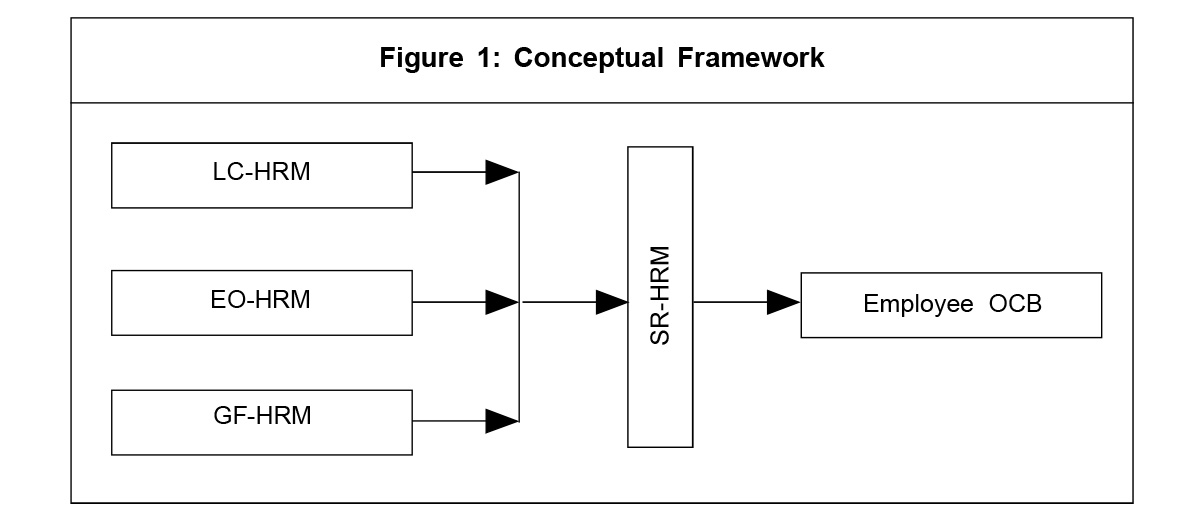
SR-HRM was initially developed by Shen and Zhu (2011) by integrating CSR into HRM results. According to Barrena-Martinez et al. (2017), SR-HRM supports transforming traditional human resources strategy into a socially responsible human resource strategy by implementing SR-HR policies and practices. Shen and Zhu (2011) proposed a three-component model of SR-HRM, which includes labor law-related Legal Compliance HRM (LC-HRM), Employee-Oriented HRM (EO-HRM) and General CSR Facilitation HRM (GF-HRM).
LC-HRM involves adopting policies and practices that ensure firms are compliant with legislation on equal employment opportunity, health and safety, working hours, minimum wage and the use of child labor and forced labor (Shen and Zhu, 2011).
EO-HRM addresses employees' personal and family needs and goes beyond what is required by laws and regulations (Shen and Zhu, 2011).
GF-HRM involves applying HRM policies and practices that engage firms and their employees in general CSR initiatives (Shen and Zhu, 2011).
Organizational Citizenship Behavior
In recent years, OCB has become one of the most widely researched areas in organizational behavior research. OCB is regarded as one of the most desirable workplace behaviors expected from employees to ensure superior organizational performance. Researchers pointed out that OCB should be a significant factor in an employee's job performance (Podsakoff and Mackenzie, 1997; Khaola, 2014; and Basu et al., 2017). Due to the apparent relevance of OCB, businesses are focusing their efforts on improving OCB among employees to accomplish organizational goals and objectives more effectively and efficiently in today's competitive business environment.
The term OCB was first used by Organ in 1977. OCB refers to behavior that is not formally requested or directly rewarded but can be functional to an organization's operations (Smith et al., 1983). According to Organ et al. (2006), OCB is an employee's discretionary behavior that is not directly or explicitly recognized by the formal reward system and efficiently and effectively promotes the organization's performance. Organ (1988) identified five dimensions of OCB: conscientiousness, sportsmanship, civic virtue, courtesy, and altruism.
- Conscientiousness includes situations in which employees make an effort to rise above the minimum required behaviors, such as attending scheduled meetings, keeping one's personal workspace tidy, punctuality, and other formal and informal rules meant to ensure the workplace is in order (Organ, 1988).
- Sportsmanship includes behaviors such as not complaining about minor issues or voicing minor grievances, enduring difficult working conditions without complaining, having a positive attitude in adverse situations, and being ready to put one's interests aside for the sake of the group (Organ, 1988; and Podsakoff et al., 2000).
- Civic virtue refers to active engagement in an organization's political activity. Attending important but optional meetings, reading intra-office mail, discussing work issues on personal time, voting, and speaking up are all examples of this kind of behavior (Organ, 1988).
- Courtesy refers to "such actions as 'touching base' with fellow employees, whose work could be affected by one's decisions or commitments. Advance notice, reminders, passing along information, consultation, and briefing all suggest the intrinsic quality of courtesy" (Organ, 1988).
- Altruism refers to helping behaviors aimed at co-workers, customers, clients, vendors, or suppliers. Unlike courtesy which is meant to prevent a problem from happening, altruism is meant to provide help to someone who is already in trouble (Organ, 1988).
LC-HRM and OCB
Opatha (2009) revealed that ensuring legal compliance is considered as one of the strategic goals of HRM. According to Shen and Zhu (2011), LC-HRM practices deal with equal employment opportunity, health and safety, working hours, minimum wage and the use of child labor and forced labor. Thus, implementing LC-HRM can be an effective mechanism for organizations to align with the local and international labor laws. Further, it also strongly contributes to improving positive attitudes among the employees, such as job satisfaction, organizational commitment and more. An organization that focuses on LC-HRM can be termed as a legal and ethical-oriented organization, which paves the way for creating and retaining excellent employer brand in the job market. Newman
et al. (2016) proposed that an organization's utilization of LC-HRM improves employees' welfare and concerns that will lead them to reciprocate in the form of OCB. According to Gahlawat and Kundu (2021), LC-HRM practices such as equal opportunity in HRM and labor law compliance positively impact employee motivation and satisfaction. As a result, they are more likely to work outside of their assigned duties and responsibilities. Based on the above arguments, it is possible to conclude that organizations can fulfil their legal responsibility towards employees by implementing the LC-HRM practices, which encourages employees to foster OCB in the workplace. Thus, the study formulates the first hypothesis as follows:
H1: LC-HRM practices are positively related to employee OCB.
EO-HRM and OCB
Several authors have suggested that employees with positive workplace attitudes and behaviors put up excellent organizational performance (Opatha, 2009; Shen and Zhu, 2011; Thevanes and Arulrajah, 2016; and Opatha and Opatha, 2019 and 2020). In this scenario, organizations need to think more about satisfying the employees' personal and family needs to gain their maximum individual contribution to improve organizational performance. Fundamentally, EO-HRM deals with fulfilling the employees' personal and family needs beyond the legal requirement imposed by the local and international labor laws. Hence, organizations are increasingly required to focus on EO-HRM to ensure superior organizational performance. Because, achieving superior organizational performance becomes unrealistic without satisfying employees' personal and family needs. EO-HRM provides employees with organizational support and justice in the workplace. In addition to that, it also focuses on employee needs for personal development such as training, feedback, mentoring, career and organizational development, and the adoption of workplace democracy such as employee participation, involvement and power-sharing (Waring and Lewer, 2004; and Mankelow, 2008).
Further, EO-HRM focuses on improving the work-life balance of employees through the implementation of work-life balance promoting practices such as telecommuting, job sharing, flextime, part-time work, shift work, employee assistance programs, on-site child care facility, leave programs, and compressed work weeks to allow the employees to balance their family and work responsibilities (Thevanes and Mangaleswaran, 2018). Ultimately, this trend enhances the positive work attitudes among the employees, such as employee commitment, job satisfaction, and employee engagement (Shen and Zhu, 2011; and Newman et al., 2016), which lead the employees to foster OCB in the workplace. Furthermore, a study conducted by Abdullah and Rashid (2012) proved that CSR for employees has the strongest relationship with employee OCB. Furthermore, according to a study done by Newman et al. (2016), firms may encourage employees to respond to high-level OCB via EO-HRM, which aims to satisfy employees' developmental and physiological needs. Based on the above empirical findings and logical beliefs, the second hypothesis of the study is:
H2: EO-HRM practices are positively related to employee OCB.
GF-HRM and OCB
GF-HRM involves employees in CSR initiatives that benefit external stakeholders (Shen and Zhu, 2011). Organizations that concentrate more on external CSR activities are treated as socially responsible organizations. Employees' positive perception of organizations' socially responsible activities (external CSR activities) positively influences their workplace attitudes and behaviors (Priyanka et al., 2020). Thus, engaging employees in the external CSR practices through GF-HRM facilitates the employees to understand the social responsibility of the organization and have a direct effect on their job satisfaction, organizational commitment, and work engagement (Shen and Zhu, 2011; Tuzcu, 2013; and Priyanka et al., 2020), which in turn fosters OCB in the workplace. Employees with higher-level OCB always like to actively participate in the organization's external CSR activities. In this context, several studies (e.g., Kanji and Chopra, 2010; Lu et al., 2020; and Priyanka et al., 2020) have linked the relationship between external CSR practices and OCB. Bartels et al. (2010) stated that when employees consider their CSR activities critical and sensitive, it can influence their OCB and overall organizational performance. In addition, Newman et al. (2016) stated that GF-HRM is positively related to employee OCB. Based on the above arguments, it is possible to conclude that GF-HRM can influence employee OCB. Hence, the study formulates the third hypothesis as follows:
H3: GF-HRM practices are positively related to employee OCB.
Hence, based on the literature review, this study proposes a conceptual framework that shows the relationship between SR-HRM and OCB (see Figure 1).
Methodology
The empirical data for the current study was collected from a manufacturing company operating in Nuwara-Eliya District of Sri Lanka. The total population for the study was 1,150 employees of the selected manufacturing company. Out of these, 200 employees were selected as the sample to conduct the study by using disproportionate stratified sampling method. Table 1 describes the sampling framework of the study. The following equation was used to calculate the sample size.
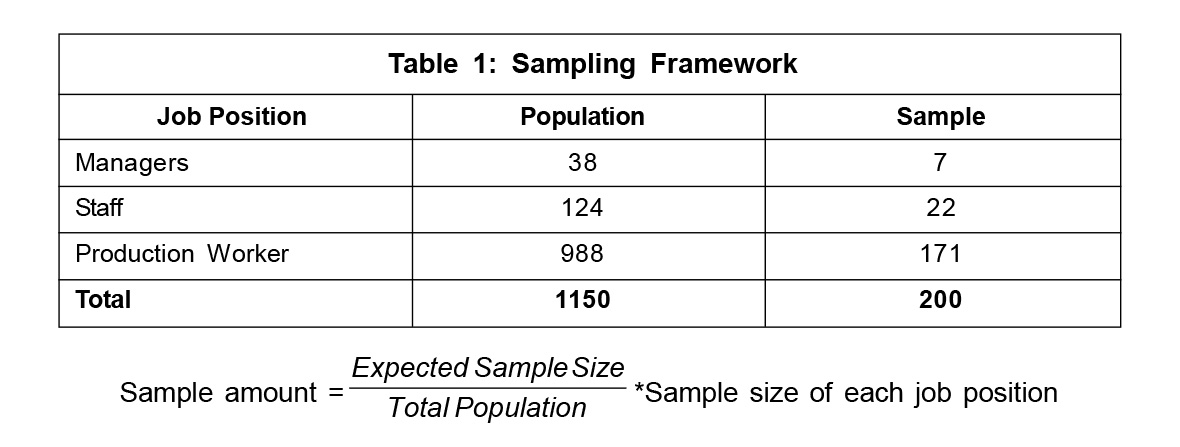
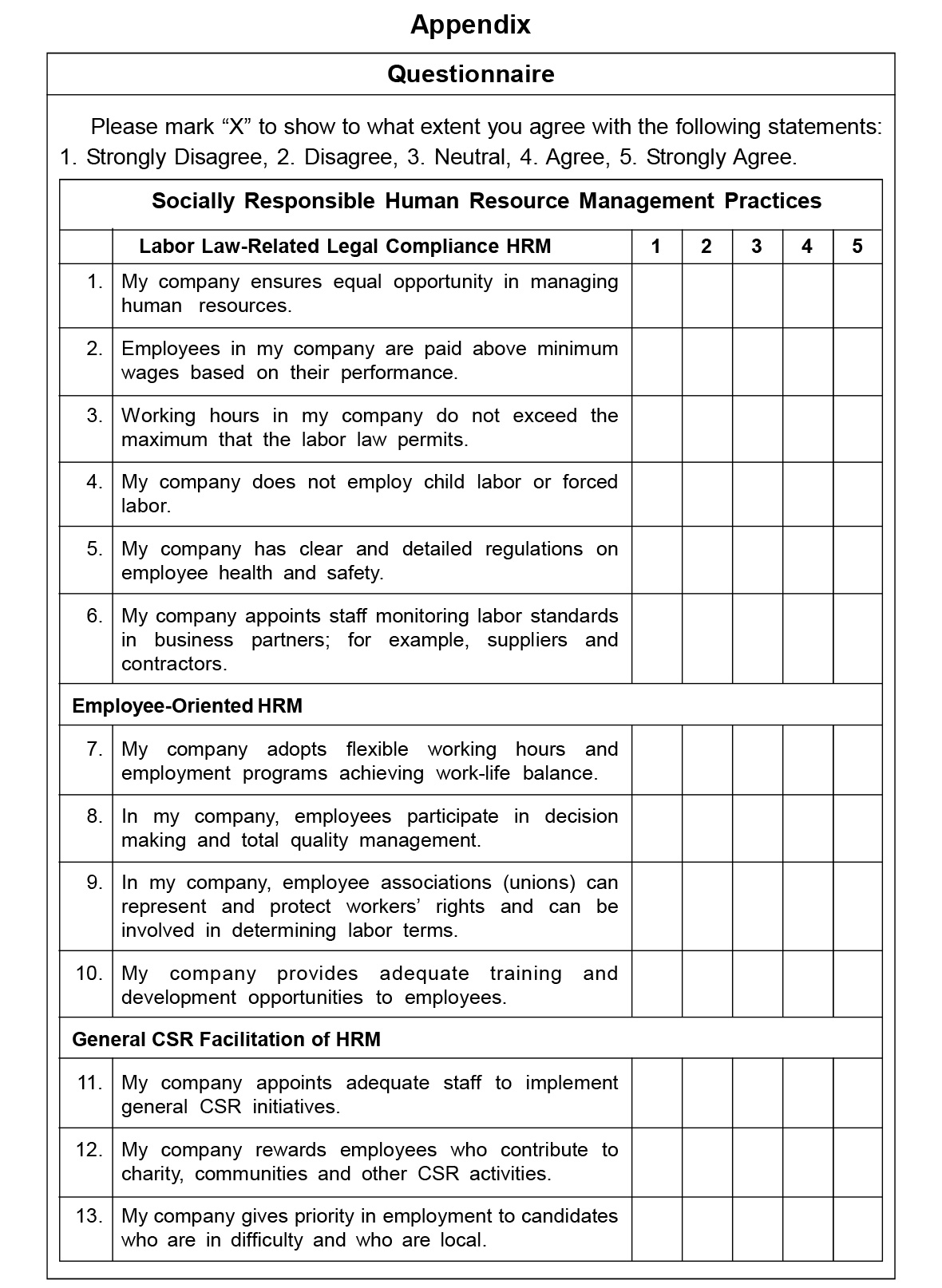
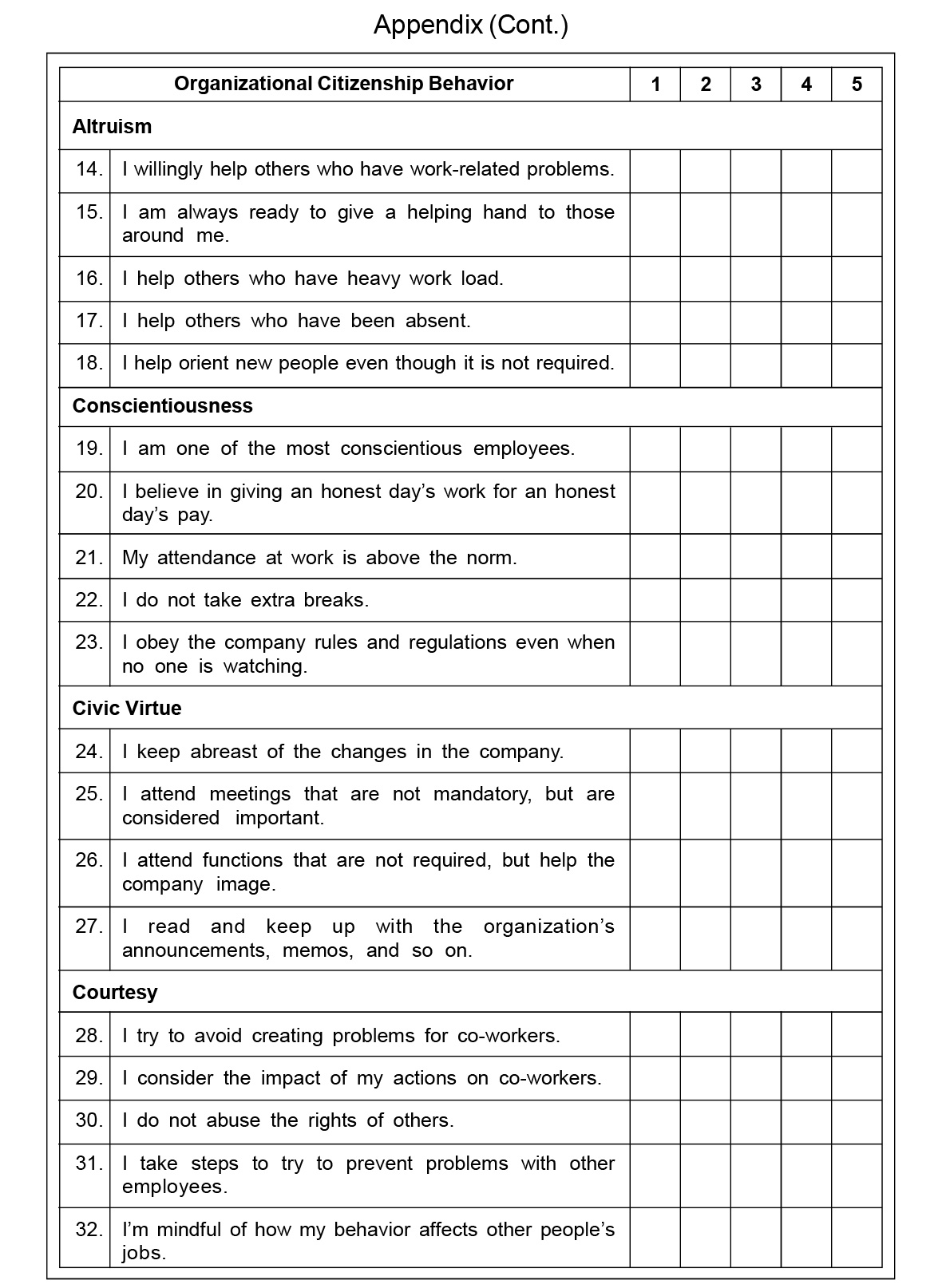
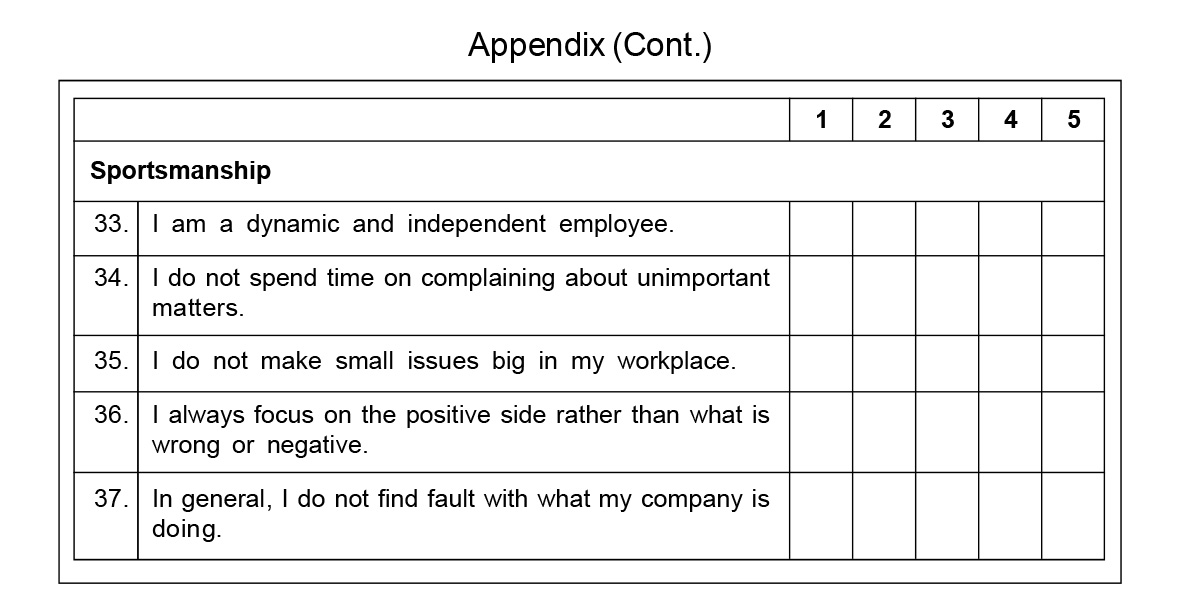
This study is based on primary data. Therefore, the data for this study was collected from the respondents through a structured questionnaire (see Appendix). The questionnaire contained questions relating to SR-HRM and OCB.
Measures
This study has used an instrument adapted from past research works of Shen and Zhu (2011). This instrument can be used to measure the SR-HRM practices that consist of 13 question items. This instrument had a Cronbach's alpha of 0.847, which is higher than 0.70. Hence, this instrument has good reliability. To measure OCB, 24 question items were used from past research works of Organ (1988); Jiao et al. (2011); and Oge et al. (2014). The instrument had a reasonable degree of reliability with a Cronbach's alpha of 0.926. This study has used a Likert scale ranging from 1 to 5, where 1 indicates "strongly disagree" and 5 indicates "strongly agree", with the mean scores indicating the status of the study variables.
Data Analysis and Techniques
Correlation analysis is used to measure the magnitude and the direction of the relationship between the two variables. The correlation coefficient, denoted by "r", measured the closeness of the relationship between the two variables. It contains the following features. The value "r" lies between -1 and +1. The closer the coefficient is to an absolute value of one (1.00) indicates a perfect correlation, and a value near zero (0.00) indicates a very weak linear relationship. The magnitude of "r" indicates the strength of the linear relationship, while the sign indicates the direction. The authors have used correlation analysis to examine the relationship between SR-HRM and OCB in the selected manufacturing company in Nuwara-Eliya district of Sri Lanka.
Findings
Descriptive Analysis of SR-HRM Practices
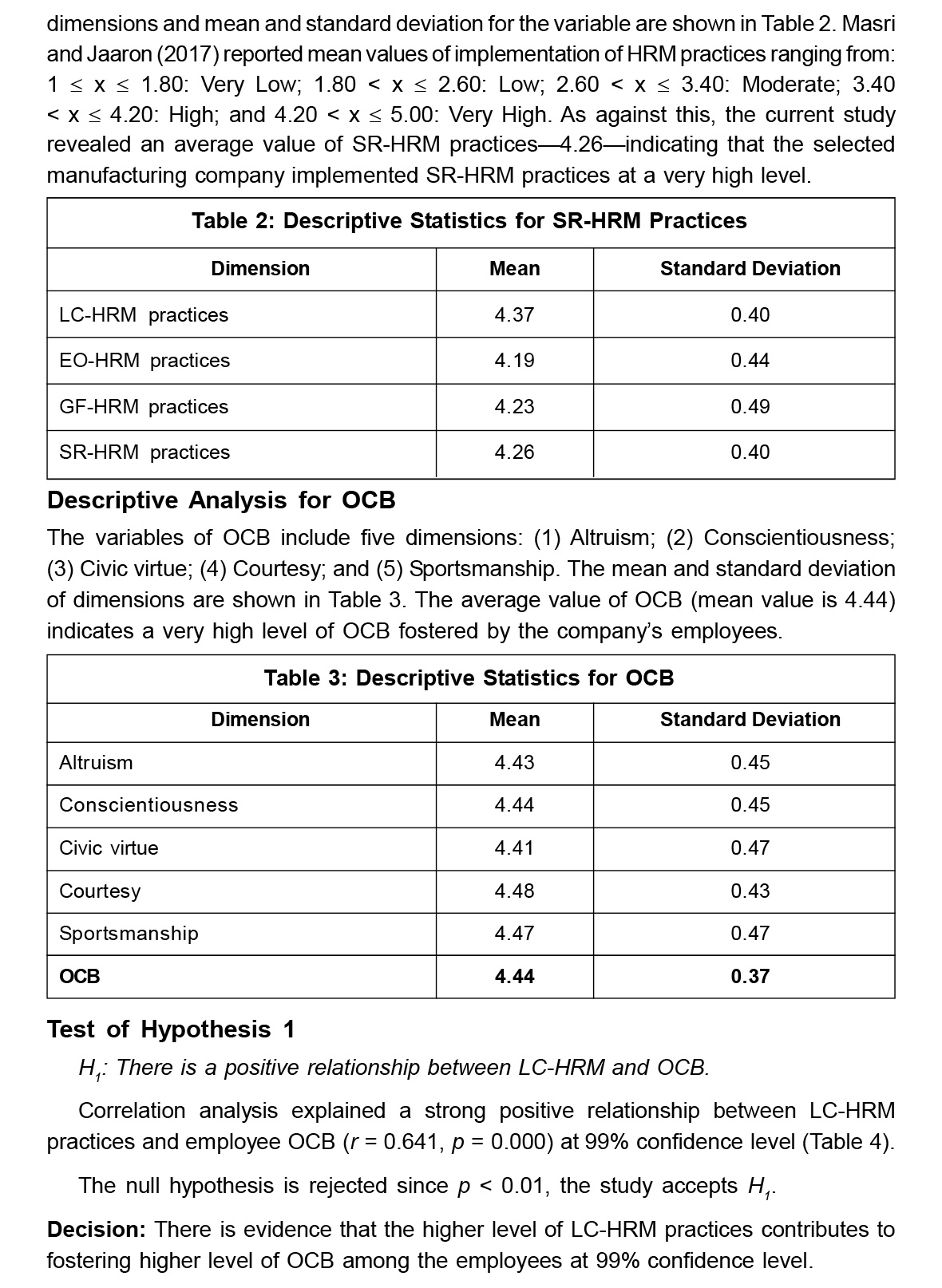
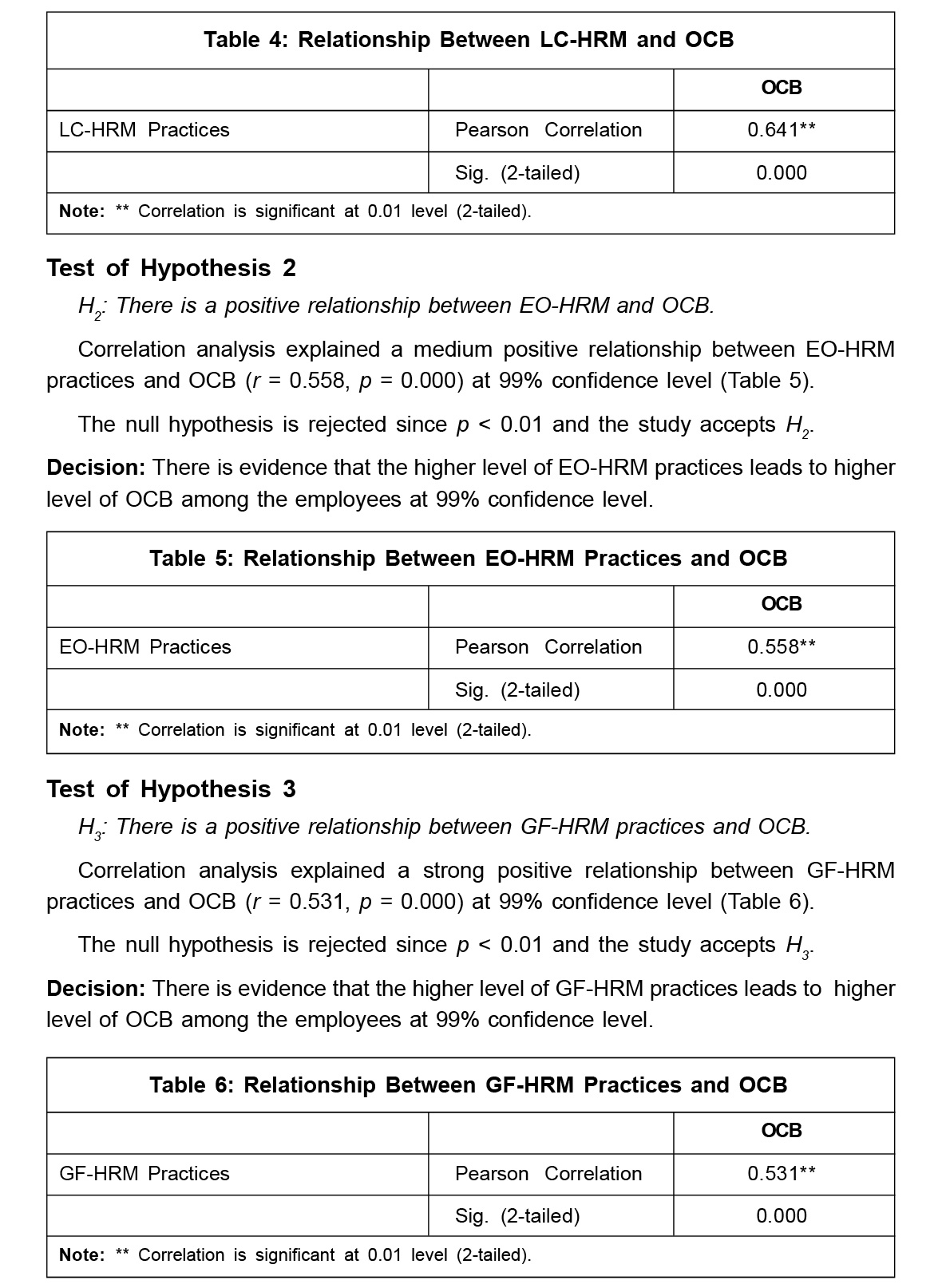
The variable of SR-HRM includes three dimensions: (1) LC-HRM practices, (2) EO-HRM practices, and (3) GF-HRM practices. The mean, standard deviation, individual score of
Impact of SR-HRM Practices on Employee OCB
The study used multivariate analysis to measure the impact of SR-HRM practices on employee OCB. Moreover, to analyze the impact of each dimension of SR-HRM on employees, step-wise multiple regression analysis was used. The results are shown in Tables 7 and 8.
Table 7 shows R2 statistics is 0.410, indicating that LC-HRM has 41% impact on employee OCB. Adjusted R2 statistic indicates that 40.7% of variation in employee OCB is explained by LC-HRM practices. In other words, the independent variable of LC-HRM practices in the regression model accounts for 41% of the total variation in employee OCB. R2 statistics is 0.466, indicating that both LC-HRM and EO-HRM have 46.6% impact on employee OCB. Adjusted R2 statistic indicated that 46.1% of variation in employee OCB is explained by LC-HRM and EO-HRM practices. In other words, the independent variables of LC-HRM and EO-HRM practices in the regression model accounted for 46.6% of total variation in employee OCB. R2 statistics is 0.477, indicating that LC-HRM, EO-HRM and GF-HRM have 47.7% impact on employee OCB. Adjusted R2 statistic indicated that 46.9%
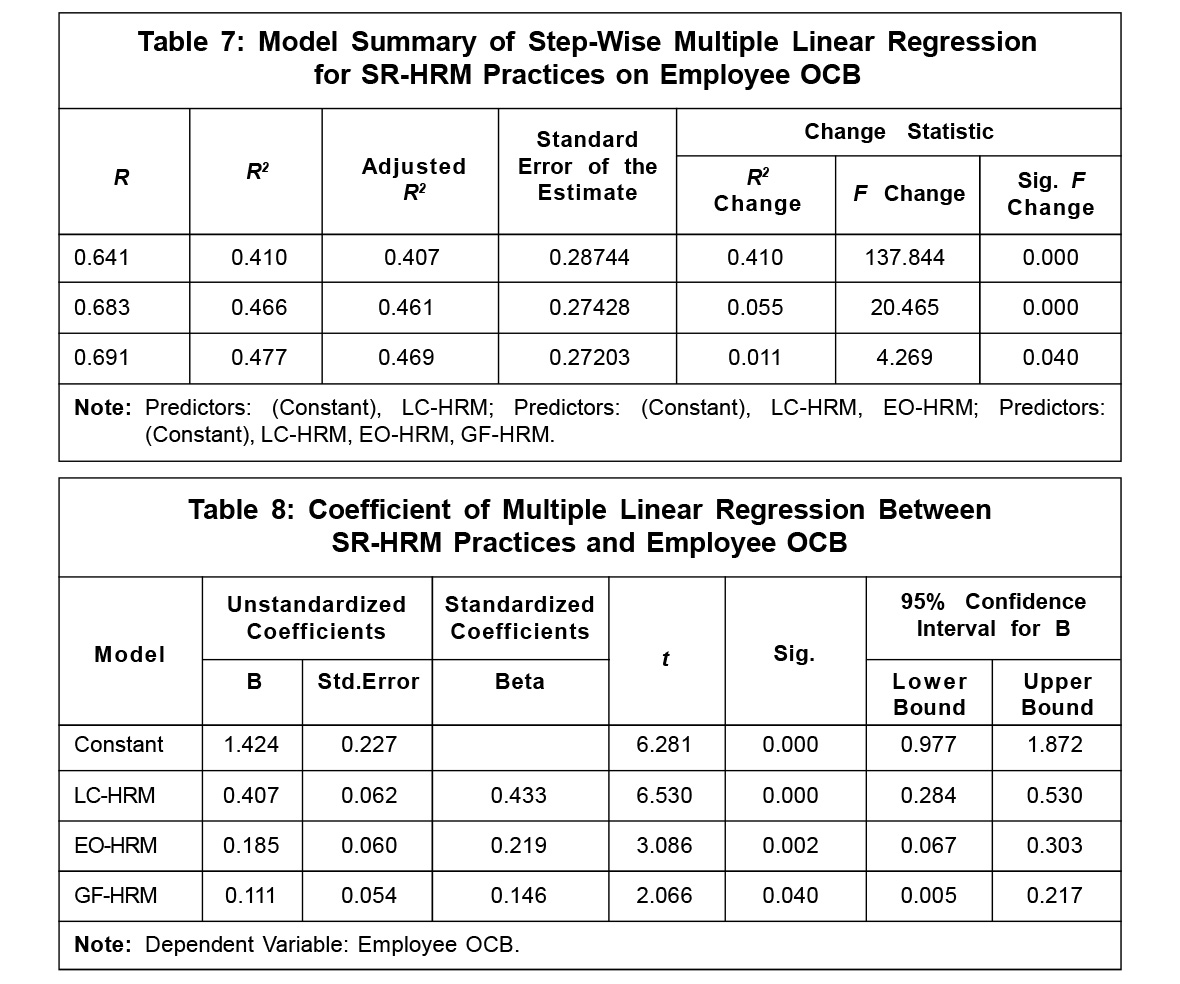
of variation in employee OCB is explained by LC-HRM, EO-HRM and GF-HRM practices. In other words, the independent variables of LC-HRM, EO-HRM and GF-HRM practices in the regression model accounted for 47.7% of the total variation in employee OCB.
Table 8 shows that the unstandardized constant statistic of 1.424 units show that the model would predict if all of the independent variables were zero. Regression results indicate that the significance of t value of LC-HRM is 0.000, and it is less than 0.05 and the b value of LC-HRM is 0.433, which means LC-HRM positively and significantly impacts employee OCB. The significance of t value for GF-HRM is 0.002 and it is less than 0.05 and the b value is 0.185, which means that EO-HRM positively and significantly impacts employee OCB. The significance of t value for GF-HRM is 0.040 and it is less than 0.05 and the b value is 0.146, which means that GF-HRM positively and significantly impacts employee OCB. Based on this analysis, it is concluded that LC-HRM, EO-HRM and GF-HRM positively and significantly impact employee OCB.
Thus, it is concluded that SR-HRM positively and significantly impacts employee OCB in the selected manufacturing company operating in Nuwara-Eliya district of Sri Lanka.
Discussion
The empirical findings of the study revealed a significant and strong positive relationship between LC-HRM and OCB. The findings support the first hypothesis of the study. Organizations should seek to align with the local and international labor laws. In this sense, the adaptation of LC-HRM practices such as providing equal employment opportunities without discrimination, ensuring a healthy and safe workplace for the employees, avoiding child or forced labor, and aligning with minimum wage requirements contribute to establishing the image of the organization as equal employment opportunity provider and ethical and legal-oriented organization. Further, it contributes to creating a positive attitude about the organization among the employees. This leads to enhanced positive work-related attitudes among employees, like job satisfaction, organizational commitment, and work engagement, which in turn motivate the employees to foster OCB in the workplace. The findings are in alignment with the study by Gahlawat and Kundu (2021), which suggested that LC-HRM is found to be positively related to employee OCB. However, the finding of the current study is in contrast with that of past research by Newman et al. (2015), which stated that LC-HRM is not positively related to employee OCB.
Further, the findings of the study indicate that a significant and strong positive relationship exists between EO-HRM and OCB. Contemporary organizations need to win employees' hearts to gain their maximum individual contribution for organizational success. For this purpose, organizations need to consider the implementation of EO-HRM, which aims to satisfy the personal and family needs of employees. On the other hand, organizations that do not focus on employees' personal and family needs end up with a high level of absenteeism and employee turnover. In general, if an organization takes care of the employees' needs and wants, employees also provide their fullest contribution to the organizational success by utilizing their competencies. In other words, they will always be ready to work beyond the job description to achieve the goals and objectives. EO-HRM mainly focuses on employees' career development and work-life balance, which are essentially treated as personal and family needs of the employees. These practices help in creating a safe and sound working environment, which encourages employee OCB. The finding was consistent with previous studies, which suggested that
EO-HRM practices enhance employee OCB (Newman et al., 2016; and Gahlawat and Kundu, 2021).
The results have also shown that there is a significant and strong positive relationship between GF-HRM and OCB. In other words, an organization can improve the OCB of employees via the adaptation of GF-HRM practices in an organizational context. In recent times, organizations are seriously focusing on external CSR activities to improve organizational performance and gain competitive advantage. GF-HRM aims to increase employee involvement and commitment in external CSR activities. GF-HRM practices like rewarding employees for their contribution to charity, community and other CSR activities, giving priority in employment to candidates who are in difficulty and who are local, and appointing staff to implement general CSR activities motivate the employees to participate actively in the CSR initiatives of the organization and show OCB in the workplace according to the organizational CSR values. In this context, employees are provided with a clear picture of the organizational CSR initiatives and practices, which makes them proud of working for the organization. Further, it will encourage them to put more effort beyond the job description to reach the predetermined goals and objectives of the organization. This finding lends support to previous studies, which suggested that it is possible to enhance employee OCB through the GF-HRM practices (Newman et al., 2016; and Gahlawat and Kundu, 2021).
Conclusion
The study concludes that a positive and significant relationship exists between LC-HRM and OCB. Similarly, a positive and significant relationship exists between EO-HRM and OCB. At the same time, GF-HRM has a strong positive and significant relationship with OCB. Overall, the findings of the study revealed a positive and significant relationship between SR-HRM and OCB. OCB is considered as the critical work behavior of employees, which plays a crucial role in determining organizational performance. Thus, contemporary organizations need to turn their spotlight on implementing SR-HRM practices to enhance OCB among the employees to gain competitive advantage.
Implications: This study contributes to academic research by elucidating the links between SR-HRM and OCB. Furthermore, this study provides empirical evidence of the relationship between SR-HRM (LC-HRM; EO-HRM; GF-HRM) and OCB by collecting data from a Sri Lankan perspective. Therefore, the findings of the study contribute to SR-HRM literature. From a managerial standpoint, this study will be fruitful for managers to understand the importance of SR-HRM in improving OCB among employees.
Limitations and Future Scope: The current study is a cross-sectional one. As a result, future researchers should confirm the current findings using longitudinal designs rather than cross-sectional designs for establishing causal assumptions based on previous theories and empirical evidence. Furthermore, only a quantitative research design is used in the study. Hence, future researchers may consider gathering deeper data from the respondents. The use of qualitative and quantitative methods would provide more depth and richer explanations regarding the relationship between SR-HRM practices and employee OCB. In addition, future researchers may look at the factors that influence the deployment of SR-HRM practices in organizations. Furthermore, the generalizability of the findings is hampered by the study's sample being limited to a manufacturing company in a selected district in Sri Lanka. Hence, future studies can be extended nationwide.
References
- 1. Abdullah M H and Rashid N R (2012), "The Implementation of Corporate Social Responsibility (CSR) Programs and Its Impact on Employee Organizational Citizenship Behavior," International Journal of Business and Commerce, Vol. 2, No. 1, pp. 67-75.
- Aga G, Khan S, Wasim D and Shah A (2012), "The Impact of Corporate Social Responsibility on the Company's Financial Performance: A Study of Pharmaceuticals Firms of Peshawar Pakistan", City University Research Journal, Vol. 3, No. 1, Article XX, PP. 1-3.
- Azizi I, Saaghi F and Sardo S Y (2014), "The Impact of Corporate Social Responsibility on Consumer Satisfaction (A Case Study: Car Industry in Shiraz)", Indian Journal Science Research, Vol. 7, No. 1, pp.163-168.
- Basu E, Pradhan R K and Tewari H R (2017), "Impact of Organizational Citizenship Behavior on Job Performance in Indian Healthcare Industries: The Mediating Role of Social Capital", International Journal of Productivity and Performance Management, Vol. 66, No. 6, pp. 780-796. https://doi.org/10.1108/IJPPM-02-2016-0048
- Barrena-Martinez J, Lopez-Fernandez M and Romero-Fernandez P M (2017), "Towards a Configuration of Socially Responsible Human Resource Management Policies and Practices: Findings from an Academic Consensus", The International Journal of Human Resource Management, Vol. 30, No. 17, pp. 2544-2580. http://dx.doi.org/10.1080/09585192.2017.1332669
- Bartels J Peters, O de Jong M, Pruyn A and van der Molen M (2010), "Horizontal and Vertical Communication as Determinants of Professional and Organizational Identification", Personnel Review, Vol. 39, pp. 210-226.
- Buciuniene I and Kazlauskaite R (2012), "The Linkage Between HRM, CSR and Performance Outcomes", Baltic Journal of Management, Vol. 7, No. 1, pp. 5-24. http://dx.doi.org/10.1108/17465261211195856
- Carroll A B (1979), "A Three-Dimensional Conceptual Model of Corporate Performance", Academy of Management Review, Vol. 4, No. 4, pp. 497-505. https://doi.org/10.5465/amr.1979.4498296
- Cetro S C and Cetro S T (2015), Modern Management, 14th Edition, PHI Learning Pvt. Ltd., New Delhi.
- Chanda U and Goyal P (2019), "A Bayesian Network Model on the Interlinkage Between Socially Responsible HRM, Employee Satisfaction, Employee Commitment and Organizational Performance", Journal of Management Analytics, Vol. 7, No. 1, pp.105-138. https://doi.org/10.1080/23270012.2019.1650670
- Collier J and Esteban R (2007), "Corporate Social Responsibility and Employee Commitment", Business Ethics: A European Review, Vol. 16, No. 1, pp. 19-33. https://doi.org/10.1111/j.1467-8608.2006.00466.x
- Dzhavdatovna K A, Rishadovna G R and Alexandrovna R O (2015), "Influence of Corporate Social Responsibility (CSR) on Financial Efficiency of Company", Asian Social Science, Vol. 10, No. 24, pp. 172-177.
- Gahlawat N and Kundu S C (2021), "Exploring the Connection Between Socially Responsible HRM and Citizenship Behavior of Employees in Indian Context", Journal of Indian Business Research, Vol. 13, No. 1, pp. 78-91. https://doi.org/10.1108/JIBR-01-2018-0014
- Jenkins R, Pearson R and Seyfang J (2002), Corporate Responsibility and Labour Rights: Codes of Conduct in the Global Economy, Stylus, Dulles, VA.
- Jiao C, Richards D A and Zhang K (2011), "Leadership and Organizational Citizenship Behavior: OCB-Specific Meanings as Mediators", Journal of Business and Psychology, Vol. 26, No. 1, pp. 11-25. https://doi.org/10.1007/s10869-010-9168-3
- Kanji G K and Chopra P K (2010), "Corporate Social Responsibility in a Global Economy", Total Quality Management & Business Excellence, Vol. 2, No. 2, pp. 119-143. http://dx.doi.org/10.1080/14783360903549808
- Khaola P P (2014), "The Relationships Among Students' Commitment, Self-Esteem, Organisational Citizenship Behaviour and Academic Performance", Africa Education Review, Vol. 11, No. 2, pp. 119-132. https://doi.org/10.1080/18146627.2014.927144
- Lu J, Ren L, Yao S et al. (2020), "Exploring the Relationship Between Corporate Social Responsibility and Firm Competitiveness", Economic Research, Vol. 33, No. 1, pp.1621-1646. https://doi.org/10.1080/1331677X.2020.1761419
- Mankelow G (2008), "Social Responsibility Paradox of Small Business Human Resource Management Practices", International Journal of Human Resource Management, Vol. 19, No. 12, pp. 2171-2181. https://doi.org/10.1080/0958519080 2479405
- Mousavi Z (2013), "Effect of Corporate Social Responsibility on Capital Market", Journal of Novel Applied Sciences, Vol. 2, No. 12, pp. 713-715.
- Masri H A and Jaaron A A (2017), "Assessing Green Human Resources Management Practices in Palestinian Manufacturing Context: An Empirical Study", Journal of Cleaner Production, Vol. 143, pp. 474-489. https://doi.org/10.1016/j.jclepro.2016.12.087
- Newman A, Nielsen I and Miao Q (2015), "The Impact of Employee Perceptions of Organizational Corporate Social Responsibility Practices on Job Performance and Organizational Citizenship Behavior: Evidence from the Chinese Private Sector", International Journal of Human Resource Management, Vol. 26, pp.1226-1242. doi:10.1080/09585192.2014.934892
- Newman A, Miao Q, Hofman P S and Zhu C J (2016), "The Impact of Socially Responsible Human Resource Management on Employees' Organizational Citizenship Behaviour: The Mediating Role of Organizational Identification", The International Journal of Human Resource Management, Vol. 27, No. 4, pp. 440-455. https://doi.org/10.1080/09585192.2015.1042895
- Oge G M, Emmanue O I, Mmaduabuchi E M and Anene O P (2014), "Organizational Justice and Organisational Citizenship Behaviours Among Academic Staff of Private Universities in Southeast Nigeria", Journal of Economics and Sustainable Development, Vol. 21, No. 5, pp. 12-23.
- Opatha H H D N P (2009), Human Resource Management, Author Publication, Colombo, Sri Lanka, 2016.
- Opatha H H D N P (2019), Sustainable Human Resource Management: Expanding Horizons of HRM, Department of HRM, University of Sri Jayewardenepura, Colombo, Sri Lanka.
- Opatha H H D N P and Opatha H H D P J (2019), "Internality and Job Involvement: An Empirical Study of Senior Managers in Sri Lanka", International Journal of Arts and Commerce, Vol. 8, No. 5, pp. 35-45.
- Opatha H H D P J and Opatha H H D N P (2020), "Assertiveness and Its Relationship with Self-Esteem: An Empirical Study of Senior Managers in a Sri Lankan Bank", Asian Journal of Social Sciences and Management Technology, Vol. 2, No. 2, pp. 52-60.
- Organ D W (1988), Organizational Citizenship Behavior: The Good Soldier Syndrome, Lexington Books, Lexington.
- Organ D W, Podsakoff P M and MacKenzie S B (2006), Organizational Citizenship Behavior: Its Nature, Antecedents, and Consequences, Sage Publications.
- Podsakoff P M and MacKenzie S B (1997), "Impact of Organizational Citizenship Behavior on Organizational Performance: A Review and Suggestion for Future Research", Human Performance, Vol. 10, No. 2, pp. 133-151. https://doi.org/10.1207/s15327043hup1002_5
- Podsakoff P M, MacKenzie S B, Paine J B and Bachrach D G (2000), "Organizational Citizenship Behaviors: A Critical Review of the Theoretical and Empirical Literature and Suggestions for Future Research", Journal of Management, Vol. 26, No. 3, pp. 513-563. https://doi.org/10.1016/S0149-2063(00)00047-7
- Priyanka P, Thevanes N and Arulrajah A A (2020), "The Impact of Perceived Corporate Social Responsibility on Job Satisfaction and Organizational Citizenship Behavior in Sri Lanka Telecom", The IUP Journal of Organizational Behavior, Vol.19, No. 2, pp. 55-71.
- Richards J and Sang K (2019), "Socially Irresponsible Human Resource Management? Conceptualising HRM Practice and Philosophy in Relation to in Work Poverty in the UK", The International Journal of Human Resource Management, Vol. 32, No.10, pp. 2185-2212. https://doi.org/10.1080/09585192.2019.1579249
- Shen J and Zhu C J (2011), "Effects of Socially Responsible Human Resource Management on Employee Organizational Commitment", The International Journal of Human Resource Management, Vol. 22, No. 15, pp. 3020-3035. https://doi.org/10.1080/09585192.2011.599951
- Shen J and Benson J (2016), "When CSR is a Social Norm: How Socially Responsible Human Resource, Management Affects Employee Work Behaviour", Journal of Management, Vol. 42, No. 6, pp.1723-1746. https://doi.org/10.1177%2F0149206314522300
- Shen J and Zhang H (2017), "Socially Responsible Human Resource Management and Employee Support for External CSR: Roles of Organizational CSR Climate and Perceived CSR Directed Toward Employees", Journal of Business Ethics, Vol. 156, pp. 875-888. https://doi.org/10.1007/s10551-017-3544-0.
- Smith C A, Organ D W and Near J P (1983), "Organizational Citizenship Behavior: Its Nature and Antecedents", The Journal of Applied Psychology, Vol. 68, No. 4, pp. 653-663. https://psycnet.apa.org/doi/10.1037/0021-9010.68.4.653
- Stancu A, Grigore G F and Rosca M I (2011), "The Impact of Corporate Social Responsibility on Employees", International Conference on Information and Finance IPEDR, IACSIT Press, Singapore, Vol. 21, pp.11-16.
- Thevanes N and Arulrajah A A (2016), "The Relationships Among Environmental Training, Environmental Attitude of Employee and Environmental Orientation of Organization", Proceedings of 3rd Jaffna University International Research Conference (JUICE), University of Jaffna. https://doi.org/10.2139/ssrn.2909687.
- Thevanes N and Mangaleswaran T (2018), "Relationship Between Work-Life Balance and Job Performance of Employees", IOSR Journal of Business and Management, Vol. 20, No. 5, pp. 11-16. https://doi.org/10.9790/487X-2005011116
- Turnipseed P H and Turnipseed D L (2013), "Testing the Proposed Linkage Between Organizational Citizenship Behaviours and an Innovative Organizational Climate", Creativity and Innovation Management, Vol. 22, No. 2, pp. 209-216. https://doi.org/10.1111/caim.12027
- Tuzcu A (2013), "The Impact of Corporate Social Responsibility Perception on the Job Satisfaction and Organizational Commitment", Fifteenth Annual International Conference Reading Book, July 2-6th, Global Business and Technology Association, Helsinki, pp. 1224-1233.
- Waring P and Lewer J (2004), "The Impact of Socially Responsible Investment on Human Resource Management: A Conceptual Framework", Journal of Business Ethics, Vol. 52, pp. 99-108. http://dx.doi.org/10.1023/B:BUSI.0000033110.21900.
- Willard D (2012), The Sustainability Advantage: Seven Business Case Benefits of a Triple Bottom Line, Gabriola Island, British Columbia: New Society.