October '22
The IUP Journal of Organizational Behavior
Archives
Students' Willingness Towards Online Learning and Its Effectiveness During the Covid-19 Pandemic: An Exploratory Study
Madhusmita Choudhury
Assistant Professor, Centurion University of Technology & Management, Vizianagaram, Andhra Pradesh, India. E-mail: 2madhusmitachoudhury@gmail.com
Shantanu Raj
Research Scholar, Utkal University, Bhubaneswar, Odisha, India. E-mail: shantanuraj022@gmail.com
The Covid-19 pandemic has caused widespread social and economic disruption across the world. In India, the government decided to impose a nationwide lockdown on March 24, 2020, and the life of many people, including the students and faculty of all institutions across the globe changed thereafter. From the second week of April 2020, most educational institutions went online to engage the students by choosing convenient online learning platforms. This study is based on a survey of students to understand their perception, preferences, faculty effectiveness, self-management and self-motivation with regard to online learning. It also explores online willingness of students to learn, and measures online learning effectiveness.
Introduction
With the advent of Covid-19 pandemic across the globe, several countries ordered the closure of all academic institutions. Academic establishments came to a purposeful standstill to shield their students from infectious agent exposure, which would have been possible if the student community had come together. At the start of February 2020, educational institutions in China and some other affected countries were closed, thanks to the proliferating contamination. And, by mid-March 2020, nearly 75 countries had enforced the closure of educational institutions. As of March 10, 2020, college and university closures globally due to Covid-19 had left one in 5 students out of school. According to UNESCO, since the occurrence of Covid-19, some 1.37 billion students in 138 countries worldwide were faced with faculty and university closures. Nearly, 60.2 million school academicians and university lecturers were no longer in the physical classrooms.
The pandemic and the subsequent lockdown forced the faculty across India to briefly shut, and this unprecedented move had created an enormous gap within the education system, despite the best of efforts of the central and state governments to ensure support for e-learning and online education (Asian News International, April 9, 2020). Since the country was under lockdown, e-education was the most effective bet left. University colleges opened accounts on online video-conferencing platforms such as Adore Zoom (G2), Ekstep, Lark, Ding talk, Google Classroom, Skype (India Today Web Desk, August 21, 2020), Cisco Webex Meetings, Abode Connect, Schoology, Blackboard Collaborate, Panopto, Touvuti LMS. Top Hat, LearnCube, BigBlueButton, Walkabout Workplace, Vedamo Virtual Classroom, Wiziq, Samba Live, TutorRoom, BrainCert, K-12 Online, HowNow, Blik Session, Agora, Airstack, AyoTree, ClassIn, Electa, Elvis Virtual Classroom, Koala Online Classroom, Newrow Smart, and SimpleHelp VCR (G2), to interact with students (ET Government, May 20, 2020).
The academic establishments were looking for stop-gap solutions to continue teaching; however, it is to be noted that training quality depends on the amount of digital access and efficiency. The web learning setting varies deeply from the normal schoolroom scenario as it involves the learner's motivation, satisfaction and interaction (Bignoux and Sund, 2018). The Community of Inquiry (COI) model provides a practical framework for intervening in online learning and teaching (Garrison et al., 2001). In line with the COI framework, the success of web-based instruction is set by maki ng a learners' cluster. For this group (analogous to the traditional classroom situation), learning happens through three mutualistic elements: (1) social presence; (2) psychological feature presence; and (3) teaching presence. A study by Adam et al. (2017) argued that there was no important distinction between online learning and face-to-face learning with regard to satisfaction; they also supported the fact that online class is as effective as a conventional class if it is designed appropriately. This clearly shows that in the US, online learning may be an excellent substitute for traditional schoolroom learning if it is designed suitably.
The Indian government decided to implement a 21-day lock-in nationwide from March 25, 2020. Soon thereafter, Indian educational institutions switched to online learning environment, which was then extended by another 19 days. The quality of learning is closely related to the quality of content design and execution. The effectiveness of learning also depends on how to plan the content in the online environment and how to understand and resolve the limitations faced by students. India's online education system has never been tested on such a large scale, and many fields like agricultural education which rely on practical aspects had to adapt to online platforms. In this regard, Muthuprasad et al. (2021) studied the views of Indian agricultural students on online education and the various interesting features that make online learning more effective and successful.
Research findings are important to educational institutions for two main reasons: how students perceive online education and the effectiveness of online education. In this case, the learner's experience and knowledge can be combined to make online learning simple, effective and productive. After the lockdown was lifted, despite regular offline activities, the threat of Covid-19 pandemic continued. Therefore, all educational institutions were prepared to move most of the course content to the e-learning platform and change the course structure and courses accordingly. The findings of the current study can make an important contribution to the choice of appropriate online learning environment for effective learning.
Literature Review
Technological advances today enable us to apply different types of content design online. It is very important to take student preferences and perceptions into account when designing online courses so that learning is effective and productive. Student preference is related to the students' willingness or unwillingness to participate in collaborative learning and the factors that influence online learning willingness.
Student's Preference and Willingness to Learn
Warner et al. (1998) studied the idea of readiness for online knowledge gaining in the Australian vocational schooling and education sector. They defined readiness for online knowledge gaining in terms of three aspects: (1) the preference of pupil for online delivery instead of face-to-face lecture; (2) pupil's self-belief in making use of digital verbal exchange for gaining knowledge; and (3) the functionality to have interaction in self-study. The idea was put forth numerous researchers like McVay (2000 and 2001) who advanced a 13-item tool that measured pupil behavior and mindsets as predictors. Subsequently, Smith et al. (2003) performed an exploratory examination to validate McVay's (2000) questionnaire for online readiness and got a two-element structure: "Comfort with e-studying" and "Self-control of studying". Later, numerous researchers had been taken up operationalizing the idea of readiness for online learning (Evans, 2000; and Smith, 2005). The elements that stimulated the readiness for online learning, as put forth by researchers, are self-directed studying (Guglielmino, 1978; Garrison, 1997; Lin and Hsieh, 2001; and McVay, 2000 and 2001), motivation for studying (Ryan and Deci, 2000; Deci and Ryan, 2010; and Fairchild et al., 2005), learner control (Hannafin, 1984; Shyu and Brown, 1992; and Reeves, 1993), laptop and net self-efficacy (Bandura, 1977 and 1986; Compeau and Higgins, 1995; Bandura et al., 1997; Eastin and LaRose, 2000; Tsai and Tsai, 2003; Tsai and Lin, 2004; and Hung et al., 2010), and online verbal exchange self-efficacy (Palloff and Pratt, 1999; McVay, 2000; and Roper, 2007). Pillay et al. (2007) came up with three significant aspects of students' preferences for online learning: listening to a lecture than reading materials from a computer screen; information may be collected online; and teacher-student contact is highly essential. Smith (2000) and Sadler-Smith and Riding (1999) also clearly demonstrated the "self-learning and self-management" factor in McVeigh tool. Distance learning and resource-based flexible learning clearly imply self-directed learning. Evans (2000) found that self-reliance is a prerequisite for effective distance-based and resource-based learning on flexible delivery methods, The views of Calder (2000) and Warner et al. (1998) are similar in this regard.
Student's Self-Motivation and Willingness to Learn
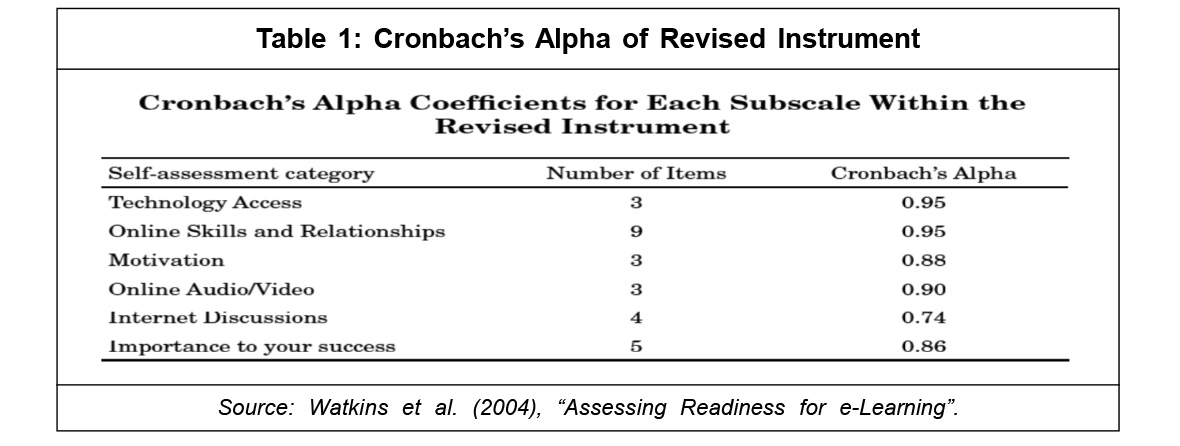
Watkins et al. (2004) developed an instrument earlier with 10 different scales, viz., Technology Assess, Technology skills, Online relationships, Motivation, Online Readiness, Online Video/Audio, Internet chat, Discussion boards, Online groups, and Importance to your success, with a sum total of 40 items and later on recommended only 6 factors and 27 items for the instrument (Table 1).
Self-Management and Willingness to Learn
Smith (2005) conducted a study on readiness for online learning by administering McVay (2000 and 2001) structured questionnaire and recommended six attributes (willingness to read for 8-10 hours; self-directed; looking back at what the students have learned; self-disciplined; managing study time effectively and easily, and enjoyment of working independently) for self-management of learning for the students by doing a factor analysis, which is similar to the study by Smith et al. (2003).
Student's Perception and Willingness to Learn
Demir and Horzum (2013) found a positive and significant relationship between willingness for online learning and perceived value interaction and the program structure which is an element for student's perception towards online learning. Davis (2006) also mentioned the positive relationship between student's perceptions and willingness to learn, and the researcher identified 17 traits related to readiness/willingness to learn online.
Effectiveness of Faculty and Willingness to Learn
Lewis and Abdul (2006), in their qualitative study, explored the learning process for making online learning effective and recommended three things to be followed by all online instructors: the sessions should be interactive (Chickering and Gamson, 1987; Knowlton, 2000; and Ward et al., 2010); provide adequate feedback (Chickering and Gamson, 1987; Knowlton, 2000; and Berge, 2002) in a structured way and facilitate learning (Thomas and Thorpe, 2019); and the instructor should be thoroughly organized (Ward et al., 2010) and show enthusiasm during the classes.
Willingness to Learn Online and Online Learning Effectiveness
According to Aydin and Tasci (2005), it is important to understand willingness to learn for Online Learning Effectiveness (OLE). Hung et al. (2010) developed an instrument to measure the constructs. Cigdem (2014) identified the need for a study to evaluate different aspects of online learning and its effectiveness. The researcher found that the variable "online willingness to learn or readiness for online learning" is a vital aspect of OLE.
Online Learning Effectiveness
Studies have documented the perception of college students towards online learning. Several works imply that the instructor's interplay with college students has a big effect on the student's perceptions of online learning. Consistency in instructional design (Swan et al., 2000), the connection with the course instructors to understand important concepts and proactive classroom discussions (Duffy et al., 1998, pp. 51-78; Picciano, 2002; and Hay et al., 2004), interaction during instruction delivery (Arbaugh, 2000; and Hay et al., 2004), emphasis on mastering through interaction amongst online learners (Chizmar and Walbert, 1999; McCall, 2002; National Centre for Vocational Education Research, 2002; Petrides, 2002; Schrum, 2002; Klingner, 2003; and Kim et al., 2005), instructor's attention-grabbing delivery of concepts (Soo and Bonk, 1998; Wise et al., 2004; and Kim et al., 2005), social presence (Barab and Duffy, 2000; Kim et al., 2005; and Jonassen, 2007), positive self-concept (Trautwein et al., 2006; and Lim et al., 2007), and technical skills (Wagner et al., 2002) have been identified as the perceived strengths of online learning. Hence, success of online learning relies on well-developed instructional content (Sun and Chen, 2016), well-organized teachers (Sun and Chen, 2016), and the post-learning reviews and remarks of the instructors (Gilbert, 2015).
However, from the instructor's point of view, some obstacles to online learning are also enumerated in the literature (Martin et al., 2020): delayed response (Hara and Kling, 1999; Petrides, 2002; and Vonderwell, 2003), suspicion of colleagues' experience (Petrides, 2002), lack of sense of community and/or isolation (Woods, 2002; Vonderwell, 2003; and Muilenburg and Berge, 2005); peer collaboration problems and technical problems (Piccoli et al., 2001; and Song et al., 2004), teachers' problems (Muilenburg and Berge, 2005), higher dropout rates (Frankola, 2001; and Laine, 2003), self-discipline and self-motivation; and the need for online users to participate in learning (Golladay et al., 2000; and Serwatka, 2003).
Research Gaps and Proposed Model for Testing
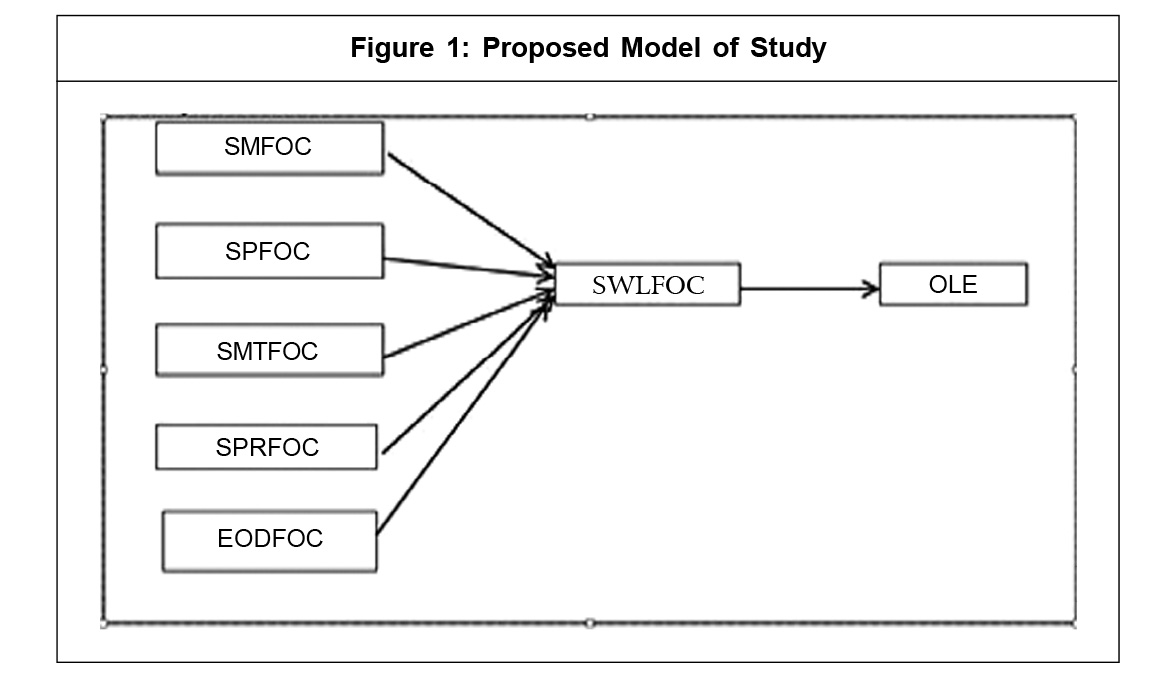
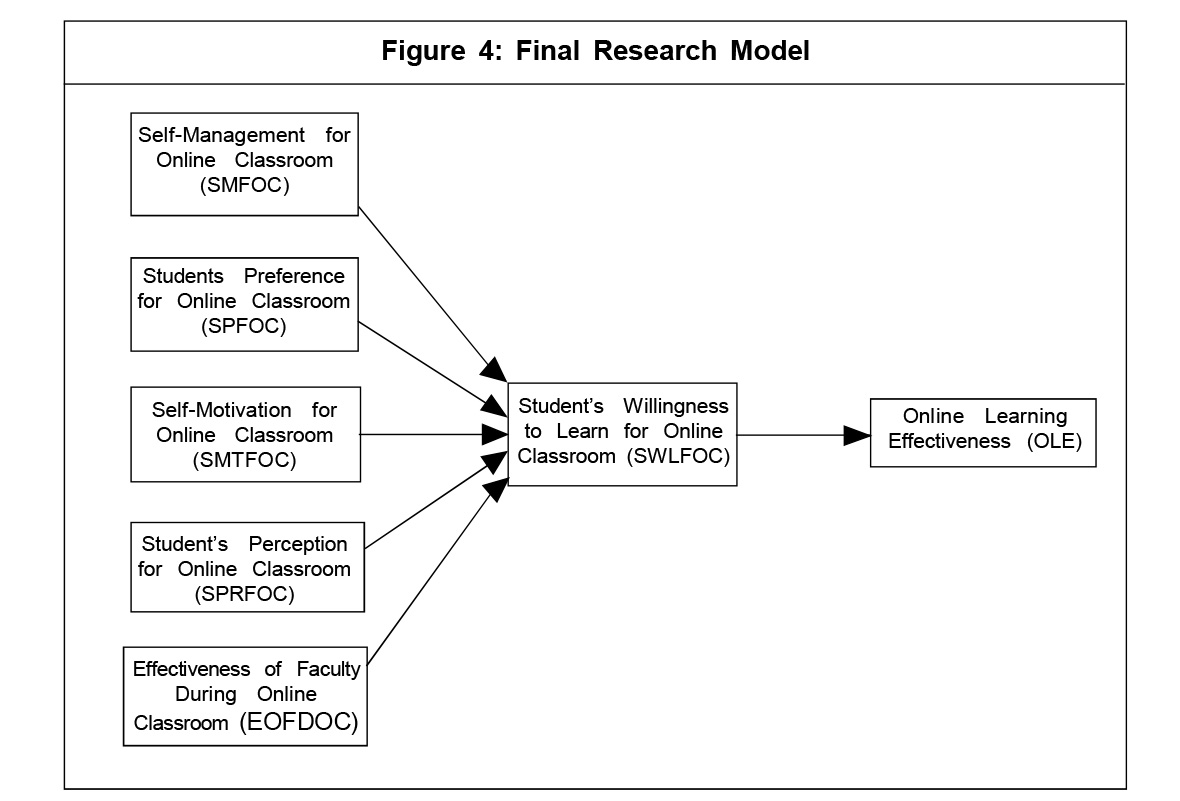
The current research identifies different variables to measure the effectiveness of online learning by proposing a model. The research found five different constructs, namely, Self-Management for Online Classroom (SMFOC), Student's Preference for Online Classroom (SPFOC), Self-Motivation for Online Classroom (SMTFOC), Student's Perception for Online Classroom (SPRFOC), Effectiveness of Faculty During Online Classroom (EOFDOC), and its relationship with the constructs Student's Willingness to Learn for Online Classroom (SWLFOC), and to measure the overall Online Learning Effectiveness (OLE). Most of the studies done measured student readiness, and the model proposed will be a unique contribution to the research world.
Of the above variables, five are independent variables: SMFOC, SPFOC, SMTFOC, SPRFOC, EOFDOC SWLFOC is controlled variable and OLE is a dependent variable.
Proposed Model
The literature review highlighted the need for an adequate model which measures online learning effectiveness. While the world is still reeling under the negative impact of Covid-19, the learners should not face any difficulties in enhancing their learning on online platforms. This proposed model (Figure 1) will further test its effectiveness and robustness to be applied in real world.
Objective
- To examine the relationship of SMFOC, SPFOC, SMTFOC, SPRFOC, EOFDOC, SWLFOC with the construct OLE.
- To develop a model for OLE based on the identified constructs.
Data and Methodology
Research Variables and Instruments
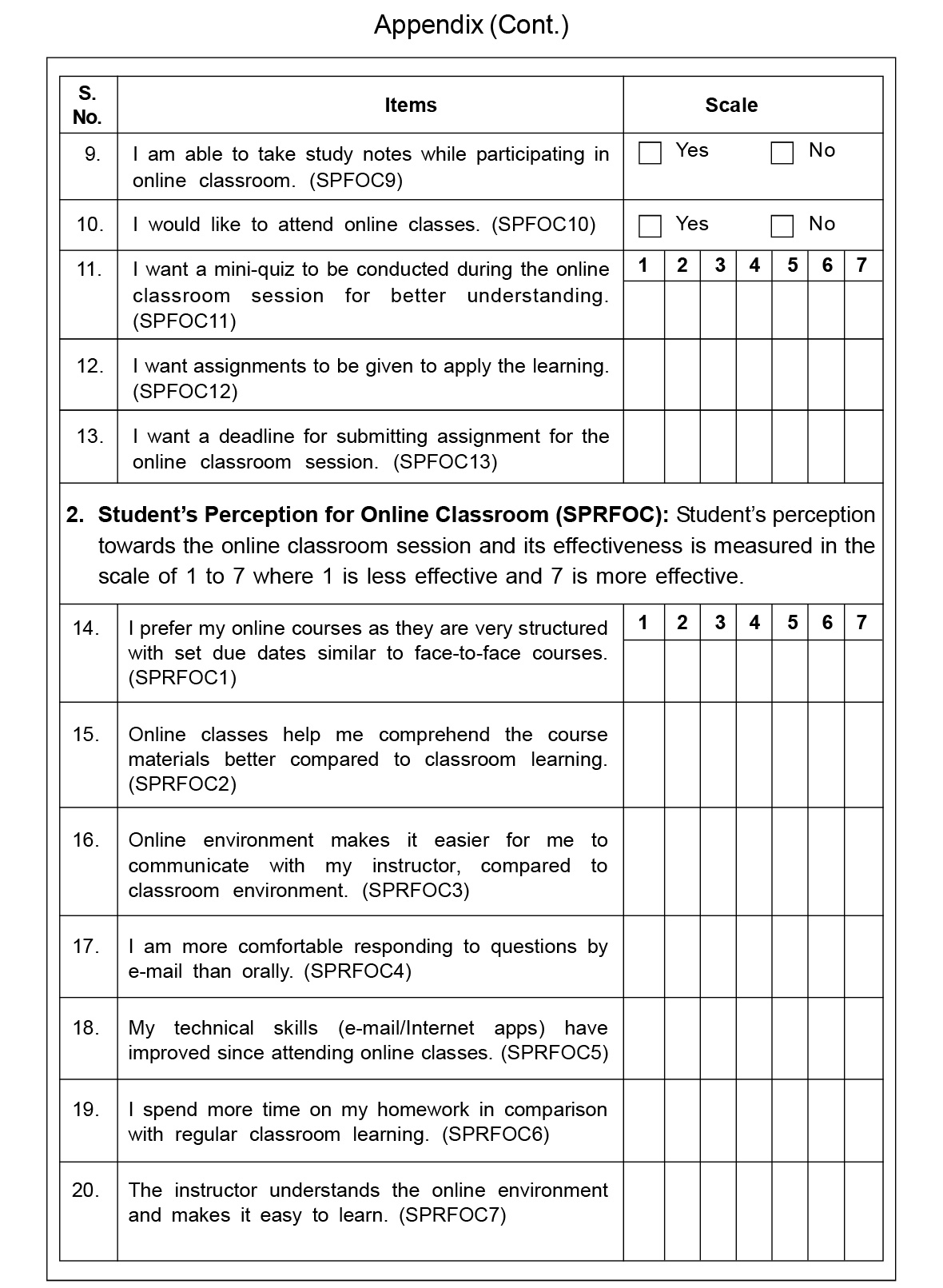
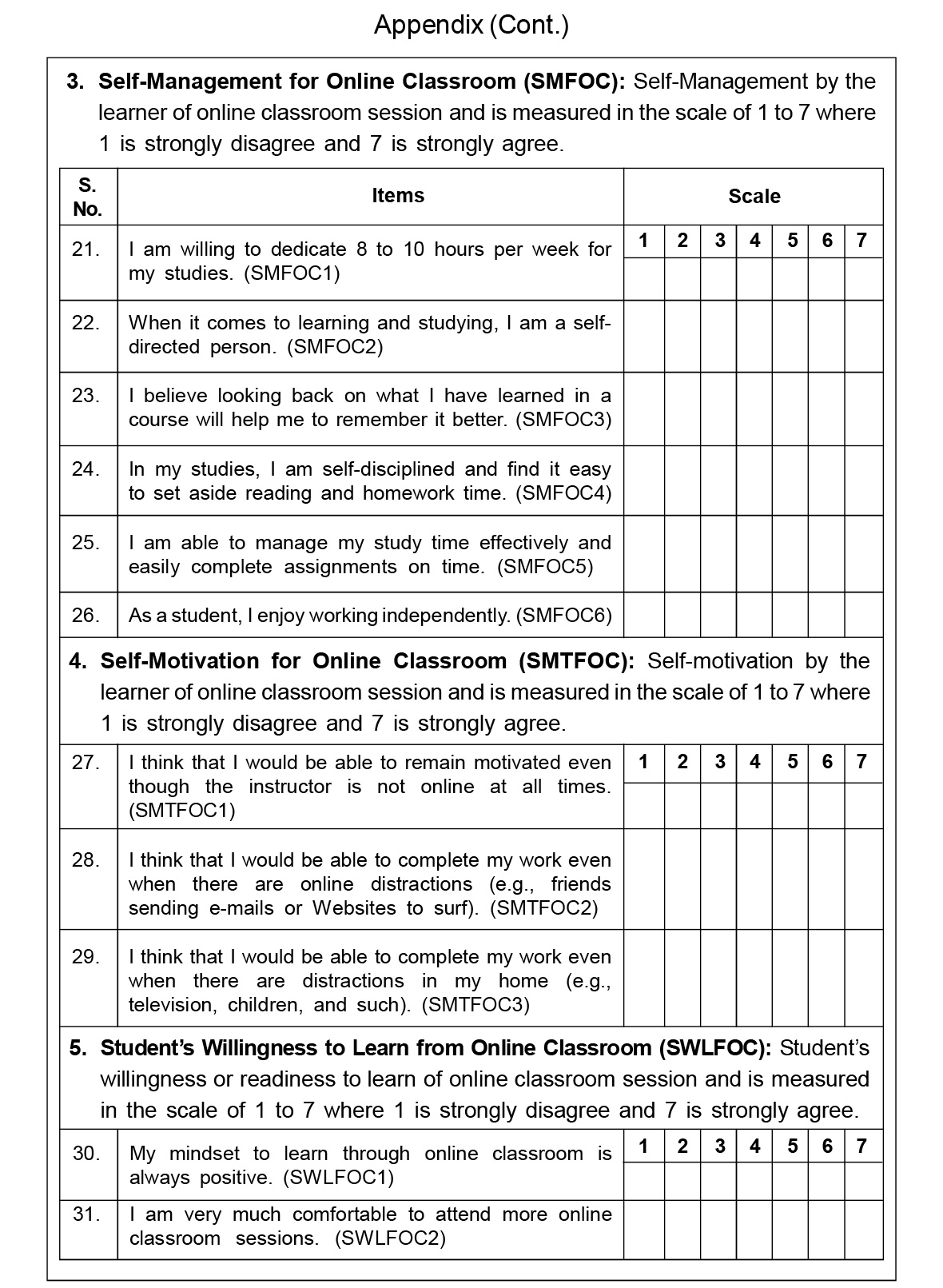
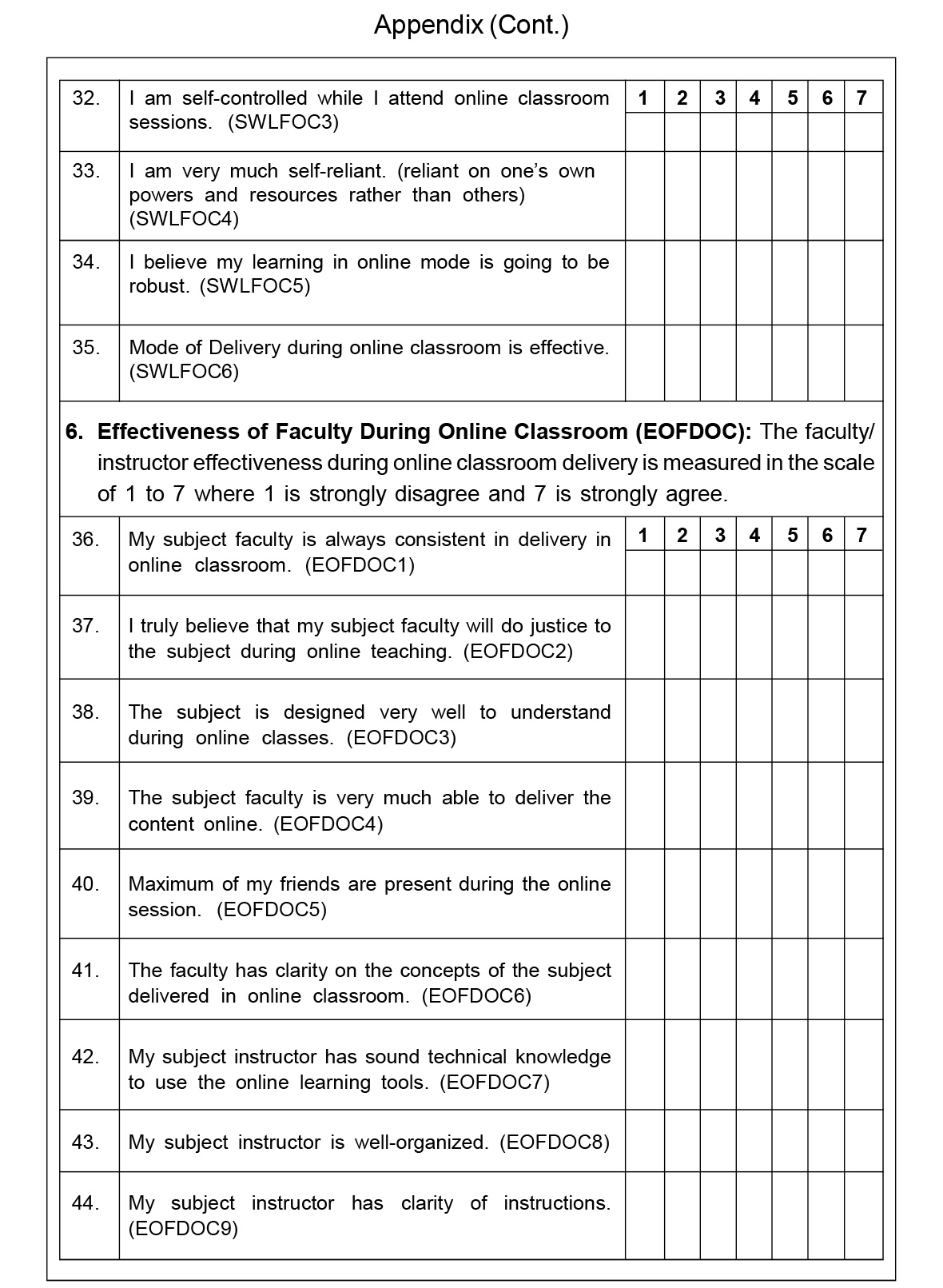
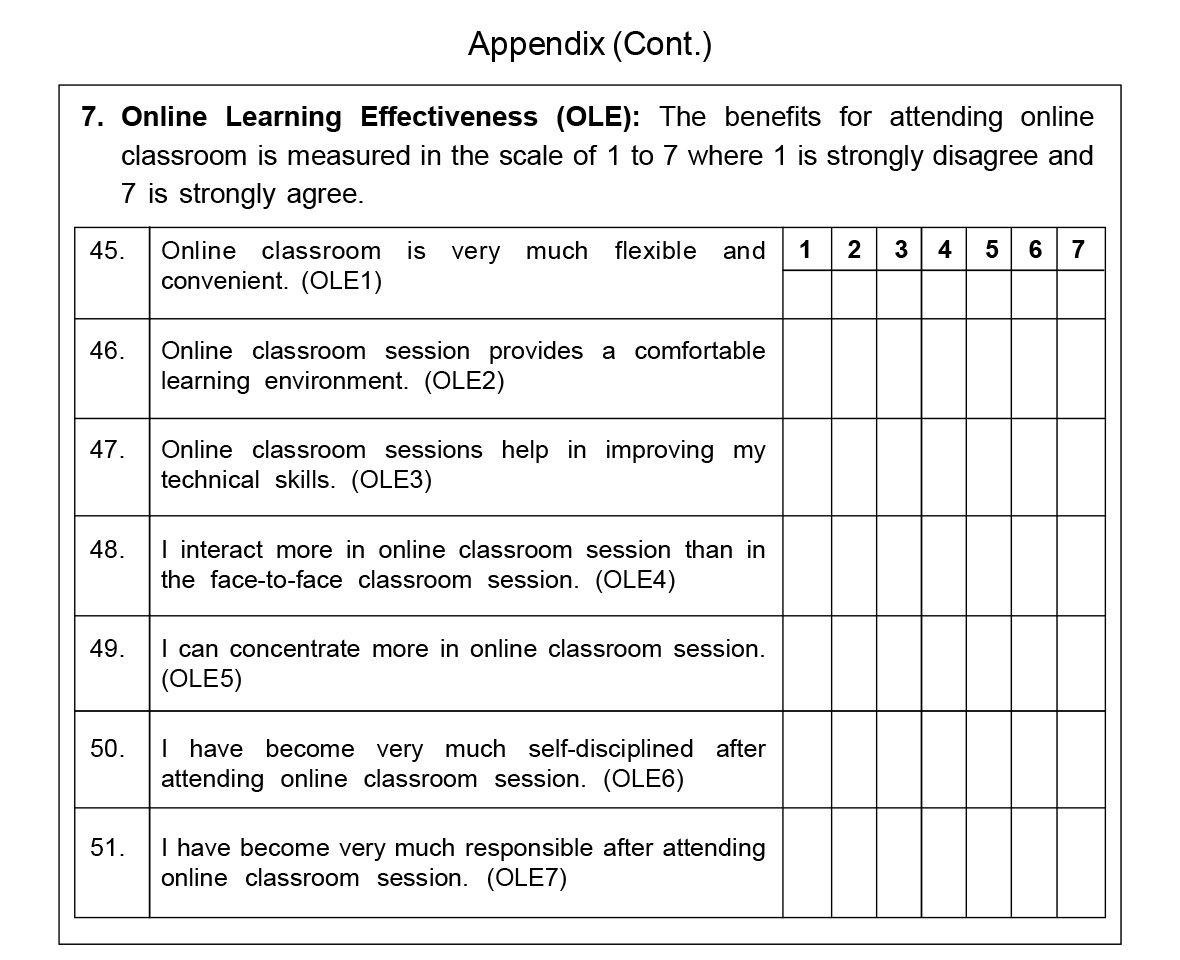
To achieve the objective of this study, a research instrument has been developed for all the seven variables, namely, SMFOC, SPFOC, SMTFOC, SPRFOC, EOFDOC, SWLFOC and OLE.
SPFOC, SPRFOC and OLE research instruments are adapted from the study of Muthuprasad et al. (2021). SMFOC research instruments are adapted from the study of Smith (2005). SMTFOC research instruments are adapted from the study of Watkins et al. (2004) EOFDOC and SWLFOC research instruments are developed after a thorough literature review.
Sample
Students of Centurion University of Technology and Management of Vizianagaram campus, enrolled for full-time course like B.Sc (General), B.Sc. (Radiology), B.Sc. (Anaesthesia) and B.Sc. (Optometry), B-Tech and BBA, were the respondents. All the students were chosen to avoid any special course effect. The author collected 244 samples through convenience sampling.
Data Collection
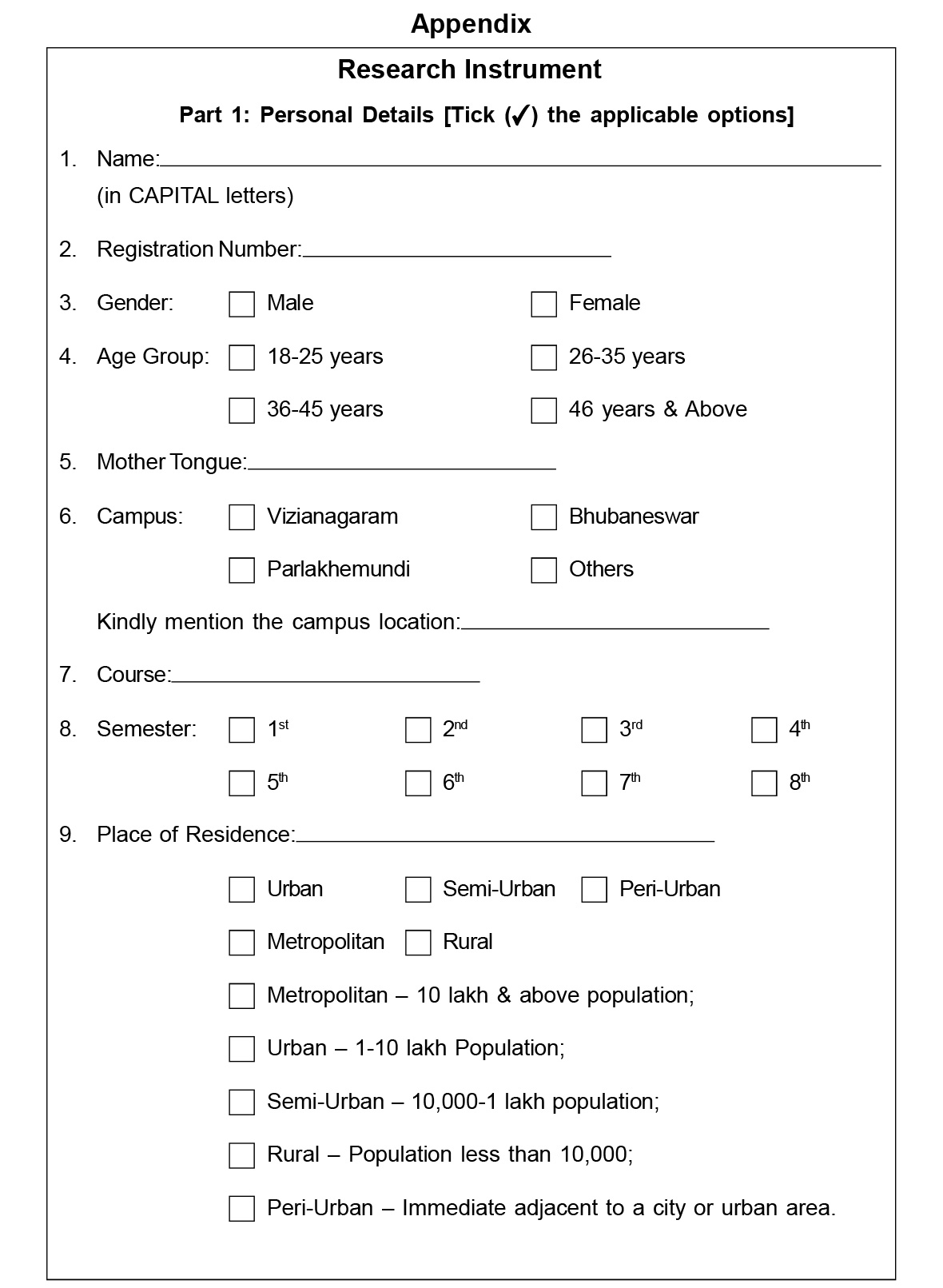
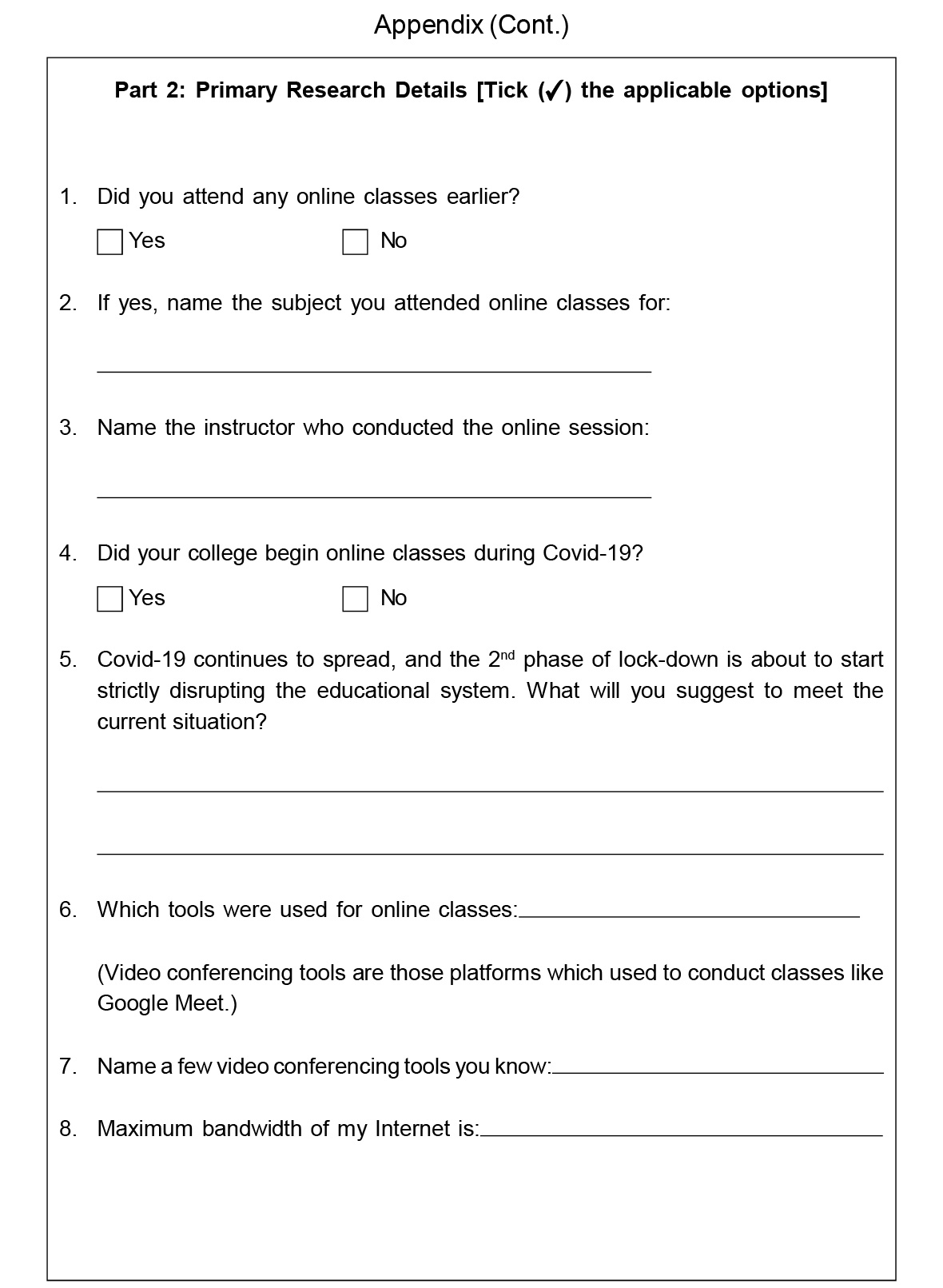
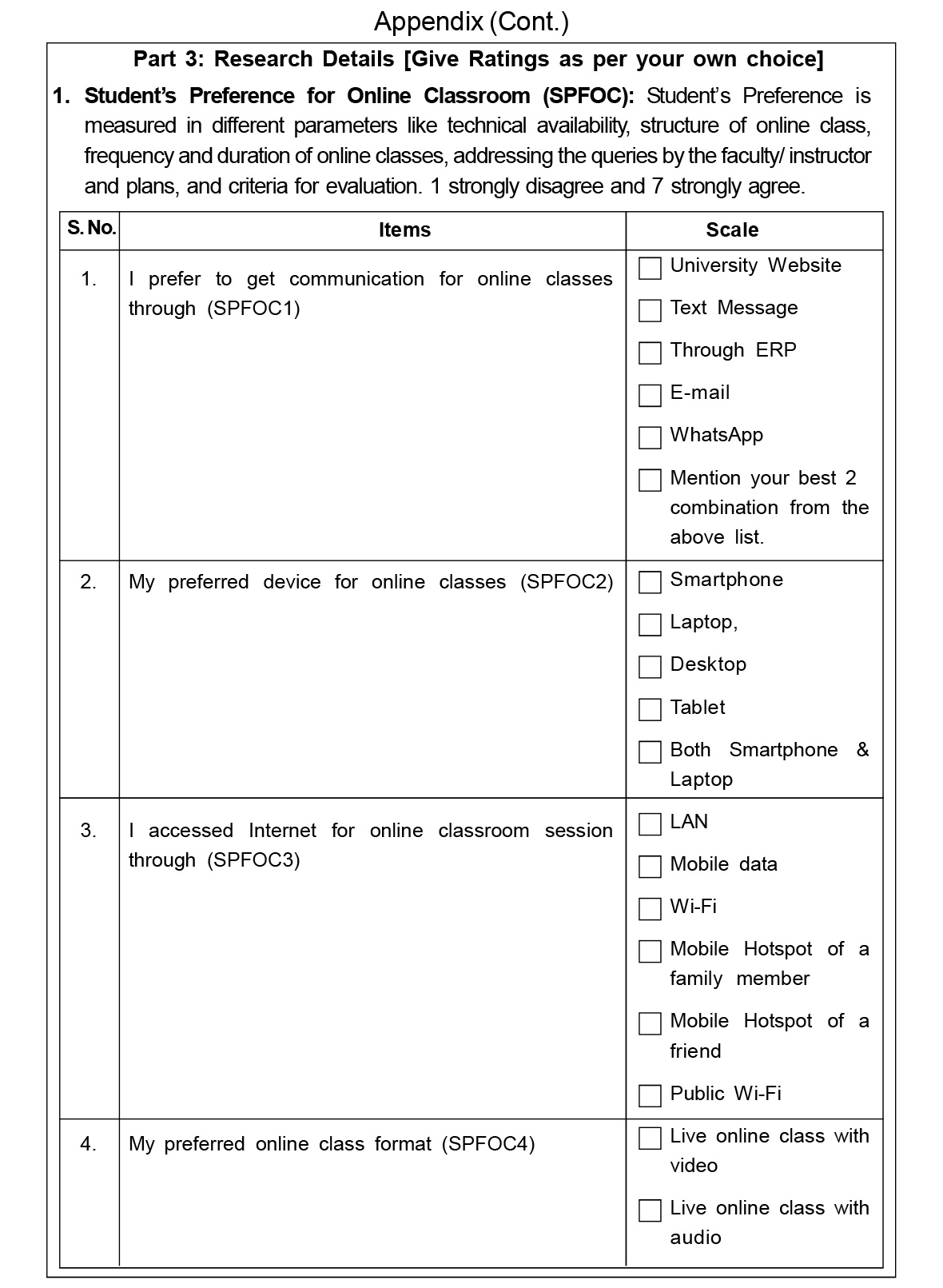
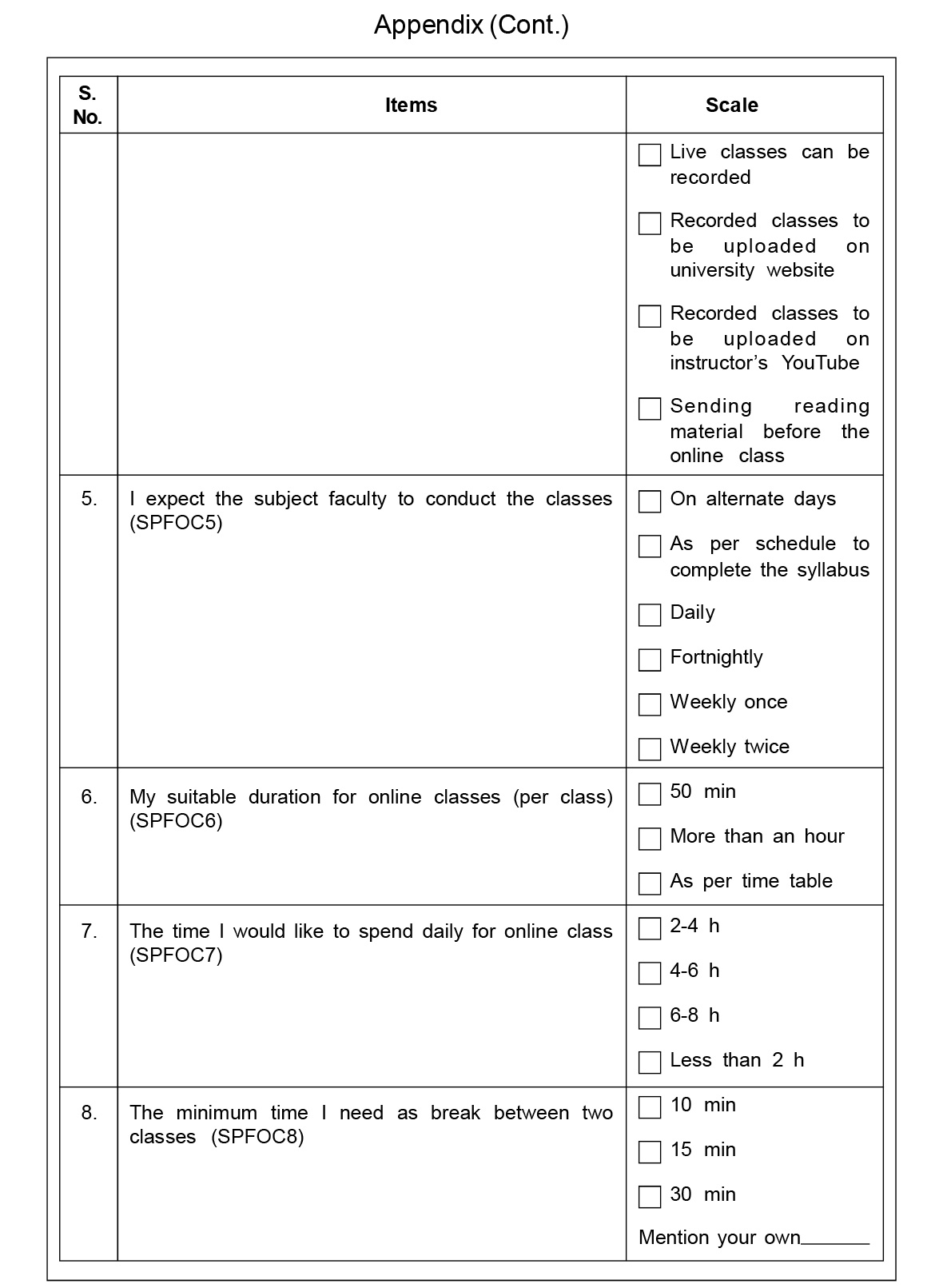
Research instruments were converted to online Google Form for simplification. The research instruments were thoroughly cross-checked for grammatical mistakes and for easy understanding by the students. The author preferred a non-probability convenience sampling method to collect data. The questionnaire (see Appendix) was responded to by the students on a 7-point rating scale, where 1 represents Strongly Disagree and 7 represents Strongly Agree.
The data was first coded in Excel, and later on, the values of those data were defined in the variable view of SPSS. For further analysis, the authors first checked the distribution of demographic data available to have a general idea before running data analysis, as these demographic dividends do always have an effect on the learning goal.
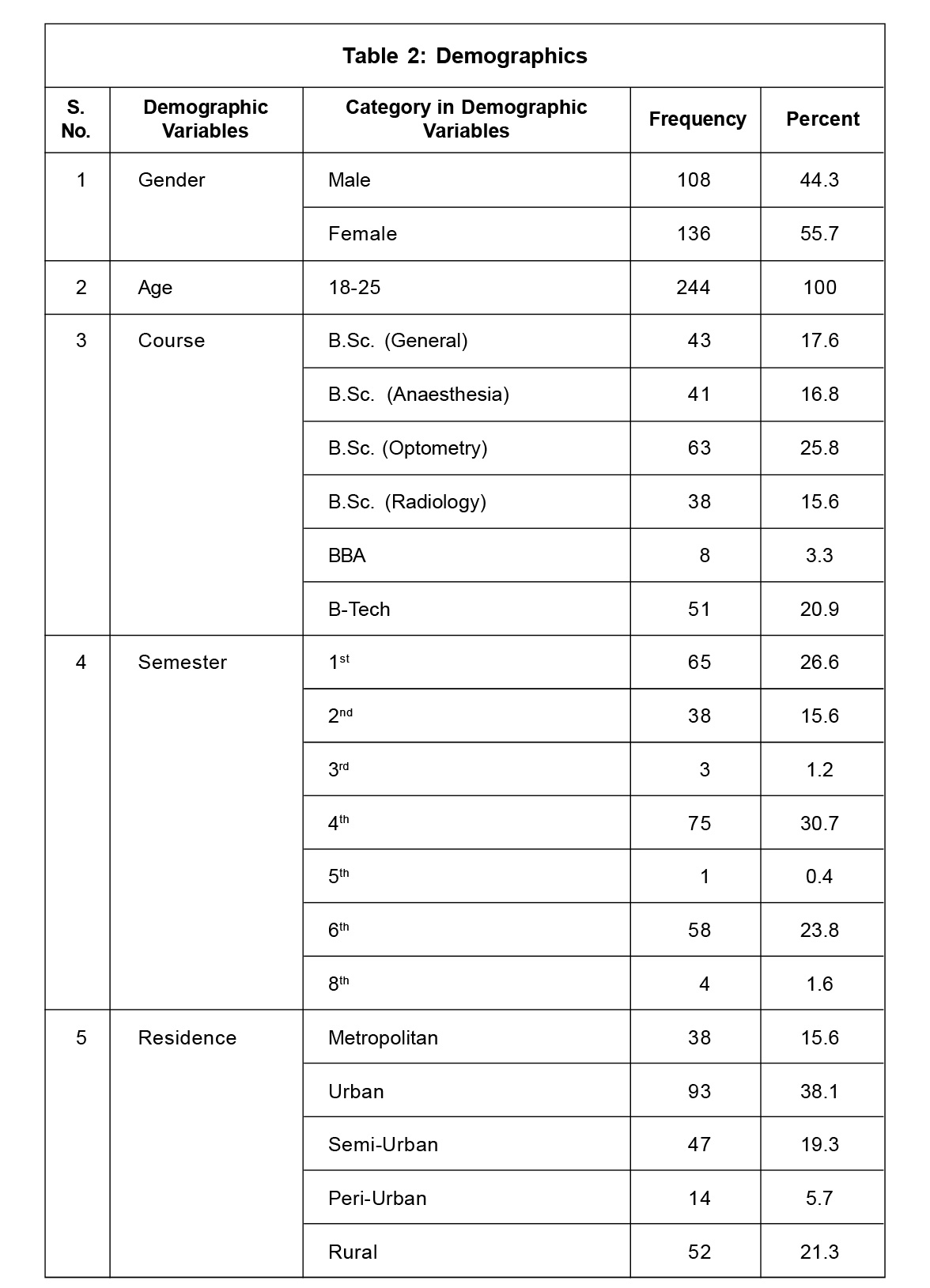
From Table 2, we can find that females comprise 55.7% of the sample size, whereas males only 44.3%. The authors had collected data from four different age categories, i.e., 18-25 years, 26-35 years, 36-45 years and 46 years and above; our data has samples from only one category, i.e., 18-25 years. We have three different categories of courses in the sample size, i.e., B.Sc., BBA and B. Tech; and again in B. Sc, we have four different subcategories, namely, General, Anaesthesia, Optometry and Radiology. So the authors assigned value to each subcategory.
Data Analysis
Data analysis was conducted by coding the data into relevant software, and here we used SPSS and AMOS (Strauss and Corbin, 1990). Data cleaning is also required before
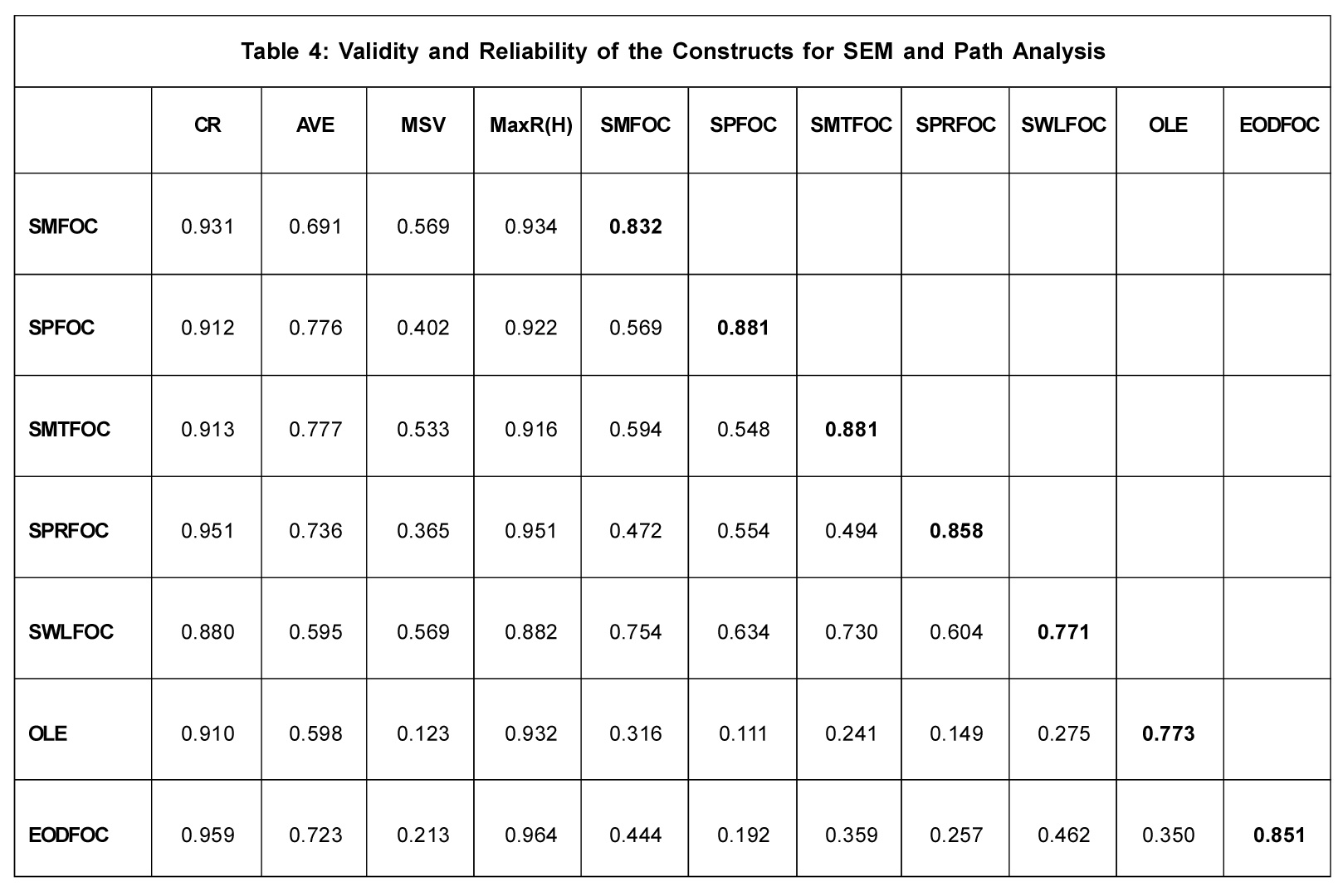
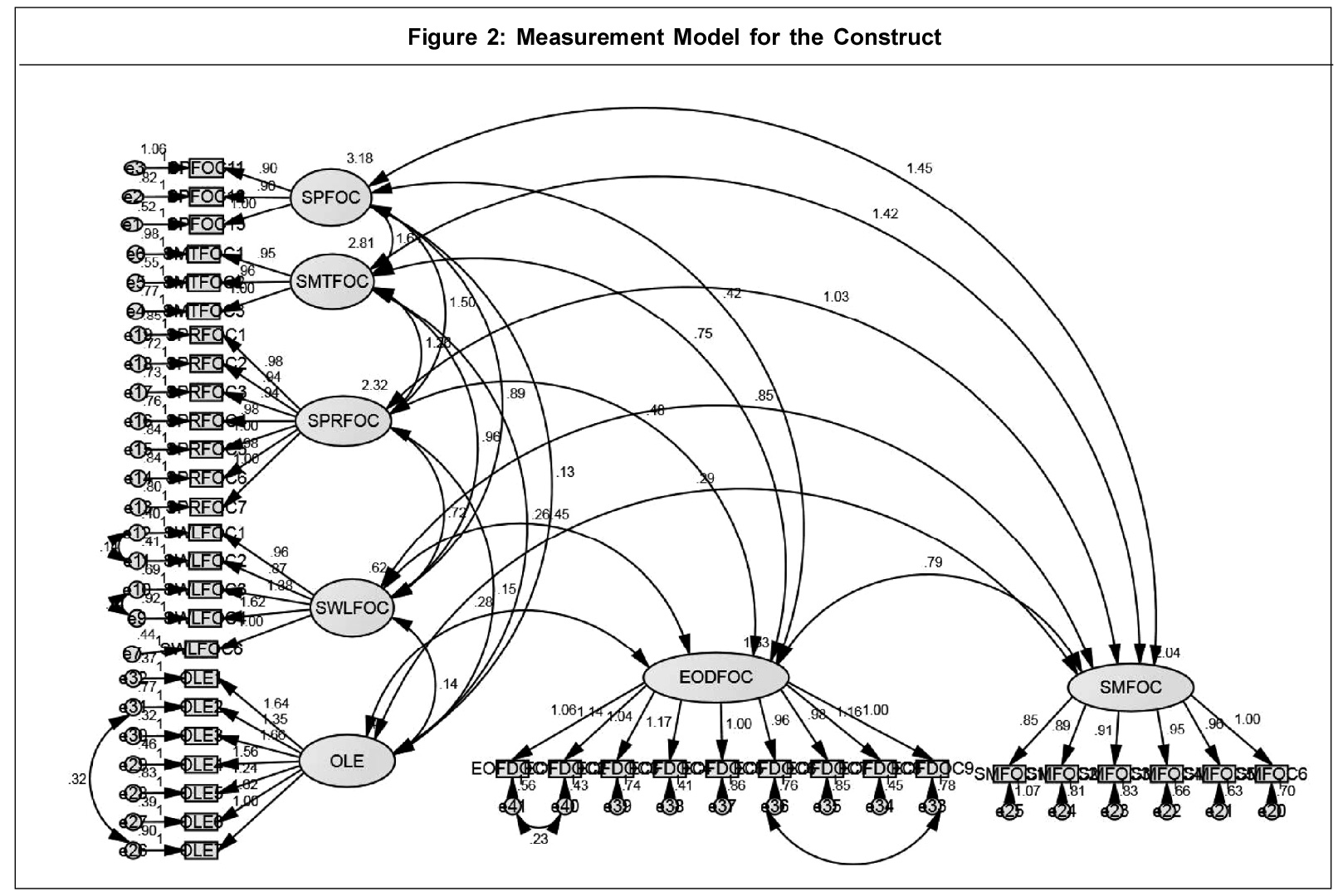
analyzing the data (Osborne, 2010). The outlier in data is also checked as it may affect the overall data due to Type 1 or Type II error. The constructs of the research instrument were found normal through P-P plots, which enables us to run the Cronbach's alpha for understanding whether the constructs are actually measuring what they are supposed to measure. Along with this, we checked the normality of all variables by Skewness and Kurtosis method (Mishra et al., 2019). The authors argued for medium sample size 50 n ≤ 300, the required Z value should be ± 3.29, and our values for all the variables are < ± 3.29. Before running the statistical test, the authors ran Single Factor Harman's test to check the common method biasness (Aguirre and Hu, 2019) and found the total variance in the sample data to be 31.448. Thus, there is no common method biasness in the data; the sample data is unbiased to estimate the reliability and validity of the measures and the relationship between the studied constructs.
Results
Reliability Analysis
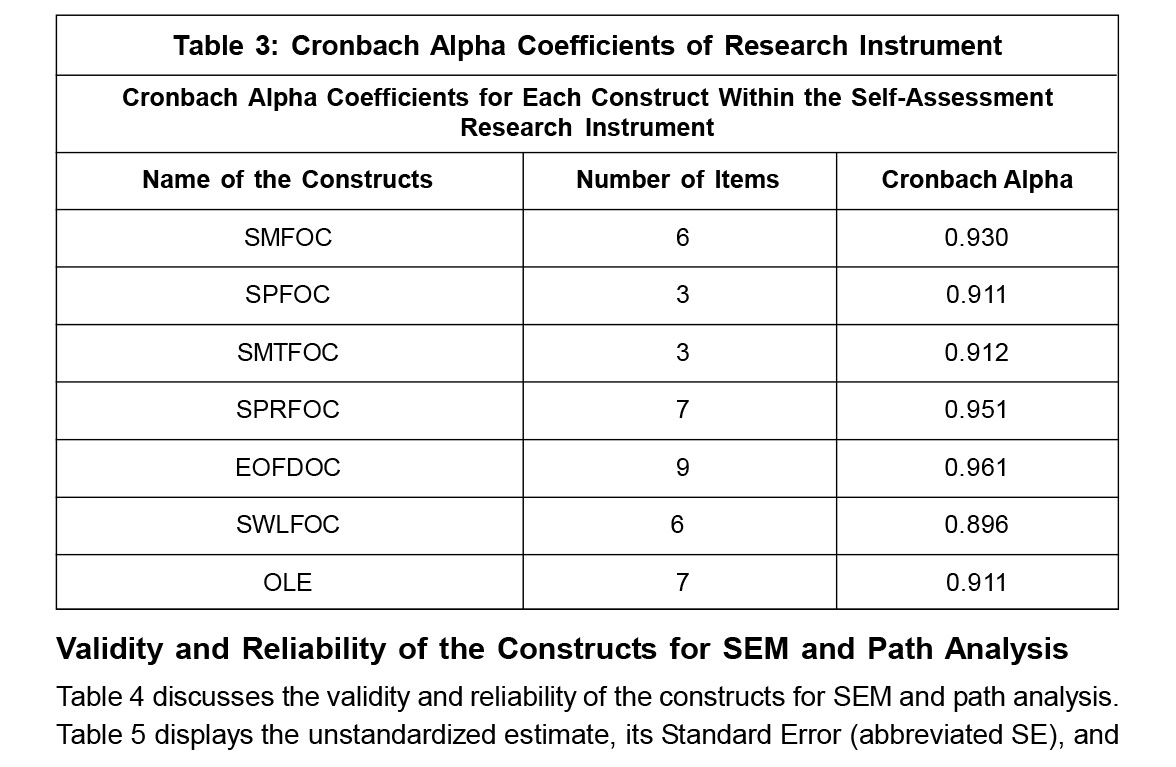
The reliability of the constructs used in the research instruments was assessed with Cronbach alpha of 0.930 for SMFOC, 0.911 for SPFOC, 0.912 for SMTFOC, 0.951 for SPRFOC, 0.961 for EOFDOC, 0.896 for SWLFOC and 0.911 for OLE (Table 3). All the Cronbach alpha values are accepted and reliable for further studies as the values are more than 0.7, as per the recommendations of Coakes and Steed (1997) and Pallant (2001).
Discussion
Self-Determination Theory (SDT) mentioned different types of motivation, which reflect different forms of self-determination and different behaviors demonstrated by self (Deci and Ryan, 1985). When a person is motivated by internal motivation, internal satisfaction and internal pleasure that is seen as the most powerful form of self-determination, which is known as intrinsic motivation. We understand that all the behaviors in every person are not triggered through intrinsic motivation; when the education regulation changes in a learning environment, students' behavior toward this extrinsic motivation too also varies. Sometimes, the learner can exhibit a positive self-image and lessen the anxiety considering these extrinsic motivations as important to them. A learner may not be motivated internally but may be motivated by extrinsic factors when the job market demands the learning of a new set of skills. SDT mentioned that with extrinsic motivation, the learner will transform through the process of internalization and then the learner can have a positive outcome of self-motivation guided by intrinsic motivation transformation. However, in this study, we are not referring to the process, instead a final transformed motivation of learners is governed by themselves and the relative absence of self-motivation will not result in the desired outcome (Deci and Ryan, 2010).
Self-management is the composition of self-discipline, having control over self, strong willpower, balanced ego, self-regulation, regulated emotions and regulated behaviors (Duckworth and Kern, 2011). According to Casel (2018), an individual who can control his emotions and knows how to channel ideas, self-motivate and strive towards academic and personal growth is a better illustration of self-management. And, when we consider a better learning environment for a learner in any educational institution, the learner should know how to manage himself. To achieve academic growth, the learner should show the potential to grow and know how to apply their skill sets to achieve excellence (Jeynes, 2008). Claro and Loeb (2019) mentioned self-management as the potential to control thoughts and channelize emotions in the right direction. For a learner, self-management may be a powerful indicator of success; self-management helps in strong decision-making skills and competencies to regulate behavior (Deming, 2015; and Balica et al., 2016).
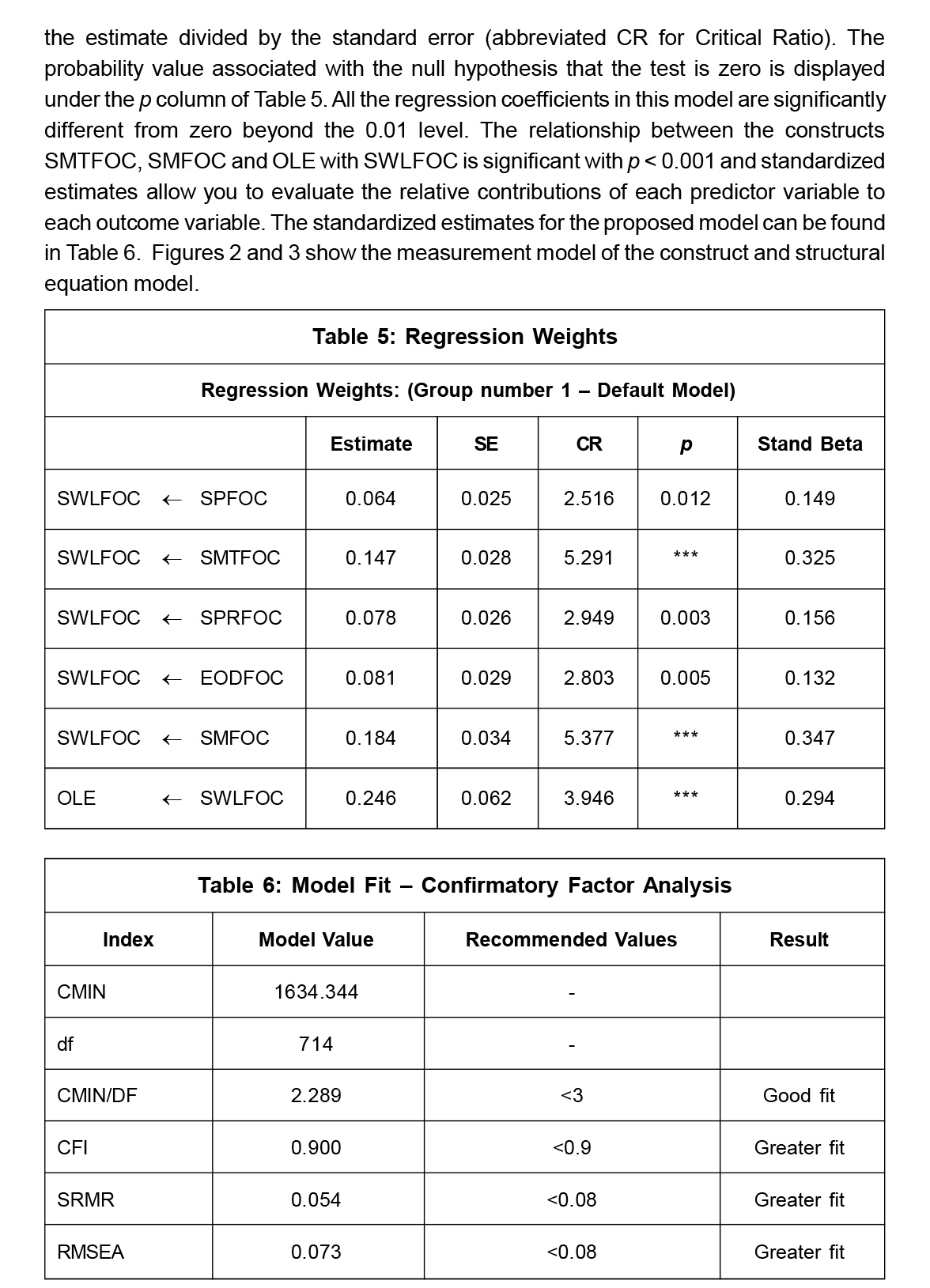
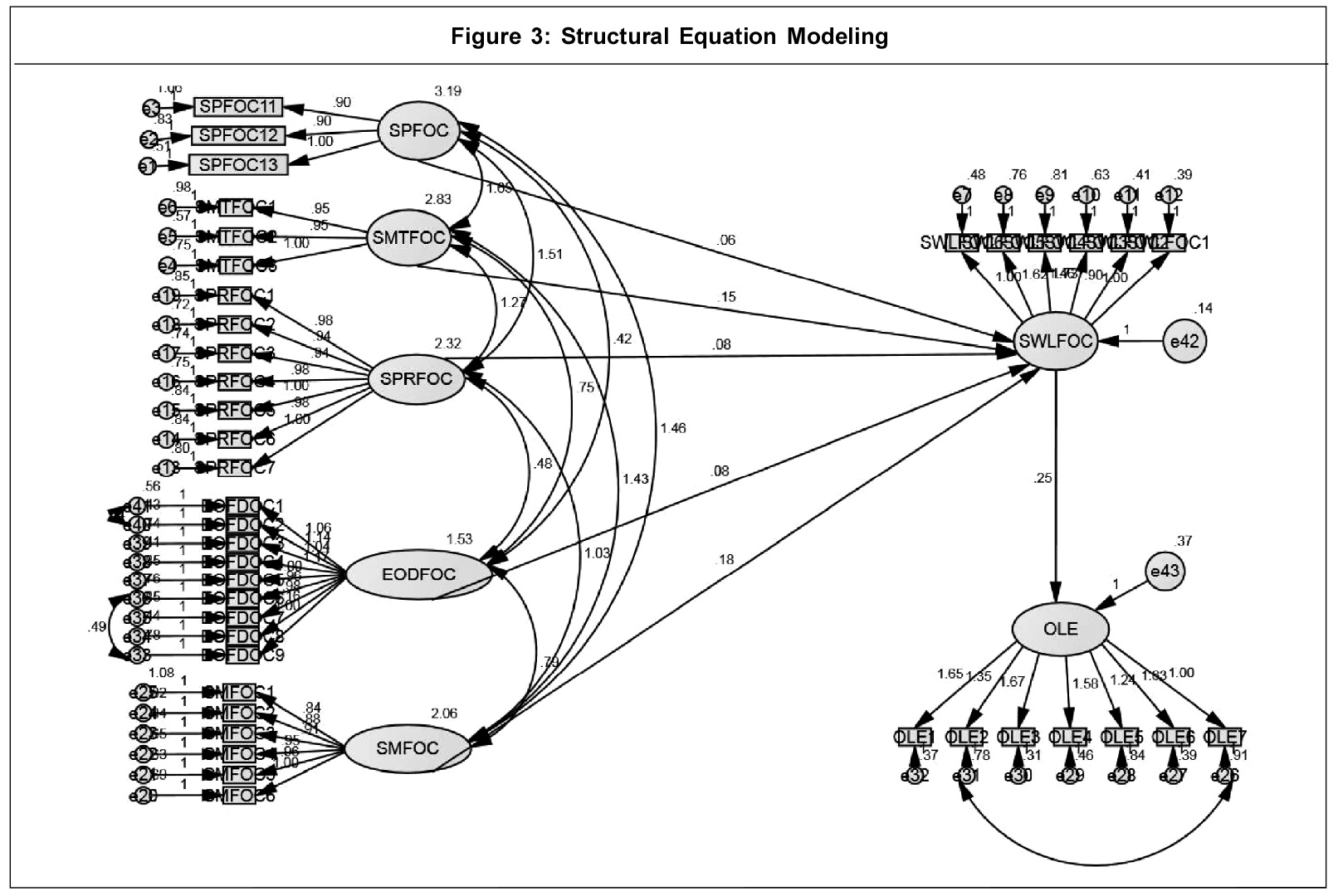
SMTFOC and SMFOC are significant at 0.01 level of significance; the faculty may try to motivate the students to learn effectively by sharing study materials of online content beforehand. Students, as part of their discipline, need to complete their assignments before coming to the classes. The role of the faculty is an important factor for creating SWLFOC; they need to be consistent in delivery approach and a facilitator during the online session. The course curriculum should be designed effectively to achieve the learning objective through effective delivery with absolute conceptual clarity to make online learning effective. Figure 4 presents the final research model for OLE.
Conclusion
The relationships between Student's Preference for Online Classroom (SPFOC), Self-Motivation for Online Classroom (SMTFOC), Student's Perception for Online Classroom (SPRFOC), Effectiveness of Faculty During Online Classroom (EOFDOC) and Self-Management for Online Classroom (SMFOC) and Student's Willingness to Learn for Online Classroom (SWLFOC) are positive and all the independent variables are positively related to the mediating variable. We also found that SWLFOC is significantly related to OLE.
The study examined the concepts of self-management, self-motivation, student perception, student preferences and student willingness and the contribution of the faculty/facilitators in the context of online learning.
References
- Adam N L, Alzahri F B, Cik Soh S et al. (2017), "Self-Regulated Learning and Online Learning: A Systematic Review", in International Visual Informatics Conference, pp. 143-154, Springer, Cham.
- Aguirre-Urreta M I and Hu J (2019), "Detecting Common Method Bias: Performance of the Harman's Single-Factor Test", ACM SIGMIS Database: The DATABASE for Advances in Information Systems, Vol. 50, No. 2, pp. 45-70.
- Arbaugh J B (2000), "How Classroom Environment and Student Engagement Affect Learning in Internet-Based MBA Courses", Business Communication Quarterly, Vol. 63, No. 4, pp. 9-26.
- Asian News International (2020), "What is the Best Methodology During Lockdown for Studies", available at
- Aydin C H and Tasci D (2005), "Measuring Readiness for e-Learning: Reflections from an Emerging Country", Educational Technology & Society, Vol. 8, No. 4, pp. 244-257.
- Balica Magdalena, Oana Benga, Violeta Maria Caragea et al. (2016), "Non-Cognitive Skill Development in Adolescents in Romania", UNICEF, Bucharest, Romania.
- Bandura A (1977), "Self-Efficacy: Toward a Unifying Theory of Behavioral Change", Psychological Review, Vol. 84, No. 2, pp. 191-215.
- Bandura A (1986), Social Foundations of Thought and Action: A Social Cognitive Theory, pp. 23-28, Prentice-Hall, Inc., Englewood Cliffs, NJ.
- Bandura A, Freeman W H and Lightsey R (1999), Self-Efficacy: The Exercise of Control, W H Freeman/Times Books/ Henry Holt & Co.
- Barab S A and Duffy T (2000), "From Practice Fields to Communities of Practice", Theoretical Foundations of Learning Environments, Vol. 1, No. 1, pp. 25-55.
- Berge Z L (2002), "Active, Interactive, and Reflective e-Learning", Quarterly Review of Distance Education, Vol. 3, No. 2, pp. 181-190.
- Bignoux S and Sund K J (2018), "Tutoring Executives Online: What Drives Perceived Quality?", Behaviour & Information Technology, Vol. 37, No. 7, pp. 703-713.
- Calder A (2000), "Online Learning Support: An Action Research Project", in The Fourth Pacific Rim-First Year in Higher Education Conference: Creating Futures for a New Millennium, Queensland University of Technology, Brisbane.
- Casel (2018), "Core SEL Competencies", available online https://casel.org/core-competencies/. Accessed on December 8, 2019 as cited in Al-Abyadh M H A and Abdel Azeem H A H (2022), "Academic Achievement: Influences of University Students' Self-Management and Perceived Self-Efficacy", Journal of Intelligence, Vol. 10, No. 3, p. 55.
- Chickering A W and Gamson Z F (1987), "Seven Principles of Good Practice in Undergraduate Education", AAHE Bulletin, Vol. 39, No. 7, pp. 3-7.
- Chizmar J F and Walbert M S (1999), "Web-Based Learning Environments Guided by Principles of Good Teaching Practice", The Journal of Economic Education, Vol. 30, No. 3, pp. 248-259.
- Cigdem H (2014), "Effects of Students' Characteristics on Online Learning Readiness: A Vocational College Example", Turkish Online Journal of Distance Education, Vol. 15, No. 3, pp. 80-93.
- Claro Susana and Susanna Loeb (2019), "Self-Management Skills and Student Achievement Gains: Evidence from California's CORE Districts", [Working Paper]. Policy Analysis for California Education. Available online https://edpolicyinca.org/publications/self-management-skills-and-student-achievement-gains-evidence-california-core-districts (accessed on December 20, 2020). As cited in Al-Abyadh M H A and Abdel Azeem H A H (2022), "Academic Achievement: Influences of University Students' Self-Management and Perceived Self-Efficacy", Journal of Intelligence, Vol. 10, No. 3, p. 55.
- Coakes S J and Steed L G (1997), SPSS Analysis Without Anguish, John Wiley and Sons, Brisbane.
- Compeau D R and Higgins C A (1995), "Computer Self-Efficacy: Development of a Measure and Initial Test", MIS Quarterly, Vol. 19, No. 2, pp. 189-211.
- Davis T S B (2006), "Assessing Online Readiness: Perceptions of Distance Learning Stakeholders in Three Oklahoma Community Colleges", Doctoral Dissertation, Oklahoma State University.
- Deci E L and Ryan R M (1985), "The General Causality Orientations Scale: Self-Determination in Personality", Journal of Research in Personality (Print), Vol. 19, No. 2, pp. 109-134.
- Deci E L and Ryan R M (2010), Intrinsic Motivation, The Corsini Encyclopedia of Psychology, pp. 1-2, Wiley.
- Deming David J (2015), "The Growing Importance of Social Skills in the Labor Market", The Quarterly Journal of Economics, Vol. 132, No. 4, pp. 1593-1640.
- Demir K Z and Horzum M B (2013), "Relationship Between Online Learning Readiness and Structure and Interaction of Online Learning Students", Educational Sciences: Theory and Practice, Vol. 13, No. 3, pp. 1792-1797.
- Duckworth A L and Kern M L (2011), "A Meta-Analysis of the Convergent Validity of Self-Control Measures", Journal of Research in Personality, Vol. 45, No. 3, pp. 259-268.
- Duffy T M, Dueber B and Hawley C L (1998), "Critical Thinking in a Distributed Environment: A Pedagogical Base for the Design of Conferencing Systems", Electronic Collaborators: Learner-Centered Technologies for Literacy, Apprenticeship, and Discourse, pp. 51-78.
- Eastin M S and LaRose R (2000), "Internet Self-Efficacy and the Psychology of the Digital Divide", Journal of Computer-Mediated Communication, Vol. 6, No. 1, https://doi.org/10.1111/j.1083-6101.2000.tb00110.x
- Evans T (2000), "Flexible Delivery and Flexible Learning: Developing Flexible Learners?", in V Jakupec and J Garrick (Eds.), Flexible Learning, Human Resource and Organisational Development, pp. 211-224, Routledge, London.
- ET Government (2020), "How Lockdown Reveals Actual State of e-Education in India", available at
- Fairchild A J, Horst S J, Finney S J and Barron K E (2005), "Evaluating Existing and New Validity Evidence for the Academic Motivation Scale", Contemporary Educational Psychology, Vol. 30, No. 3, pp. 331-358.
- Frankola K (2001), "Why Online Learners Drop Out", available at http://www. workforce.com/feature/00/07/29
- Garrison D R (1997), "Self-Directed Learning: Toward a Comprehensive Model", Adult Education Quarterly, Vol. 48, No. 1, pp. 18-33.
- Garrison D R, Anderson T and Archer W (2001), "Critical Thinking, Cognitive Presence, and Computer Conferencing in Distance Education", American Journal of Distance Education, Vol. 15, No. 1, pp. 7-23.
- Gilbert B (2015), "Online Learning Revealing the Benefits and Challenges", Education Masters, Paper 303.
- Golladay R M, Prybutok V R and Huff R A (2000), "Critical Success Factors for the Online Learner", Journal of Computer Information Systems, Vol. 40, No. 4, pp. 69-71.
- Guglielmino L M (1978), "Development of the Self-Directed Learning Readiness Scale", Doctoral Dissertation, ProQuest Information & Learning.
- Hannafin M J (1984), "Guidelines for Using Locus of Instructional Control in the Design of Computer-Assisted Instruction", Journal of Instructional Development, Vol. 7, No. 3, p. 6.
- Hara N and Kling R (1999), "Students' Frustrations with a Web-Based Distance Education Course", First Monday,Vol. 4, No. 12, available at http://firstmonday.org/htbin/cgiwrap/bin/ojs/index.php/fm/article/view/710/620
- Hay A, Hodgkinson M, Peltier J W and Drago W A (2004), "Interaction and Virtual Learning", Strategic Change, Vol. 13, No. 4, p. 193.
- Hung M L, Chou C, Chen C H and Own Z Y (2010), "Learner Readiness for Online Learning: Scale Development and Student Perceptions", Computers & Education, Vol. 55, No. 3, pp. 1080-1090.
- Jeynes William H (2008), "A Meta-Analysis of the Relationship Between Phonics Instruction and Minority Elementary School Student Academic Achievement", Education and Urban Society, Vol. 40, No. 2, pp. 151-166.
- Jonassen D H (2007), "Engaging and Supporting Problem Solving in Online Learning", The Quarterly Review of Distance Education, pp. 109-127.
- Kim K J, Liu S and Bonk C J (2005), "Online MBA Students' Perceptions of Online Learning: Benefits, Challenges, and Suggestions", The Internet and Higher Education, Vol. 8, No. 4, pp. 335-344.
- Klingner B G (2003), "The Relationship Between Learning Styles of Adult Learners Enrolled in Online Courses", at Pace University and Success and Satisfaction with Online Learning, Doctoral dissertation, Walden University.
- Knowlton D S (2000), "A Theoretical Framework for the Online Classroom: A Defense and Delineation of a Student-Centered Pedagogy", in R E Weiss, D S Knowlton, and B W Speck (Eds.), Principles of Effective Teaching in the Online Classroom, pp. 5-14, Jossey-Bass, San Francisco, CA.
- Laine L (2003), "Is E-Learning E-ffective for IT Training?", Training + Development, Vol. 57, No. 6, pp. 55-60.
- Lewis C C and Abdul-Hamid H (2006), "Implementing Effective Online Teaching Practices: Voices of Exemplary Faculty", Innovative Higher Education, Vol. 31, No. 2, pp. 83-98.
- Lim D H, Morris M L and Kupritz V W (2007), "Online vs. Blended Learning: Differences in Instructional Outcomes and Learner Satisfaction", Journal of Asynchronous Learning Networks, Vol. 11, No. 2, pp. 27-42.
- Lin B and Hsieh C T (2001), "Web-Based Teaching and Learner Control: A Research Review", Computers & Education, Vol. 37, Nos. 3-4, pp. 377-386.
- Loomis K D (2000), "Learning Styles and Asynchronous Learning: Comparing the LASSI Model to Class Performance", Journal of Asynchronous Learning, Vol. 4, No. 1, pp. 23-32.
- Martin F, Sun T and Westine C D (2020), "A Systematic Review of Research on Online Teaching and Learning from 2009 to 2018", Computers & Education, Vol. 159, 104009. https://doi.org/10.1016/j.compedu.2020.104009
- McCall D E (2002), "Factors Influencing Participation and Perseverance in Online Distance Learning Courses", A Case Study in Continuing Professional Education, pp. 1-335, The Florida State University.
- McVay M (2000), "Developing a Web-Based Distance Student Orientation to Enhance Student Success in an Online Bachelor's Degree Completion Program", Unpublished Practicum Report Presented to the Ed. D. Program, Nova Southeastern University, Florida.
- McVay M (2001), How to be a Successful Distance Learning Student: Learning on the Internet, Pearson Custom Pub.
- Mishra P, Pandey C M, Singh U et al. (2019), "Descriptive Statistics and Normality Tests for Statistical Data", Annals of Cardiac Anaesthesia, Vol. 22, No. 1, p. 67.
- Muilenburg L Y and Berge Z L (2005), "Student Barriers to Online Learning: A Factor Analytic Study", Distance Education, Vol. 26, No. 1, pp. 29-48.
- Muthuprasad T, Aiswarya S, Aditya K S and Jha G K (2021), "Students' Perception and Preference for Online Education in India During Covid-19 Pandemic", Social Sciences & Humanities Open, Vol. 3, No. 1, 100101.
- National Centre for Vocational Education Research (2002), "Flexibility Through Online Learning. at a Glance", National Centre for Vocational Education Research, Leabrook, Australia.
- Osborne J W (2010), "Data Cleaning Basics: Best Practices in Dealing with Extreme Scores", Newborn and Infant Nursing Reviews, Vol. 10, No. 1, pp. 37-43.
- Pallant J (2001), SPSS Survival Manual, Crows Nest, Allen and Unwin, NSW.
- Palloff R M and Pratt K (1999), Building Learning Communities in Cyberspace: Effective Strategies for the Online Classroom, Jossey-Bass Higher and Adult Education Series, Jossey-Bass Publishers, 350 Sansome Street, San Francisco, CA 94104.
- Petrides L A (2002), "Web-Based Technologies for Distributed (or distance) Learning: Creating Learning-Centered Educational Experiences in the Higher Education Classroom", International Journal of Instructional Media, Vol. 29, No. 1, p. 69.
- Picciano A G (2002), "Beyond Student Perceptions: Issues of Interaction, Presence, and Performance in an Online Course", Journal of Asynchronous Learning Networks, Vol. 6, No. 1, pp. 21-40.
- Piccoli G, Ahmad R and Ives B (2001), "Web-Based Virtual Learning Environments: A Research Framework and a Preliminary Assessment of Effectiveness in Basic IT Skills Training", MIS Quarterly, Vol. 25, No. 4, pp. 401-426.
- Pillay H, Irving K and Tones M (2007), "Validation of the Diagnostic Tool for Assessing Tertiary Students' Readiness for Online Learning", High Education Research & Development, Vol. 26, No. 2, pp. 217-234.
- Reeves T C (1993), "Pseudoscience in Computer-Based Instruction: The Case of Learner Control Research", Journal of Computer-Based Instruction, Vol. 20, No. 2, pp. 39-46.
- Roper A R (2007), "How Students Develop Online Learning Skills", Educause Quarterly, Vol. 30, No. 1, p. 62.
- Ryan R M and Deci E L (2000), "Intrinsic and Extrinsic Motivations: Classic Definitions and New Directions", Contemporary Educational Psychology, Vol. 25, No. 1, pp. 54-67.
- Sadler-Smith E and Riding R (1999), "Cognitive Style and Instructional Preferences", Instructional Science, Vol. 27, No. 5, pp. 355-371.
- Schrum L (2002), "Oh, What Wonders You Will See-Distance Education Past, Present, and Future, Learning & Leading with Technology", available at https://nsuworks.nova.edu/fse_facarticles/224.
- Serwatka J A (2003), "Assessment in On-Line CIS Courses", Journal of Computer Information Systems, Vol. 44, No. 1, pp. 16-20.
- Shyu H Y and Brown S W (1992), "Learner Control Versus Program Control in Interactive Videodisc Instruction: What are the Effects in Procedural Learning", International Journal of Instructional Media, Vol. 19, No. 2, pp. 85-95.
- Smith P J (2005), "Learning Preferences and Readiness for Online Learning", Educational Psychology, Vol. 25, No. 1, pp. 3-12.
- Smith P J (2000), "Preparedness for Flexible Delivery Among Vocational Learners", Distance Education, Vol. 21, No. 1, pp. 29-48.
- Smith P J, Murphy K L and Mahoney S E (2003), "Towards Identifying Factors Underlying Readiness for Online Learning: An Exploratory Study", Distance Education, Vol. 24, No. 1, pp. 57-67.
- Song L, Singleton E S, Hill J R and Koh M H (2004), "Improving Online Learning: Student Perceptions of Useful and Challenging Characteristics", The Internet and Higher Education, Vol. 7, No. 1, pp. 59-70.
- Soo K S and Bonk C J (1998), "Interaction: What Does It Mean in Online Distance Education?", Paper presented at the ED-MEDIA/ED-TELECOM 98 World Conference on Educational Multimedia and Hypermedia & World Conference on Educational Telecommunications (10th), Freiburg, Germany.
- Strauss A and Corbin J (1990), Basics of Qualitative Research, Sage Publishers, Newbury Park, CA.
- Sun A and Chen X (2016), "Online Education and its Effective Practice: A Research Review", Journal of Information Technology Education, Vol. 15, pp. 157-190.
- Swan K, Shea P, Fredericksen E et al. (2000), "Building Knowledge Building Communities: Consistency, Contact and Communication in the Virtual Classroom", Journal of Educational Computing Research, Vol. 23, No. 4, pp. 359-383.
- Thomas G and Thorpe S (2019), "Enhancing the Facilitation of Online Groups in Higher Education: A Review of the Literature on Face-to-Face and Online Group-Facilitation", Interactive Learning Environments, Vol. 27, No. 1, pp. 62-71.
- Trautwein U, Ludtke O, Kastens C and Koller O (2006), "Effort on Homework in Grades 5-9: Development, Motivational Antecedents, and the Association with Effort on Classwork", Child Development, Vol. 77, No. 4, pp. 1094-1111.
- Tsai C C and Lin C C (2004), "Taiwanese Adolescents' Perceptions and Attitudes Regarding the Internet: Exploring Gender Differences", Adolescence, Vol. 39, No. 156, pp. 725-734.
- Tsai M J and Tsai C C (2003), "Information Searching Strategies in Web-Based Science Learning: The Role of Internet Self-Efficacy", Innovations in Education and Teaching International, Vol. 40, No. 1, pp. 43-50.
- Vonderwell S (2003), "An Examination of Asynchronous Communication Experiences and Perspectives of Students in an Online Course: A Case Study", The Internet and Higher Education, Vol. 6, No. 1, pp. 77-90.
- Wagner R, Werner J and Schramm R (2002), "An Evaluation of Student Satisfaction with Distance Learning Courses", in Annual Conference on Distance Learning, University of Wisconsin, Whitewater, WI.
- Ward M E, Peters G and Shelley K (2010), "Student and Faculty Perceptions of the Quality of Online Learning Experiences", International Review of Research in Open and Distributed Learning, Vol. 11, No. 3, pp. 57-77.
- Warner D, Christie G and Choy S (1998), Readiness of VET Clients for Flexible Delivery Including On-Line Learning, Australian National Training Authority, Brisbane.
- Watkins R, Leigh D and Triner D (2004), "Assessing Readiness for e Learning", Performance Improvement Quarterly, Vol. 17, No. 4, pp. 66-79.
- Wise A, Chang J, Duffy T and Del Valle R (2004), "The Effects of Teacher Social Presence on Student Satisfaction, Engagement, and Learning", Journal of Educational Computing Research, Vol. 31, No. 3, pp. 247-271.
- Woods Jr R H (2002), "How Much Communication is Enough in Online Courses?-Exploring the Relationship Between Frequency of Instructor-Initiated Personal Email and Learners' Perceptions of and Participation in Online Learning", International Journal of Instructional Media, Vol. 29, No. 4, p. 377.