October'23
The IUP Journal of Organizational Behavior
Archives
Determinants of Employee Job Satisfaction: An Empirical Study in India
Vijeta Pundir
Associate Professor, University of Delhi, Maharaja Agrasen College, National Capital Region of Delhi, India;
and is the corresponding author. E-mail: vijetapundir@gmail.com
Anshul Taneja
Associate Professor, University of Delhi-Maharaja Agrasen College, National Capital Region of Delhi, India.
E-mail: anshultaneja07@gmail.com
Prachi Bansal
Marketing Executive, Shop Mulmul, Hyderabad, Telangana, India. E-mail: bprachi2400@gmail.com
Shaivya Paliwal
Executive, Client Management, Willis, Towers Watson, Hyderabad, Telangana, India.
E-mail: shaivya.paliwal.33@gmail.com
Yashika Arora
Senior Associate, Nangia Anderson, Uttar Pradesh, India. E-mail: yashikaa021@gmail.com
The study examines the level of job satisfaction and its determinants amongst working adults in India. The findings indicate that more than 50% of the population surveyed were satisfied with their current working conditions. Nature of job and salary were identified as the most important factors determining a person's job satisfaction, while flexibility of working hours was found to be the least important. Also, amongst different types of satisfaction measured through Opatha's analysis, social satisfaction was given the highest and psychological satisfaction the least priority by the sample surveyed. Interestingly, the findings also showed that earnings fell if employees switched more than four jobs and were highest for those who retained their first jobs.
Introduction
India is one of the fastest growing economies in the world. According to the World Bank, nearly 5 million people are added to the Indian workforce each year (derived using data from International Labor Organization, ILOSTAT database, June 15, 2021). It is important that their needs and wants are given full regard in the workplace, which could increase their efficiency severalfold.
Job satisfaction can be defined as the extent to which the employee feels satisfied with his/her job (Ramawickrama et al., 2017). High job satisfaction effectively leads to improved organizational productivity, decreased employee turnover, and reduced job stress in modern organizations. Job satisfaction leads to a positive ambience at the workplace and is essential to ensure higher revenues for the organization (Kasemsap, 2017).
A skilled workforce is essential for India, but a happy workforce can work as an elixir for India and help the country channel its demographic strength on the path to prosperity. Fisher (2010) defined happiness at workplace as "Employees' happy feelings towards the job itself, the job characteristics and the organization as a whole." Furthermore, it is concluded that happiness should be seen as an essential factor for the employee to continue to function (Fisher, 2010).
An analysis of the existing literature uncovers a gap in empirical knowledge concerning job satisfaction, specifically with regard to the Indian employees. In a country as densely populated as India, with a surplus of skilled labor competing for opportunities, the focus tends to be more on securing employment rather than prioritizing happiness.
Our observations depict a scenario where employees function akin to a well-coordinated machine, with minimal room for creativity or enjoyment. Despite individuals' frequently lamenting the monotony and drawbacks of a sedentary lifestyle, few take the time to contemplate their own happiness.
As a result, the intention behind conducting this study was to ascertain the extent of employee satisfaction with their workplace environment. This encompassed investigating the factors influencing their contentment, evaluating their rapport with colleagues and managers, and gauging how many employees believed they had sufficient opportunities for advancement.
Literature Review
Relationship Between Satisfaction with Workplace Training
and Overall Job Satisfaction
Spector (1997) defined job satisfaction as "how people feel about their jobs and different aspects of their jobs. It is the extent to which people like or dislike their jobs. Job satisfaction is typically measured in degrees and can be examined through certain notions". It is appropriate to examine the concept of job satisfaction using a variety of constructs because job satisfaction is not an all or nothing concept. Examining the concept on a continuum, one can be satisfied with certain elements of the job and feel neutral about some and be dissatisfied with others. Researchers have found a positive relationship between workplace training and job satisfaction. Mentoring programs, a form of training in which longer-term employees introduce newer workers to the organization and teach specific tasks, have been recommended to improve job satisfaction in older employees (Schmidt, 2007). Similarly, train-the-trainer programs have been shown to have a positive effect on job satisfaction (Huang, 2019). Further, a large part of the employee's sense of job satisfaction can be attributed to workplace learning opportunities (Rowden and Conine, 2005). If the strong link between the two keeps surfacing in other sectors and larger companies, managers concerned with the level of job satisfaction among their employees may want to encourage more learning opportunities in the workplace. As is the case with many elements of job satisfaction, job training satisfaction is not an all-or-nothing concept. As the workplace continues to evolve (through job training), employee satisfaction with on-the-job education permeates all aspects of overall job satisfaction. Based on the literature review, several determinants of job satisfaction have been identified.
Job Satisfaction as an Economic Variable
The empirical analysis conducted by Freeman (1977) NBER and Harvard University has attempted to show that subjective variables like job satisfaction contain useful information for predicting and understanding behavior. Satisfaction is largely a measure of intentions to 'stay or quit' (which could be better captured by the direct "do you intend to quit" question) and the observed impact of the variable simply relates actions to intentions to act. Immobility was the only variable affected by satisfaction, or if the effects of satisfaction were eliminated by inclusion of quit intention questions, this objection would have merit. However, the contrary appears true. The industrial psychology literature relates job satisfaction to such forms of behavior as mental health, absence and physical ailments, suggesting that the variable affects a broader range of phenomena.
Freeman (1977) further found job satisfaction to be a major determinant of labor market mobility. The results turned up puzzling relations between certain economic variables, notably unionism, and satisfaction that was attributable to the subjective nature of the variable. Overall, the results of comparing satisfaction as a dependent variable with the number of people quitting their jobs between years indicate that satisfaction cannot be treated in the same way as standard economic variables. The divergent effects of unions (and to a lesser extent tenure) on satisfaction and quitting suggests that at least some economic institutions and variables have very distinct effect on the subjective way in which individuals view their job satisfaction.
Effect of Job Complexity on Job Satisfaction: Evidence from Turnover and Absenteeism
The evidence Weiss (1985) has presented suggests that if job enrichment takes the form of increasing the complexity of semi-skilled production jobs (job enlargement), the job satisfaction of employees is likely to fall. The principal measure of job satisfaction used was quit propensity. The data presented contradicts various experimental findings. However, those experiments relied on volunteers-it is not surprising that while randomly selected employees seem to prefer simpler jobs, employees who request to be reassigned to more complex jobs prefer the jobs they requested. Their initial hypothesis, which was in fact later proved correct, was that people with a more complex job are more likely to fall out regardless of their qualification level. However, this job complexity did not play a significant role in job absenteeism.
Impact of Working Environment on Job Satisfaction
In the modern era, organizations are facing several challenges due to the dynamic nature of the environment. One of the many challenges for a business is to satisfy its employees in order to cope with the ever-changing and evolving environment and to achieve success and remain in competition. In order to increase efficiency, effectiveness, productivity and job commitment of employees, the business must satisfy the needs of its employees by providing good working conditions. Raziq and Maulabakhsh (2015) analyzed the impact of the working environment on employee job satisfaction. The study employed a quantitative methodology. The results indicate a positive relationship between working environment and employee job satisfaction. The study concludes that businesses need to realize the importance of a good working environment for maximizing the level of job satisfaction. This study may benefit society by encouraging people to contribute more to their jobs and may help them in their personal growth and development. Hence, it is essential for an organization to motivate its employees to work hard for achieving the organizational goals and objectives.
Working environment has a positive impact on the job satisfaction of employees. Difficult working conditions prevent employees from portraying their capabilities and attaining full potential, so it is imperative that businesses realize the importance of a good working environment. Raziq and Maulabakhsh (2015) stressed the importance of a good working environment for employee job satisfaction. The regression analysis results showed that working environment has a positive impact on job satisfaction, and organizations must pay attention to this element of job. These results are supported by Lee and Brand (2005) who too showed that job satisfaction is increased by a conducive working environment. However, this did not match with the results of the study by Tokuda et al. (2009), which showed that working environment is negatively associated with employees' job satisfaction, whereas extrinsic rewards are the best motivator of job satisfaction. Looking at a different sector, a study on academicians by Kohli and Sharma (2018) identified three dimensions, namely, work itself, work relations and employee-centric policies and principles, as important dimensions of job satisfaction. As most studies have found a significant relationship between job satisfaction and working environment, it has been a significant aspect of the current study.
Employee Motivation and Job Satisfaction
It is known that the biggest strength of an organization is its work culture, that is, a healthy relationship between the management and employees is known to do wonders for the organization. A study by Ali and Anwar (2021) shows compensation, incentives and recognition as motivating factors that have a significant positive influence on job satisfaction. Non-reward incentives are seen to have a more significant impact on employee success because they encourage the employees to be more responsible, say, environmentally-conscious, which is both in the interests of the organization and the employee.
Riyanto et al. (2021) analyzed the impact of job satisfaction on employee performance. Their study revealed that motivation has a favorable impact on performance, whereas job satisfaction is independent of employee performance. Employee engagement does not directly impact employee performance, but mediation through motivation and job satisfaction can impact employee performance.
Mira et al. (2019) assessed the role of human resource practices such as training and development, reward, job analysis, social support, recruitment and selection, employee relationship and empowerment, employee satisfaction to employee performance and found a positive significant relationship between HRM practices and employee performance.
Koo et al. (2020) studied the relationship among emotional rewards-compliment, opportunity, empowerment, recognition, and material rewards-promotion, certificate, incentive, special leave, job satisfaction, burnout, and job performance in the hotel sector. The study concluded that emotional and material rewards are of importance in the formation of affective commitment and job performance.
Employee Satisfaction Amidst Covid-19 Pandemic
Nemteanu et al. (2021) analyzed the effect of instability and insecurity during Covid-19 times on an individual's job satisfaction, taking into consideration the perceived support of supervisors and promotion opportunities. The results show increased instances of job instability and employee insecurity that directly enhanced employee competitiveness. Job insecurity causes a negative impact on satisfaction concerning supervisor support. Instability in job, however, showed a significant negative impact on individual work satisfaction, satisfaction with supervisor support and promotion opportunities.
Irawanto et al. (2021) studied the potential determinants of job satisfaction during working from home imposed during the Covid-19 pandemic in Indonesia. Two such potential determinants considered were work-life balance and work stress. The results demonstrated that working from home, work-life balance, and work stress had a direct and indirect impact on job satisfaction. Working from home as a new format of work can encourage job satisfaction and hints at a positive sign that needs to be paid attention.
Objective
The objectives of the study are to:
- Measure overall level of job satisfaction
- Identify the impact of different factors like age, gender, income, etc. on a person's job satisfaction
- Determine which dimension of job satisfaction (economic, social, security and psychological) is perceived to be the most important by the respondents.
Data and Methodology
Data Source (Demographics)
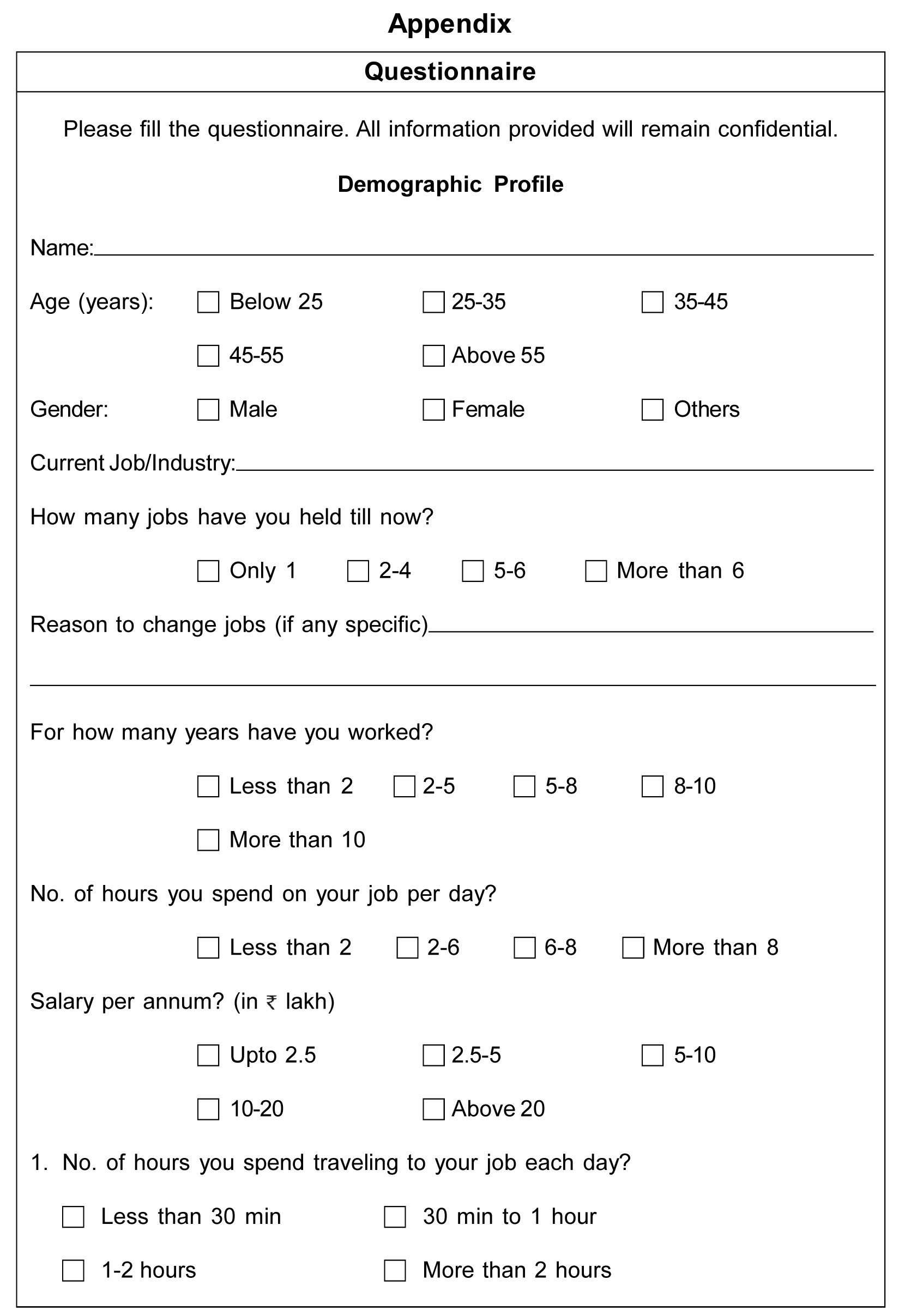
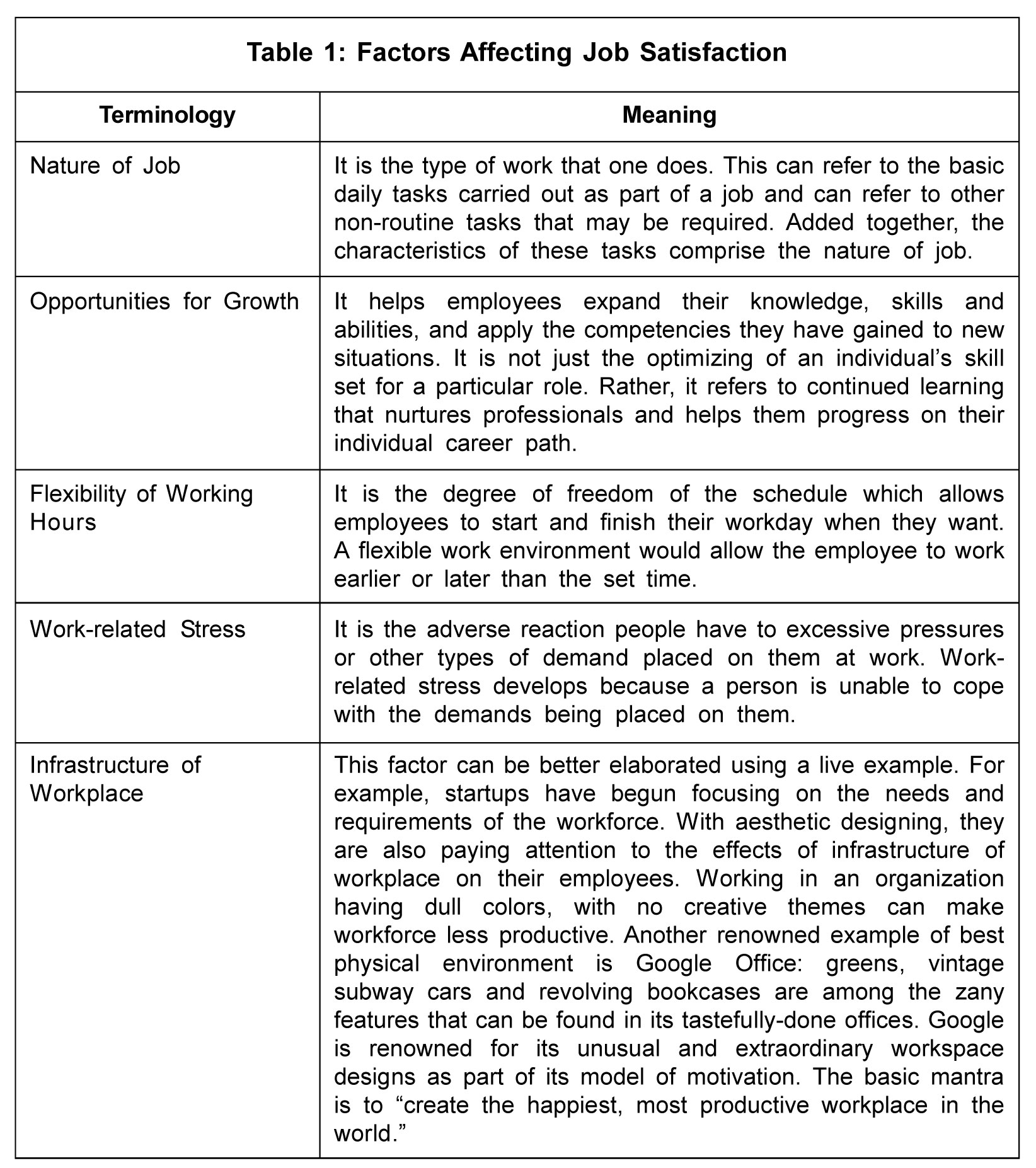
This study was conducted over a year, spanning from August 2019 to July 2020. The study examines the level of and factors determining job satisfaction. The data for this study was collected through convenience sampling, where respondents were selected based on ease of access and proximity. This method was chosen due to its practicality and ability to efficiently reach the target population. The study encompassed diverse age groups, genders, industries of work, and income backgrounds. By selecting this specific group, the study aimed to understand the job satisfaction levels and related factors prevalent among the workforce. By considering respondents from various backgrounds, the study sought to achieve a comprehensive representation of the broader working-class population. The primary data collection instrument utilized for this study was a well-structured questionnaire (see Appendix), framed keeping the factors mentioned in Objective section.
To accommodate different preferences, the questionnaires were made available in both digital and hard copy formats. Explanation and reasons for study, procedure of maintaining confidentiality and detailed instructions on how to complete the questionnaire were made available to all the respondents. The authors used self-administrative survey methods to eliminate the errors caused by the subjectivity of the interviews.
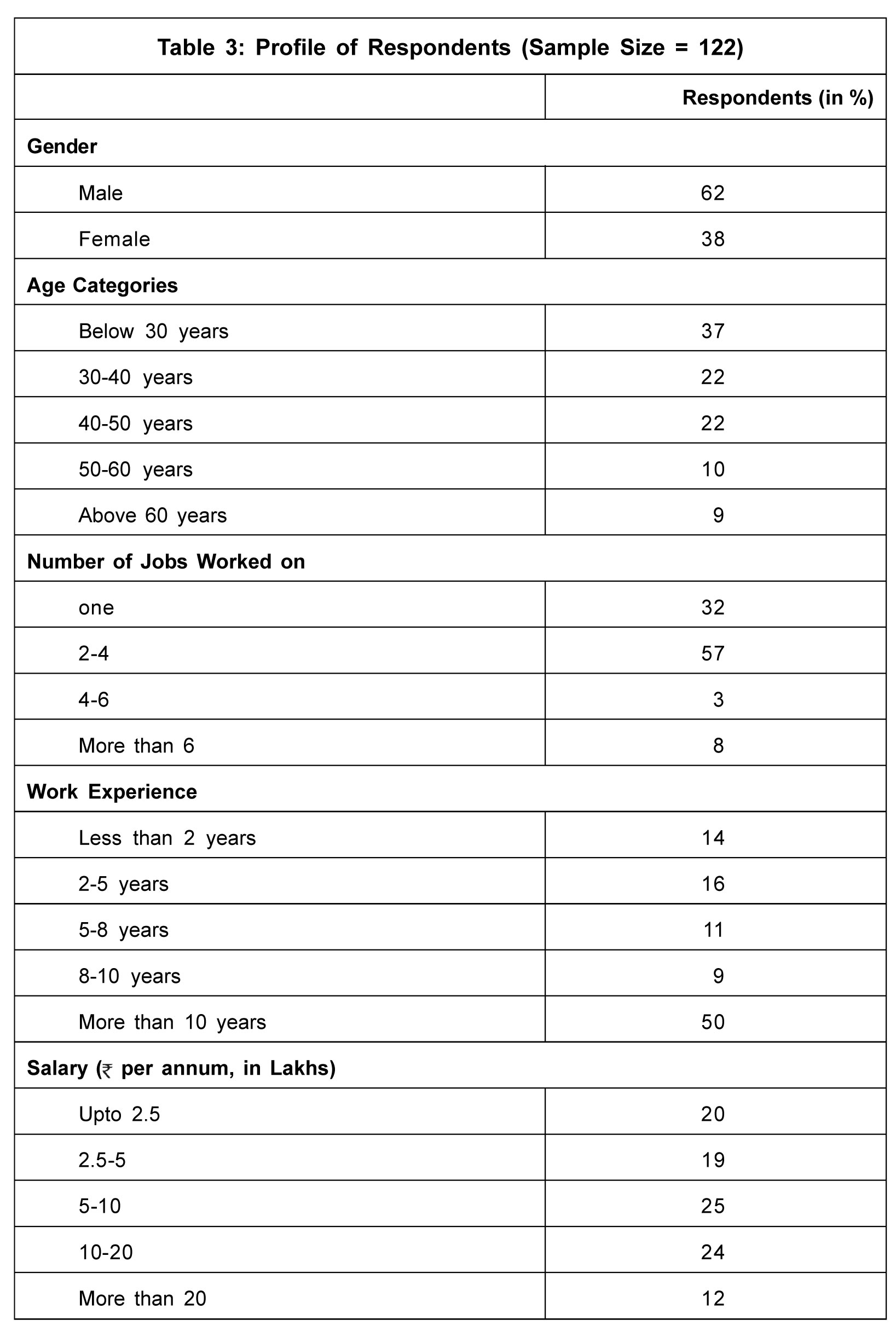
The final sample size consisted of 122 respondents, with 76 males and 46 females, ensuring comprehensive representation. By utilizing the aforesaid sampling and data collection techniques, this study provides valuable insights into job satisfaction among Indian employees, benefitting organizations and policymakers seeking to enhance their wellbeing and productivity. Our population is well diversified across all categories of age, gender, industry, and number of hours spent on job, and includes all possible income backgrounds. The study encompasses individuals from various professional backgrounds; however, the predominant proportion of our sample data originates from the field of education, sales and marketing, accounting, and service industry.
Opatha's Analysis/Dimensions of Job Satisfaction
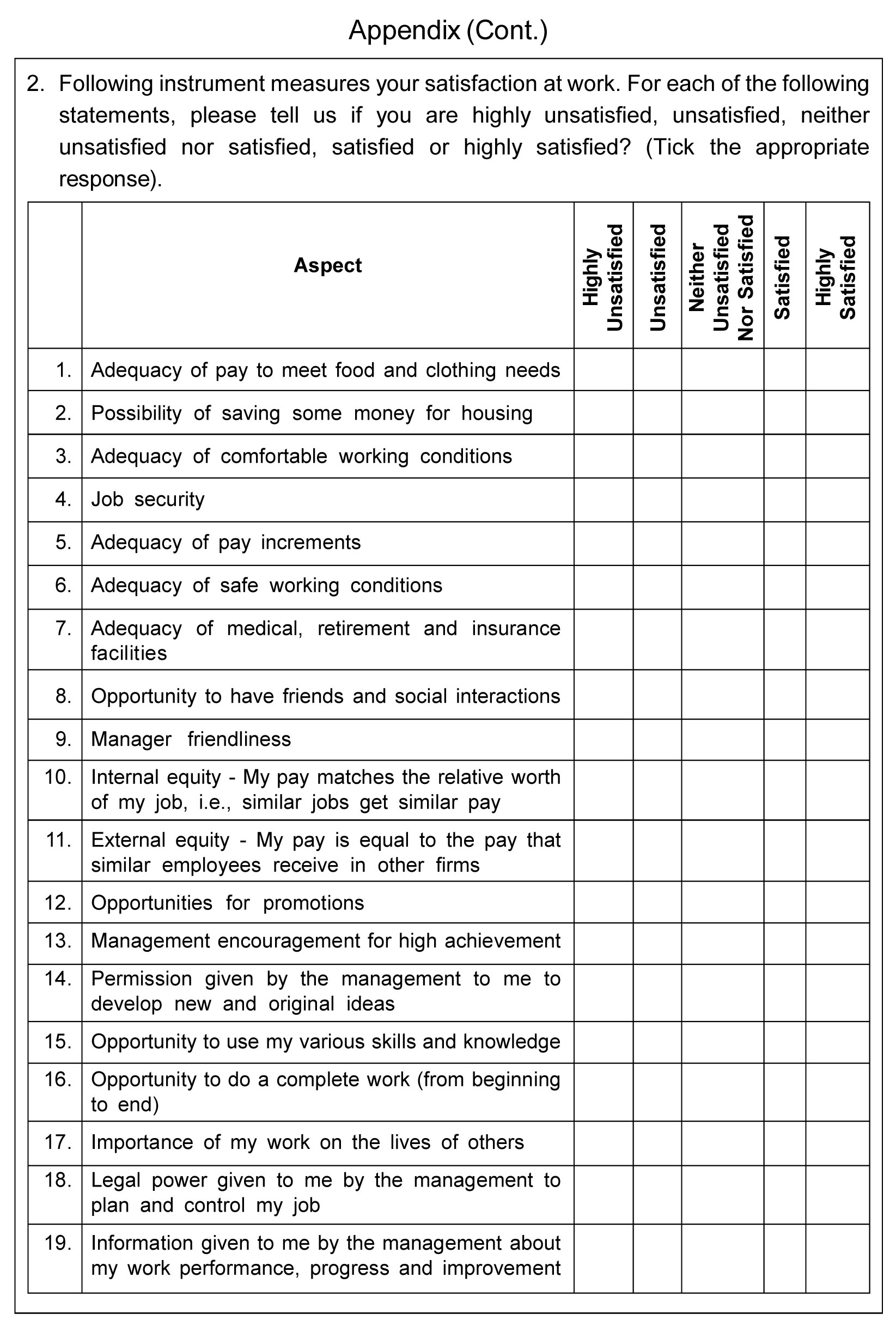
In order to derive which dimension of job satisfaction is most important and least considered at the workplace, the framework used by Opatha (2016) was taken
(Table 2). The respondents were asked to mark their preferences for the 19 statements that measured the most important and least important dimension of job satisfaction prevalent at their workplace. The statements were taken on a Likert satisfaction scale, which indicates how much satisfied they are with each of the following aspects of work. These statements helped measure a person's:
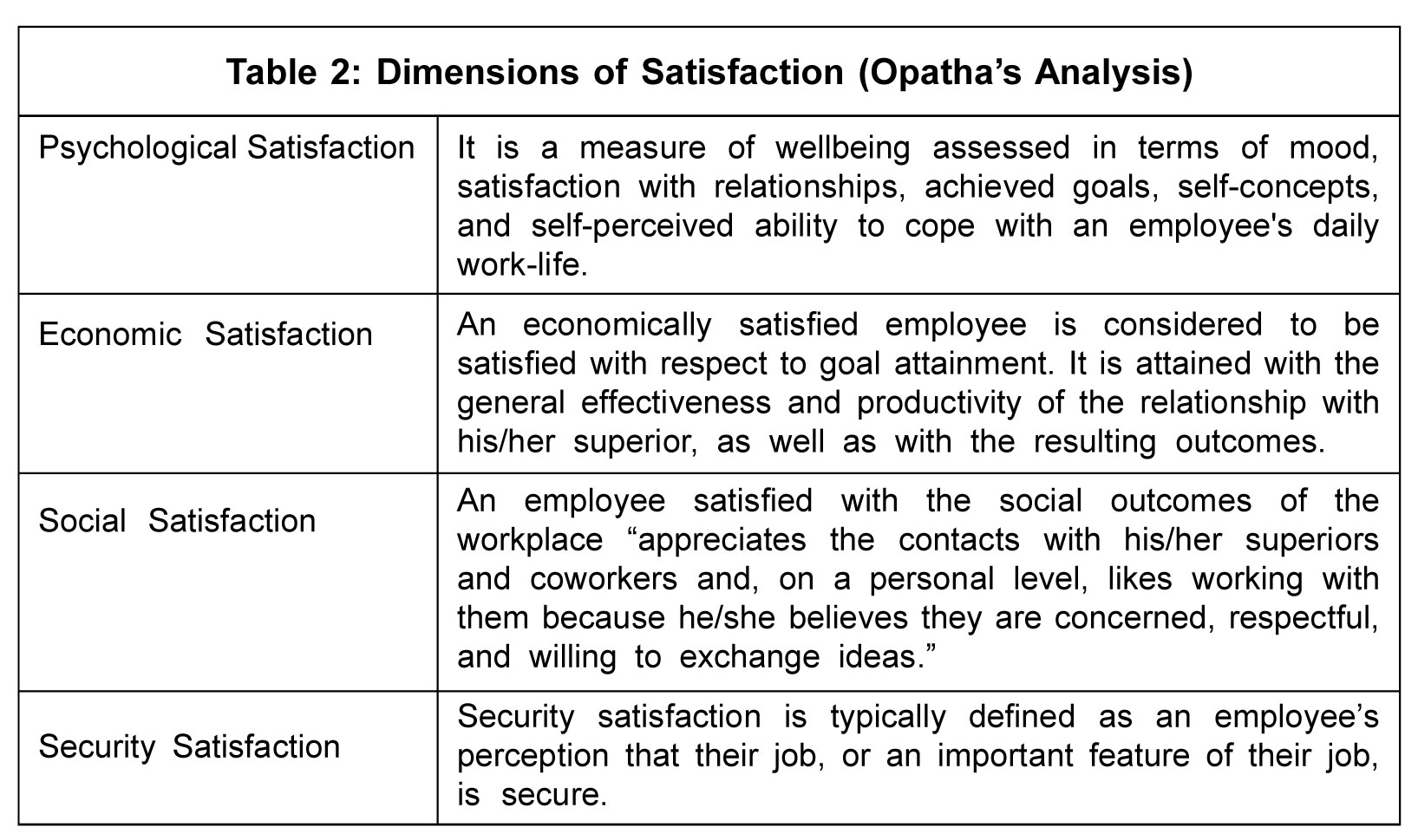
- Psychological Satisfaction
- Economic Satisfaction
- Social Satisfaction
- Security Satisfaction
Construction of the Scales
A variety of scales were used in designing the questionnaire. This section briefly discusses their creation and relevance.
Likert Scale is a non-comparative scale and it requires the respondents to indicate their degree of satisfaction with each of the statements given. The respondent is asked to choose an option from highly satisfied to highly unsatisfied for 19 statements pertaining to job satisfaction. The satisfaction quotient can then be calculated by allotting points to the 5 options: Highly Satisfied (5), Satisfied (4), Neither Satisfied nor Unsatisfied (3), Unsatisfied (2), Highly Unsatisfied (1). The 19 statements were carefully constructed after analyzing multiple literature reviews. Based on those reviews, the determinants that play a major role in calculating one's job satisfaction were extracted.
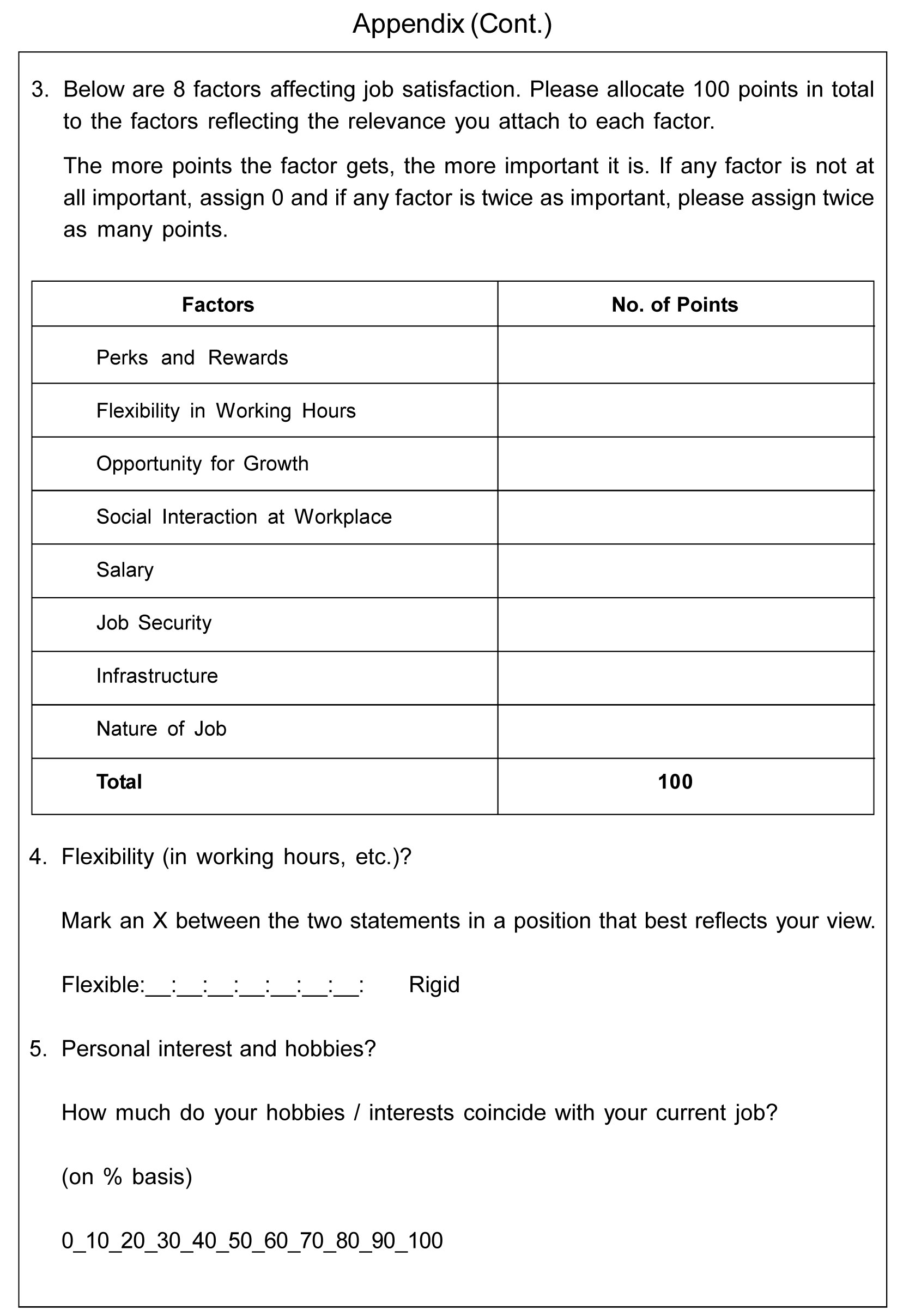
Constant Sum Scale requires the respondent to divide a given number of points, here 100, among a number of attributes based on how much they value it. The more points a factor gets, the more important is its contribution.
Eight factors were ascertained to be highly relevant to an individual's job satisfaction. The respondents had to allocate 100 points amongst the eight factors that were associated with job satisfaction. This helped conclude which factor is the most and the least preferred amongst the working class.
The factors were as follows:
- Nature of job
- Salary
- Social Interaction
- Job Security
- Infrastructure
- Perks and Rewards
- Opportunity for Growth
- Flexibility of Working Hours
Semantic Differential Scale was used to determine the flexibility in working hours experienced by respondents.
Example: Flexible: _: _: _: _: _: Rigid.
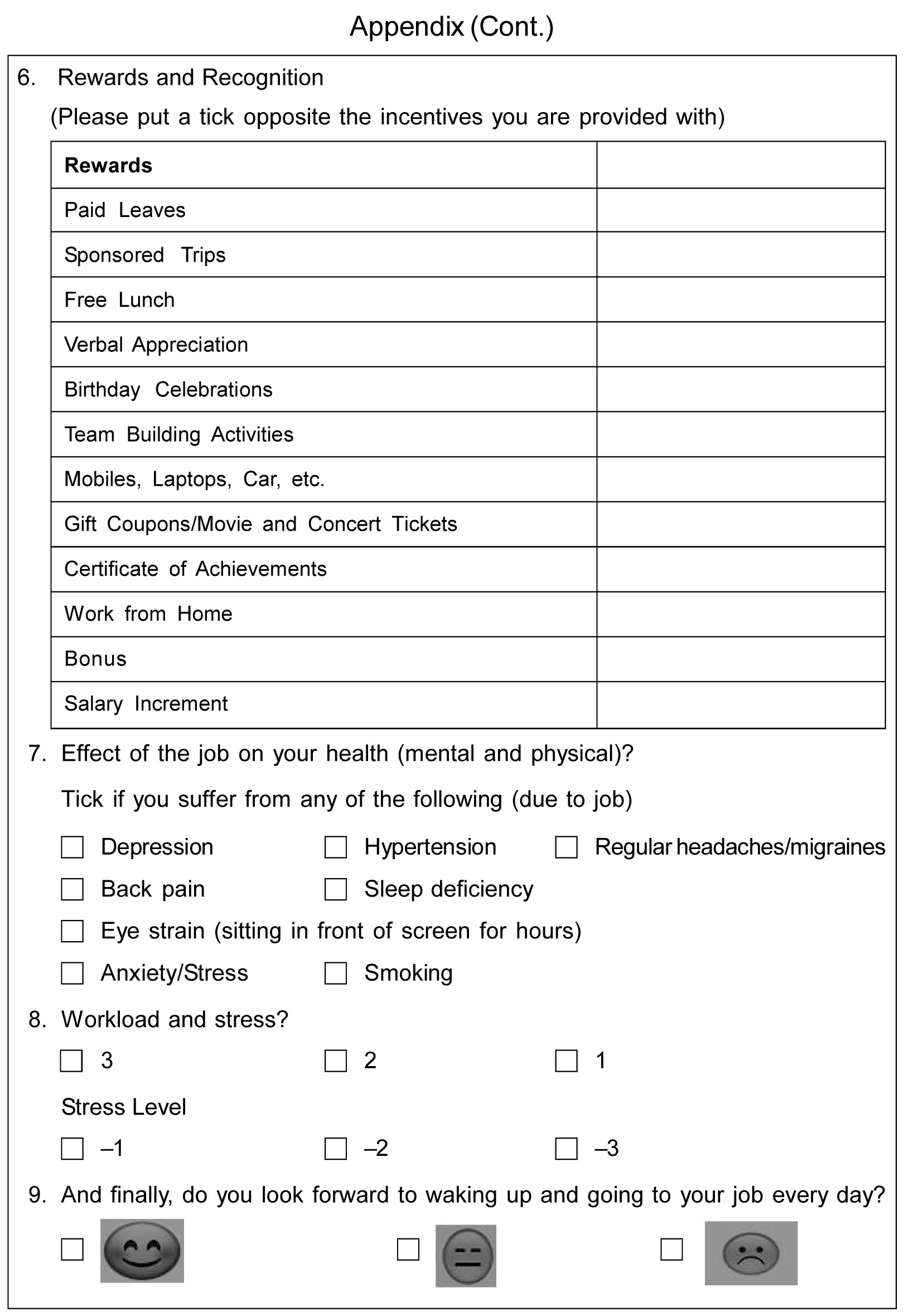
Staple Scale was used where the positive side represents the presence and intensity of the stress level, while the negative side signifies the absence of the stress experienced at the job.
Example: 3 2 1 Stress level -1 -2 -3.
Picture Labels were also used to make the questionnaire more attractive; it helped the respondents understand the categories and distinguish between them.
Results and Discussion
The data was analyzed with descriptive statistics and Opatha's framework, followed by cross-tabulation, t tests and chi-square tests of independence. This allowed the authors to make meaningful comparisons to derive insights into the nature of job satisfaction for the Indian workforce.
The profile of the respondents (Table 3) indicates an unbalanced dataset in respect of gender. In terms of age, young working professionals below the age of 30 were the most represented category. In today's time, job switching for better opportunities is the norm and is reflected in our sample. 57% of our respondents had worked on 2-4 jobs. Also, most respondents were earning 5-10 lakh and 10-20 lakh per annum, which is a high income category by Indian standard of living. Half of the sample population lived within one hour commuting distance to their workplace, and the other half spent more than an hour daily commuting to their workplace.
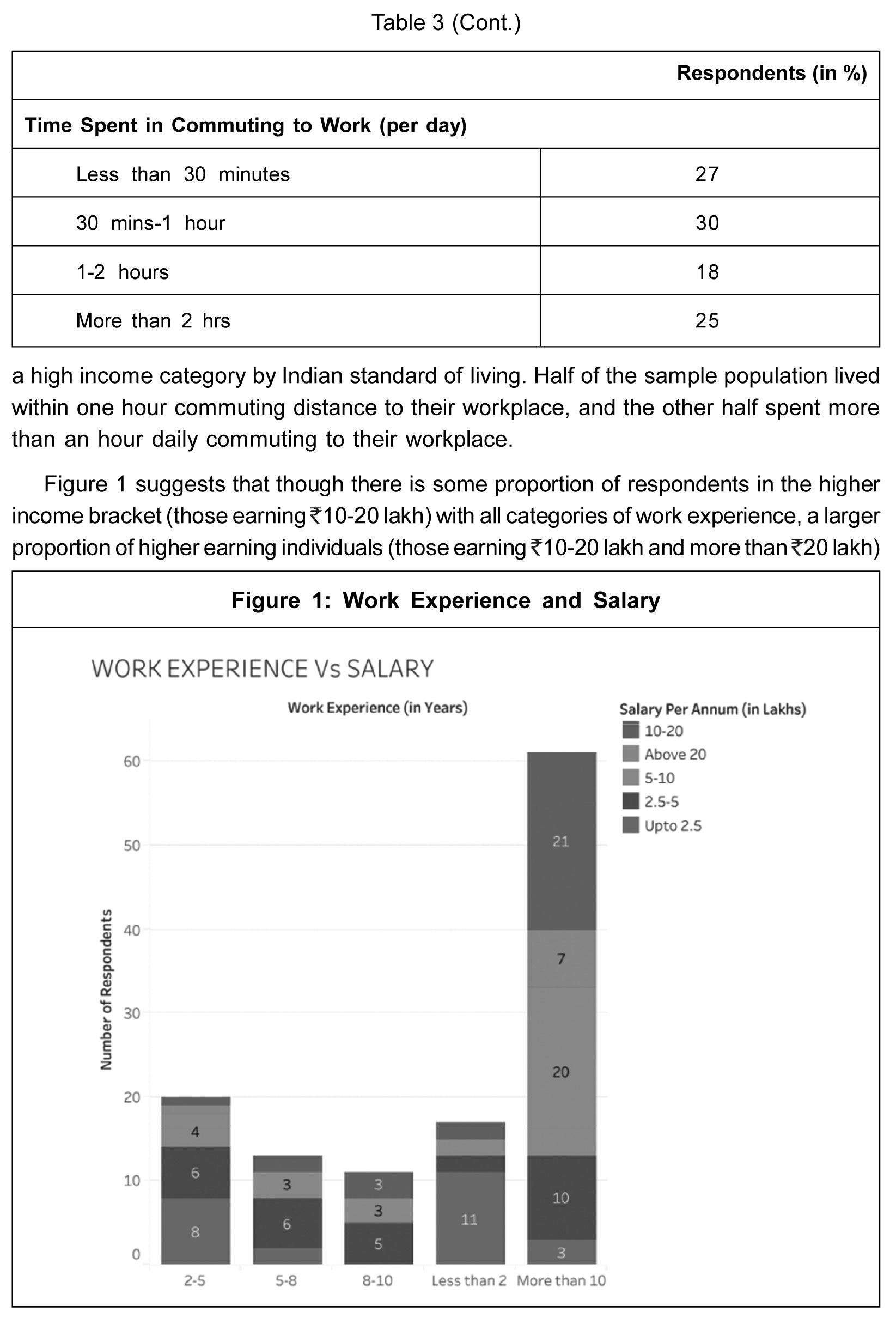
are found to have worked for more than 10 years. This figure clearly indicates a positive
association between experience and salary per annum for the sample studied.
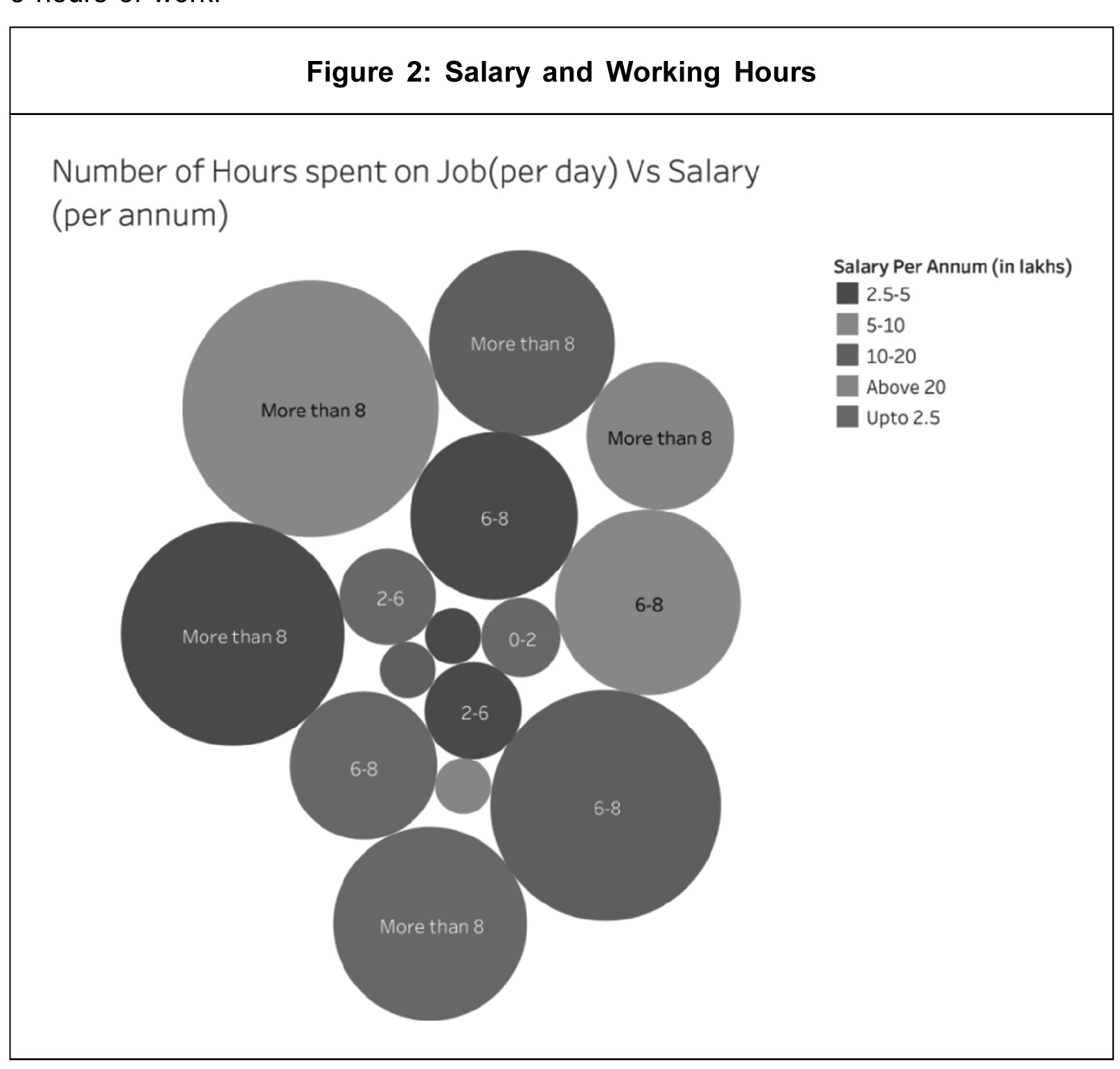
Figure 2 indicates a relation between number of hours worked per day and salary. A larger proportion of individuals with higher salaries seem to be working for 6-8 and more than 8 hours a day. The number of respondents is indicated by the radius of the circles. However, same is also true for people in the lowest income bracket. A substantial percentage of individuals earning up to 2.5 lakh per annum are also putting in more than 8 hours of work.
Relationship Among Variables Studied
Further analysis of the data shows that switching jobs results in lower job satisfaction (Table 4). People who have worked on only one and 2-4 jobs have a higher job satisfaction than compared to people who frequently change their job. On an average, people with less than four jobs fall under the category of high satisfaction. This shows that switching from one job to another frequently results in lower job satisfaction.
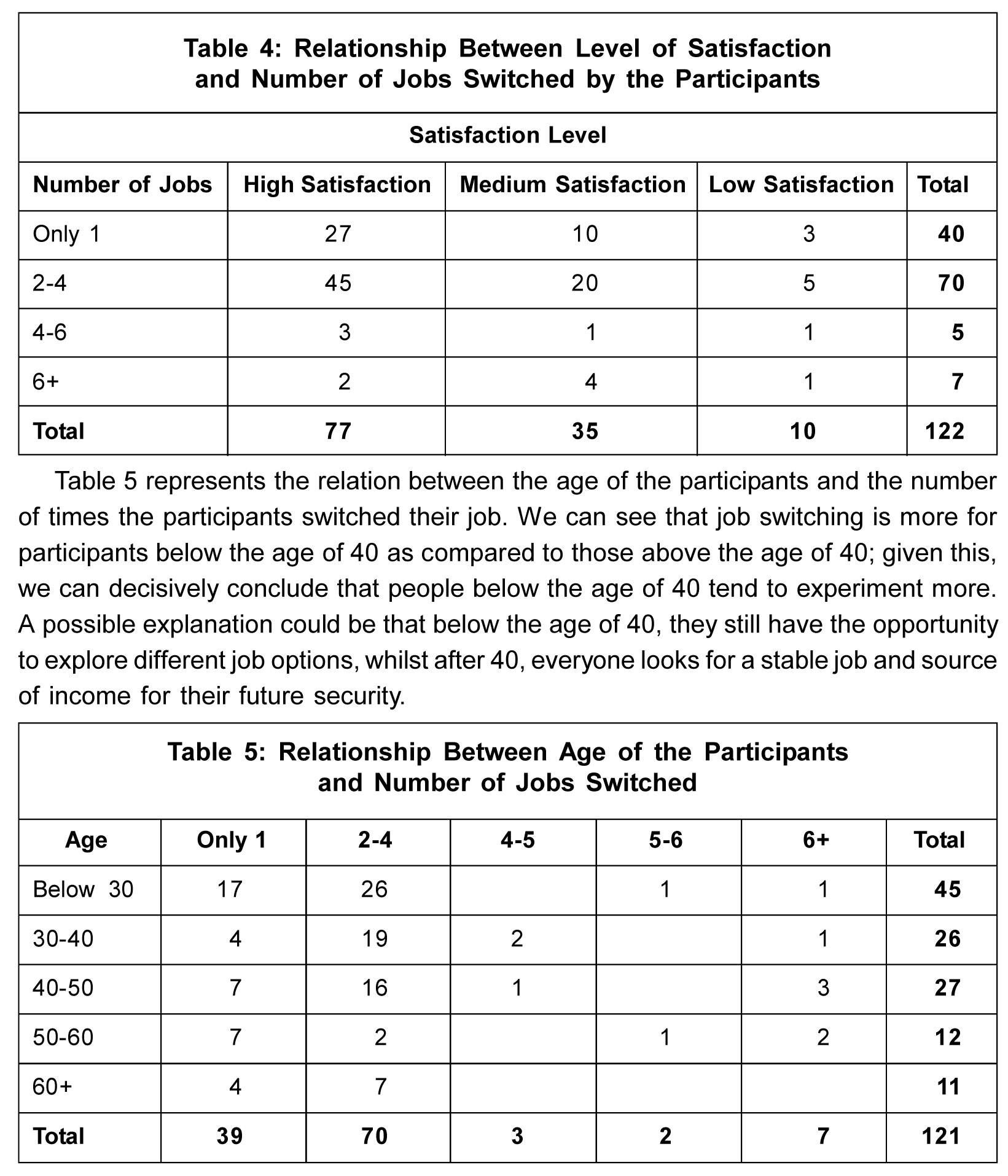
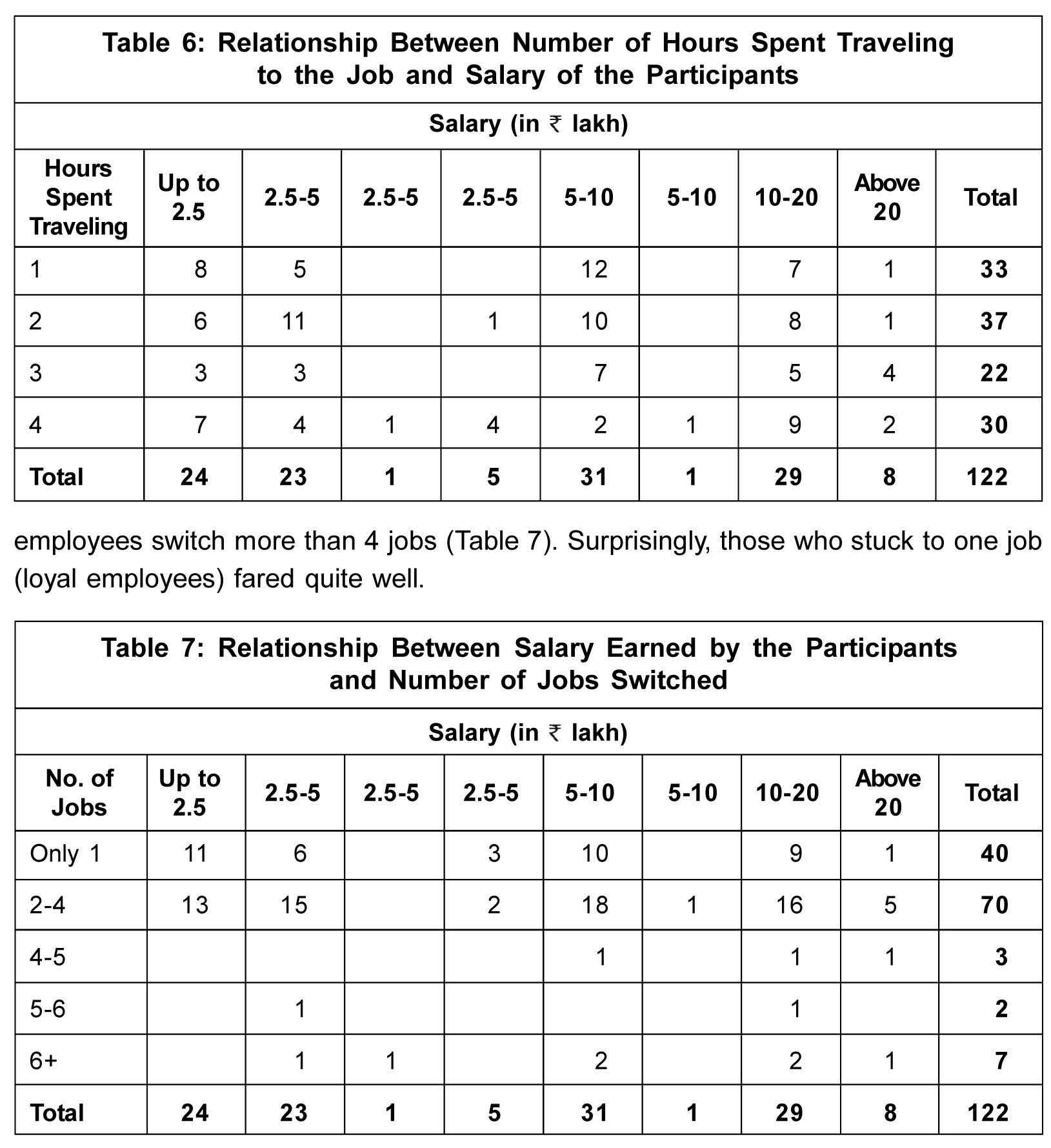
Table 6 represents the relationship between the hours spent on traveling to the job and salaries earned per annum. Analyzing travel time with salary, people with higher salaries are willing to spend more time traveling to their jobs and vice versa. This is possibly because the higher pay allows them to live at posh locations which may be further away from the workplace, effectively trading time spent in traveling for a higher living standard.
Table 7 represents the number of jobs switched by the respondents and their current salary brackets. Analyzing salary with job switching clearly shows that earnings fall if
Using Opatha's Analysis to Investigate the Different Dimensions
of Job Satisfaction
Table 8 illustrates the distinct categories of satisfaction assessed using Opatha's analysis, encompassing economic, security, social, and psychological dimensions. Our objective in this endeavor was twofold:
Firstly, to ascertain the most prioritized dimension of job satisfaction in individuals' professional lives. For this, we presented the respondents with 19 statements that talked about the different aspects that represent job satisfaction in their daily lives. These 19 statements represented the 4 dimensions of job satisfaction coined by Opatha, namely, economic represented by the first 3 statements, security represented by the next 4 statements, social represented by the following 2, and finally psychological satisfaction measured by the rest of the statements.
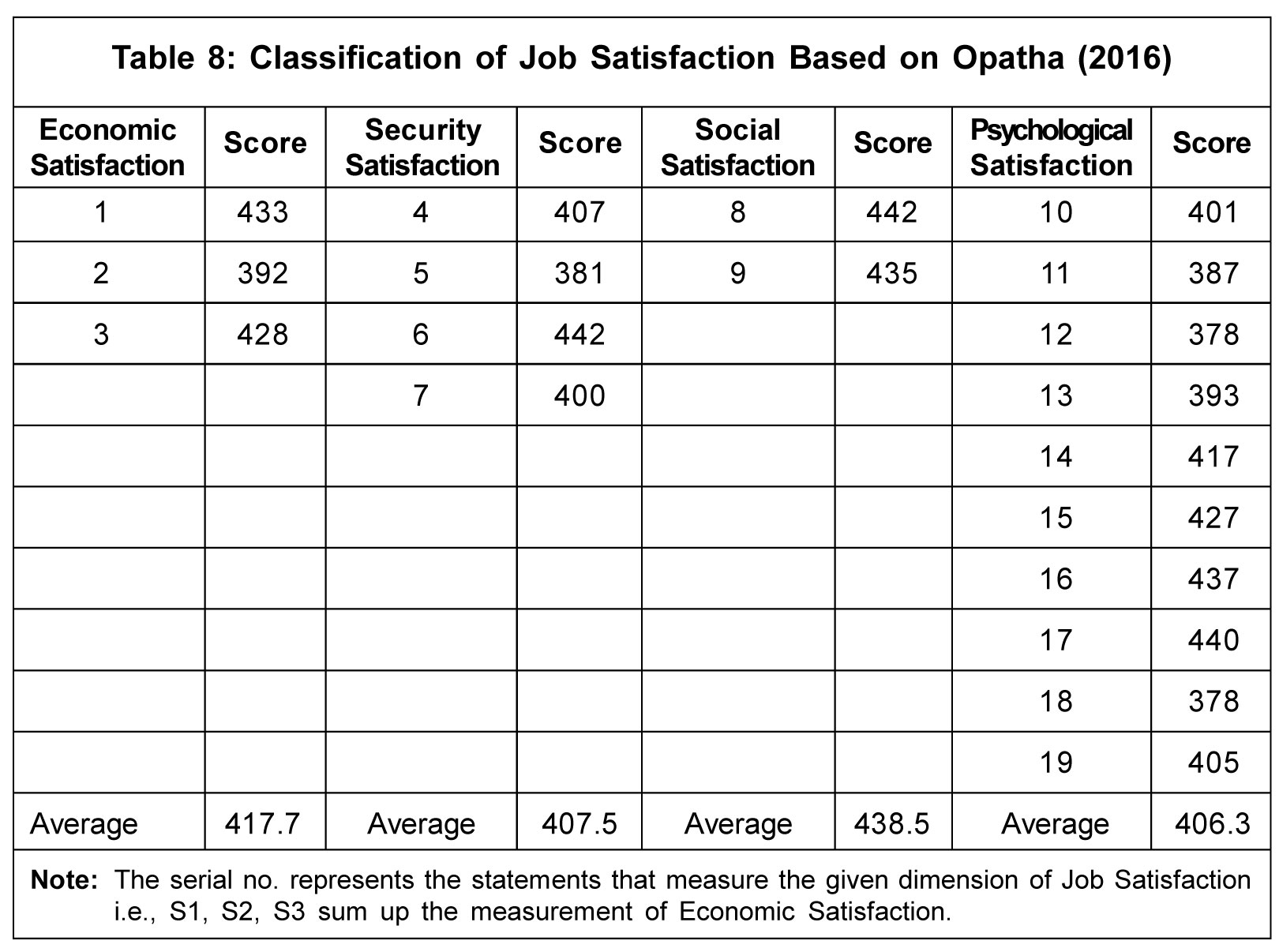
Our analysis indicates that social satisfaction ranks the highest and psychological satisfaction the least endorsed category.
Secondly, our approach involved a comprehensive evaluation of individuals' perceived satisfaction in their work context. To accomplish this, we assigned a high value to factors endorsed as satisfactory by respondents, while assigning lower value to those identified as unsatisfactory. This cumulative scoring method enabled us to find an overall satisfaction score for each participant. By averaging these scores across respondents, we stratified the outcomes into three discrete categories reflecting varying levels of job satisfaction: "Satisfied," "Neither Satisfied Nor Dissatisfied," and "Unsatisfied."
The results of this methodology revealed a distinguishable pattern: a majority of surveyed individuals find themselves satisfied with the daily work environment, as the job fulfills their essential life needs, even though it adversely affects their mental wellbeing and overall quality of life.
Based on the survey's outcomes and our evaluation, we note that 63.11% of respondents report satisfaction, 28.68% fall into the category of ambivalence, expressing neither satisfaction nor dissatisfaction, and 8.19% assert dissatisfaction with their current job circumstances.
Statistical Tests to Test Significant Relationship Between Variables
Out of the 122 respondents, it was observed that 77 responses (25 females, 52 males) were satisfied, 35 responses (15 females, 20 males) were neither satisfied nor unsatisfied, and 10 responses (6 females, 4 males) were unsatisfied with their current jobs. The average satisfaction derived by females was 61 and males 66.01. A t-test to check whether there is significant difference between satisfaction level of males and females was conducted (Table 9). The p value of 0.028 (less than significance level) returned by Levene's test suggests variances are not equal across the two gender categories. Considering unequal variances, the p value of 0.155 (greater than level of significance) returned by t-test for equality of variances suggests equal satisfaction for males and females.
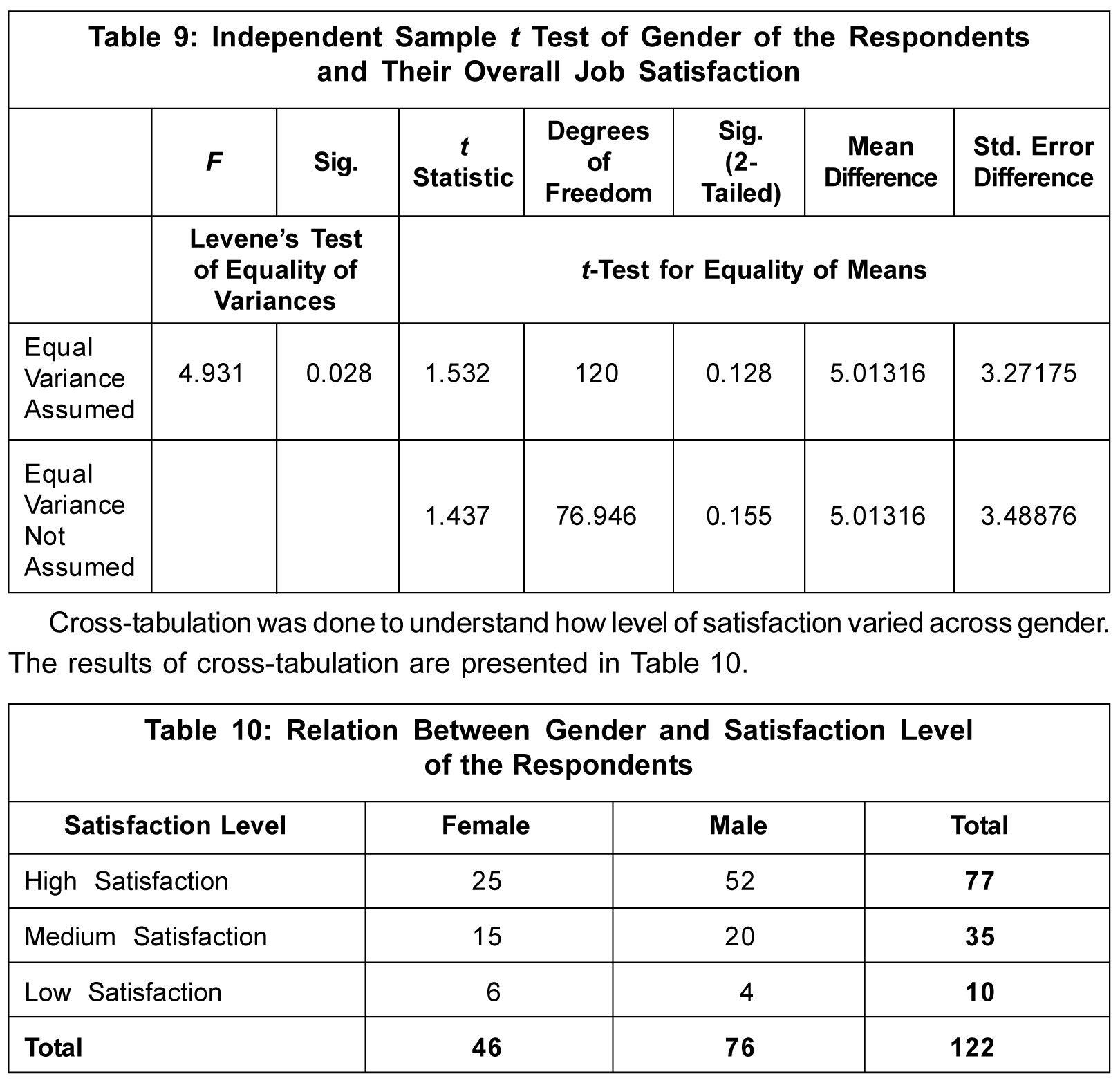
Chi-square test was further conducted to see whether satisfaction level was independent of gender or not. Here, all categories of satisfaction-low, medium and high- were considered with both categories of gender. Since both variables were categorical, chi-square test was best suited. A p value of 0.182 (Table 11) (greater than significance level) signifies that the two variables are independent, that is, job satisfaction is independent of gender.
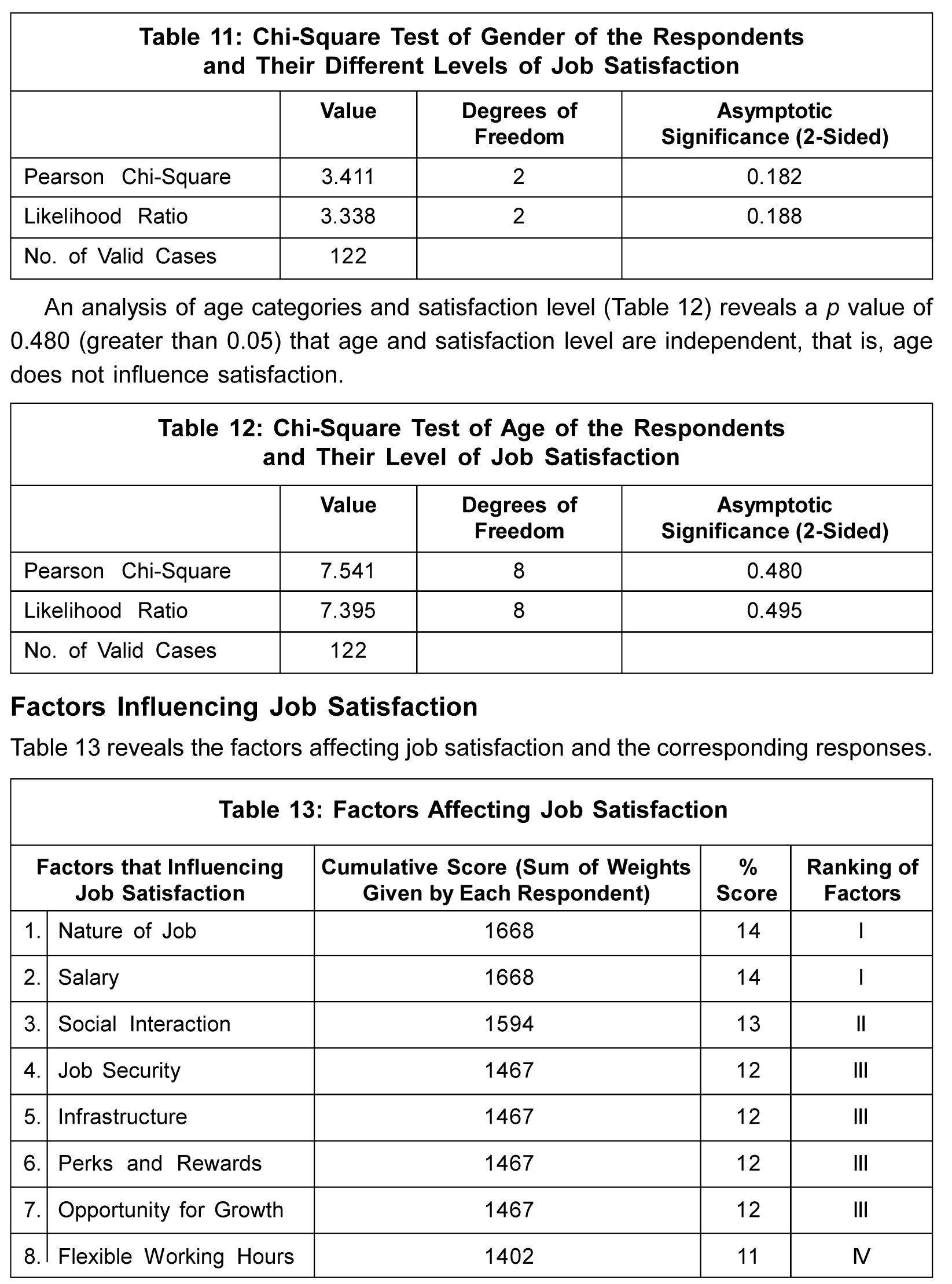
As can be seen, nature of job and salary are the most important factors influencing a person's satisfaction level, however, the difference in ranking are meager.
It is recommended that organizations should improve their policies, bonus, salary increments, overtime pay and work distribution, and make job changes in their organizations for enhanced job satisfaction. The respondents were also given a list of rewards and recognitions generally provided at a workplace; they were asked to mark the ones that they received at their workplace. It was found that people who received a greater number of rewards had a relatively higher job satisfaction quotient. Simple correlation was performed, and it was observed that there is a weak but positive correlation between the number of rewards and recognitions received by a person and his level of satisfaction.
Safety and Health (SH) function plays a crucial role in organizational success as it has direct and indirect effects on job satisfaction of employees (Opatha, 2009). A weak negative correlation was observed between the number of work-related health issues faced by an individual and his level of satisfaction.
It was observed, surprisingly, that even though people were suffering from several health problems, had less flexibility of working hours, and high workplace stress, they were still willing to come to their job every morning. This may not suggest satisfaction, and could be due to compulsion to earn a livelihood.
Conclusion
The main purpose of the study was to measure and understand various aspects of job satisfaction and the factors affecting it. The results show that in a diversified sample of 122 people, more than half are satisfied with their respective jobs. The highest rated satisfaction is social satisfaction, while the lowest psychological satisfaction. It is further observed that nature of job and salary are the most important factors influencing a person's satisfaction level. Further, we see that job-switching is more prevalent amongst the participants below the age of 40, as compared to those above 40, but it is found that age and satisfaction level are independent as age does not influence satisfaction. Further, the analysis shows that switching jobs results in lower job satisfaction. Carrington and Fallick (2014) reviewed theories of costly job displacement and how switching jobs can be costlier in the longer run, further supporting the current survey findings that earnings start to fall as employees switch jobs. Therefore, contrary to popular belief, switching jobs more frequently results in lower job satisfaction. Moreover, analyzing salary with job switching clearly shows that earnings fall if employees switch more than four jobs. Surprisingly, loyal employees (those who stuck to one job) fared quite well.
It was also observed that a majority of survey respondents were working more than their required office hours and their work-life balance was affected. Albertsen et al. (2008) cite strong evidence that non-standard work hours had a negative influence on work-life balance. Further, 'long working hours' has been associated with mental health issues across a number of occupational groups. LaMontagne et al. (2012) assessed long working hours as a dichotomous variable. Post-Covid research has suggested that work-life balance has emerged as an important determinant of job satisfaction. The WFH culture is seen to have a positive influence on a person's satisfaction and hence performance. It remains to be seen if that shall continue when employees are given a permanent or even a longer-term option to WFH. However, irrespective of this factor, overall, the study respondents seemed quite satisfied with their working conditions. Further, it is seen that people with higher salaries are willing to spend more time traveling to their jobs.
Overall, the authors conclude that the Indian employees consider themselves satisfied as long as they have a job, considering the large population and even higher competition in the job market. Nearly one in every four graduate is looking for a job, says the Center for Monitoring Indian Economy (CMIE), an independent think tank (Bajaj and Vasudev, 2020). India's unemployment rate was more than 7% in 2020 and for most of 2021 (Biswas, 2022). People are, therefore, willing to come to work every day regardless of rigidity in working hours, adverse health effects, less job security, low number of rewards and recognitions provided as well as a lack of correlation between their job and personal interests/hobbies, etc. This can be due to the reason that people depend on their jobs and are not willing to lose their jobs even if it is adversely affecting them. Interestingly, this perspective seems widely shared, yet remarkably, no previous study has arrived at this precise conclusion. It is possible that prior research delved into technical intricacies rather than observing this apparent phenomenon at face value.
Limitations and Future Scope: The first limitation of the study is that the sample size was quite small. Second, people were not very well aware of the measures for job satisfaction. Third, the respondents may not have been fully honest because they were under supervision. And finally, employees in general are not completely honest about their salaries and generally earn more than they claim. Besides, many respondents were hesitant to share their true opinions.
The future direction of research could involve identification of industry-specific determinants of job satisfaction and their measurement. This will help frame policies for employee motivation and retention across different industries in India. There is a possibility of employees working in some industries facing greater job dissatisfaction as compared to their counterparts working in other industries. Hence, industry-specific policies might help. Also, it would be interesting to note how job satisfaction varies for employees working in different regions of the country.
References
- Albertsen K, Grimsmo A, Kauppinen K et al. (2008), "Work Hours and Work Life Balance", Scandinavian Journal of Work, Environment & Health, Vol. 34, No. 5, p. 14.
- Ali B J and Anwar G (2021), "An Empirical Study of Employees' Motivation and Its Influence on Job Satisfaction", International Journal of Engineering, Business and Management, Vol. 5, No. 2, pp. 21-30. https://doi.org/10.22161/ijebm.5.2.3
- Biswas S (2022), "India's Jobs Crisis is More Serious Than It Seems", BBC, January 7, 2022, https://www.bbc.com/news/world-asia-india-59870297
- Bajaj S and Vasudev A (2020), "Nearly 1 in Every 4 Graduates Looking for a Job", NDTV, January 20, https://www.ndtv.com/business/nearly-1-in-every-4-graduates-looking-for-a-job-says-report-2167035
- Carrington W and Fallick B (2014), "Why Do Earnings Fall with Job Displacement?", SSRN Electronic Journal, 10.2139/ssrn.2456813
- Daud N (2016), "Determinants of Job Satisfaction: How Satisfied are the New Generation Employees in Malaysia,," Procedia - Social and Behavioral Sciences, Vol. 219, pp. 208-213, https://doi.org/10.1016/j.sbspro.2016.05.007
- Fisher C D (2010), "Happiness at Work", International Journal of Management Reviews, Vol. 12, No. 4, pp. 384-412.
- Freeman R B (1977), "Job Satisfaction as an Economic Variable", National Bureau of Economic Research, Working Paper No. w0225.
- Huang W (2019), "Job Training Satisfaction, Job Satisfaction, and Job Performance", J Fahed-Sreih (Ed.), Career Development and Job Satisfaction, IntechOpen, London. 10.5772/intechopen.89117
- Irawanto D W, Khusnul R N and Kenny R (2021), "Work from Home: Measuring Satisfaction Between Work-Life Balance and Work Stress During the Covid-19 Pandemic in Indonesia", Economies, Vol. 9, No. 3, p. 96. https:// doi.org/10.3390/economies9030096
- Javed M, Balouch R and Hassan F (2014), "Determinants of Job Satisfaction and Its Impact on Employee Performance and Turnover Intentions," International Journal of Learning & Development, Vol. 4, No. 2, pp. 120-140, Macrothink Institute.
- Kasemsap K (2017), "The Significance of Job Satisfaction in Modern Organizations", in Handbook of Research on Human Factors in Contemporary Workforce Development.
- Kohli A and Sharma A (2018), "The Critical Dimensions of Job Satisfaction of Academicians: An Empirical Analysis", The IUP Journal of Organizational Behavior, Vol. 17, No. 4, October, pp. 21-35.
- Koo B, Yu J, Chua B L, Lee S and Han H (2020), "Relationships Among Emotional and Material Rewards, Job Satisfaction, Burnout, Affective Commitment, Job Performance, and Turnover Intention in the Hotel Industry", Journal of Quality Assurance in Hospitality & Tourism, Vol. 21, No.4, pp. 371-401, DOI: 10.1080/1528008X.2019.1663572
- LaMontagne A D, and Milner A and Smith P (2012), "Working Hours and Mental Health in Australia: Evidence from an Australian Population-Based Cohort", Occupational and Environmental Medicine, Vol. 72, No. 8, pp.573-579.
- Lee S Y and Brand J L (2005), "Effects of Control Over Office Workspace on Perceptions of the Work Environment and Work Outcomes", Journal of Environmental Psychology, Vol. 25, pp. 323-333.
- Mira M S, Choong Y V and Thim C K (2019), "The Effect of HRM Practices and Employees' Job Satisfaction on Employee Performance", Management Science Letters, Vol. 9, No. 6, pp. 771-786.
- Nemteanu M S, Dinu V and Dabija D C (2021), "Job Insecurity, Job Instability, and Job Satisfaction in the Context of the Covid-19 Pandemic," Journal of Competitiveness, Vol. 13, No. 2, pp. 65-82. https://doi.org/10.7441/ joc.2021.02.04
- Opatha H H D N P (2009), Human Resource Management, Department of HRM, University of Sri Jayewardenepura. ISBN 978-955-95885-9-7
- Opatha H H D N P (2016), "Labour-Management Relations and Worker Satisfaction: An Empirical Study of Seven Manufacturing Firms in Sri Lanka", Proceedings of Annual Research Sessions of Faculty of Graduate Studies, pp. 343-369.
- Ramawickrama J, Opatha H H D N P and Pushpakumari M D (2017), "Quality of Work Life, Job Satisfaction and the Facets of the Relationship Between the Two Constructs", International Business Research, Vol. 10, No. 4, pp. 167-182.
- Riyanto S, Endri and Herlisha N (2021), "Effect of Work Motivation and Job Satisfaction on Employee Performance: Mediating Role of Employee Engagement," Problems and Perspectives in Management, Vol. 19, No. 3, pp. 162-174. doi:10.21511/ppm.19(3).2021.14
- Raziq A and Maulabakhsh R (2015), "The Impact of the Working Environment on Job Satisfaction", Procedia Economics and Finance, Vol. 23, 10.1016/S2212-5671(15)00524-9.
- Rowden R W and Conine C T (2005), "The Impact of Workplace Learning on Job Satisfaction in Small US Commercial Banks", Journal of Workplace Learning, Vol. 17, No. 4, pp. 215-230. https://doi.org/10.1108/13665620510597176
- Schmidt S (2007), "The Relationship Between Satisfaction with Workplace Training and Overall Job Satisfaction", Human Resource Development Quarterly, Vol. 18, No. 4, pp. 481-498. 10.1002/hrdq.1216
- Seo Y, Ko J and Price J L (2004), "The Determinants of Job Satisfaction Among Hospital Nurses: A Model Estimation in Korea", International Journal of Nursing Studies, Vol. 41, No. 4, pp. 437-446, https://doi.org/10.1016/j.ijnurstu.2003.11.003.
- Spector P E (1997), Job Satisfaction: Application, Assessment, Causes, and Consequences, Sage Publications, DOI: https://doi.org/10.4135/9781452231549
- Subarto S, Solihin D and Qurbani D (2021), "Determinants of Job Satisfaction and Its Implications for the Lecturers Performance", Jurnal Pendidikan Ekonomi Dan Bisnis (JPEB), Vol. 9, No. 2, pp. 163-178. https://doi.org/10.21009/JPEB.009.2.7
- Ting Y (1997), "Determinants of Job Satisfaction of Federal Government Employees", Public Personnel Management, Vol. 26, pp. 313-334. https://doi.org/10.1177/009102609702600302
- Tokuda Y, Hayano K, Ozaki M, Bito S, Yanai H, and Kozumi S (2009), "The Interrelationship Between Working Conditions, Job Satisfaction, and Mental Health among Hospital Physicians in Japan: A Path Analysis", Industrial Health, Vol. 47, pp. 166-172.
- Weiss A (1985), "The Effect of Job Complexity on Job Satisfaction: Evidence from Turnover and Absenteeism", National Bureau of Economic Research, working paper no. w1597.
- Word Bank (2021), International Labor Organization, ILOSTAT Database, June 15.
- Wilczynska A, Batorski D and Sellens J T (2016), "Employment Flexibility and Job Security as Determinants of Job Satisfaction: The Case of Polish Knowledge Workers", Soc Indic Res, Vol. 126, No. 2, pp. 633-656. https://doi.org/10.1007/s11205-015-0909-6
- Yuen K F, Loh H S, Zhou Q and Wong Y D (2018), "Determinants of Job Satisfaction and Performance of Seafarers", Transportation Research Part A: Policy and Practice, Vol. 110, pp. 1-12, https://doi.org/10.1016/j.tra.2018.02.006