| COVER
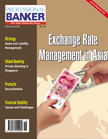
STORY Exchange
Rate Management in Emerging Economies of Asia
- - Katuri Nageswara Rao Emerging
Asian economies keep their domestic currencies undervalued and build up large
forex reserves in the wake of substantial inflows. There are costs of reserve
management besides the danger of rise in asset prices, higher volume of government
expenditure, and most importantly raising global imbalances. It will be in the
interest of East Asia, if the region's major players can put their heads together
and take a common position on the exchange rate issue. ©
2006 IUP . All Rights Reserved
STRATEGY
Asset
and Liability Management
- - SN Ghosal This
article discusses the importance of prudentially managing assets and liabilities
in banks. It is true that banks create both assets and liabilities in their day-to-day
operations, but it is also equally true that management in bank is keener to manage
their assets rather than their liabilities. In fact, for quite some time, bankers
were happy to keep an eye on their asset acquisition and treated the liability
as granted. ©
2006 IUP . All Rights Reserved
GLOBAL
BANKING Italian
Banking Mergers : Usher an Era of Consolidation
- - Krishna Kishore Puranam
The
merger of second and third largest banks in Italy will create one of Europe's
ten biggest banks. It could likely act as a catalyst for further consolidation
in the sector. Banking in Italy has long been too fragmented, gloomy and localized.
Hence, they are costly for consumers, inefficient and poor lenders, and the obstacles
are formidable. They lack scale of economies and competition and there is hardly
any investment in technology. To open an account, one has to go through and fill
out endless forms. According to a survey conducted by consultancy firm, Capgemini,
Italians pay on average around 250 a year as commission. ©
2006 IUP . All Rights Reserved
GLOBAL
BANKING Private
Banking in Singapore Riding on Asian Economic Boom
- - D Satish
The
flourishing class of millionaires in emerging Asian economies offers enormous
opportunities for private banking in the region. Will Singapore, which has congenial
enviroment for the growth of wealth management companies, emulate Switzerland
as the most favorable nation for private banking? Asia's burgeoning class of millionaires
backed by strong economy growth offers a vast market for the world's wealth managers.
Against this milieu, private banking in Asia is growing faster than any other
region in the world. ©
2006 IUP . All Rights Reserved
PRODUCTS
Challenges
before Securitization
- - Rajendra Singh
Global
credit rating and indices firm, Standard & Poor's (S&P) has asked Indian and Asian
economies, which are sitting pretty with high levels of savings, to wake up to
the huge opportunities in securitization. ©
2006 IUP . All Rights Reserved
FINANCIAL
STABILITY Financial
Stability : Issues and Challenges
- - Pramod Kumar Gupta
Growing interlinkage among financial markets across the world is giving birth
to many risks. These risks can be tackled only by higher level of cooperation
among the regulators of various countries. Best practices in risk management,
which emerge from Basel II, are the first step in the right direction. Still,
massive information flow among regulators is required to make the financial system
stable. ©
2006 IUP . All Rights Reserved
SCENARIO
Mumbai:
An International Financial Hub? Mumbai: An International Financial Hub?
- - S Bhaskaran Mumbai,
the financial and commercial capital of India, is poised to become an international
financial hub. In 1661, Catherine of Braganza gave away islands of Bombay to King
Charles II of England. The British East India received Bombay from the Crown in
1668 and founded the modern city of Bombay for the promotion of trade between
India and British colonies. George Oxenden was the first Governor of Bombay. Consequent
to the mismanaged affairs of the East India Company, in 1857, Bombay reverted
to the British Crown. Export of cotton became a major activity from Bombay for
the colonial economy to feed the textile mills in Great Britain.
©
2006 IUP . All Rights Reserved
CORPORATE
GOVERNANCE Dimensions
of Corporate Governance in Indian Banking
- - Ajaya Kumar Mohanty Reforms
in the Indian banking sector call for strong corporate governance to enhance the
stakeholders' value. Renowned Economist, Milton Friedman, while defining corporate
governance, states "The purpose of Corporate governance is to conduct the business
in accordance with owner or shareholders' desires, which generally will be to
make as much money as possible, while conforming to the basic rules of the society
embodied in law and local customs. ©
2006 IUP . All Rights Reserved
TECHNOLOGY
Technology
Transformation at Punjab National Bank
- - Reena Poddar Punjab
National Bank (PNB), one of the oldest banks in India, is fast catching up with
changes in the banking technology. The Indian Banking sector has undergone a sea
change during the last decade with the accomplishment of enduring transformations
with respect to technology. Over the years, banks have become more efficient in
providing customer satisfaction through technology advancements. Punjab National
Bank (PNB) is no exception to this; their technology-driven business model is
fast catching up with the changes in the banking industry. ©
2006 IUP . All Rights Reserved
CREDIT
MANAGEMENT Easy
Bank Credit to Farmers : The Panacea for All Problems?
- - Reena Ray Banks
can play a more effective role in empowering farmers and rural India.The issue
of `farmers' suicide', has created furor in the Monsoon Session, 2006 of Parliament.
This brouhaha is not new, because suicide is being committed by farmers unfortunately
for quite long time in one part of the country or the other and it is mainly driven
by debt. As per a survey of 40 farmers who committed suicide in Andhra Pradesh,
each farmer on an average owed Rs. 1,06,000 - roughly five to ten times of their
normal annual income. ©
2006 IUP . All Rights Reserved
BOOK
REVIEW European
Retail Banks : An Endangered Species?
- - Andreas R Dombret and Holger J Kern
In order to survive in today's cut-throat competition, retail banks will have
to stop trying to provide all things to all people. They need to develop core
competency by focusing on a certain customer group, on a specific product, on
a certain process, or on a particular value proposition. The authors of this book
discuss some strategies to increase profitability and obtain competitive advantage.
©
2006 IUP . All Rights Reserved |