|
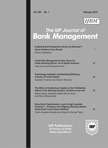
Determinants of Commercial Banks’ Profitability in Botswana: An Empirical Analysis
--M Seemule, Narain Sinha and Tiroyamodimo Ndlovu
The main objectives of the study are to determine the factors that influence commercial banks’ profitability in Botswana and make recommendations for management decision making and policy objectives. These determinants have been categorized into internal and external factors. The internal factors refer to bank-specific factors that can be controlled by the banks’ management. External factors considered are the macroeconomic factors such as GDP, inflation and money supply. A panel data consisting of the three large-sized commercial banks was used to represent the commercial banks in Botswana. The data was analyzed over the period of 2004-2013, using ordinary least square technique to estimate fixed effects regression model. Return on Assets (ROA) was used as the dependent variable or measure of profitability. The bank-specific factors considered are: Capital Adequacy (CAD), Operating Efficiency (OEF), Liquidity (LQD), Asset Quality (AQT) and Bank Size (NLA). The empirical results indicated that CAD, OEF, AQT and NLA are positively related to bank profitability. However, the relationship between ROA, OEF and AQT was found to be insignificant. Moreover, LQD, GDP and money supply were found to have a significant and negative relationship with bank profitability. Inflation was reported to have a positive but insignificant relationship with bank profitability.
© 2017 IUP. All Rights Reserved.
The Level of Penetration of Banking Products and Services in the Rural Areas of Sivakasi:
A Study of Customer Perception
--M Selvakumar, R Mohammed Abubakkar Siddique and V Sathyalakshmi
Rural banking in India plays a vital role in the growth of rural economy. The banks in rural areas are found to help the rural people in their all-round progress. Rural banking is rightly called an engine of rural development. The overall position of rural banking in India is not quite encouraging. The banker offers almost the whole thing—from a plain savings product, to loans for businesses and wealth management guidance—to the rural population and creates new strategies to support rural customers. Though the Indian banks are penetrating the rural areas to meet the rural customers’ needs, still they have not achieved the set goal. Penetration indicates how many users are there for products/services. Getting consumers to use its products/services is one of the measures of success of a company. The government also seems to be instrumental in the dispersal of branches of regional and rural banks at the grassroots level to provide banking service to the needy people. Therefore, the present study aims to analyze the penetration of the banking products and services in the rural areas of Sivakasi.
© 2017 IUP. All Rights Reserved.
The Fragile SHG-Bank Lending Linkage: Some Empirical Evidence for Tamil Nadu
-- T K Venkatachalapathy
Microfinance programs are often characterized by progressive lending. A typical borrower receives at first small amounts that increase further with proper repayment performance. This paper attempts to investigate the features of progressive lending and Bank-Self-Help Group (SHG) linkage for a sample of 204 women SHGs in Tamil Nadu. The paired ‘t’ tests reveal that the mean loan cycles across a few blocks are significantly different over loan 1 and loan 2 and loan 1 and loan 4. The empirical analysis reveals that the groups witnessed a decline in their loan sizes over loan cycles. This indicates that the progressive lending to SHGs has declined. Although the loan amount has been increasing over the cycle, the number of loan borrowers was declining. The regression results indicate that factors such as age of the SHG, per capita member credit, and type of bank linkage determine the extent of progressive lending and borrowing in SHGs.
© 2017 IUP. All Rights Reserved.
|