|
COVER STORY
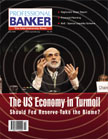
The US Economy in Turmoil : Should Fed Reserve Take the Blame?
-- Katuri Nageswara Rao
The subprime crisis has been caused due to, among other reasons, a lax monetary policy of the US Federal Reserve. The US economy, in fact, has started its southward journey following this crisis. Low interest rates have resulted in the rise in asset prices, especially of housing. Thanks to the ingenious but highly questionable securitization mechanism, the US has been burdened with a spiral of debt that has started unwinding now. The assumption that housing prices will always go up is wrong after all.
© 2008 IUP . All Rights Reserved
REGULATION
Raghuram Rajan Report and the Hundred Small Steps in the Financial Sector
-- T N Ramakumar
Raghuram Rajan is of the opinion that carefully co-ordinated smaller steps will yield bigger dividends than big bang reforms, and that financial sector reforms are urgently needed today to improve inclusion, stability and growth.
© 2008 IUP . All Rights Reserved
REGULATION
Central Banks' Supervisory and Regulatory Insights
-- A K Sohani
The article discusses why central banks were set up. With the emphasis being attached to financial stability and payment system, the need for redefining the role and responsibilities of central banks was felt. In view of the changing environment, how the role of central banks in supervision and regulation is carried out and what steps are taken by them to bring about financial stability in the system are discussed. It also discusses the role of Basel Committee in regulation and supervision.
© 2008 IUP . All Rights Reserved
RETAIL BANKING
Emerging Trends in Retail Boom : New Opportunities in Agricultural Finance
-- Dr. A Sarangapani and T Mamatha
With corporate buyers around, farmers may be better able to raise loans from banks to invest in land development, irrigation, farm equipment, seeds, fertilizer, storage and processing and transportation. Banks will also find it conducive to push lending in agriculture sector as involvement of retail chains will infuse confidence in them about the economic viability of the projects.
© 2008 IUP . All Rights Reserved
RETAIL BANKING
An overview of customer management in retail banking
-- Smitha Ramachandran
To sustain the growth in innovation and position themselves, banks should adopt at least four necessary strategies - focus on core strengths and outsource or partner for other necessities; optimize the prospective customer relationship; exploit the available good workforce with effective performance management; and, adopt technology that will be the critical success factor in customer management.
© 2008 IUP . All Rights Reserved
STRATEGY
Impact of Globalization on Indian Banking Sector
-- Dr. M Sumathy
Globalization has vastly transformed the banking sector through technology infusion, outsourcing innovation and better risk management practices.
© 2008 IUP . All Rights Reserved
STRATEGY
Bank of England's Special Liquidity Scheme : Admission of Weakness?
-- P S Sarath Chandra
Analysts suspect whether exchanging mortgage-backed securities and assets will be enough to ease the credit market gridlock and to avert the credit crisis. It will be tricky to value risky assets and cross-border lending will still be effective.
© 2008 IUP . All Rights Reserved
PERSONAL FINANCING
Financial Planning : Need of the Hour
-- Smriti A Pathak
Financial planning is not about attaining unlimited wealth. The key to financial planning is knowing what you need and when. It covers a wide variety of money topics, including budgeting, expenses, debt, saving, retirement and insurance, among others. It is one of the toughest things to do, but it is important.
© 2008 IUP . All Rights Reserved
SOCIAL BANKING
An Ngo's Recipe of Success for Poverty Alleviation and Empowerment
-- Prof. Prafulla K Dash and Sukomal Chakrabarty
Since financing to SHGs is being used as one of the main instruments for poverty alleviation and social empowerment, the government has been directly or indirectly fixing indicative targets for the financial institutions. But the response to this approach has been mostly in numerical terms so far.
© 2008 IUP . All Rights Reserved
MICROFINANCE
Microfinance : The Road Ahead
-- Suhel Shaik and Sumathi Nukala
The high interest rates and loan recovery practices of various finance institutions are responsible for the suicide of several farmers in the rural areas. To avoid this, microfinance institutions must play a vital role in the present financial world. This article focuses on the recent developments, regulations and their impact on the banking sector, etc.
© 2008 IUP . All Rights Reserved
INFORMATION TECHNOLOGY
Large Value Payments through Electronic Payment Systems : An Initiative of Reserve Bank of India
-- K R Subbakrishna
Real-Time Gross Settlement (RTGS) systems are typically electronic systems, which transmit and process information in real-time as the name itself suggests. As it is a gross settlement system, transfers are settled individually, that is, without netting debits against credits.
© 2008 IUP . All Rights Reserved
SCENARIO
Forex Muddle : Making Banks Scapegoats?
-- D Satish
With the unprecedented volatility in the global forex markets, many banks and corporates have piled up notional losses on their forex derivatives positions. Those corporates which have earlier made bumper profits in the forex derivatives are now blaming the banks for their plight.
© 2008 IUP . All Rights Reserved
CASE STUDY
A Study of Customers' Perception towards e-Banking with Special Reference to Jaipur City
-- Prof. Sumeet Gupta
e-Banking is not fully used due to inadequate awareness levels besides misconception about and lack of trust in the system. New technologies will not be successful until customers are satisfied with privacy and security aspects. It also requires some time to earn confidence among the customers even if it is easier and cheaper than the traditional methods.
© 2008 IUP . All Rights Reserved
|